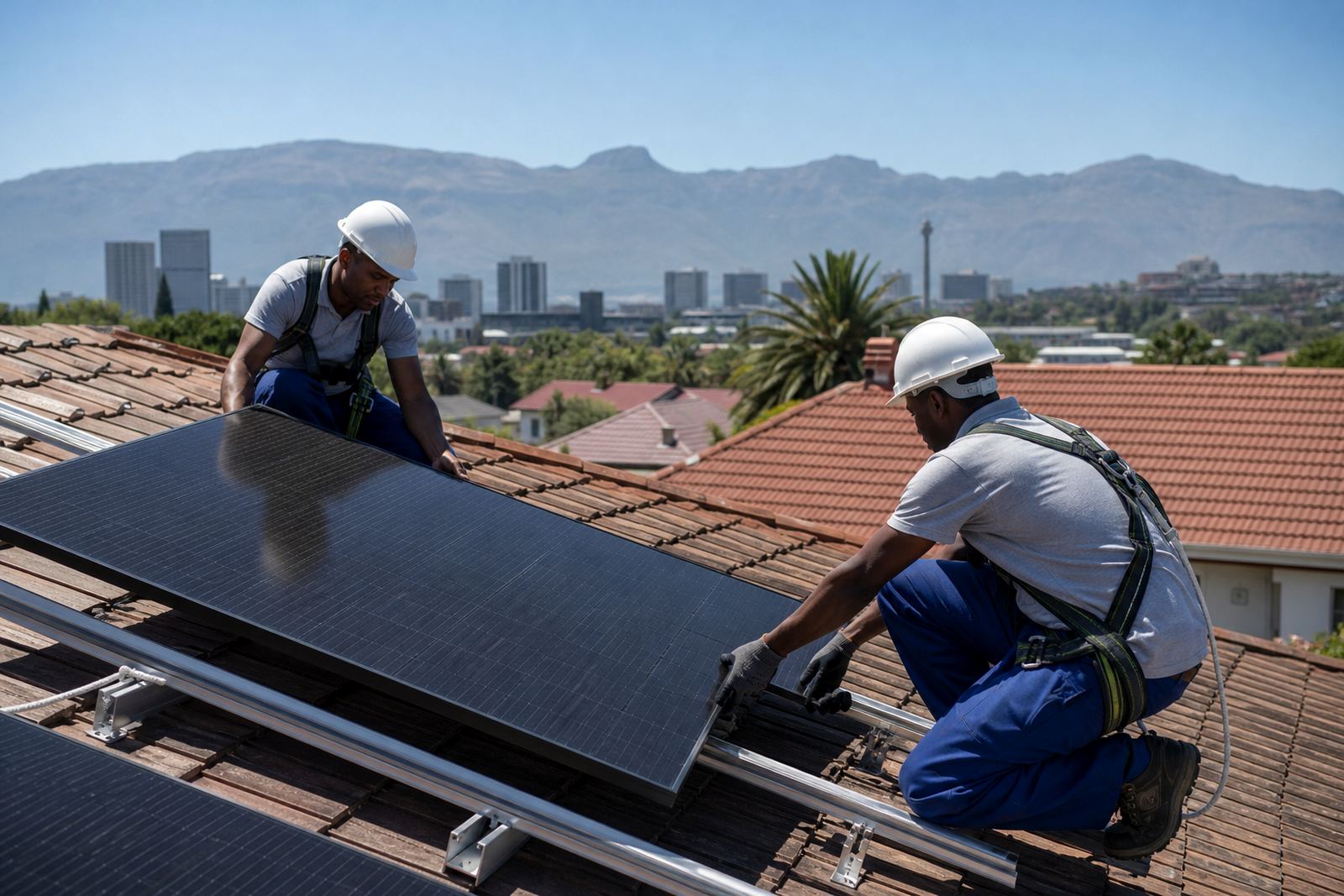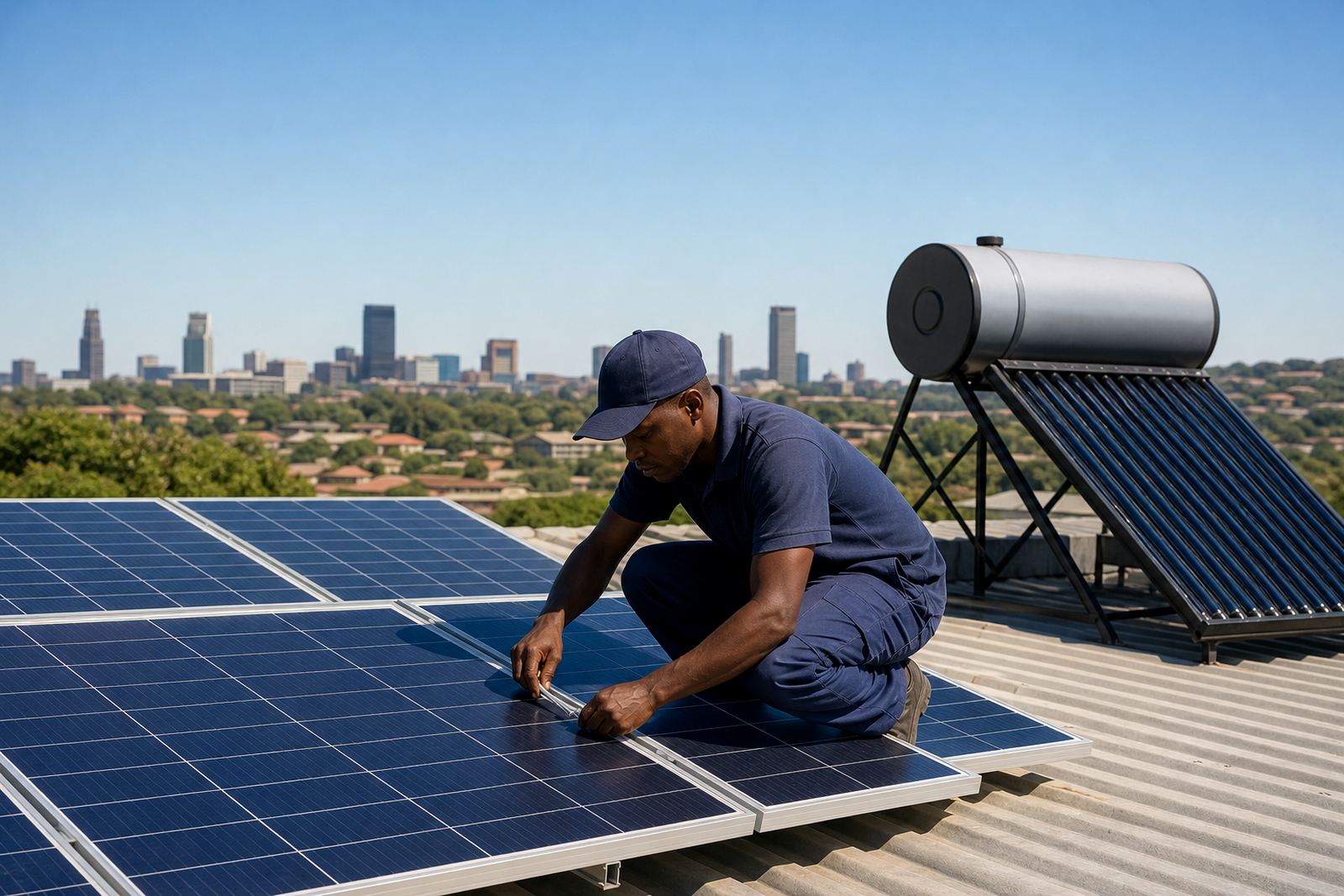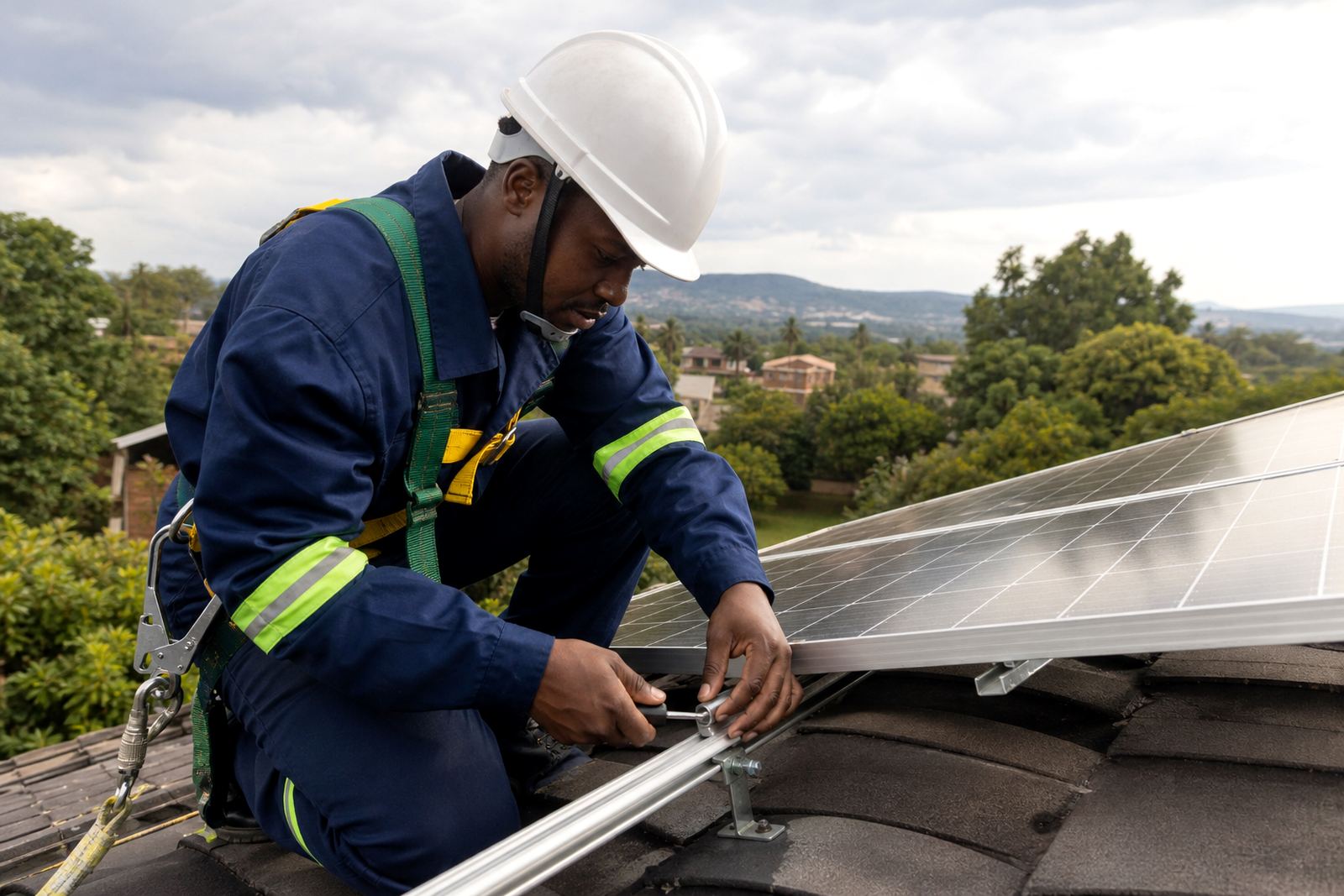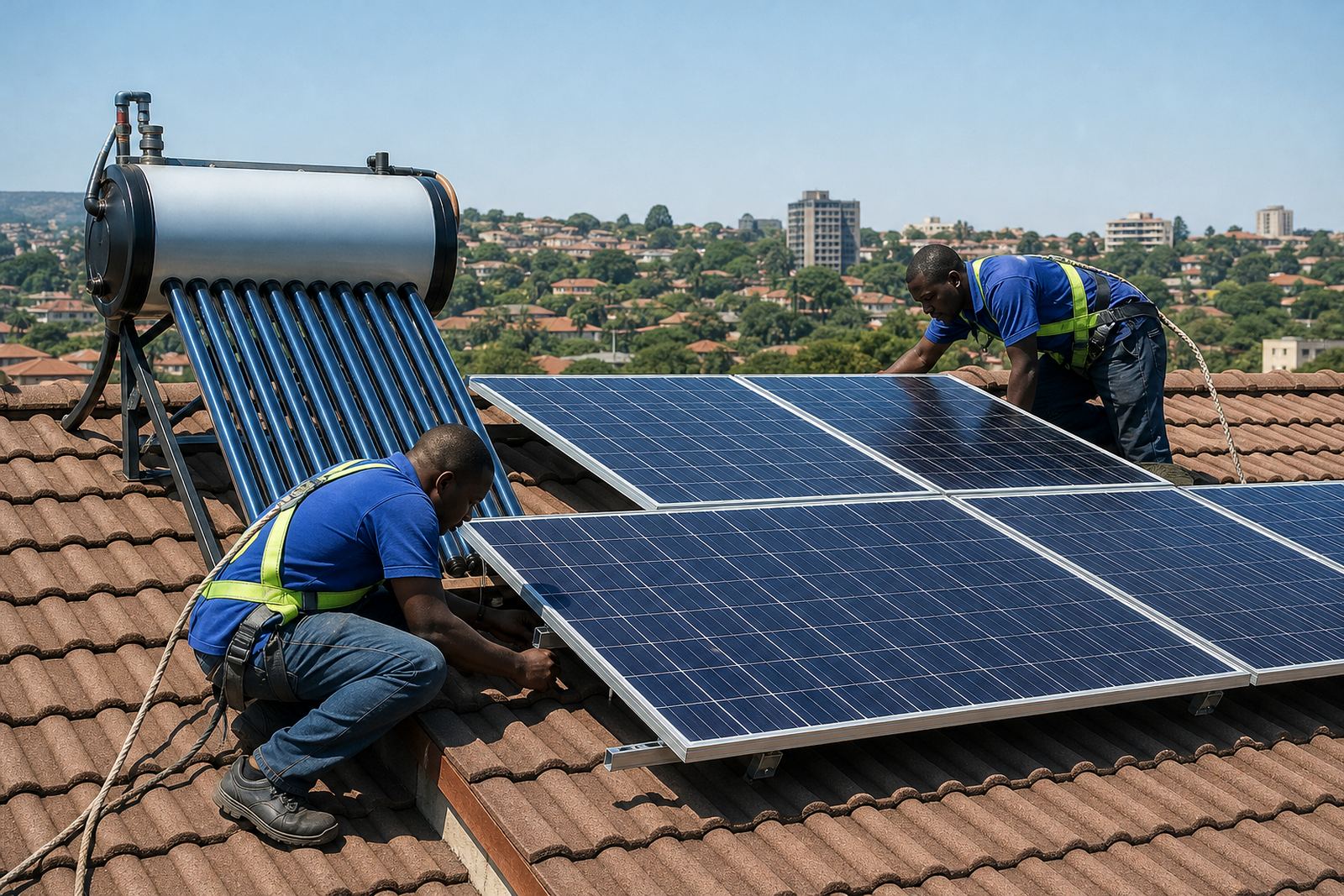
Start With a Safe Visual Check
Before you touch any part of the system, switch off only what you are meant to switch off and leave electrical work to qualified installers. A quick visual check once a month can help you spot small issues before they become callouts. Look for loose mounting rails, cracked glass, twisted cables, standing water around equipment and any signs of corrosion on metal fittings.
In Pretoria and Centurion dust can build up fast, while in Durban and other coastal areas salt in the air may speed up wear on exposed parts. If you notice a burnt smell, unusual noise or a breaker that keeps tripping, stop using the system and arrange support. Do not open electrical enclosures unless you have the right training.
How to Care for Solar Panels Between Cleanings
Panels work best when their surface is free of dirt, bird droppings and leaves. Light dust usually washes off with rain, but dry seasons and construction dust can leave a film that reduces output. Gentle cleaning is usually enough, and it is better to wash panels early in the morning or late afternoon when the surface is cool.
- Use clean water and a soft brush or sponge.
- Do not use high pressure washers on the glass or frame seals.
- Avoid harsh chemicals, scouring pads and metal scrapers.
- Check that the frame is secure and that no cable is rubbing on a sharp edge.
If panels are hard to reach or the roof pitch is steep, rather book a proper cleaning service. Falls from ladders and wet roof sheets are a common risk, especially after summer storms.
Battery Care for Backup Power That Lasts Longer
Batteries need steady treatment to stay healthy. Keep the battery area clean, dry and well ventilated, and do not stack boxes, tools or paint tins around it. Heat is hard on batteries, so garages, utility rooms and enclosed cupboards should have enough airflow. In winter, check that the space is not damp or exposed to water leaks from the roof or geysers.
Try not to let the battery sit completely flat for long periods. If the system has been idle because of maintenance or travel, ask for a proper check before bringing it back into full use. Battery settings should also match the rest of the system, especially after load-shedding events or electrical work. A battery that charges too quickly or drains too fast may need fault finding by a qualified installer.
- Keep terminals and casing free of dust.
- Watch for swelling, heat, smells or warning lights.
- Do not cover batteries with cloths or plastic.
- Book support if the backup time changes suddenly.
Solar Water Heater Checks for Roof and Geyser Safety
Solar water heaters need attention because they deal with both water and roof mounted equipment. Check for dripping valves, loose brackets and signs of rust around pipes and support points. In colder inland areas like Bloemfontein, frost protection matters. On the coast, corrosion and mineral build-up can shorten the life of fittings if left unchecked.
Water temperature that changes sharply, air in the pipes, or a geyser that keeps topping up more than usual can point to a problem. The roof tank, collector and plumbing should all be inspected by someone who understands the system layout. If you are not sure whether the fault is in the heater, the thermostat or the electrical side, log a support callout and let the right person test it properly.
When to Book Maintenance or Fault Finding
Some issues are obvious, but others only show up when the weather changes or the household load increases. If your system is giving less hot water, the inverter is dropping out, or the battery backup is not lasting as long as expected, do not wait until it stops working completely. Early fault finding is usually simpler and safer than fixing a full breakdown.
Book maintenance after heavy rain, hail, strong wind or any roof work nearby. Also arrange a check after new appliances are added, because extra load can affect the system balance. Our team works from Centurion, Pretoria and supports homes and small businesses across Pretoria, Johannesburg, Midrand, Durban, Cape Town, Bloemfontein and wider Gauteng.
Simple Service Steps Before You Call Us
Preparing a few details makes support faster and helps the technician arrive with the right tools. Keep notes on what you noticed, when it started and whether the problem happens all the time or only at certain times of day. If there was a storm, outage or recent electrical work, mention that as well.
- Check the date and time the fault first appeared.
- Note any warning lights, error codes or breaker trips.
- Tell us whether the issue affects panels, batteries, inverter functions or hot water.
- Make sure the equipment area is accessible for inspection.
Our support team includes experienced people in operations, project coordination, technical support, customer care and solar water heating, so the enquiry can be routed to the right person. Electrical work is handled by qualified installers, and that keeps the system safer for your property and the people using it.