How the installation process starts
The first step is an enquiry through our contact page, followed by a site assessment. We check roof space, shading, geyser position, existing wiring and the type of load you want to cover, whether that is a home, shop, office, guest house or small workshop. This helps us plan a system that suits your daily use and the local supply conditions.
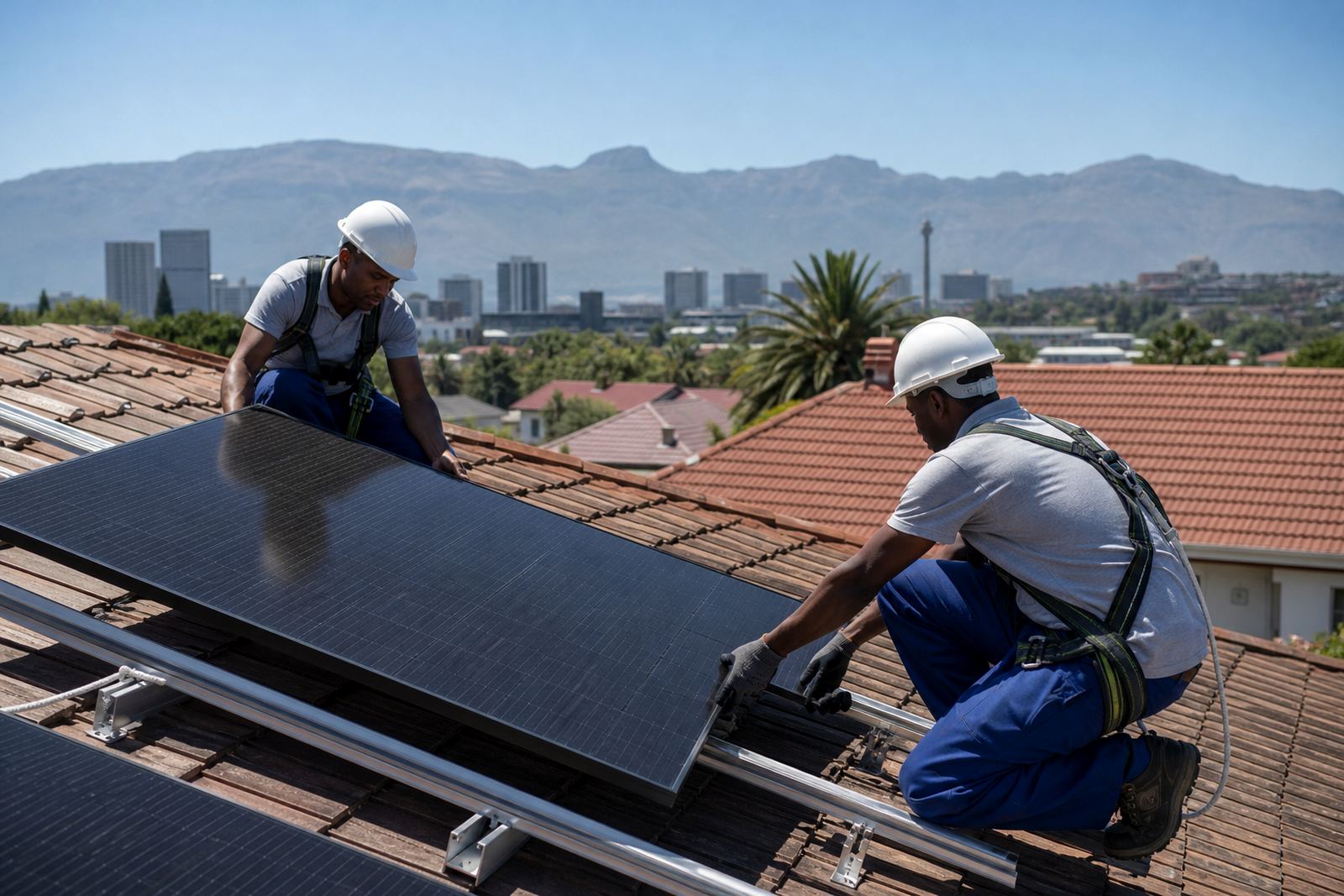
From there we prepare a practical layout for the equipment, including panel positions, inverter location, battery storage if needed and the route for cables and isolators. In Pretoria and Gauteng we often work with pitched tile roofs, while in coastal areas like Durban and Cape Town we also consider wind exposure and salty air.
What you need to prepare before the installers arrive
You do not need to do much, but a little preparation helps the job run smoothly. Please clear access to the roof area, the DB board, the geyser or water heater position, and the space where the inverter and batteries will be mounted. If there are pets on the property, keep them safely out of the work area.
- Make sure the roof access point is open and safe.
- Clear items from garages, passageways and plant rooms.
- Let us know about any weak ceilings, old wiring or leaks.
- Have the property owner or responsible person available for sign-off.
If you are in an estate, sectional title unit or business park, please check any access rules before the appointment. Some body corporates and municipalities have specific requirements for mounting, noise or visible cabling.
How long a typical installation takes
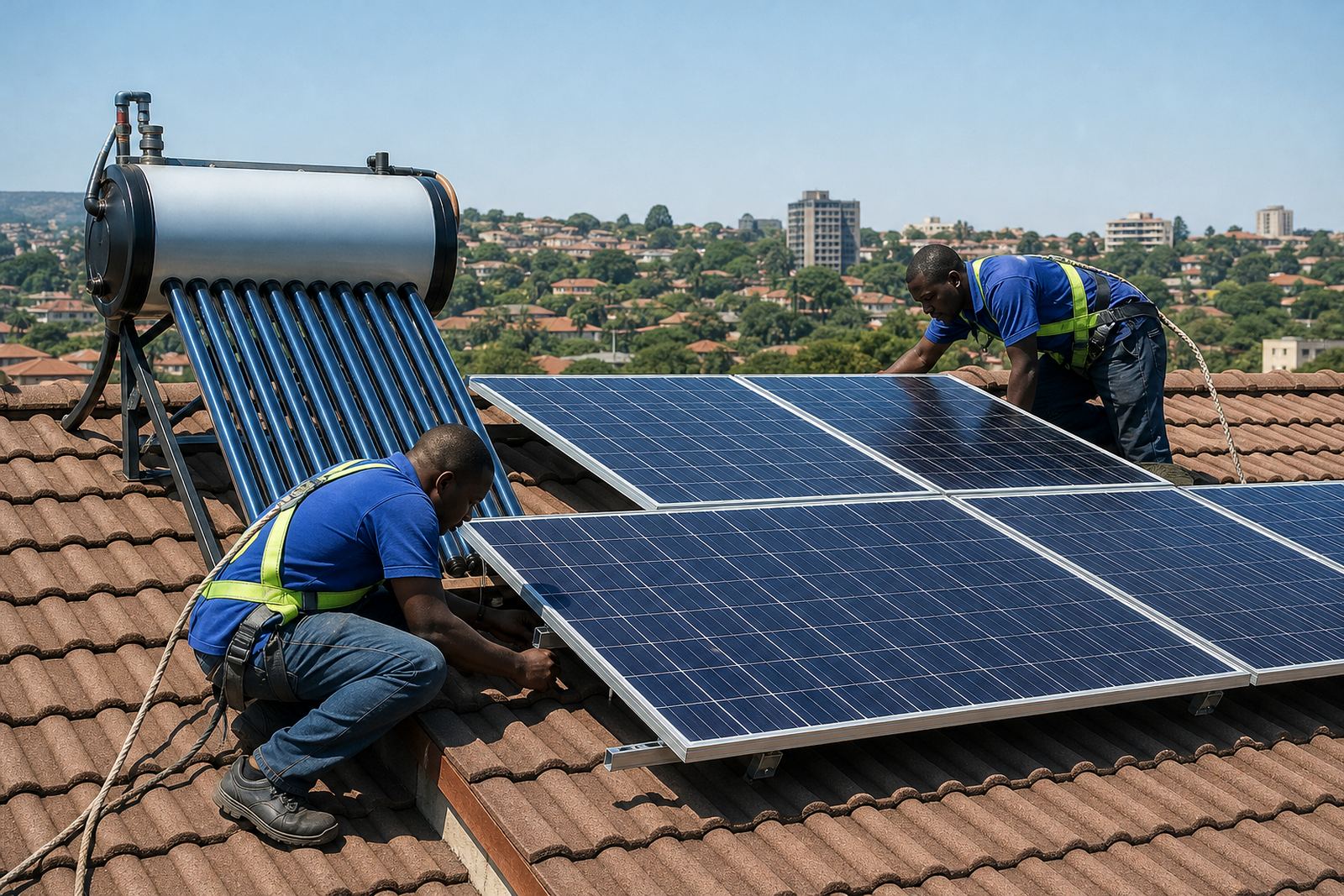
Timing depends on the size of the system and the condition of the site. A straightforward panel and inverter installation on a home may take a day or two, while a bigger setup with batteries and a solar water heater can take longer. If the roof needs extra preparation, or if the electrical board must be upgraded, that also adds time.
We always aim to work neatly and keep disruption low. For small businesses, we plan around trading hours where possible. In places like Johannesburg, Midrand and Centurion we often coordinate installs early in the day so the team can finish testing before peak activity starts.
What happens during electrical integration
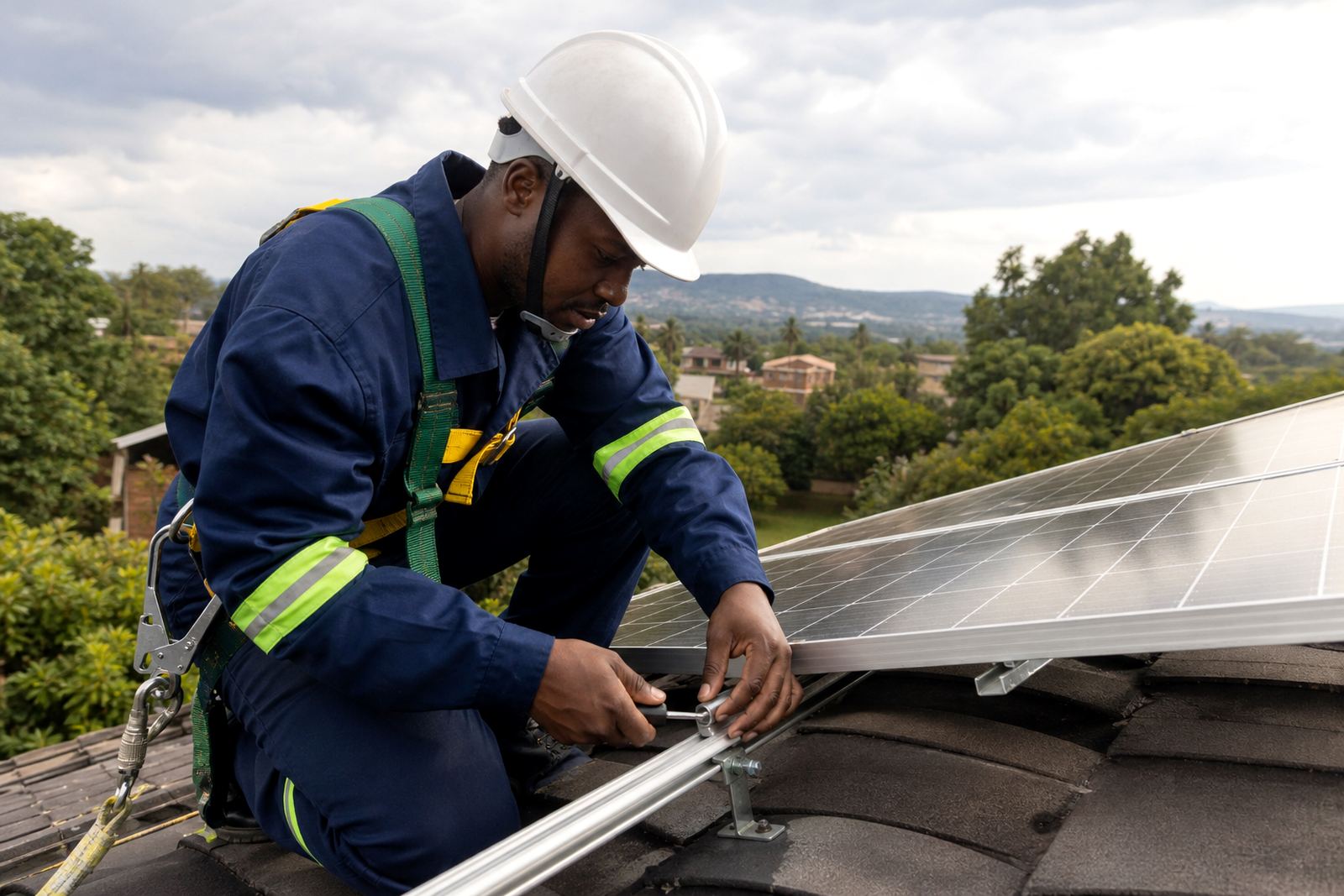
Electrical integration is handled by qualified installers and checked before the system is put into service. This includes safe connection to the inverter, batteries, changeover points, geyser controls and the relevant circuits in the board. We also test protection devices, polarity and system response before handover.
- Mounting and mechanical fixing of the equipment.
- Cable routing and protection through proper conduits.
- Connection to the inverter and battery bank where applicable.
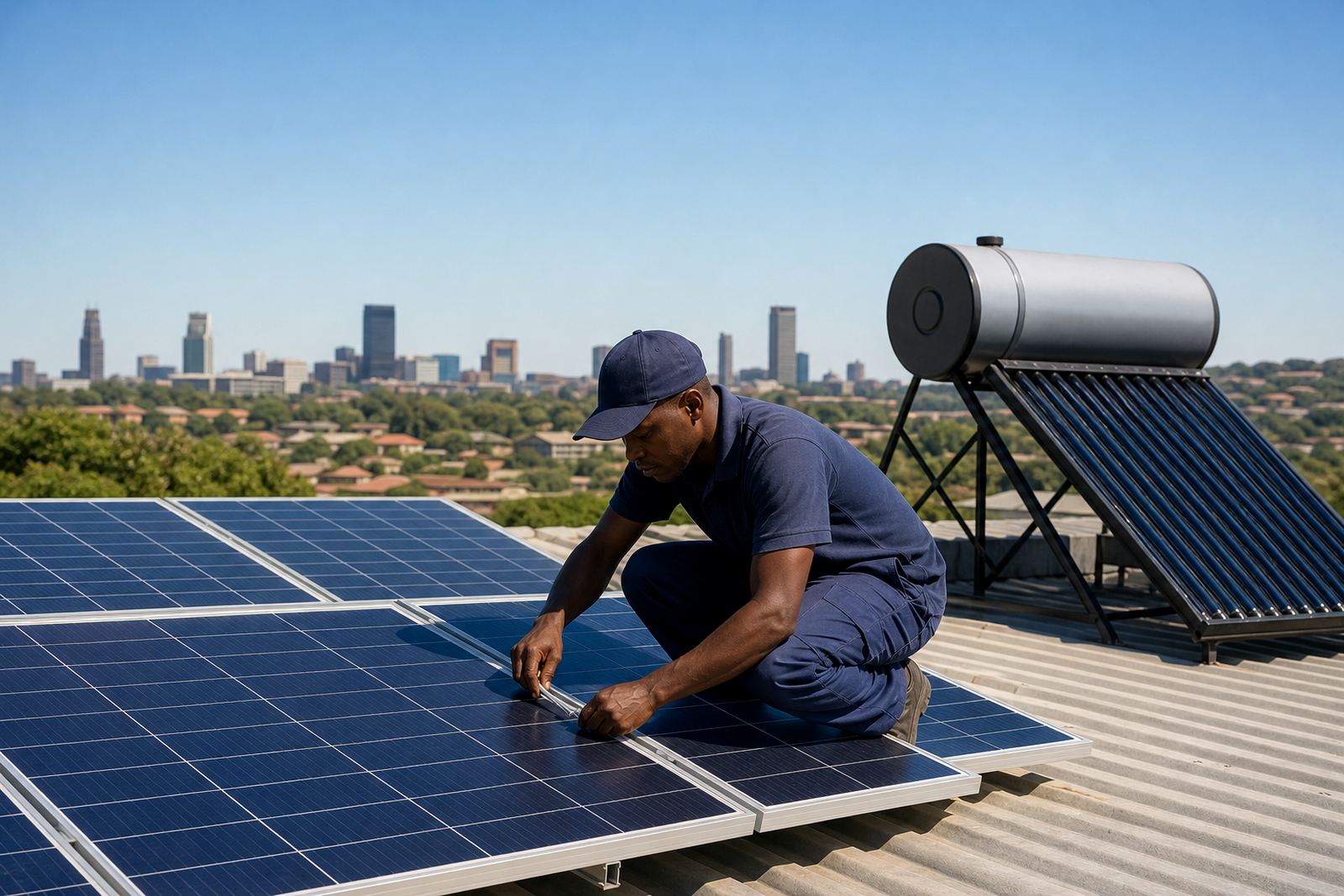
- Testing of solar water heating controls and circulation components.
- Commissioning and basic operating instructions on site.
Where load-shedding is part of the daily routine, we explain what will switch over automatically and what still needs manual use. That way you know exactly how the system behaves during an outage.
Will the system work during bad weather or power cuts
Yes, but performance depends on the system type, weather conditions and how much power you use. Solar panels still produce energy on cloudy days, though output is lower. Batteries can keep selected circuits running during outages, while an inverter manages the conversion and supply to the connected loads.
For solar water heaters, the system can continue to heat water using sunlight and stored heat, though winter conditions and overcast weather may reduce the rate of heating. In colder inland areas like Bloemfontein and Pretoria, we plan the layout and insulation carefully so the system performs well through seasonal changes.
Maintenance, cleaning and fault finding after installation
After commissioning, regular maintenance helps keep the system in good condition. Panels should be checked for dirt, bird mess and loose fittings, especially after wind or heavy rain. Solar water heaters also need periodic inspection of valves, pressure and piping, because hot water systems work hard over time.
- Panel cleaning to remove dust, pollen and grime.
- Fault finding for inverter alarms, battery issues or loss of output.
- Support callouts for leaks, wiring concerns or control problems.
- Scheduled checks on mounting hardware and cable condition.
If you are near the coast, moisture and salt in the air can speed up wear on exposed parts, so routine checks become even more important. Our support team in Pretoria and Centurion can help arrange follow-up visits where needed.
Who to contact and what information helps us quote correctly
Use the enquiry form on our contact page to reach the Linuo Solar team. We serve Pretoria, Centurion, Johannesburg, Midrand, Durban, Cape Town and Bloemfontein, and we also assist homes and small businesses across South Africa. When you send an enquiry, include as much detail as possible so we can respond with the right approach.
- Property type and town.
- Whether you need panels, inverter work, batteries or a solar water heater.
- If there is existing equipment already on site.
- Any roof restrictions, body corporate rules or access limits.
Linuo Solar is led by MD Vuyo Phasha, with support from Naledi Kgosi, Sarel Delport, Palesa Mabena, Mothusi Mphahlele, Faatimah Latief and Unathi Tau. That mix of planning, technical knowledge and customer care helps keep the process clear from first enquiry to final handover.