Before you log a support request
If you are dealing with low output, no hot water, a tripping board or battery concerns, start with the basics before you send a request. In many homes and small businesses the issue is a simple setting, a switch that has been turned off, or a weather related drop in performance. In Pretoria and Centurion we also see problems after heavy rain, dust build-up and load-shedding events that cause systems to shut down and need a reset.
Have these details ready so the team can help faster: your suburb, the system type, when the issue started and what you noticed first. If there has been an electrical smell, water leak or visible damage, switch the system off if it is safe to do so and keep people away from the area.
- Check whether the main supply is on and whether any breakers have tripped.
- Look at the inverter display for fault codes or warning lights.
- Confirm whether the battery is charging and whether the app or display is showing normal readings.
- For solar water heaters, check whether the geyser switch is on and whether hot water is reaching the taps.
How to book a site assessment or installation
Use the enquiry form on our contact page to request a site visit or installation quote. This is the best way to start if you are planning panels, an inverter, batteries or a solar water heater for a home, office, workshop or guest property. The form helps the team understand your roof type, power needs and location before a visit is arranged.
We work from Centurion, Pretoria and assist customers in Gauteng and other parts of South Africa, including Johannesburg, Midrand, Durban, Cape Town and Bloemfontein. For roof mounted systems, the team checks available space, shading, cable routes and the condition of the existing electrical board. Where needed, qualified installers handle the electrical work and the final integration into the system.
- Tell us whether the property is residential or commercial.
- Share your suburb and best access times for the visit.
- Note any roof restrictions, shared driveways or body corporate rules.
- Mention whether you need solar water heating, power backup or both.
What happens during installation day
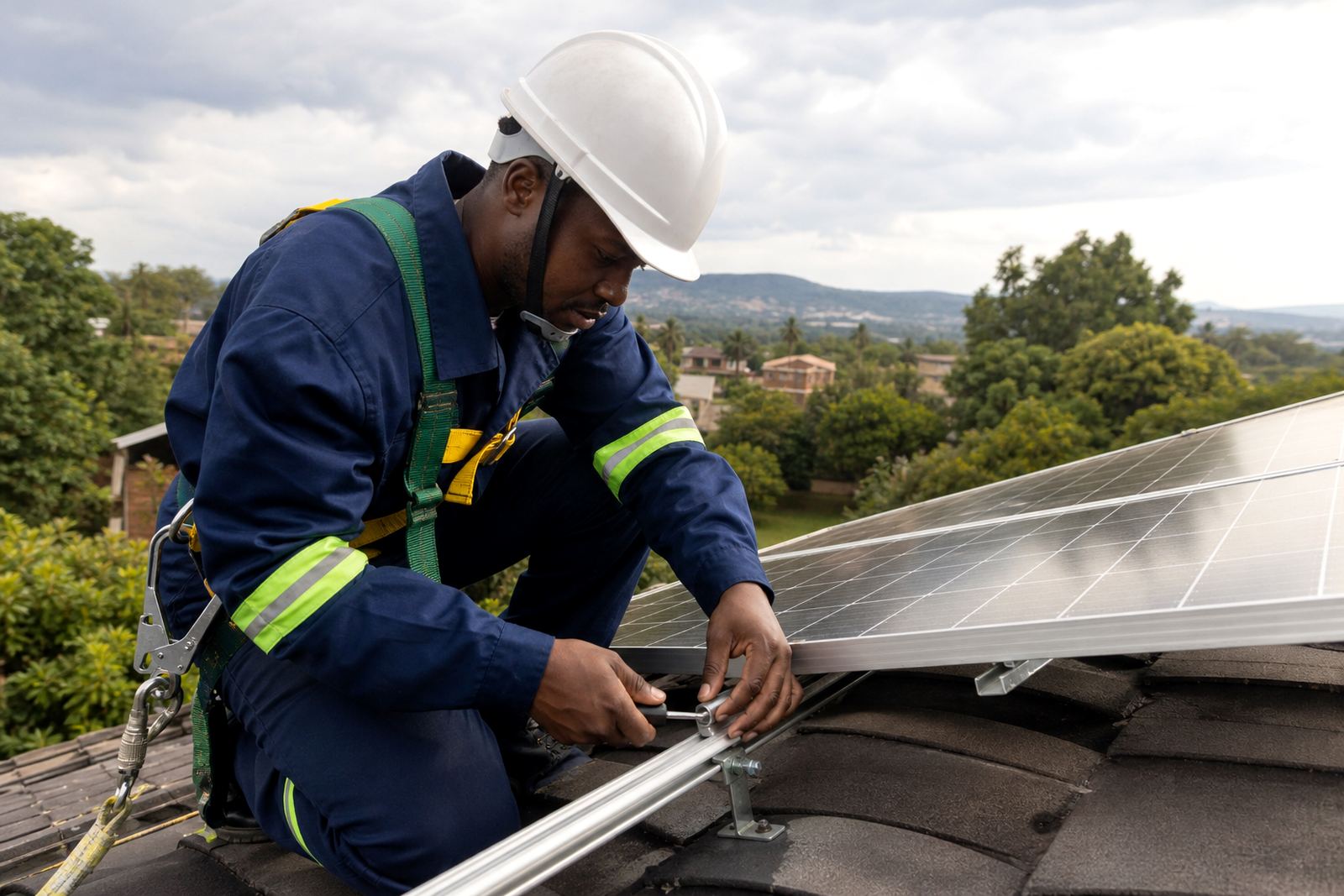
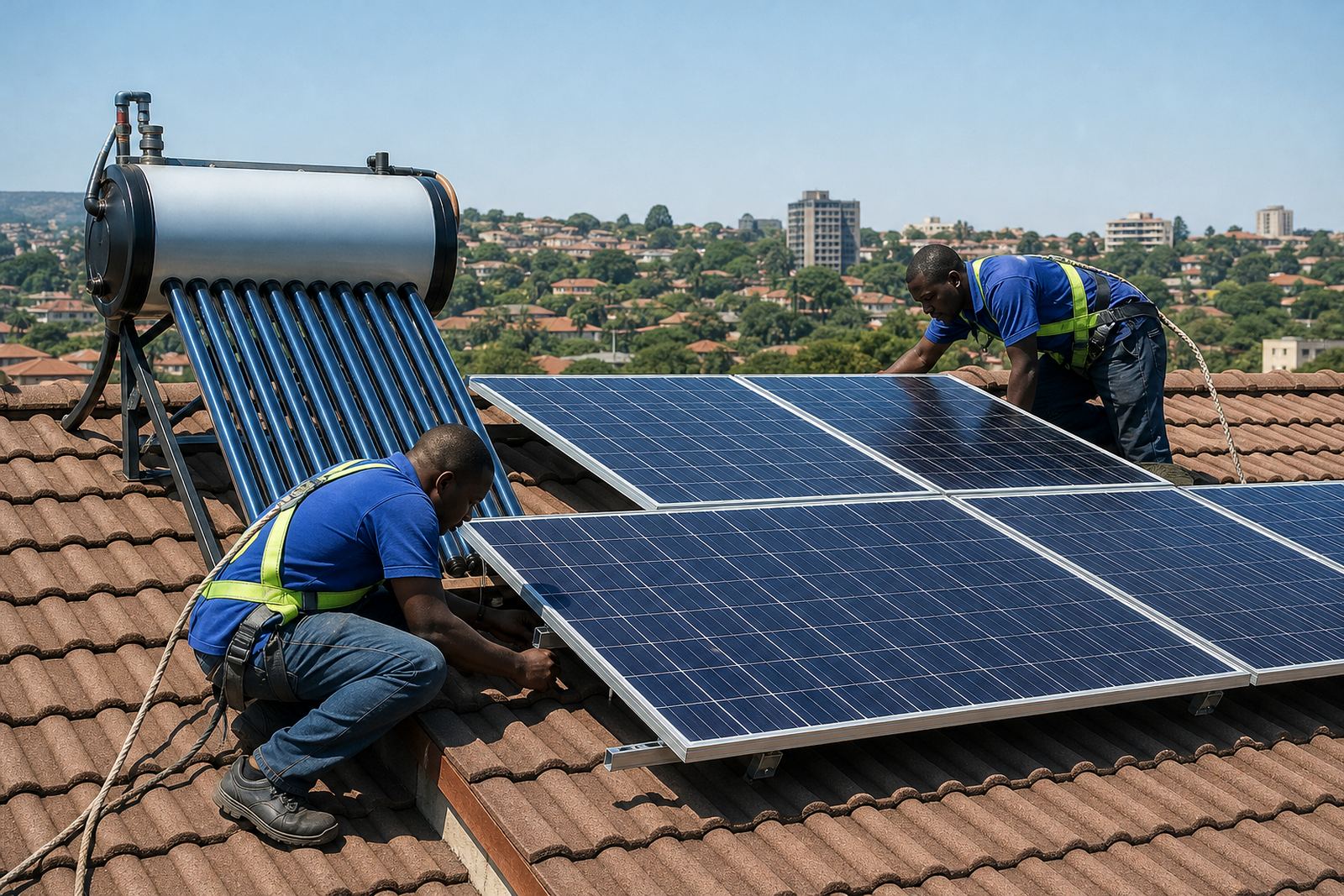
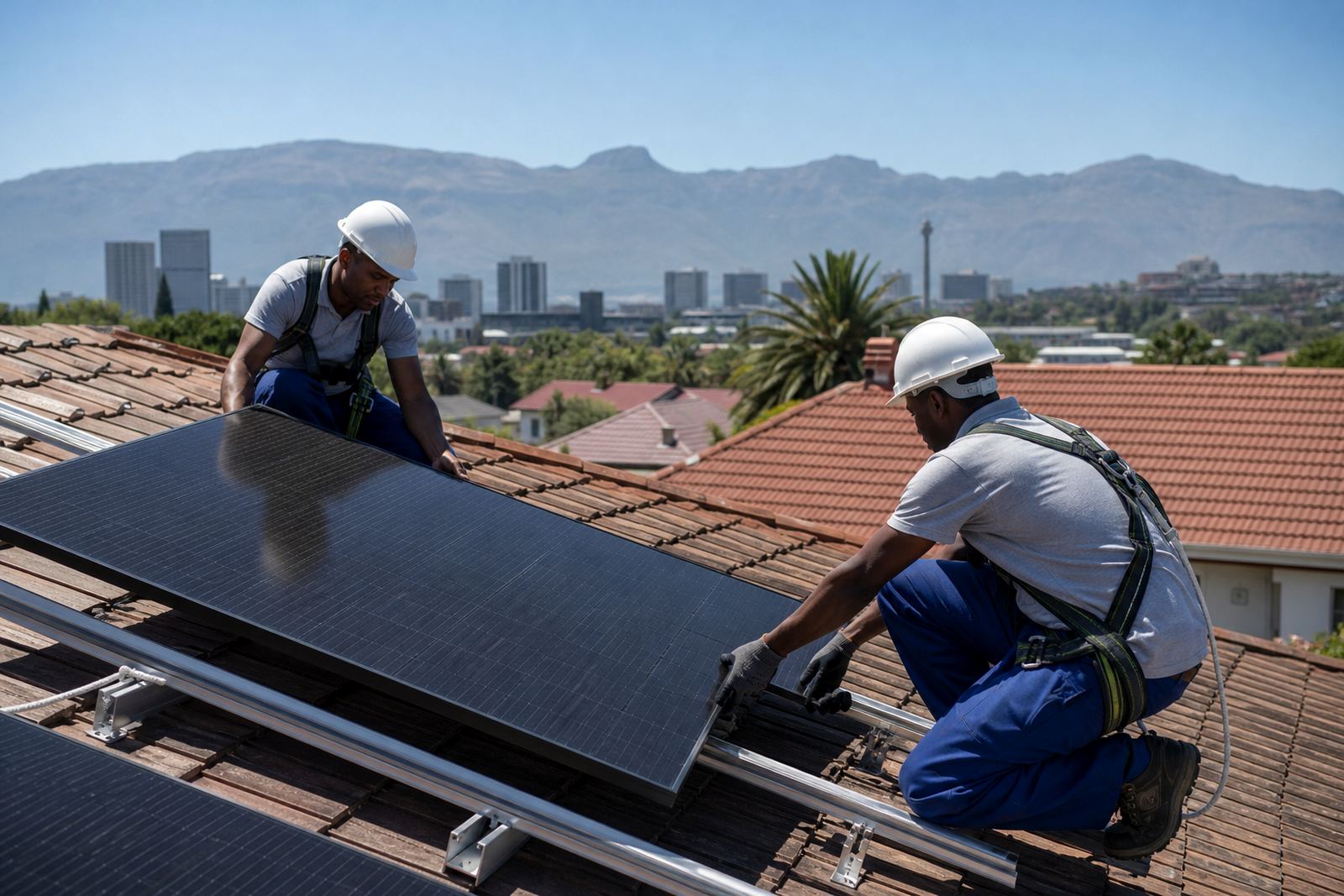
On installation day the crew arrives with the agreed equipment and tools, then checks the layout against the approved design. For panel systems, the mountings are fitted first, followed by the panels, cabling and protection devices. Inverter and battery work is completed next, then the system is tested under load before handover. If you are having a solar water heater fitted, the piping, valves and controls are checked carefully to suit the property.
Because South African conditions vary so much, the team plans for heat, wind, coastal humidity and roof type. In Durban and Cape Town, corrosion control matters more, while in inland areas dust and summer heat can affect performance. The goal is to leave you with a system that is safe, neat and ready for daily use, not something that needs constant attention.
- Keep the installation area clear for ladders, tools and packaging.
- Make sure someone is available to sign off access and answer basic questions.
- Do not switch on or change wiring unless the installer tells you it is safe.
- Ask for a handover explanation before the team leaves.
Common product questions we get every week
Many customers ask how the different parts of a solar setup work together. Panels produce electricity from sunlight, inverters convert that power for household use, batteries store energy for later and solar water heaters use the sun to warm water for bathing, washing and general use. A system can include one part or several, depending on what you need most.
Small businesses often want backup during outages, while households may want lower reliance on the grid and more reliable hot water. If you are comparing options, think about your daily usage, the appliances you want to keep running and the amount of roof or yard space available. There is no one size fits all answer and it usually takes a proper look at the property first.
- If your lights flicker during load-shedding, the inverter setup may need checking.
- If hot water is inconsistent, the water heating controls or plumbing may need attention.
- If panels seem dirty, a safe clean can improve output.
- If the battery drains too quickly, the load profile or settings may need adjustment.
Maintenance, cleaning and fault finding support
Systems in South Africa need regular attention because dust, pollen, coastal salt and heavy rainfall can all affect performance. Maintenance visits are useful for checking wiring, mounts, output levels, battery health and water heater components. Fault finding is available when a system stops working as expected, shows warning lights or behaves differently after a storm or outage.
Panel cleaning should be done with care and at the right time of day, especially in hotter areas. Water heater checks are also important in colder months when pressure, valves and insulation can make a big difference. If you are in Pretoria, Johannesburg or Midrand, a planned service can help prevent small problems turning into bigger callouts.
- Book a service if output has dropped noticeably.
- Arrange a check after hail, high winds or a power surge.
- Report leaks, loose fittings or unusual noises as soon as you notice them.
- Keep a record of when faults started and what happened just before them.
Getting support through the enquiry form
All support requests should come through the enquiry form on our contact page. This keeps the job details in one place and helps the right person respond, whether you need a site assessment, maintenance, fault finding or a new installation. It also helps the team plan visits by area, especially for Pretoria, Centurion, Johannesburg, Durban, Cape Town and Bloemfontein.
Include as much detail as you can in the message field. Mention the suburb, the system type, the main problem and whether the property is a home or business. If the issue is urgent, say that clearly so it can be triaged properly. We are based in Centurion and work with a practical, hands-on approach, so clear details make the whole process quicker and easier.
Vuyo Phasha leads the business, with support from Naledi Kgosi, Sarel Delport, Palesa Mabena, Mothusi Mphahlele, Faatimah Latief and Unathi Tau. That means your request is not passed around without context, it is handled by people who know the work and the local conditions. A proper note on the form can save time on both sides.