Solar for workshops that run through the day
Light industrial workshops often use power in bursts, but those bursts can be hard on the municipal supply and expensive when they happen all day. In Pretoria and Centurion we see the same pattern across fabrication bays, repair shops, print rooms, storage yards and small production spaces. The practical aim is to cover the daytime load first, then decide how much backup is needed for cloud cover, load-shedding or after-hours work.
A good workshop system starts with a clear view of what actually runs at the same time. That usually includes motors, compressors, welders, extract fans, LED lighting, computers, printers and admin office air conditioning. Some sites also need solar water heaters for staff ablutions or wash-up areas, which takes pressure off electricity use during busy shifts.
The design must match the way your team works, not just the size of the roof. A system that is too small will trip often or leave you depending on the grid. A system that is oversized can push up the budget without giving real value. We look at the load profile, roof space, switchboard layout and the type of work done on site before any recommendation is made.
Typical equipment found in a small industrial setup
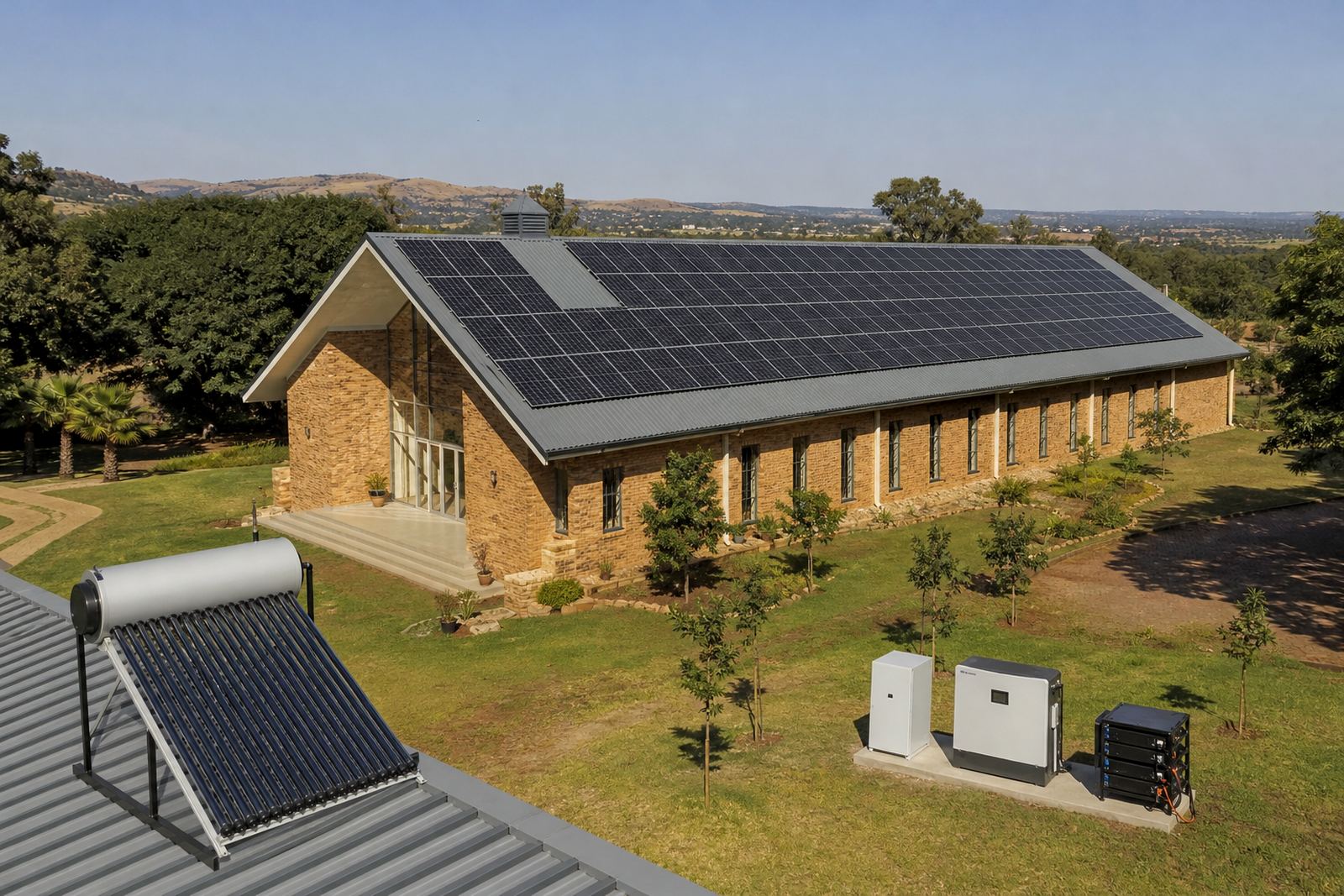
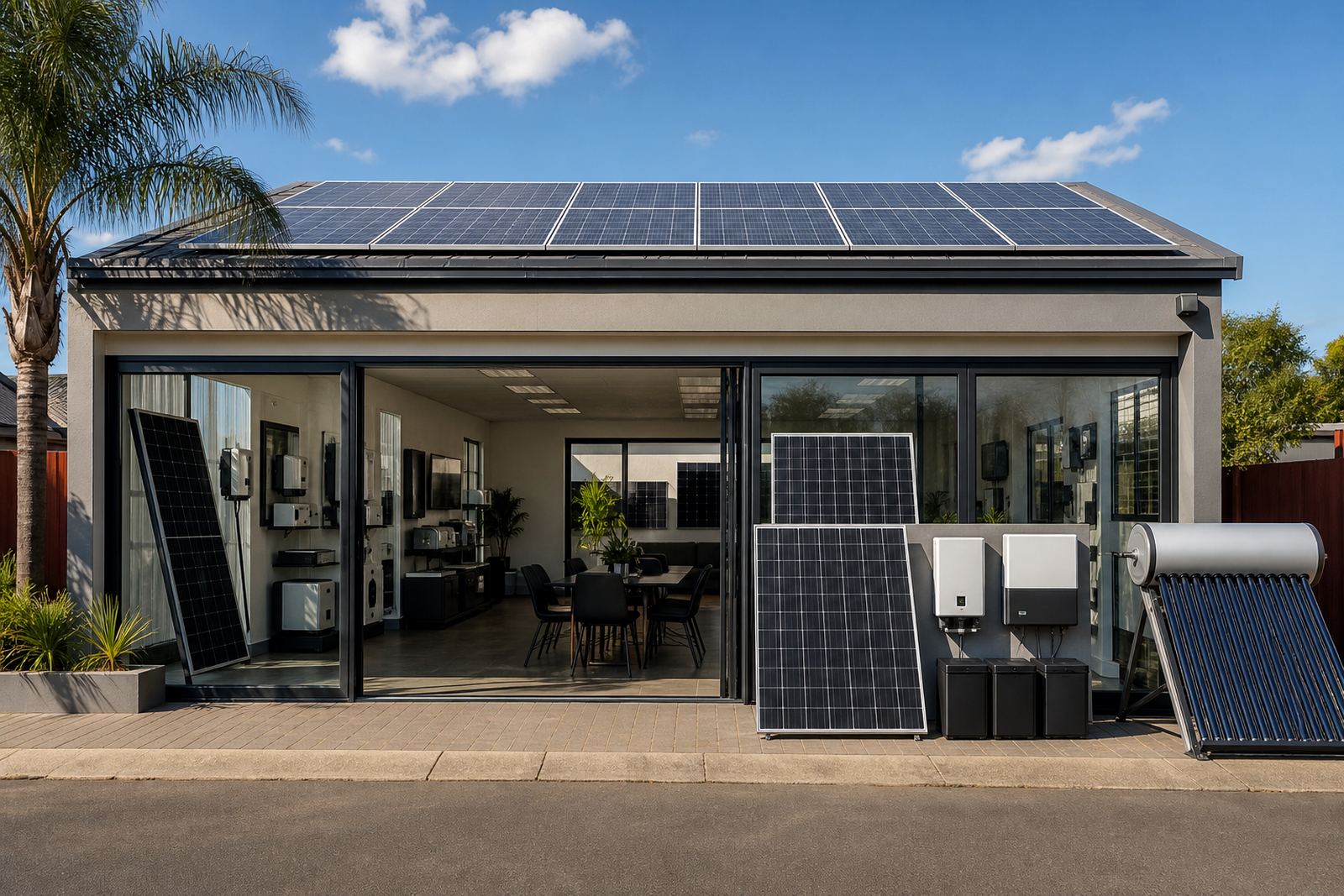
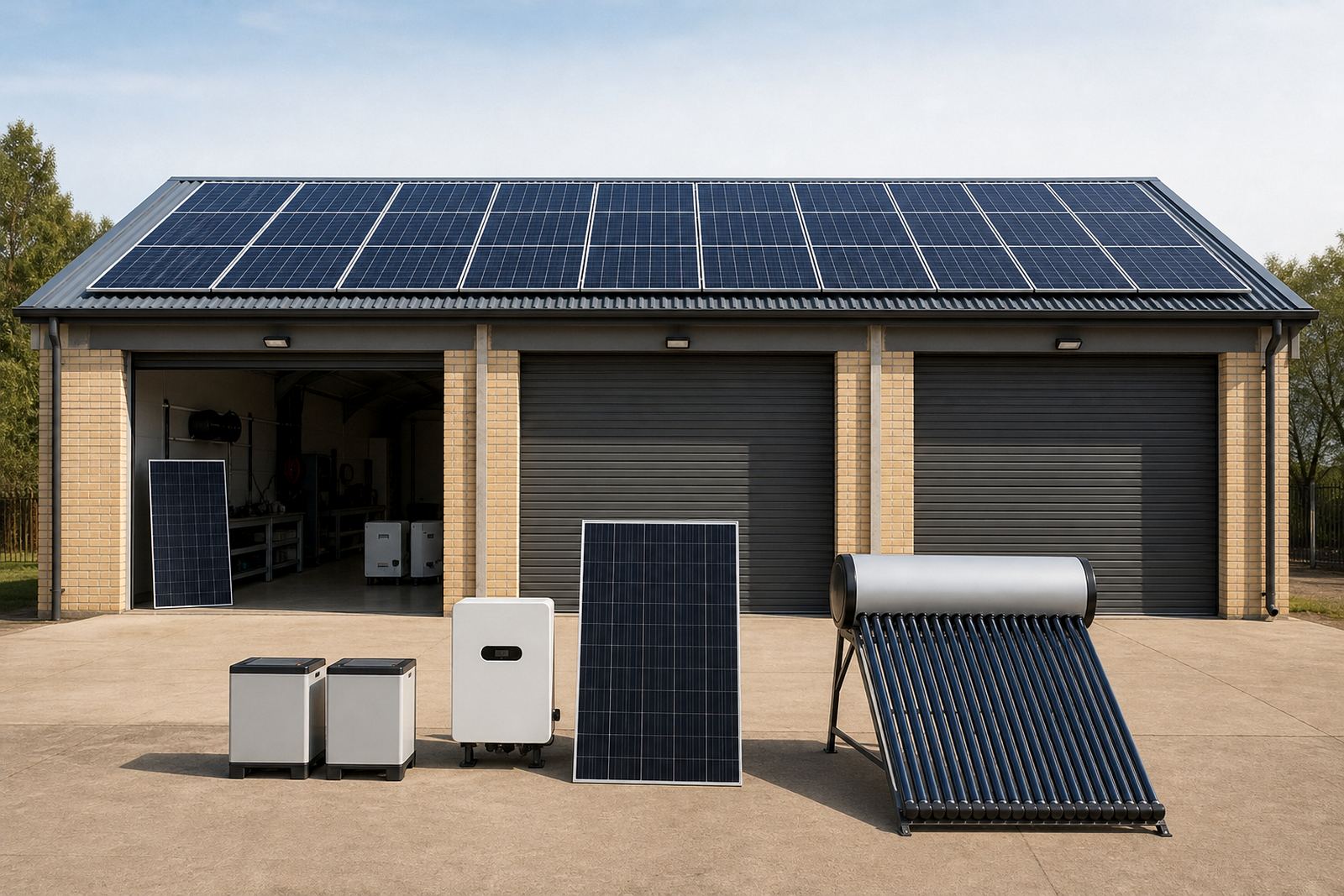
Every workshop is a little different, but many sites use a similar mix of equipment. The list below is a useful starting point when planning a system:
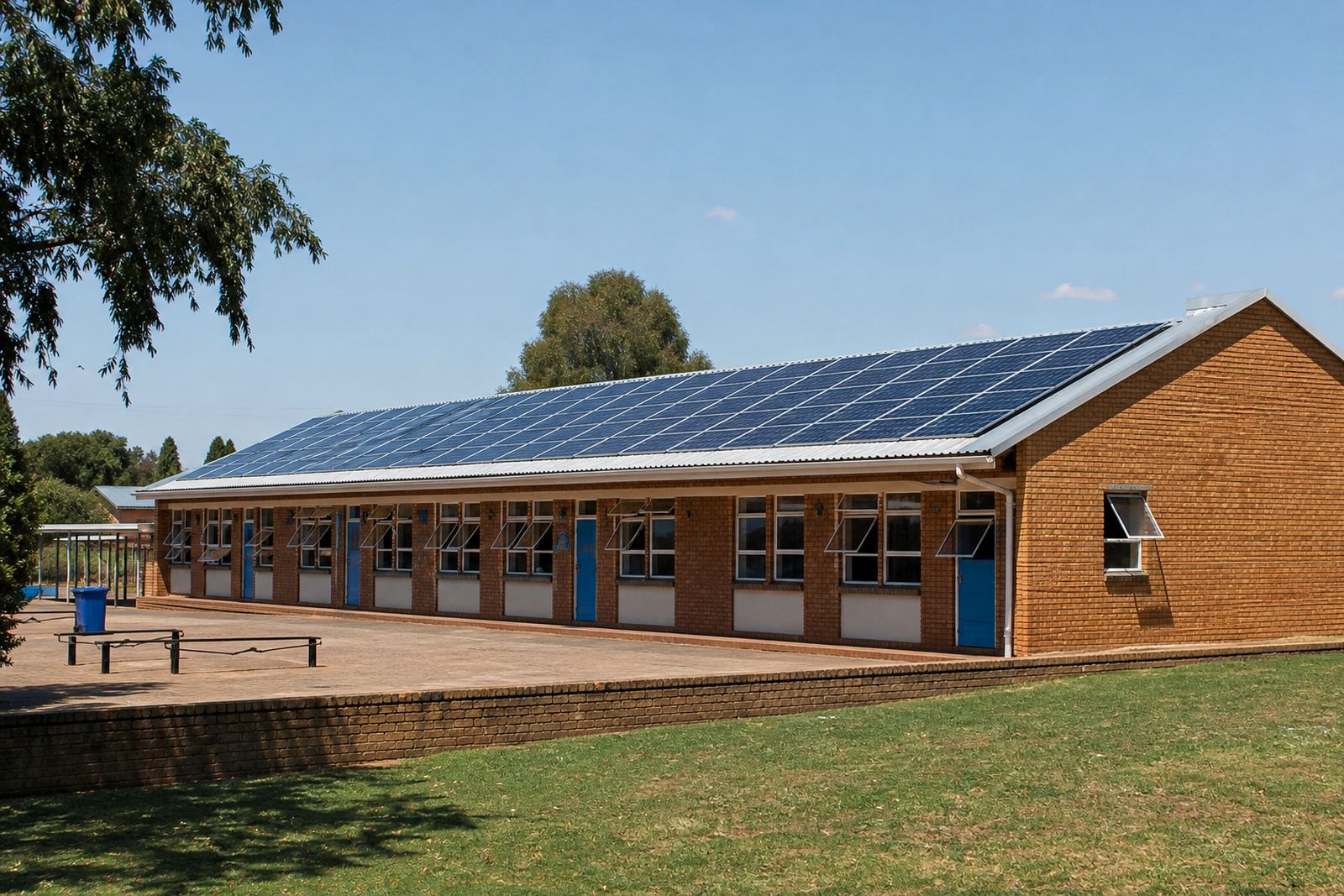
- Roof-mounted solar panels for daytime generation
- An inverter sized to handle the running load and start-up surges
- Batteries for backup during outages or evening use
- Distribution boards and protection equipment for safe electrical integration
- Solar water heaters for staff toilets, wash areas or staff accommodation on site
- Monitoring gear so the owner can see what the system is doing
For workshops in coastal areas such as Durban and Cape Town, corrosion resistance and mounting quality matter because of salt air and humidity. In Gauteng, dust from yards and open storage areas can build up quickly, so access for cleaning should be planned from the start. If the roof is old, made from fragile sheets, or carries an awkward pitch, that also affects panel layout and fixing methods.
Our team handles site assessments, system design, panel installation, inverter installation, battery installation and water heater installation. Electrical work is done by qualified installers, and the final system must be commissioned properly so it runs safely from day one.
Layout planning that keeps production moving
A workshop installation should support workflow, not get in the way of it. Panel rows need enough spacing for maintenance and should avoid shading from parapets, higher roofs, tanks, vents and nearby trees. On many Pretoria and Johannesburg sites the best roof space is not the biggest space, but the one with the cleanest sun path from morning to late afternoon.
Inside the building, the inverter and battery position needs sensible ventilation and easy access for maintenance. They should not be placed in a cramped store room where heat builds up or where forklifts, tools and dust are constant problems. If the site has office areas attached to the workshop, it can make sense to separate critical office loads from heavy machinery so one fault does not take down the whole property.
For businesses that cannot stop during business hours, planning also includes switchover strategy. Some loads can be backed up, while others may stay on grid supply only. This is where fault finding and commissioning are important. A site with clear labelling, neat cable routes and proper isolation points is easier to maintain and safer for staff.
Common mistakes that cost workshop owners later
We often see workshop owners focus only on panel count and ignore the rest of the system. That can lead to under-sized inverters, poor battery selection, or a layout that leaves the roof difficult to service. Another common mistake is assuming every machine can run at once on backup power. Motors and compressors can draw more power on start-up than people expect.
Other mistakes include:
- Ignoring roof condition before installation
- Not checking shading from nearby structures
- Placing batteries in a hot or poorly ventilated area
- Using the same backup setup for office loads and heavy machinery without a plan
- Leaving cable runs exposed to damage from traffic or tools
- Skipping regular panel cleaning in dusty or coastal areas
Another issue is forgetting about future growth. A workshop that is adding machines, more staff or extended operating hours should allow for expansion. It is usually cheaper to plan the reserve space and switchgear now than to redo part of the system later. A little extra forethought can save plenty of disruption.
Budget ranges for workshop solar in Rand
There is no single price for a workshop system because the final cost depends on roof size, load profile, battery backup, switchboard work and whether solar water heating is included. A small workshop with basic daytime support and limited backup will sit in a different budget band from a site with office areas, larger motors and more battery storage.
As a practical guide, smaller workshop setups can start in the lower tens of thousands of Rand, while more involved systems for light industrial use often move into the mid to upper six figures. If the site needs electrical integration, fault corrections, additional protection devices or roof repairs before installation, that will add to the total. Water heaters also change the budget depending on the number of outlets and hot water demand.
We prefer to work from the actual site rather than guess from a floor plan alone. A proper assessment in Pretoria, Midrand, Johannesburg, Durban, Cape Town or Bloemfontein gives a more accurate picture of what will fit the building and what the business really needs. That way the client can compare options with clear numbers instead of rough promises.
Support for ongoing use, cleaning and fault finding
A workshop system should be treated like any other piece of production equipment. It needs maintenance, inspection and occasional support callouts. Dust, loose connections, shading changes and wear on mounting points can all affect output. In some sites the first sign of trouble is not a complete failure, but a drop in performance that becomes obvious only when bills or downtime start climbing.
We offer solar maintenance, panel cleaning, fault finding and support callouts for sites that need regular attention. That is useful for businesses in Pretoria, Centurion and the wider Gauteng area, as well as coastal and inland sites where weather and dust conditions vary. Solar water heaters also benefit from checks on fittings, circulation and general condition, especially where the system is working hard for staff amenities.
For workshop owners, the main value of solar is not only saving on grid use. It is having a system that supports daily work, handles the pressures of local supply interruptions and keeps office areas running with less interruption. When the design is matched to the site, the result is simply easier to live with.