
Power Planning for Churches That Use the Building All Week
A church is rarely only a Sunday space. Many congregations use the same site for choir practice, youth meetings, admin work, counselling, crèche rooms and community events, so the power profile shifts through the week. In Pretoria, Centurion, Johannesburg and other Gauteng areas, many church clients also need support during load-shedding, because lighting and basic plug loads must stay on without disrupting services or weekday programmes.
We usually start with a site assessment to look at the main hall, offices, kitchen, outside lighting, security needs and any hot water demand. That helps shape the system design and avoids the common mistake of fitting too little storage for the way the building is actually used. Electrical work is handled by qualified installers, and the final setup is commissioned so the different parts of the system work together properly.
Typical Equipment for Halls, Offices and Outreach Spaces
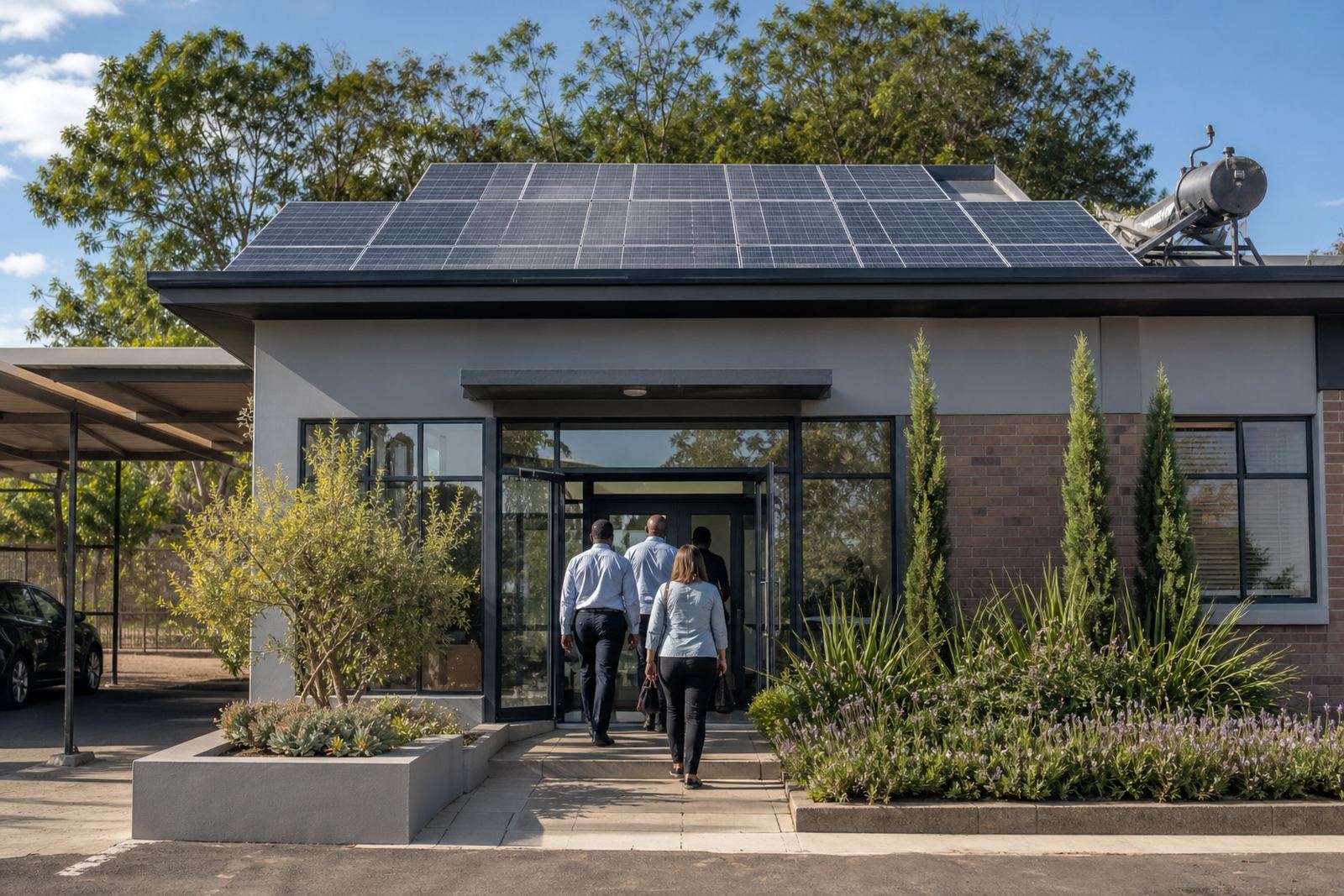
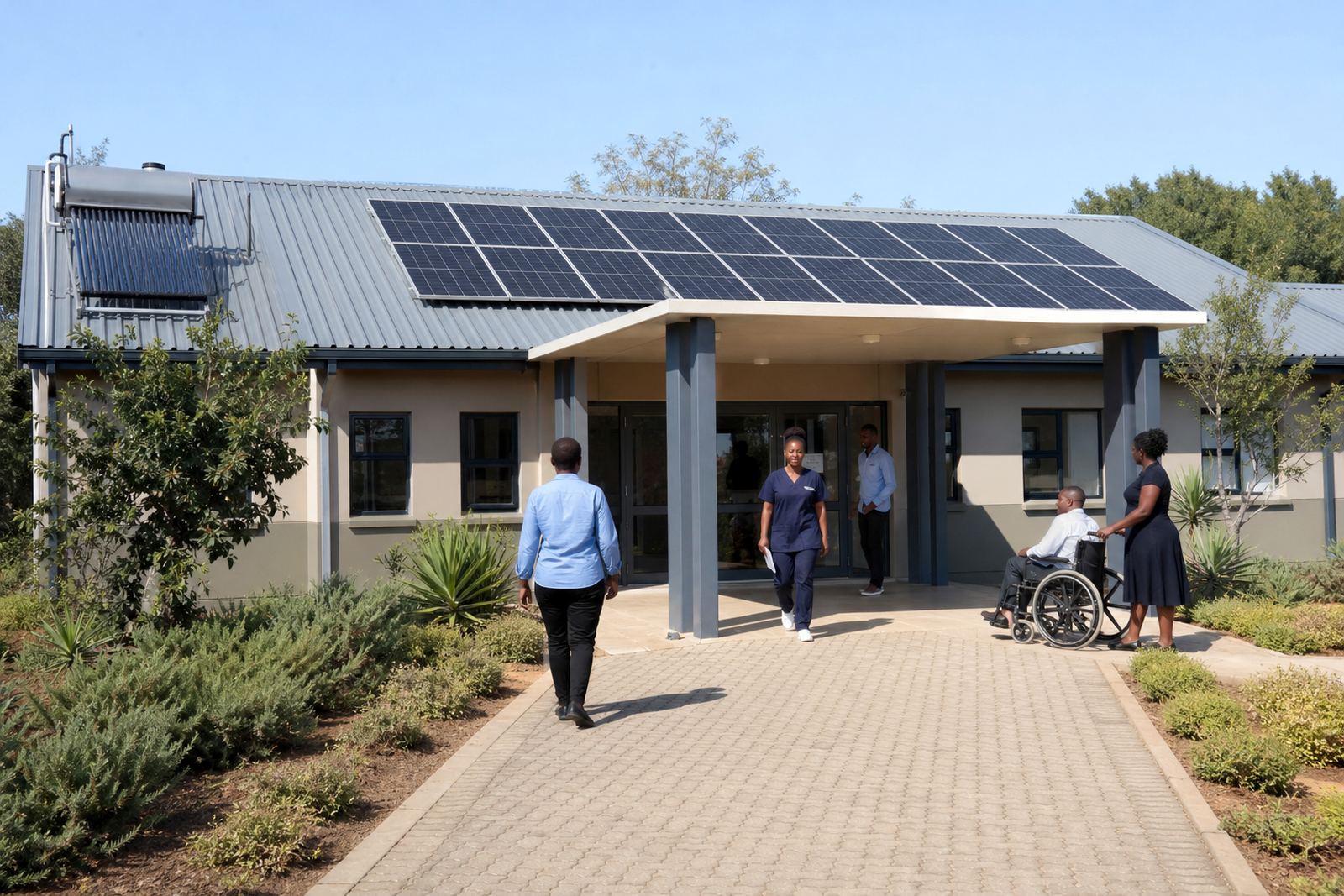
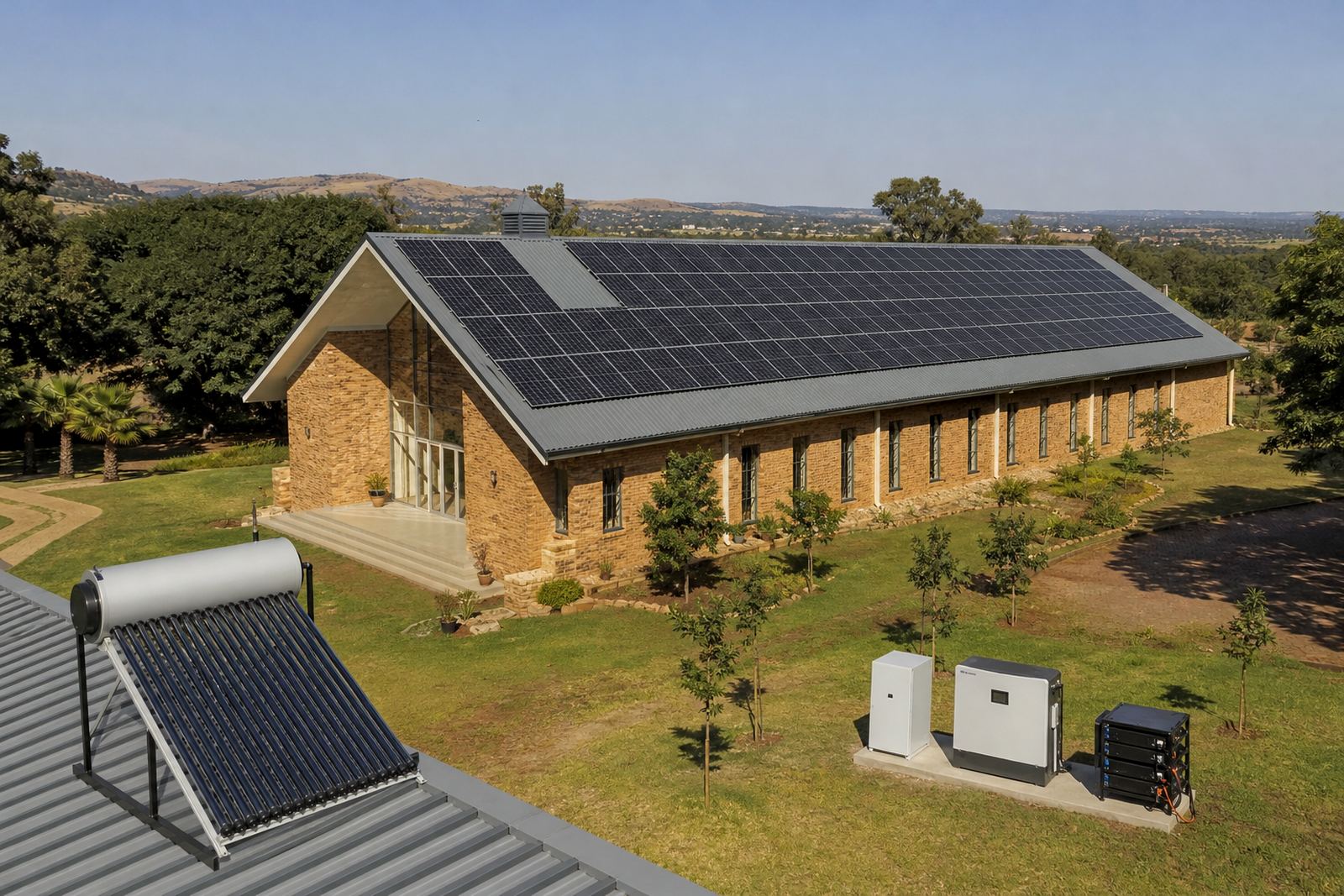
Most church installations use a practical mix of solar panels, an inverter, batteries and, where needed, a solar water heater. The exact setup depends on whether the goal is to cover lights and sound for services, keep office equipment running, or support a kitchen, nursery or wash area. For small to medium churches, it is common to plan for a daylight-heavy system with battery support for evening use and outages.
- Solar panels sized for roof space, roof pitch and shade from trees, towers or nearby buildings
- Inverter matched to the main loads such as lighting, sound, computers and selected plug points
- Batteries for evening services, meetings and load-shedding cover
- Solar water heater for kitchens, ablution blocks or staff areas where hot water is used often
- Protection equipment and proper cabling for safe electrical integration
Church roofs can be tricky because of high ceilings, older trusses or mixed roof sheets. In Pretoria east, central areas and older suburbs, we often see roof layouts that need careful spacing and access planning so the array can be maintained safely later on.
Layout Advice for Roofs, Halls and Courtyards
Good layout is just as important as the equipment itself. Panels should be placed where they get clear sun for most of the day, but also where maintenance is practical. If the church has multiple roof faces, we look at which side gets the best production during the main service and meeting times. For larger complexes, it may make sense to separate the hall, office block and kitchen into different circuits or phases.
We also advise on where the inverter and batteries should be kept. A cool, dry and secure room is best, especially in coastal areas like Durban or Cape Town where humidity can affect equipment if it is poorly protected. In Gauteng, dust and heat around roof spaces can become a problem too, so ventilation and tidy cable runs matter. If the church has a caretaker or facilities team, they should know how to check basic indicators and who to call when a fault appears.
- Keep batteries in a sheltered room, not in direct sun or a damp storeroom
- Allow safe access for maintenance, cleaning and inspection
- Separate essential loads from non-essential loads where possible
- Plan for future growth if the church expects more events or added rooms
Common Mistakes Churches Make When Going Solar
One of the most common mistakes is choosing a system based on Sunday attendance only. A church may be quiet for part of the week, then suddenly draw more power during choir practice, funerals, weddings or holiday programmes. Another mistake is assuming every appliance must stay on during an outage. If the design is not clear, the battery bank can be drained too quickly and the whole setup becomes frustrating.
It is also easy to forget about water heating. Many churches have kitchens, cleaners’ sinks or ablution areas that use more hot water than expected. Where the load is split between a hall, offices and rooms used by the community, proper circuit planning makes the difference between a useful system and one that trips at the worst moment. Fault finding later becomes simpler when the installation was done neatly from the start.
For small businesses or church-run projects in Bloemfontein, Midrand or Johannesburg, budget pressure can lead to undersized equipment. That is a false economy. It is usually better to install a practical system that covers the main loads well, then expand later if the church grows.
Budget Ranges for Church Solar Projects in Rand
Budget depends on roof size, how many lights and sockets must stay live, whether the church needs batteries for evening use, and whether water heating is included. A smaller church office or chapel space may need a modest system for lighting, admin equipment and a few plug points. A larger congregation with a hall, stage sound, kitchen and support rooms will need a bigger design and a more careful battery plan.
As a general guide, smaller church projects can start from around R80,000 to R180,000, depending on the loads and roof conditions. Mid-sized systems for halls and offices often sit in the range of R180,000 to R450,000. Larger church complexes with stronger backup needs, more panels and more battery capacity can go above that. A solar water heater is usually priced separately depending on the hot water demand and the pipe layout. We do not guess at pricing on the phone, because a proper assessment gives a more useful answer.
In places like Centurion and Pretoria, some churches also ask for phased work so the installation can be spread across budget cycles. That is often sensible, as long as the first phase is designed with the next phase in mind.
Practical Solar Installations for Churches
Church leaders often want clear answers, tidy work and a setup that does not interrupt ministry. Our team is used to working around service times, meetings and public access areas. Vuyo Phasha leads the business from our base in Centurion, Pretoria, with support from Naledi Kgosi, Sarel Delport, Palesa Mabena, Mothusi Mphahlele, Faatimah Latief and Unathi Tau. That mix helps with planning, installation, support callouts and solar water heating work across Gauteng and other parts of South Africa.
We handle site assessments, system design, panel installation, inverter installation, battery installation, water heater installation, electrical integration, system commissioning, solar maintenance, fault finding and panel cleaning. For churches, the value is in getting a system that can cope with the real use of the building, not just the nameplate size. If you are planning a new hall, upgrading an older building or trying to reduce outages during weekly programmes, a structured solar plan is the sensible starting point.
Keeping Church Operations Running Through Outages
When a power cut happens during a sermon, choir rehearsal or community meeting, the effect is immediate. Sound equipment drops out, lights dim and admin work stops. A well-planned solar system keeps the essentials live and helps the building stay usable throughout the week. For churches in Pretoria, Johannesburg, Durban, Cape Town and Bloemfontein, that reliability matters just as much as the initial install.
Support also matters after the handover. Panels need cleaning from time to time, batteries should be checked, and any fault should be traced quickly before it affects the next event. Churches that keep up with maintenance tend to get better day-to-day use out of the system and fewer surprises when the schedule is full.