Power for the workday, not just the peak sun hours
A small office usually has a simple but sensitive load profile. Lighting, a few computers, printers, routers, a switch for the network, a security camera system and maybe a small server or point of sale unit all need steady power through the day. When load-shedding hits or voltage dips start, even a short interruption can cost time and create unnecessary stress for staff and clients.
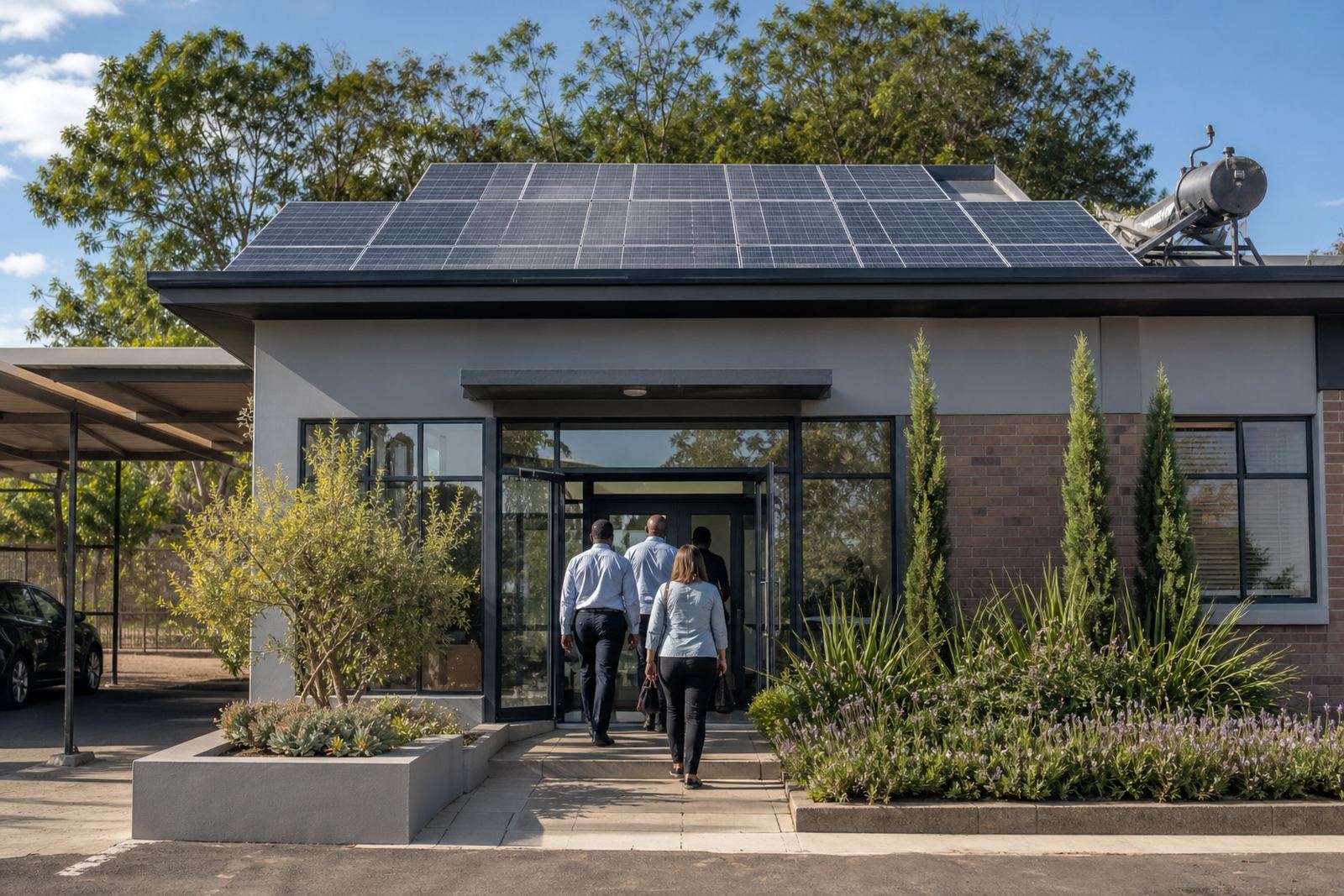
For that reason, office solar is planned around what must stay on first. We start with a site assessment, then look at the number of workstations, business hours, roof space, parking area or yard space for mounting, and the condition of the existing electrical board. In Pretoria, Centurion and Midrand, many offices have mixed roof types and limited space, so the layout needs careful planning from the start.
We also consider local conditions. Durban and other coastal areas need attention to humidity and corrosion risk. Cape Town can have strong winds, so fixing methods and module placement matter. In Bloemfontein and Gauteng, heat build-up and afternoon demand are common issues. A practical system should suit the building, the way people work, and the local climate.
Typical equipment for a smaller workplace
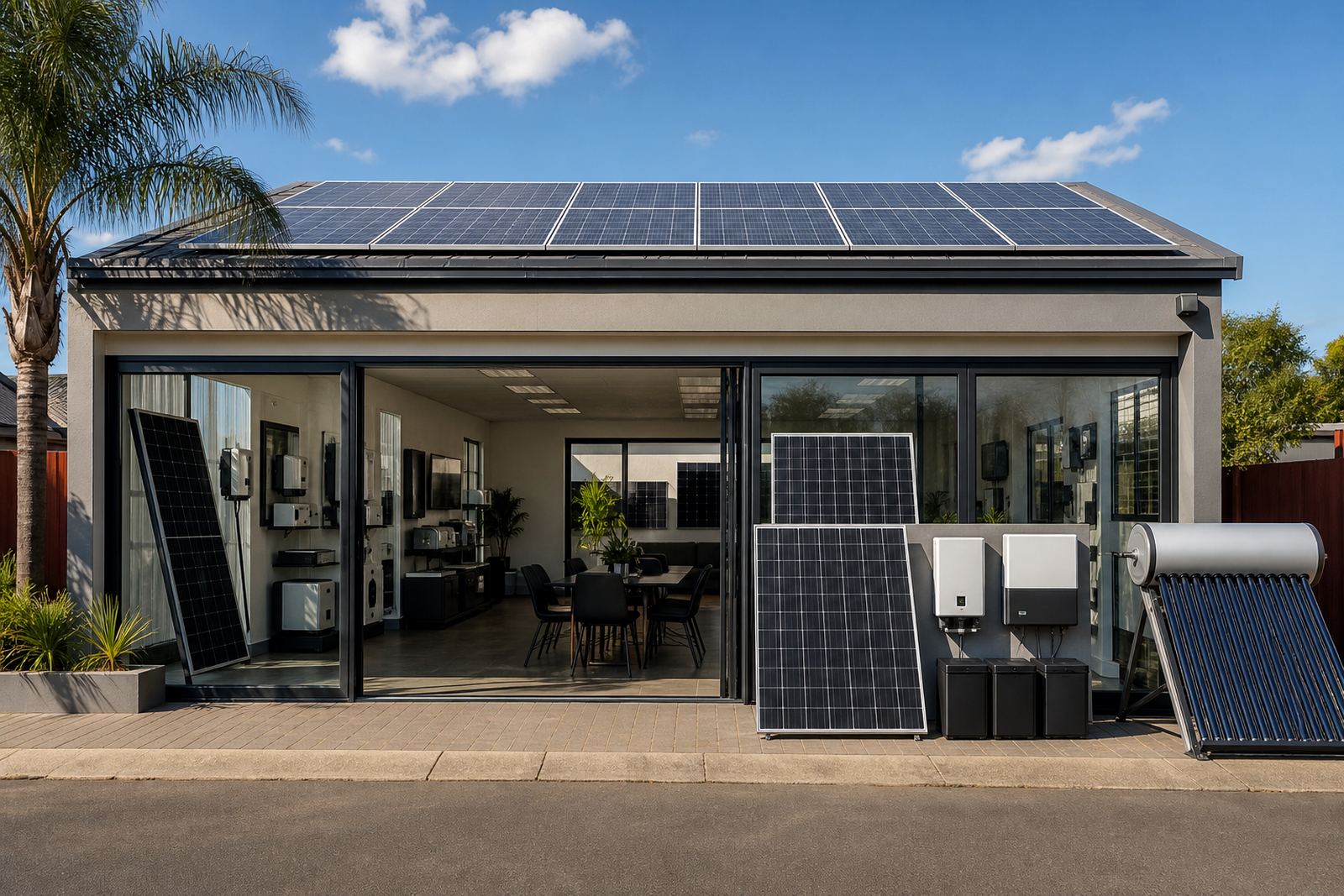
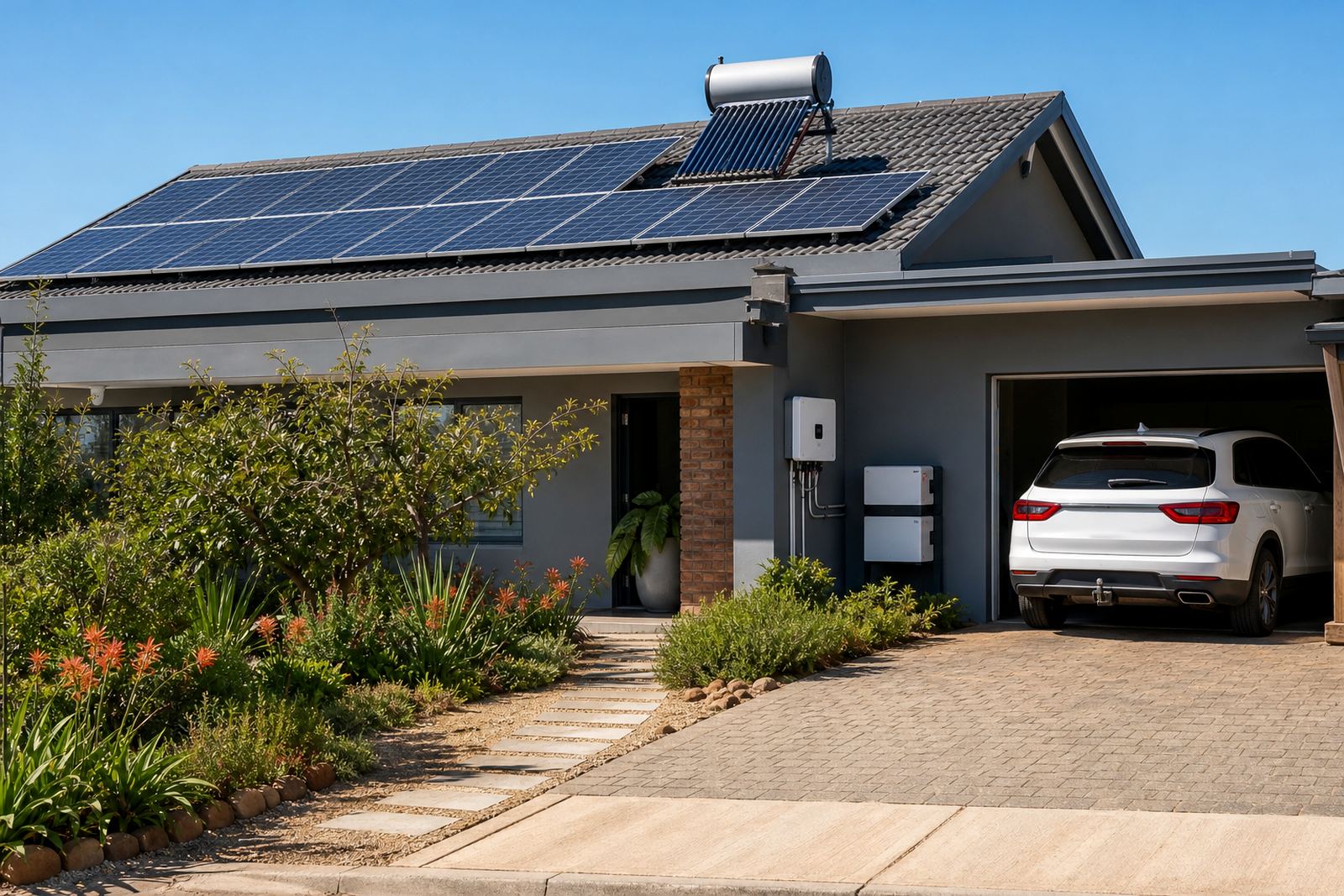
Most small offices do not need a complicated setup. The usual arrangement is a group of solar panels feeding an inverter, with batteries added when the office needs backup during outages or after hours. Where hot water is used in a staff kitchen or washroom, a solar water heater can take some pressure off the electrical system as well.
We size systems to match actual use, not guesswork. That means looking at the equipment list, the number of hours the office stays open, and whether the business needs backup for half a day or only for short interruptions. The wrong battery size can be just as troublesome as too little generation. A battery bank that is too small drains quickly, while an oversized one can push up the budget without solving the real problem.
- LED lighting for rooms, corridors and reception
- Benchtop computers, laptops and monitors
- Routers, fibre ONT units and network switches
- Printers, scanners and small copiers
- Security cameras and access control
- Small kitchen loads such as a kettle, microwave or fridge
Electrical work is handled by qualified installers, and every connection is planned so the office board, inverter and backup circuits work safely together.
How we plan the layout around your building
A good solar layout is not only about roof size. It is also about shade from nearby buildings, trees, air conditioners, parapet walls and water tanks. In office parks and mixed-use buildings, one shaded section can reduce the output of a whole string if the design is not thought through properly. That is why the site assessment matters before any installation begins.
For small offices, we often recommend separating essential circuits from non-essential ones. That might mean keeping lighting, computers and internet on backup, while heavier items such as air conditioning, geysers or large printers stay off the backup side. This keeps the battery reserve for work that really matters. If the office has a boardroom that is used occasionally, we can plan that load separately too.
We also look at future growth. A business may have six staff today and ten next year. It makes sense to plan cable routes, board space and inverter capacity with a little room to move. Not every office needs the biggest setup on day one, but the design should allow for a sensible upgrade later.
- Keep the main office loads on dedicated backup circuits
- Place inverter and batteries in a cool, dry indoor area where possible
- Allow for neat cable runs and clear maintenance access
- Check roof strength and waterproofing before mounting panels
Common mistakes that cost office time and money
One of the most common mistakes is treating office power like a household system. Small businesses often need more stable uptime than a home, even if the total load looks similar on paper. Routers, switches and computers can be sensitive to power interruptions, so the system must be designed with quality changeover and proper protection.
Another mistake is underestimating the start-up surge of certain equipment. Even a small printer or fridge can create a brief spike. If the inverter or wiring is not sized correctly, the office may trip at the wrong time. People also forget about future staff changes, and then the system becomes too tight within a year. In some cases the battery is placed in a hot storeroom or near direct sun which shortens its useful life and makes maintenance harder.
We also see offices leave the electrical integration to chance. That is risky. Proper commissioning, clear labelling and fault finding at the start helps avoid nuisance trips later. If a client needs support callouts, maintenance or panel cleaning, the system should already be set up in a way that allows easy access and safe servicing.
Budget ranges for small office solar in Rand
Budget depends on the size of the office, the amount of backup needed and whether the installation includes batteries or hot water equipment. A smaller office with lights, computers and internet only may need a modest package, while a business that wants longer backup time or a solar water heater will need a larger budget. We do not give fixed savings claims because every building and usage pattern is different.
As a guide, small office solar projects in South Africa often fall into these broad ranges:
- Basic daytime support for lighting and internet: from about R35 000 to R75 000
- Office backup with inverter and batteries: from about R75 000 to R180 000
- Larger small office setups with more circuits and stronger backup: from about R180 000 to R350 000
- Solar water heater installation for staff hot water use: from about R12 000 to R35 000 depending on size and layout
The final figure depends on roof access, cable routes, board upgrades and the quality of existing electrical work. A careful design from the beginning usually costs less than fixing an unsuitable setup later.
Support for Pretoria, Gauteng and beyond
We are based in Centurion, Pretoria and work with small offices across Pretoria, Johannesburg, Midrand, Durban, Cape Town and Bloemfontein. The process is straightforward: enquiry, site assessment, system design, installation, electrical integration, commissioning and aftercare. That approach suits offices that need a clear plan and minimal disruption to daily work.
Vuyo Phasha leads the business, with support from Naledi Kgosi, Sarel Delport, Palesa Mabena, Mothusi Mphahlele, Faatimah Latief and Unathi Tau. Each project benefits from practical coordination, especially when a business needs work done around office hours or during a quiet period. Some clients want support for a single room of workstations, others need a larger backup plan across a full office floor. We handle both.
If your office is ready for a better power setup, the best first step is a proper assessment. That gives you a system sized for your actual daily use, not a one-size-fits-all solution.