Home solar for daily use, not just outages
Many households start looking at solar after repeated load-shedding, but the best home setup is one that also helps with normal day to day use. That might mean keeping lights, Wi-Fi, TV, the gate motor and fridge running, plus having hot water ready when the weather turns cold or the geyser is working hard. In Pretoria and Centurion, many homes also want a system that can handle summer heat, afternoon storms and the steady demand of school mornings and weekends.
We work with homes of different sizes, from compact townhouses to larger family properties and cluster homes. The right package depends on how much power you use, what appliances must stay on, and whether your main goal is backup support or lower grid dependence. A common mistake is buying equipment only by panel count or battery size without checking the actual household load. That usually leads to frustration, especially when the system is expected to carry the whole house.
Our team looks at the way the home is used, where the roof space is available, and how much wall space is open for the inverter and battery equipment. Coastal humidity in Durban, dust in Gauteng and strong sun in Bloemfontein all affect planning, so the setup needs to suit the location as well as the household.
Typical equipment set for a family home
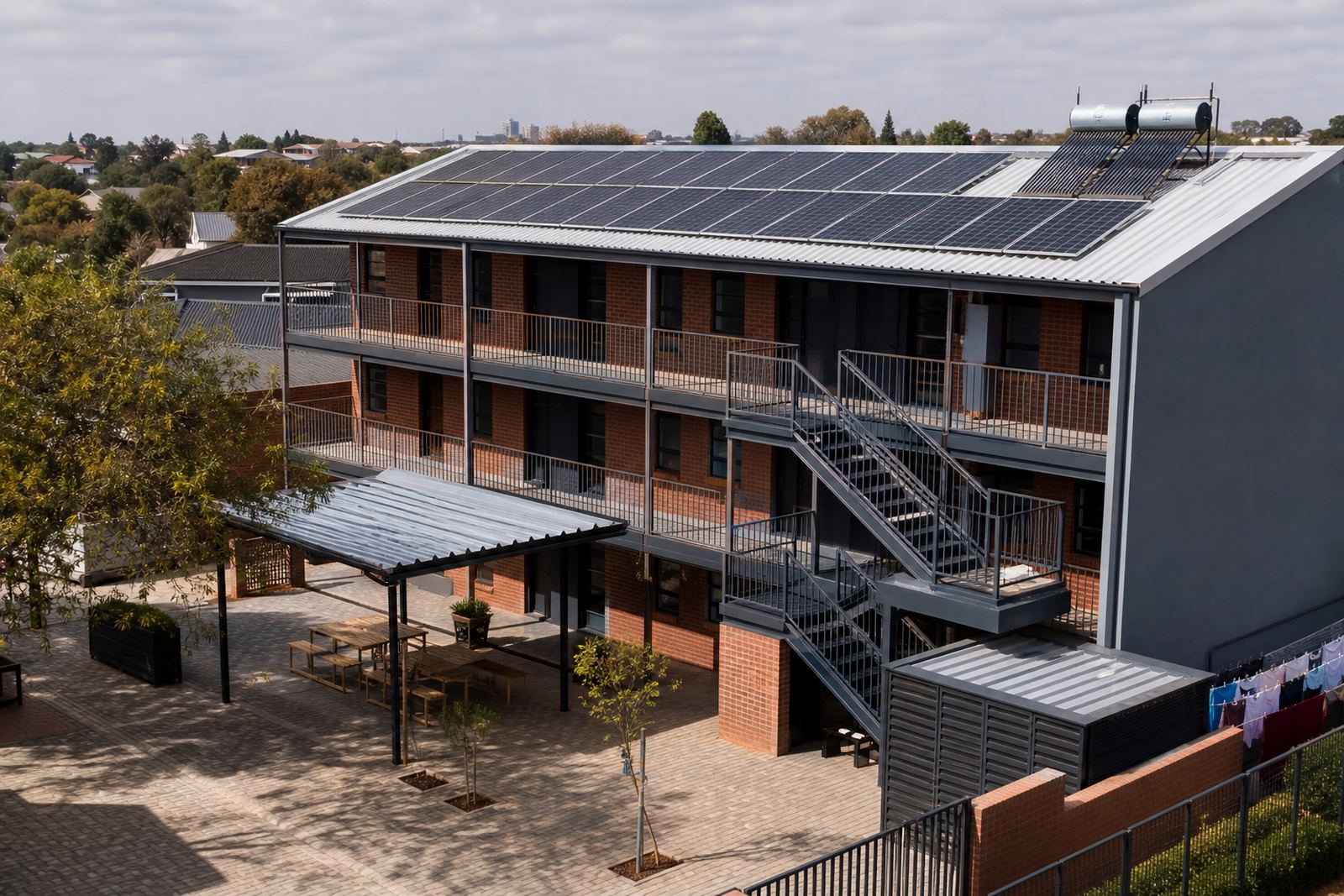
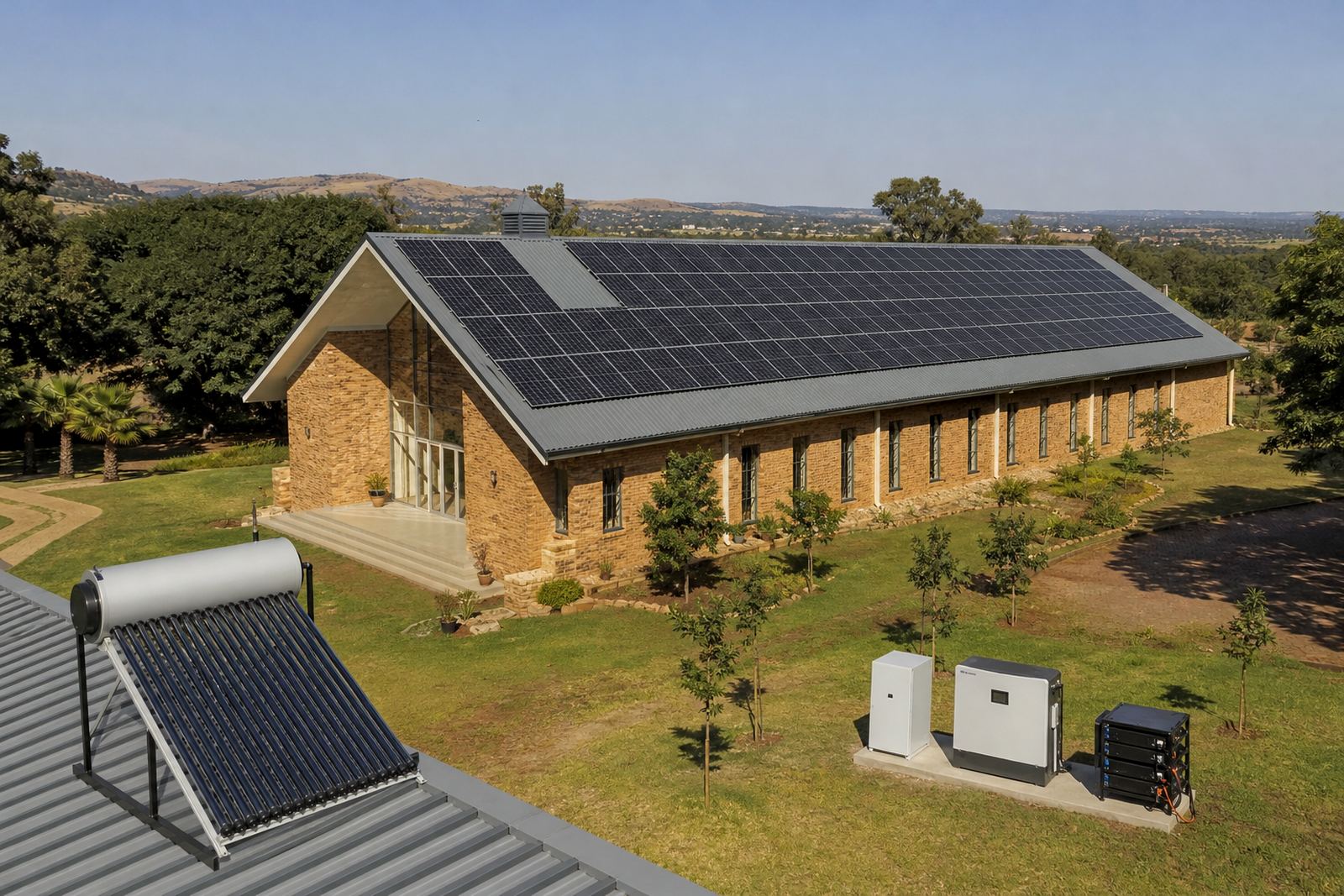
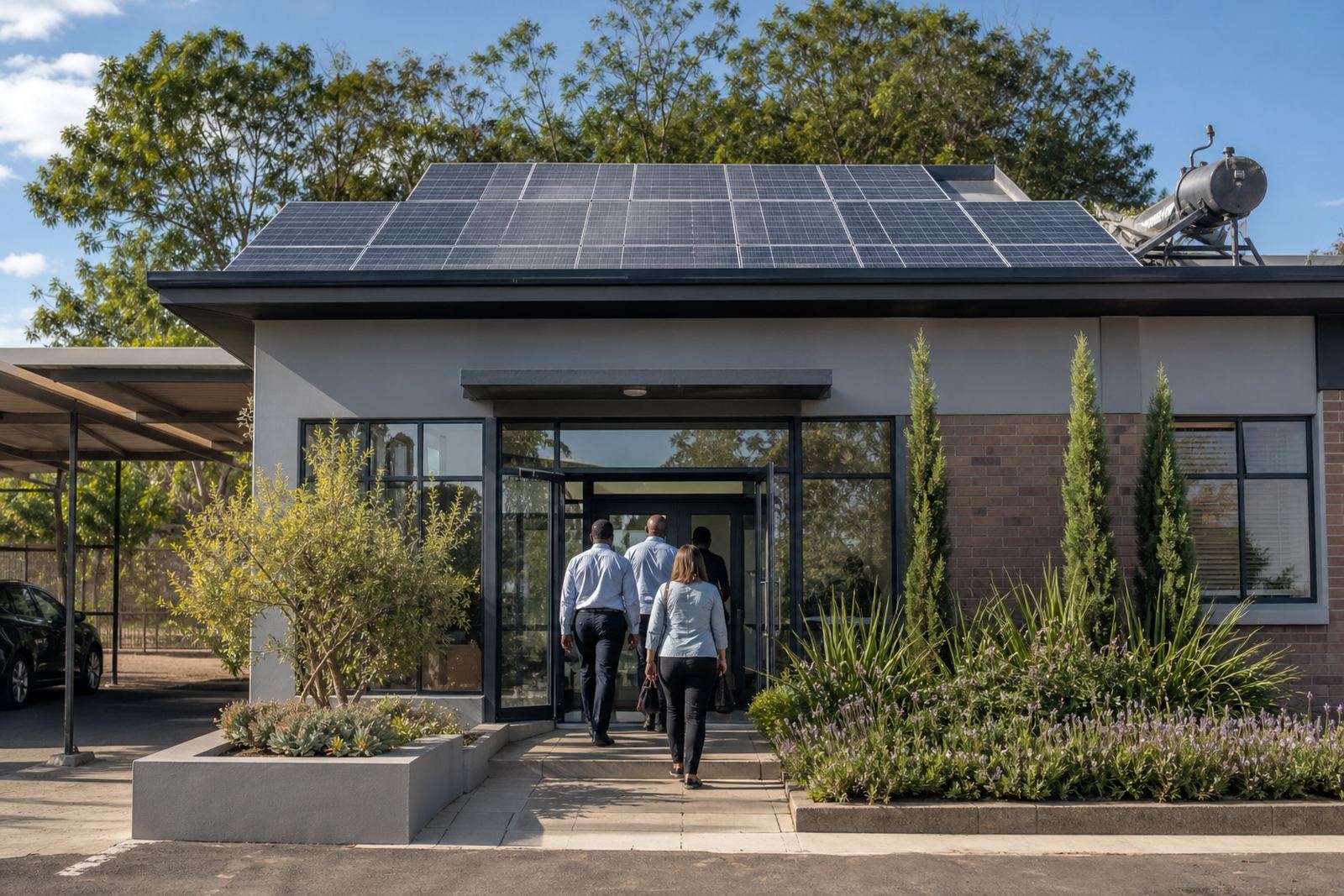
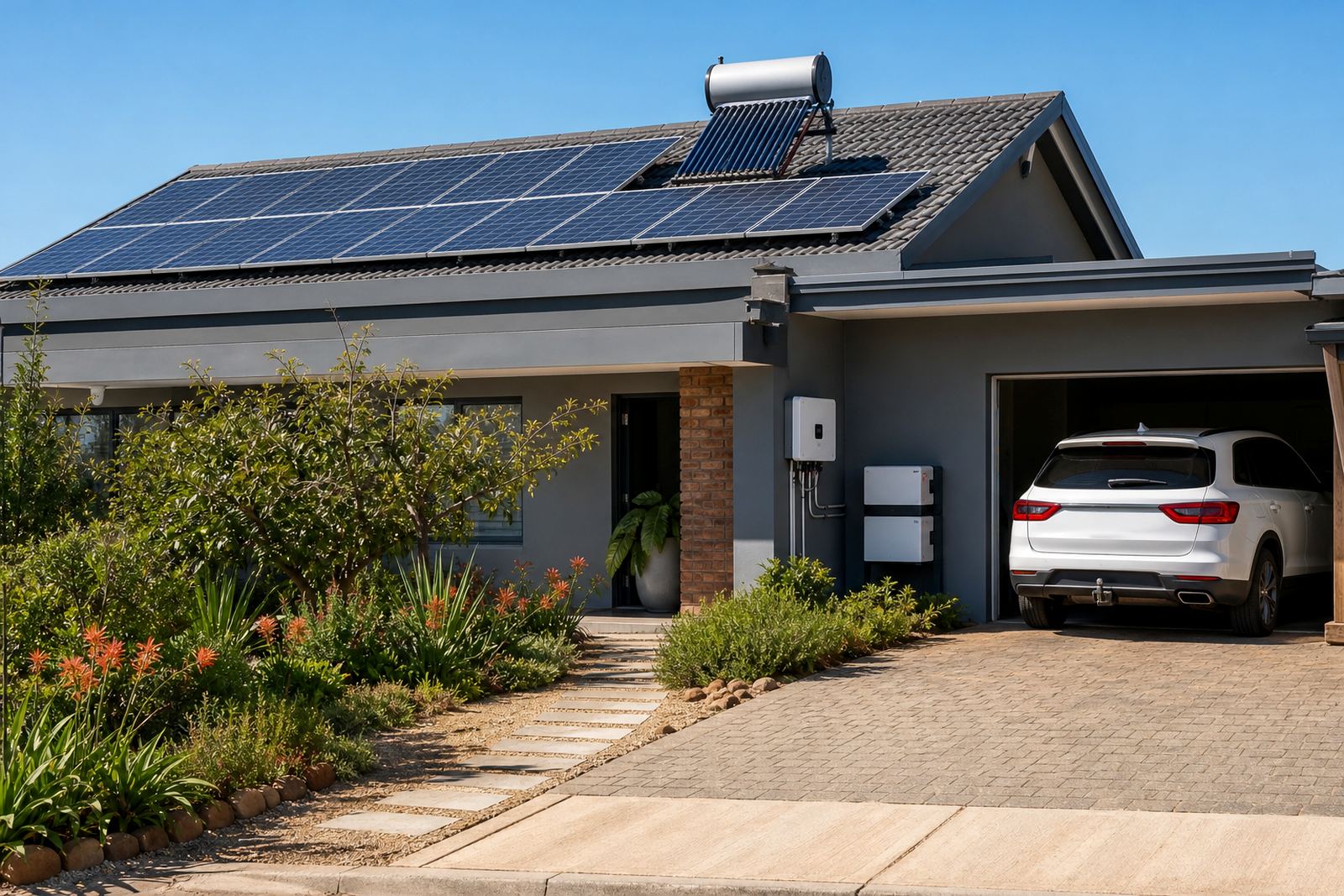
A residential solar setup can be kept simple or built in stages. The most common combination for homes is solar panels, an inverter, one or more batteries and, where needed, a solar water heating system. Panels generate power during the day, the inverter manages the flow of energy, batteries store backup power and a solar water heater assists with hot water needs so the electric geyser is not carrying the full load all the time.
For many homes the layout is straightforward: panels on the roof, inverter and batteries in a cool dry utility space, and the water heater mounted where it can get enough sun and be plumbed in properly. On double storey homes or properties with limited roof area, planning matters even more because cable runs, roof pitch and shading from trees or nearby walls can reduce performance.
- Solar panels sized to match the household daytime load and available roof area
- Inverter matched to the appliances you want to run during outages
- Battery bank for evening use and load-shedding cover
- Solar water heater for households that want lower geyser demand
- Correct isolators, protection and cabling installed by qualified installers
Planning the layout before anything goes on the roof
A good system starts with a proper site assessment. We check the roof structure, available sunlight, shading from chimneys or nearby trees, and the position of the distribution board. In older Pretoria homes, the electrical layout can be quite different from newer builds in Midrand or Johannesburg, so we plan the integration carefully before any equipment is installed.
The inverter and batteries should go somewhere with decent airflow, away from direct sun and not in a cramped passage where heat builds up. A lot of homeowners try to hide equipment in a ceiling space or outdoors under a weak cover, but that usually shortens service life and makes maintenance harder. The same goes for solar water heaters, which need correct mounting, plumbing and pressure control. If the roof is too shaded, the geyser location or panel direction may need to be adjusted.
We also look at future changes. A family may add a pool pump, air conditioner or extra fridge later on, so the layout should allow for some growth. That does not mean overbuying on day one, but it does mean avoiding a box system that leaves no room for a second battery or extra panels later.
Common mistakes homeowners make
The biggest mistakes are usually simple ones. People often focus only on the cheapest quote, then end up with equipment that is too small, poorly positioned or hard to maintain. Others choose a battery setup without planning for the appliances they actually want to use, which means the system works for lights but not for the kettle or microwave when needed.
Another issue is ignoring water heating. A home can use a lot of electricity just on the geyser, so installing panels and batteries without looking at the hot water side can leave a large part of the bill untouched. A solar water heater can make a real difference for families that use a lot of hot water, especially in winter when geysers work harder.
- Choosing equipment before doing a load review
- Mounting panels where trees or neighbouring buildings cast shade
- Putting batteries in a hot, cramped or damp spot
- Mixing household loads without proper electrical planning
- Skipping maintenance and then waiting for a fault to show up
Electrical work should always be done by qualified installers. That matters for safety, for proper isolation and for getting the system commissioned correctly. It also helps when you need future fault finding or a support callout.
What homes in Pretoria and beyond usually budget for
Every home is different, so budgets vary with roof space, load size, battery storage and whether the property includes a solar water heater. As a broad guide, smaller backup-focused home systems can start from around R45 000 to R85 000, while more complete packages for heavier household use often sit between R90 000 and R180 000 or more. Larger homes, higher demand and added hot water support can push the total higher.
It is better to budget in stages if needed. A family might begin with panels, inverter and battery backup for essential loads, then add a water heating solution or extra storage later. That approach can work well for homes in Gauteng where electricity use changes through the year and families want to keep the monthly spend under control without overcommitting on the first installation.
We help with system design so the budget matches the actual home. That includes balancing performance, roof space and the equipment that gives the most value first. It also helps avoid spending money on a large battery bank when the problem is really poor daytime generation or a hot water system that still relies too heavily on electricity.
Support after installation for long term use
A home solar system should be easy to live with. After installation, we support households with commissioning, maintenance, panel cleaning, fault finding and callouts when something is not behaving as it should. Dust, pollen and winter grime can affect panel output, especially in busy urban areas and near main roads. In coastal towns, salt air can also build up on exposed surfaces, so regular checks are worth it.
For many families, the best outcome is not just backup during an outage but a home that feels organised and predictable. Lights stay on, the battery takes over when needed and hot water assistance keeps the geyser from doing all the work. That is the practical value of a properly planned solar system, not just a box of equipment on the roof. If you are comparing options, ask for a layout that suits your home today and still leaves room for tomorrow.
Clients in Pretoria, Centurion, Johannesburg, Midrand, Durban, Cape Town and Bloemfontein can reach us through the enquiry form on our contact page to arrange an assessment.