
What student housing needs from a solar system
Accommodation properties in Pretoria, Johannesburg and other university towns are usually busy from early morning to late at night. Students cook at different times, charge laptops and phones, use lighting for long hours, and rely on hot water every day. That means the solar plan needs to support steady demand rather than just the neat daytime load you might see in a standard house.
For these properties, we normally look at a combination of solar panels, an inverter, batteries and, where hot water use is high, a solar water heater. The aim is to keep common areas working during load-shedding and reduce pressure on the municipal supply. In a block with shared bathrooms or several units on one metre, the first step is to understand which loads matter most and which ones can be managed separately.
Our team works from Centurion, Pretoria and assists accommodation owners across Gauteng and further afield including Durban, Cape Town and Bloemfontein. The right setup depends on roof space, wiring condition, how many rooms are occupied, and whether the building has a single feed or multiple supply points.
Typical equipment set for shared accommodation
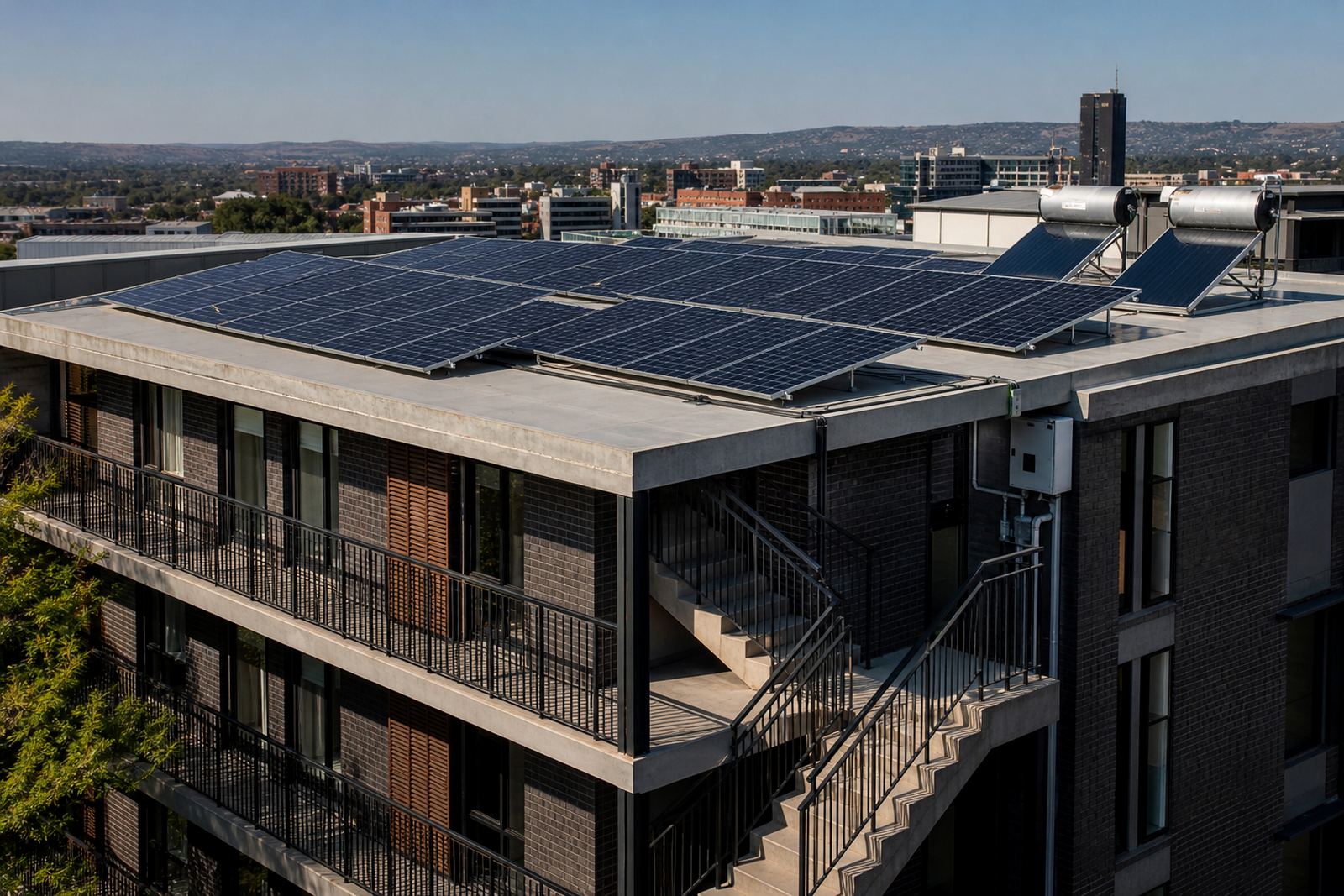
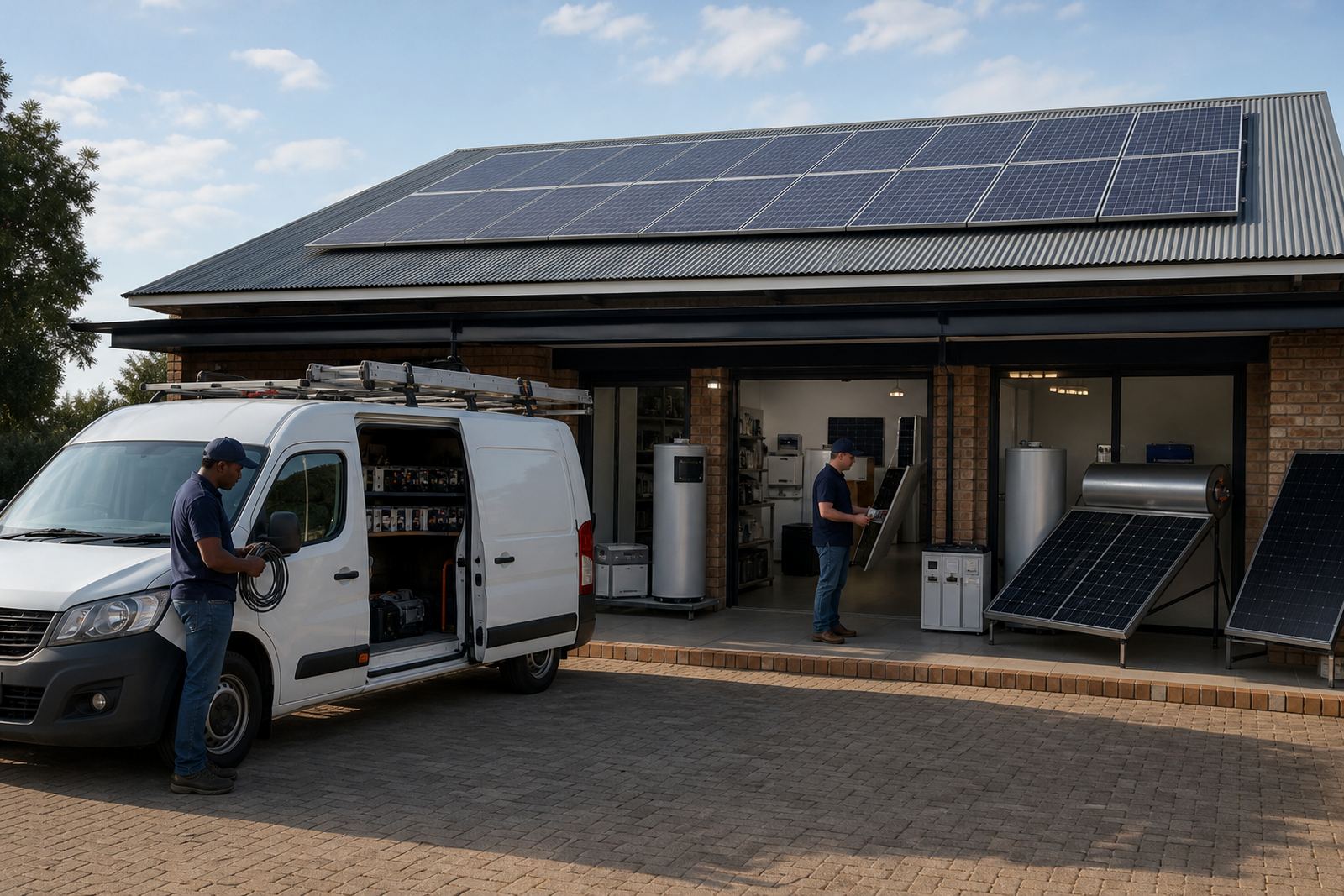
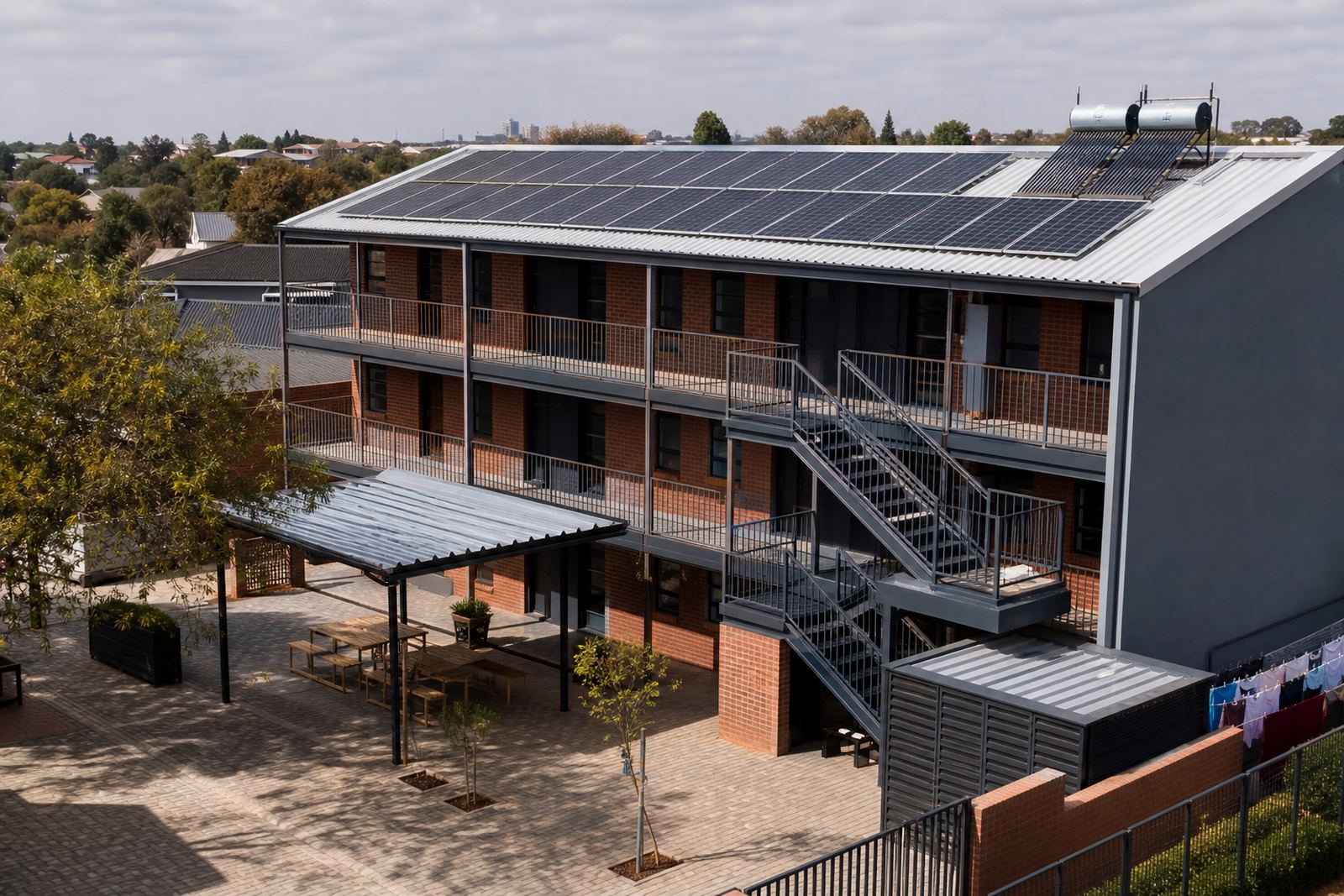
Most student housing setups need more than panels alone. Panels generate power during the day, but an inverter is what makes that power useful for the building. Batteries help keep essentials running when the grid goes down, while electrical integration ties the system into the property safely. For some sites, a solar water heater is the best way to reduce geyser use and keep hot water available for shared showers.
- Solar panels sized to suit the roof area and daytime use
- Inverter capacity matched to lighting, fridges, routers and circulation loads
- Batteries for backup during outages and evening demand
- Solar water heater for high hot water use in communal bathrooms
- Electrical integration and system commissioning by qualified installers
We also advise on fault finding and maintenance. In student accommodation, equipment gets used hard and small problems can become a daily complaint very quickly. Loose connections, tripping circuits and dusty panels are common issues if the system is not checked properly. On coastal sites like Durban, humidity can also affect fittings so the installation details matter.
How layout and planning affect the result
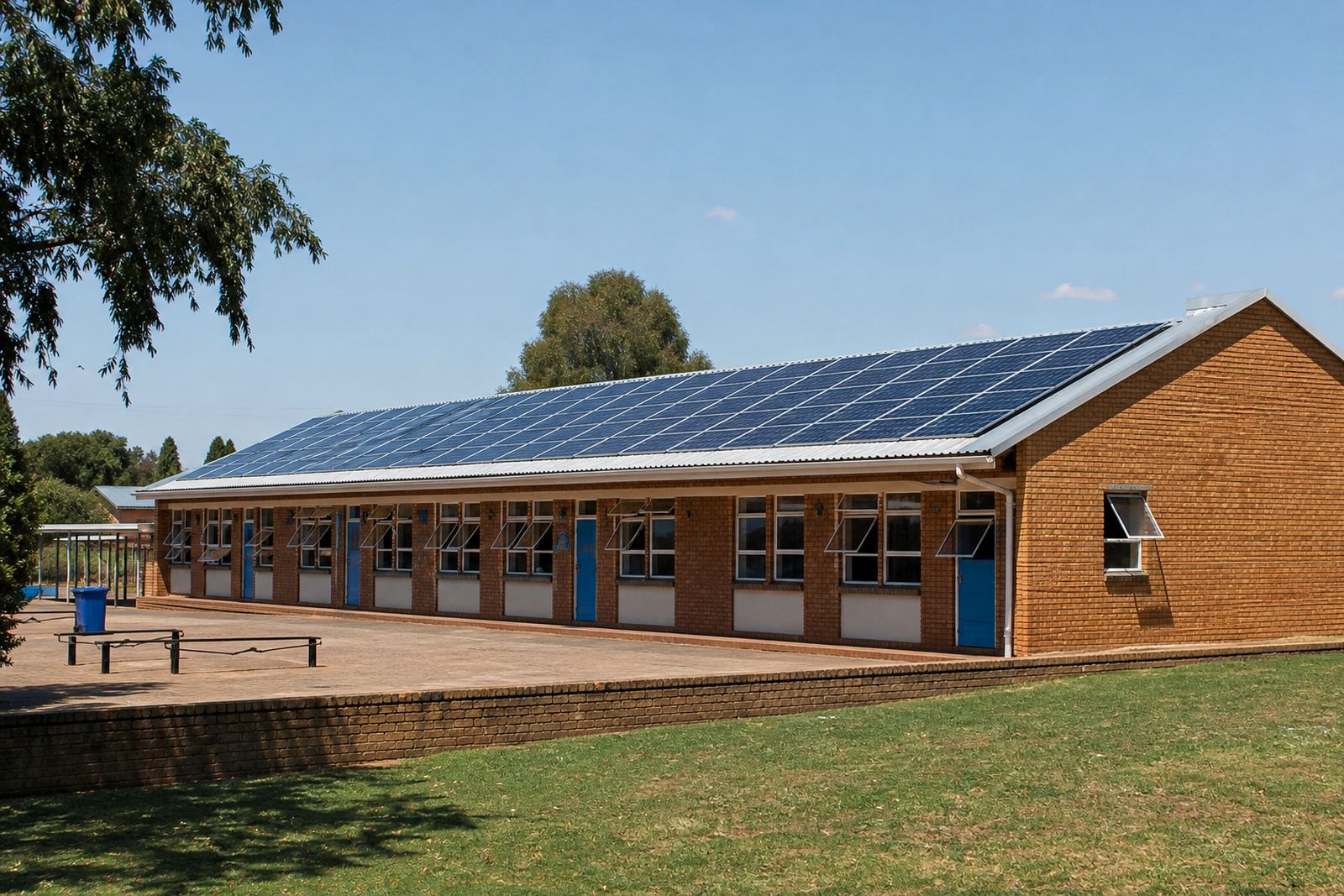
A good student housing solar layout starts with the roof, not the shopping list. We look at shade from trees, water tanks, neighbouring buildings and parapets, then check whether the roof can carry the equipment safely. On older properties in Pretoria and Johannesburg, roof condition and cable runs can change the whole design. If the building has several levels, the position of the inverter and batteries is just as important as the panels on top.
It helps to divide the property into priorities. For example, security lights, internet equipment, common area lighting and selected fridges may come before non-essential appliance loads. In some cases the geyser load is the biggest issue, which is why a solar water heating solution can make more sense than trying to back up every single element with batteries.
- Map the peak times for cooking, showering and study hours
- Check whether the geyser or hot water system is the main load
- Confirm the number of rooms, shared kitchens and common spaces
- Plan for future occupancy changes, not only the current intake
We often see property owners underestimate how quickly a student house can fill up. A system that seems fine for 10 rooms may feel stretched when the house runs at full occupancy and every socket is in use. Good planning leaves a little headroom.
Common mistakes on student housing projects
The biggest mistake is treating student housing like a single-family home. Accommodation properties have more traffic, more switching on and off, and more people using shared services at once. If the system is sized only for a light evening load, it can struggle when the study group returns, the kettle is on and the batteries are already low.
Another issue is poor electrical integration. Solar equipment should be installed by qualified installers who understand the property layout and the existing distribution board. If the wiring is rushed or the changeover points are unclear, tenants may lose power to the wrong circuits, or the system may trip when demand rises. That is avoidable with proper commissioning and support callouts when needed.
Owners also forget maintenance. Dust on panels, blocked gutters, and neglected battery areas can reduce performance. In Bloemfontein, dry conditions and dust build-up can make panel cleaning more important than people expect. In coastal areas, corrosion checks matter. A student property needs regular attention because small failures become complaints from multiple tenants at once.
Budget ranges for Pretoria and other cities
Budgets vary a lot because student housing comes in different sizes. A small house with shared rooms will need a very different setup from a multi-unit property with several kitchens and bathrooms. As a rough starting point, smaller systems for essential loads may begin around R85,000 to R180,000. Mid-sized accommodation properties often fall between R180,000 and R450,000, while larger shared buildings with greater hot water demand and stronger backup requirements can go well beyond that.
If the main goal is to reduce geyser use, a solar water heater may be more affordable than a full electrical backup system. If the goal is to keep lights, internet and selected appliances running through load-shedding, then battery capacity becomes more important and the budget rises. Site assessment is the best way to avoid paying for equipment that does not match the actual use pattern.
We can assist with system design, panel installation, inverter installation, battery installation, water heater installation and maintenance across Gauteng, Durban, Cape Town and Bloemfontein. The final cost depends on roof access, cable runs, the condition of the existing electrical setup and how much of the property you want to back up.
Support for busy accommodation owners
Student housing needs reliable support because a minor fault can affect several tenants at once. That is why ongoing support matters after installation. We handle solar maintenance, fault finding, panel cleaning and support callouts, along with commissioning work when the system needs to be brought online correctly after installation or repair.
Our Pretoria and Centurion base supports accommodation owners who want practical advice, not overcomplicated talk. Vuyo Phasha leads the business with a team that includes Naledi Kgosi in operations, Sarel Delport on installation, Palesa Mabena on project coordination, Mothusi Mphahlele in technical support, Faatimah Latief in customer care and Unathi Tau on solar water heating. That mix helps us keep jobs organised from the first site visit to final handover.
If you manage student housing and want a solar setup that can handle shared services, repeat occupancy and load-shedding, the first step is a proper site assessment. From there we can size the system sensibly and keep the property running with less interruption.