Why blocks of flats need a different solar plan
A block of flats is not the same as a free-standing home. The roof, metre rooms, pumps, passage lights, access gates and sometimes lifts all draw power in different ways, so the first step is to work out what belongs to the body corporate, what belongs to individual owners, and what should stay on the municipal supply. In a sectional title setting, that distinction matters for cost, maintenance and approvals.
For Pretoria, Centurion and Johannesburg properties, we often find the main pressure points are common area lighting, borehole or booster pumps, gate motors, security systems and hot water demand. In coastal areas like Durban and Cape Town, equipment choice also needs to suit humidity and salt air, while inland sites often need stronger attention to heat and dust. A proper site assessment helps avoid oversizing one part of the system while leaving the real problem untouched.
- Shared loads need to be measured separately from private unit loads.
- Roof space, shade and cable routes have to be checked before any equipment is selected.
- Municipal supply rules and body corporate approvals should be considered early.
- Electrical work must be done by qualified installers, not guessed at on site.
Typical equipment for common areas and shared services
Most blocks of flats do not need every load backed up. The best setup is usually a practical mix of solar panels, an inverter, batteries and, where hot water is part of the brief, solar water heaters. The aim is to support the services that matter most after load shedding or during high tariff periods, while keeping the system manageable for the body corporate.
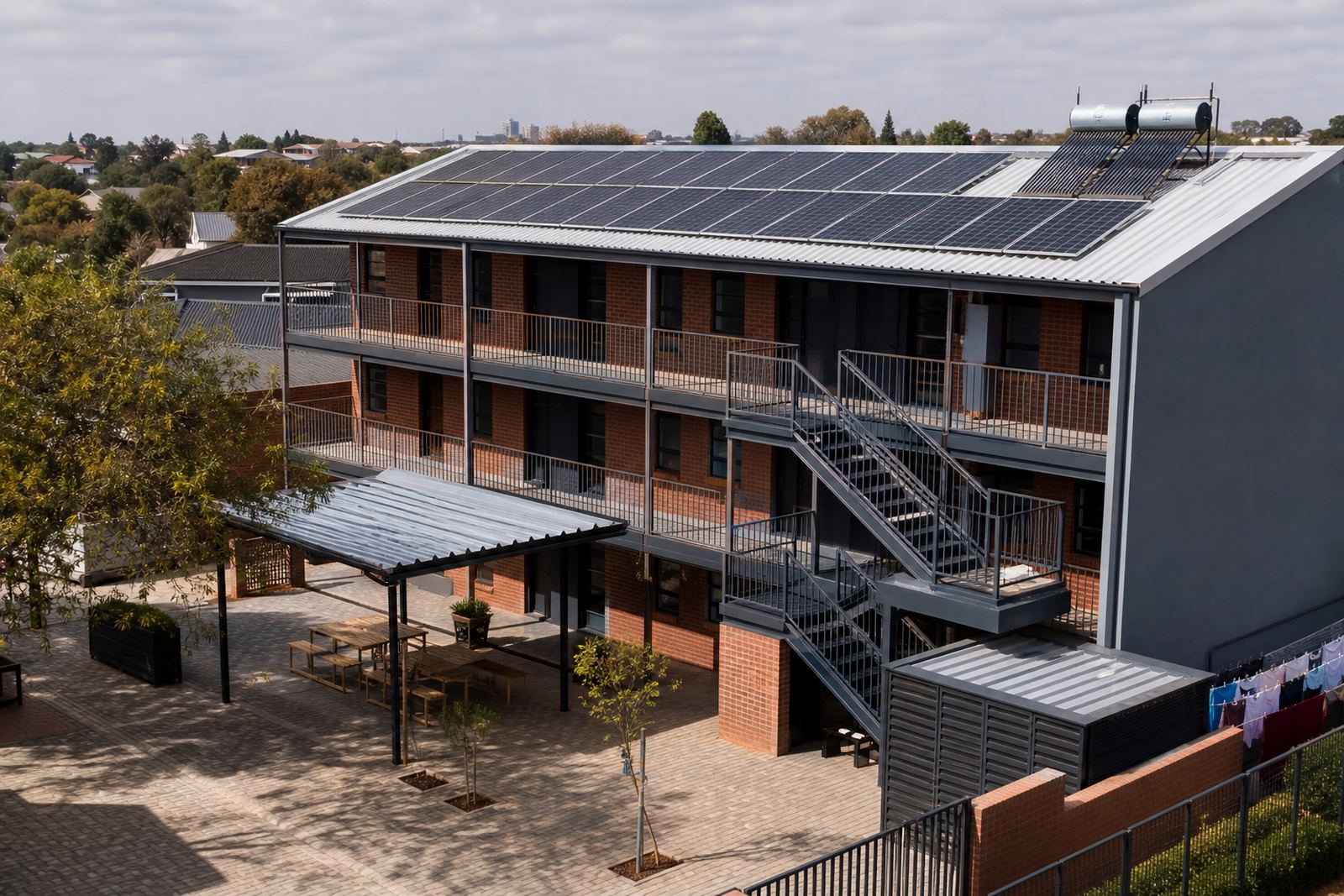
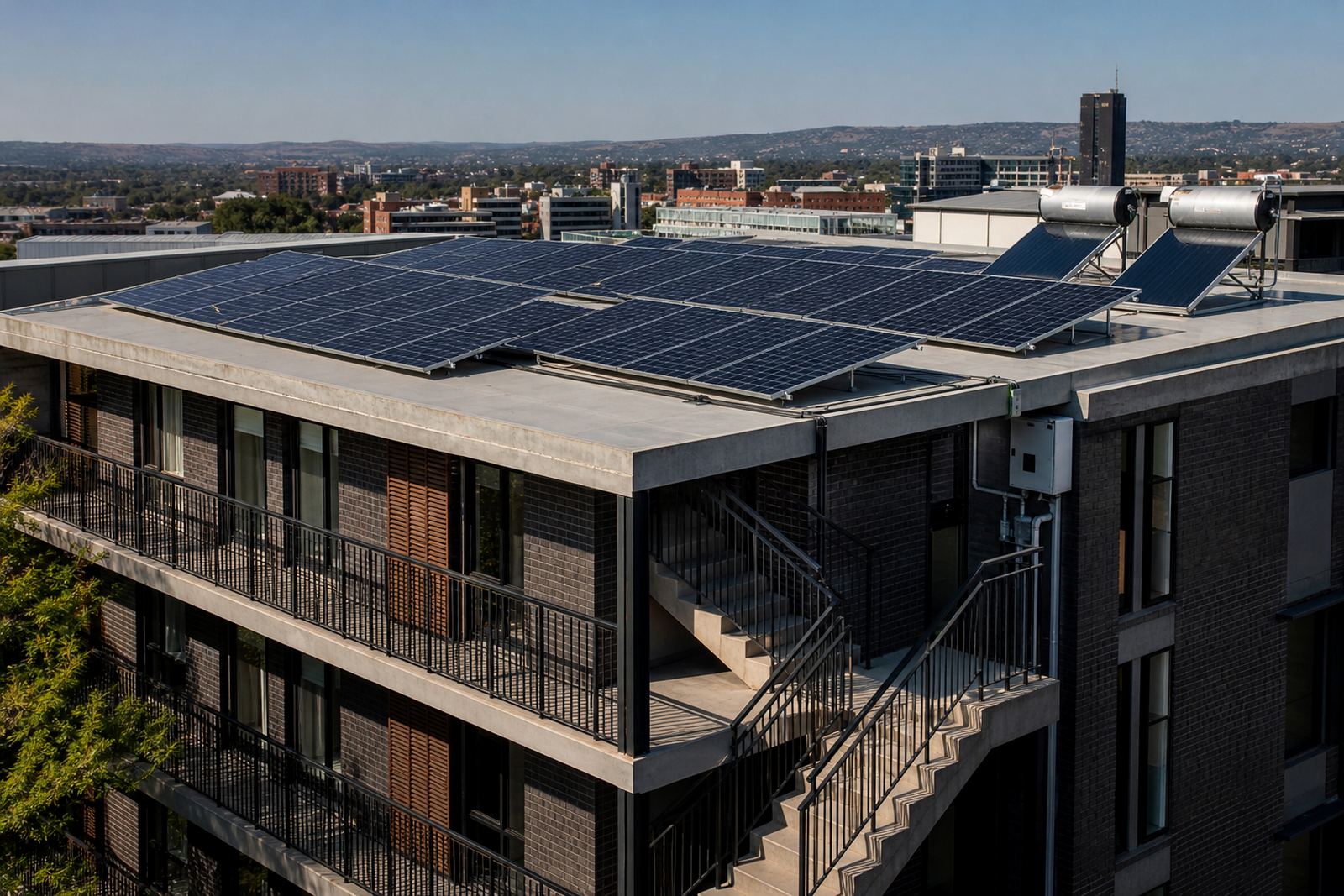
A common arrangement is to use panels on the main roof or on shaded-free sections over parking bays, feeding an inverter and battery bank that supports lights, gate motors, CCTV, routers, lift control where allowed, and selected pump circuits. For buildings with high hot water use, solar water heaters can take pressure off geysers in a controlled way. On larger blocks, hot water systems are often planned in phases so the cost and disruption stay under control.
- Solar panels for roof or canopy mounting, sized to available space.
- Inverters for converting solar power to usable AC supply.
- Batteries for evening and outage support.
- Solar water heaters for geysers, wash areas and common-use hot water points.
- Electrical integration, commissioning and fault finding for the installed system.
Layout advice for sectional title roofs and common services
Good planning starts with the roof. On flat roofs, panel rows must be spaced so one row does not shade the next row in winter. On pitched roofs, orientation and fixing points matter just as much as output. In many apartment blocks, the safest layout is a split arrangement that uses several smaller strings rather than forcing everything into one long run. That keeps maintenance simpler and reduces the impact of one fault.
Cable routing is another point people often overlook. If the inverter room is far from the roof, voltage drop and cable protection become important. So is access for cleaning and inspection. Dust, bird droppings and leaves can reduce performance over time, especially in Gauteng after dry spells. If a block has a caretaker or facilities team, we normally show them where isolators, breakers and monitoring points are located so day to day checks are straightforward.
- Keep panels clear of shade from lift towers, parapets and nearby blocks.
- Place inverters and batteries in ventilated, secure indoor spaces.
- Allow safe access for maintenance and panel cleaning.
- Separate common area supply from private unit supply where possible.
- Plan for future expansion if more loads may be added later.
Common mistakes that raise costs later
One of the biggest mistakes is treating the building like a single house and picking equipment before the load profile is known. Another is trying to cover every unit from day one. That can push the budget too high and lead to a system that is harder to manage. A better approach is to start with essential common loads and then phase in extra circuits if the body corporate approves them later.
We also see problems where panels are fitted without checking roof condition or waterproofing. Fixings must suit the roof type and the building should be inspected before mounting begins. On older blocks, the distribution boards may need upgrades before any inverter is tied in. If that part is missed, the site can end up with nuisance trips, uneven battery use or poor backup during load shedding. It is the kind of issue that sounds small until the first outage hits.
For coastal properties, corrosion protection is often skipped and then the system ages faster than expected. For inland sites, heat build-up in plant rooms can shorten battery life. These are practical details, not extras.
Budget ranges for blocks of flats in rand
Budgets vary a lot because blocks of flats differ in height, roof access, electrical condition and the number of loads that need support. A modest common-area system for lighting and gate equipment may start in the lower tens of thousands of Rand, while a fuller setup with panels, inverter capacity and batteries for more common services can move into the mid to higher ranges. If solar water heaters are added, the total depends on how many geysers or hot water points are involved.
As a rule, the right budget is the one matched to the load and the building plan, not the one based on a rough guess. We help clients in Pretoria, Johannesburg, Midrand, Durban, Cape Town, Bloemfontein and across Gauteng compare options before anything is ordered. That way the body corporate can see what is essential now, what can wait and what the long term maintenance picture looks like.
- Smaller shared-load projects: common area lighting, gates and basic backup.
- Mid-range projects: shared services plus more battery support.
- Higher-range projects: larger roof arrays, longer backup and solar water heating.
- Phased projects: start with critical loads and expand later.
How we handle shared solar projects from first visit to handover
For a block of flats, the process starts with a site assessment and a proper discussion with the managing agent, trustees or body corporate. We look at roof space, load requirements, electrical condition and access for installation. From there, the system design is drawn around the property rather than around a generic equipment list. That saves time on site and helps the building avoid changes that would cost more later.
Our team includes Vuyo Phasha as MD, with Naledi Kgosi overseeing operations, Sarel Delport on solar installation, Palesa Mabena handling project coordination, Mothusi Mphahlele leading technical support, Faatimah Latief on customer care and Unathi Tau for solar water heating. Work is based from Centurion, Pretoria and supplied and installed across South Africa. Once the system is installed, we commission it, test the key circuits and explain how the building team should use it during outages and normal operation.
If your block needs a practical shared solar plan, start with the enquiry form on our contact page and we will work from the actual building details, not assumptions.