What a retail shop usually needs during load-shedding
Most small shops do not need the same setup as a warehouse or factory. The real priority is keeping the tills on, the card machine live, fridges cold and enough lighting on for staff to work safely. In many cases, the best system starts with a careful list of the loads that must stay running and the ones that can stay off during outages.
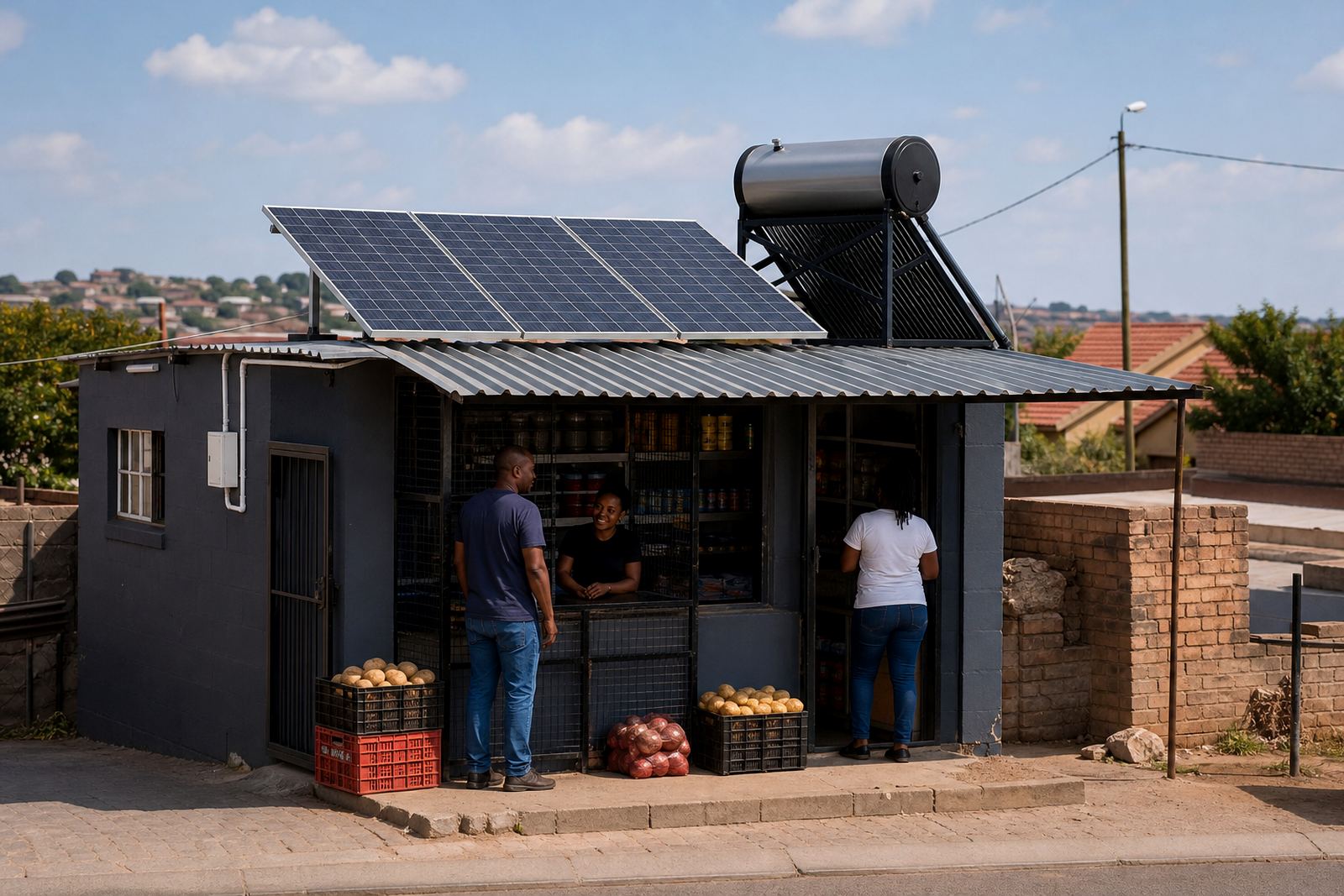
For street-facing shops, the usual equipment set includes LED lighting, point-of-sale terminals, routers, small printers, CCTV, signage lights, fridge units and sometimes a back-office computer. A compact solar system can carry the essential items first, then the rest of the shop can be added if the budget allows. That is often a better approach than oversizing from day one.
- Point-of-sale tills and card machines
- LED shop lighting and external security lights
- One or two display fridges or upright fridges
- Router, modem and CCTV recorder
- Small office equipment in the back room
Shops in busy areas such as Centurion, Midrand and Johannesburg often also need a plan for after-hours security lighting and gate access, while coastal stores in Durban and Cape Town need equipment placed with humidity in mind.
How the system is normally planned for a small shop
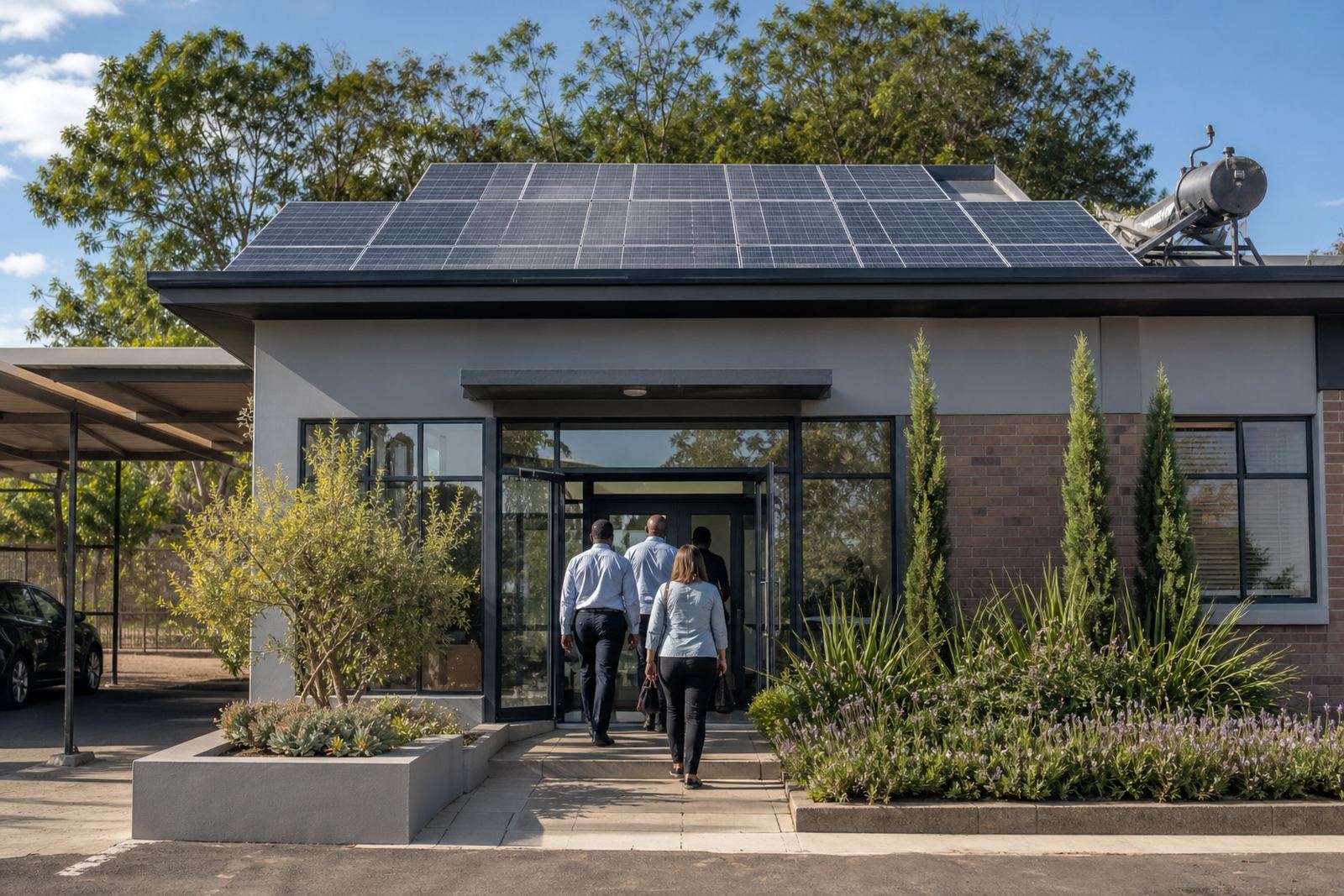
Good planning starts with the shop layout. The roof size, ceiling space, cable routes, metre position and distribution board all matter. A shop in a single front unit will be handled very differently from a spaza, pharmacy, butcher or convenience store with several cold rooms and a deep freezer bank. The aim is to match the solar panels, inverter and batteries to the actual trading pattern, not a generic package.
We look at when the shop opens, how long fridges must run, whether trading continues after dark and what happens during long outages. For some sites, panels on the roof will be enough to support daytime load and charge batteries. For others, battery storage becomes the main safeguard because the shop must keep trading after sunset. Electrical integration is done by qualified installers, and the final setup should be neat, safe and easy to maintain.
- Measure essential loads before selecting equipment
- Check roof condition, shading and mounting space
- Allow for future fridge or lighting expansion
- Keep critical circuits separate from non-essential ones
- Plan for clean cable runs and safe isolation points
If the premises are in a shopping strip or a municipal area with specific wiring rules, the electrical layout must be checked before installation starts. That avoids delays and rework later.
Solar panels, inverters, batteries and water heating in retail spaces
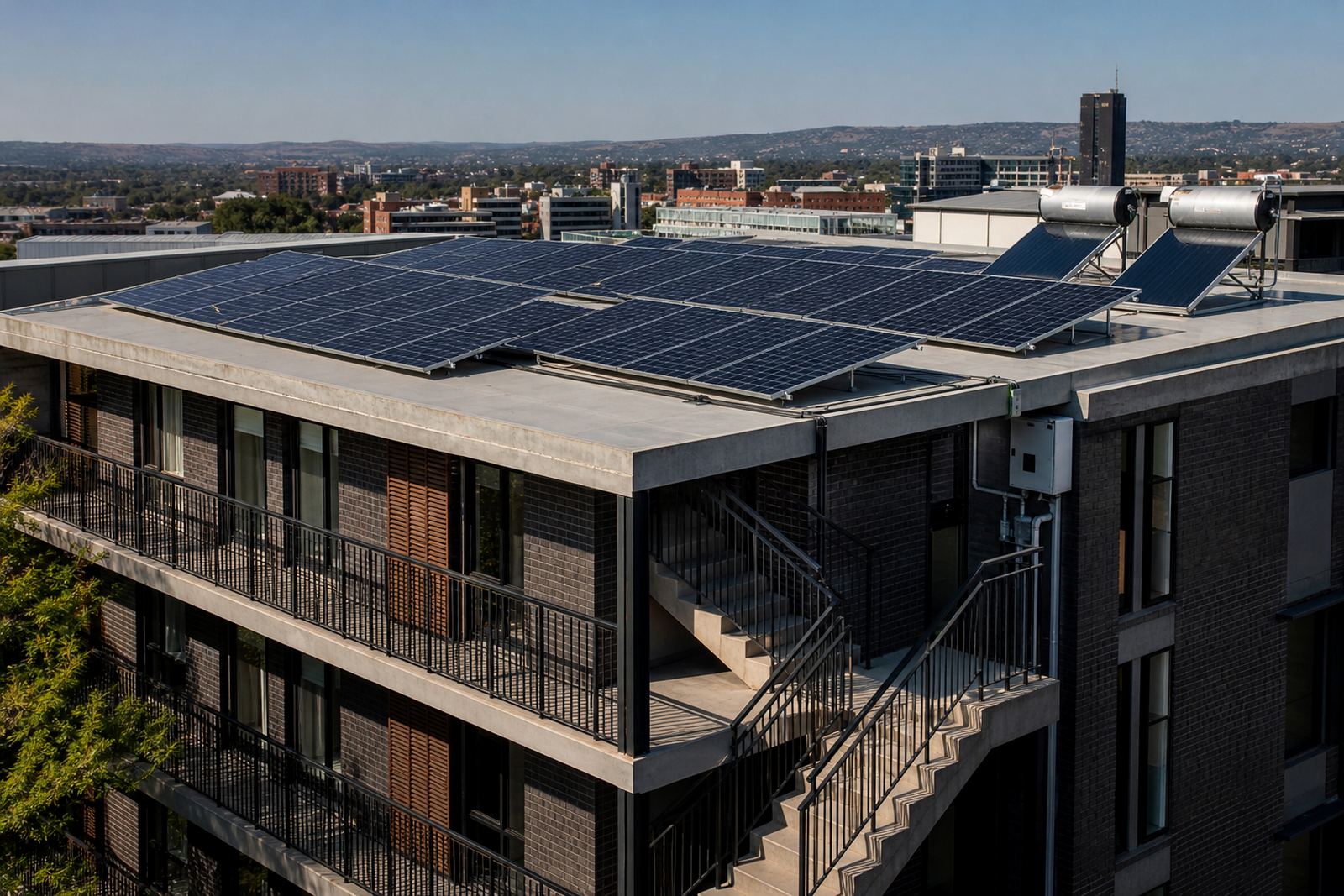
Retail shops often use a mix of solar panels, an inverter and battery storage to keep operations steady when municipal supply drops. The panels generate power during the day, the inverter manages the changeover and the batteries carry the shop through evening trading or outages. For stores with high lighting demand or several refrigeration units, careful balancing is important because cold appliances have a steady draw that can empty a small battery bank quickly.
Some retail premises also need solar water heating for staff bathrooms, tuck shop prep areas or washup points. That is especially useful where the shop has a kitchenette or a small deli section. Solar water heaters reduce the strain on electric geysers, but they still need to be sized properly and placed where there is safe roof access and enough sunlight.
In coastal towns and humid inland areas alike, mounting hardware and cable protection need attention. Corrosion and heat can shorten the life of poorly installed equipment, so the system should be set up with maintenance in mind. A shop owner should be able to get to isolators, test points and service areas without shutting down the whole front end.
Common mistakes shop owners make when going solar
The most common mistake is trying to power every appliance from the same backup system. That usually pushes the budget higher than needed and still does not solve the real problem. Another mistake is forgetting how much power fridges use during door openings and hot afternoons. A display fridge that looks small can still be one of the heaviest loads in the shop.
Other mistakes include poor placement of batteries in hot back rooms, undersized cabling, no allowance for future expansion and weak planning around mounting space. Street-facing shops are also vulnerable to theft and tampering, so equipment should not be left exposed or easy to remove. In some cases, a shop owner wants backup for lighting but forgets the till network and internet connection, which makes trade difficult even if the lights stay on.
- Do not size the system only by total shop floor area
- Do not ignore fridge start-up loads
- Do not place batteries in direct heat or damp corners
- Do not leave visible cables and exposed junctions at the front of the shop
- Do not skip maintenance access for cleaning and fault checks
Fault finding is easier when the original installation was planned properly. That saves time if a breaker trips or a battery bank needs checking later on.
Typical budget ranges for retail solar projects
Budgets for retail shops vary a lot because the load profile is different from one business to the next. A small convenience store with lights, a till and one or two fridges will usually sit in a lower range than a shop that runs multiple display units, a freezer, CCTV and after-hours trading. The numbers below are broad planning ranges only, not fixed quotes.
For a basic retail backup setup, many shop owners start around R45 000 to R95 000. A more balanced system for lighting, point-of-sale equipment and some refrigeration may fall between R95 000 and R180 000. Larger small-business setups with stronger battery storage, more panels and extra circuits can move beyond R180 000 depending on the layout and equipment list. Solar water heating is usually priced separately where it is needed.
Site assessments help narrow this down before any purchase is made. A proper check in Pretoria, Johannesburg, Durban, Cape Town or Bloemfontein usually prevents overspending on panels the shop does not need, or under-spending on batteries that will not last through an outage.
Fast Solar Support For Retail Shops
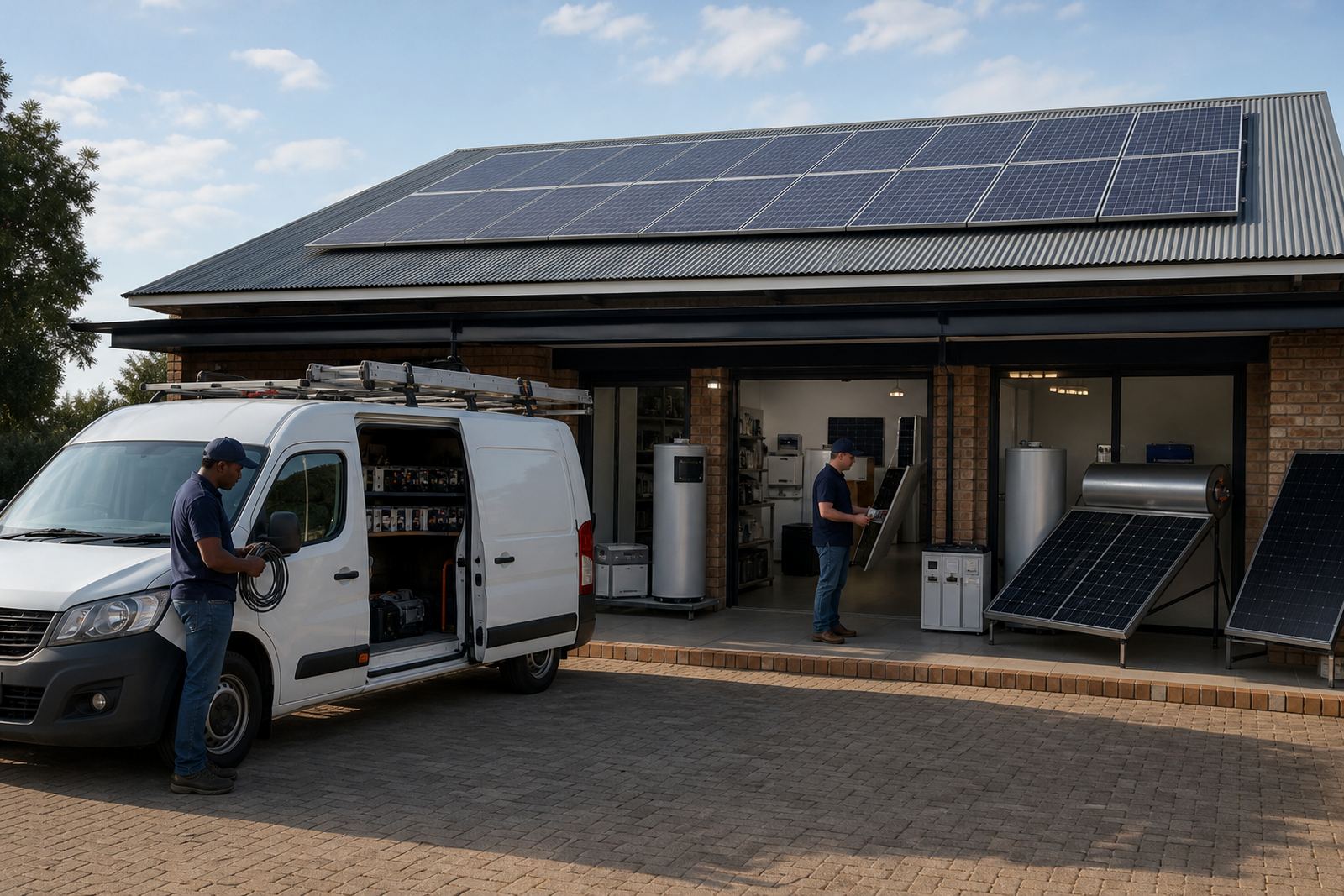
If a battery issue shows up on a Friday afternoon or a lighting circuit fails before opening, the delay hits trade straight away. That is why local support matters, especially for small businesses that cannot afford long downtime. A practical support plan should include fault finding, panel cleaning, maintenance visits and callouts when something is not working as expected.
Linuo Solar works from Centurion, Pretoria and supports retail clients across Gauteng and beyond. Our team includes Vuyo Phasha, Naledi Kgosi, Sarel Delport, Palesa Mabena, Mothusi Mphahlele, Faatimah Latief and Unathi Tau, each focused on the part of the process that keeps a shop running properly. From first site visit to commissioning, the job is handled with the needs of the business in mind.
Retail owners usually want a solution that is simple to use, easy to service and sized for daily trading. That is what the planning should support, without adding equipment that sits unused. If the shop is in a busy municipal area or a coastal trading strip, we factor in layout, weather and access before recommending the final system.