Solar Support For Busy Neighbourhood Shops
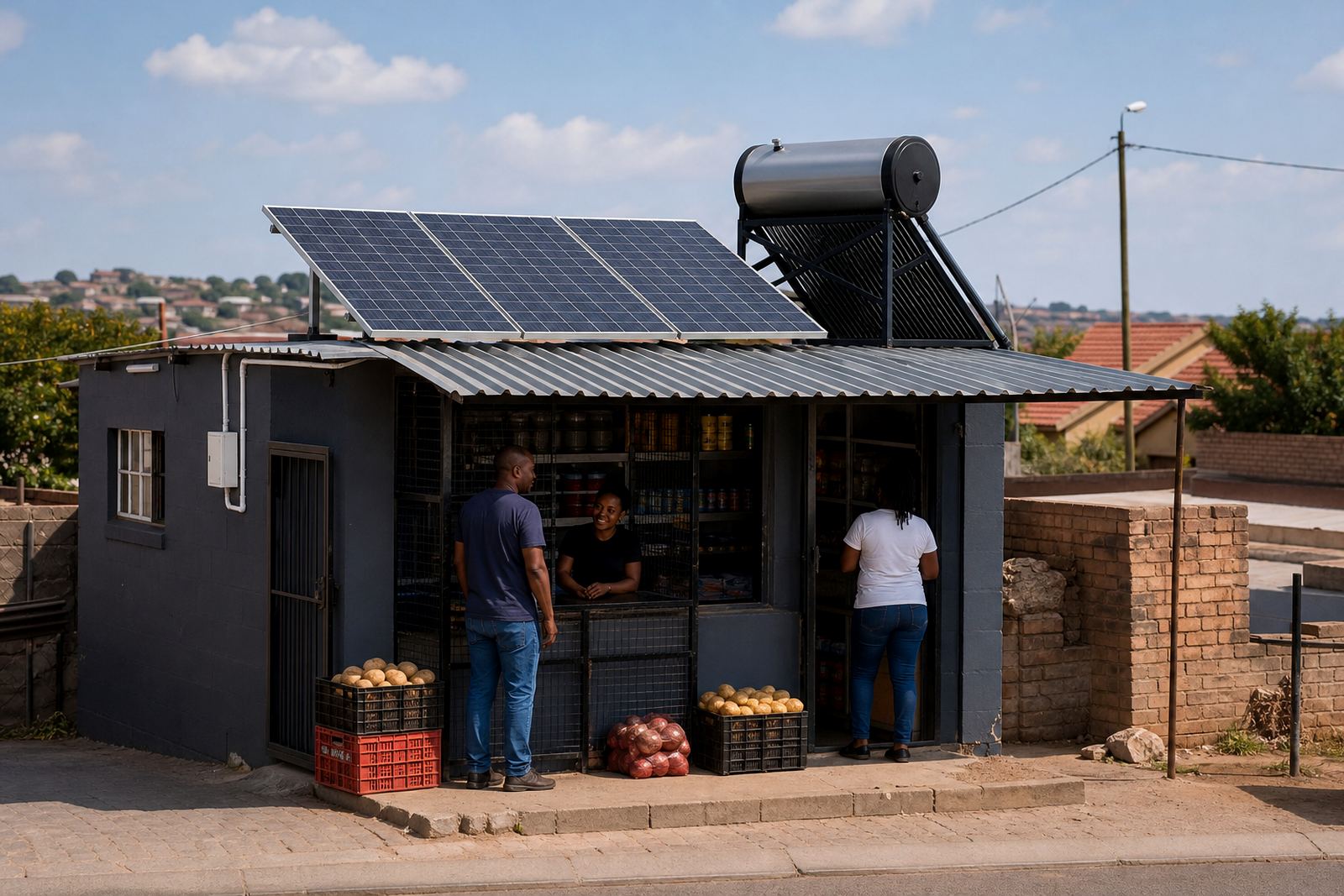
A spaza shop runs on small but constant power needs. Lights must stay on, the till must work, a fridge may need to keep drinks cold, and phones or card machines need charging. In places like Mamelodi, Soshanguve, Soweto, Umlazi, Mitchells Plain and Rocklands, the right solar setup helps a shop keep trading when the grid is unstable.
For this type of business, the best system is usually compact and practical. It should cover daytime use first, then give enough backup to ride through outages without forcing you to switch off the basics. The aim is not to overbuild, but to match the system to trading hours, roof space and the appliances you really use.
- Keep lights, the till and phone charging online during load-shedding
- Support a small fridge or freezer where needed
- Reduce disruption from local outages and cable faults
- Use roof space and wall space efficiently
Typical Equipment For A Small Shop
A normal spaza shop setup may include solar panels, an inverter, a battery bank and wiring for the shop loads that matter most. Some shops also add a solar water heater if there is a back room, washing point or small living area on the same property. The exact mix depends on how much power you use after dark and what must stay on during the day.
Panels are fitted where they get good sun and little shade from nearby buildings, trees or water tanks. Inverters are usually placed inside a secure, dry room or locked cupboard with space for airflow. Batteries need a cool, protected position, especially in coastal towns where humidity can be hard on equipment over time. Electrical integration is handled by qualified installers so the shop’s wiring, changeover and protection are done properly.
- Solar panels for daytime generation
- Inverter for changeover and power control
- Batteries for backup during outages
- Optional solar water heater for hot water needs
- Protection devices, cabling and isolators
How We Plan The Layout Around Trading Space
Many spaza shops have limited roof area, a small yard, or a combined home-and-shop layout. Planning has to respect foot traffic, security gates, the landlord’s rules and any municipal or estate requirements. A good layout keeps the equipment out of reach, makes maintenance simple and avoids shading from satellite dishes, advertising boards or high parapet walls.
At site assessment stage, we look at the roof type, the condition of the structure and where the equipment can sit without interfering with trade. If the shop is in a block, a backyard structure or a corner stand, cable runs need to be neat and protected from weather and tampering. The system should also be planned around how the shop operates on weekends, during school runs and on busy payday periods.
- Check roof strength, angle and shading before choosing panel count
- Keep batteries and inverter in a ventilated, lockable area
- Plan cable routes to stay clear of customers and stock
- Allow space for cleaning and future servicing
Common Mistakes Small Shops Make
One common mistake is buying a system that is too small for the actual load. A second mistake is focusing only on price and forgetting the fridge, lights and security needs that matter during trading hours. Some owners also underestimate cable length, battery space or the effect of dust and heat on performance. It may look simple at first, but poor planning can cause frequent trips or weak backup.
Another issue is mixing the shop’s electrical work with informal wiring. That can create safety risks and make future fault finding much harder. For a business that depends on daily turnover, electrical work should be neat, labelled and installed by qualified installers. You also want honest advice on what the system can and cannot carry so expectations stay realistic.
- Do not size only for one light and one plug point
- Do not place batteries in a hot, damp or accessible corner
- Do not ignore security and lock-up requirements
- Do not leave wiring untidy or difficult to inspect
Budget Ranges For Spaza Shop Solar Systems
Budgets vary depending on whether the shop needs basic lighting and till backup, or whether it also needs a fridge, freezer and longer evening runtime. A small entry-level system for a simple trading space can start from about R25,000 to R45,000. A more practical mid-range setup for a shop with stronger backup needs often falls between R45,000 and R90,000. Larger systems with extra battery storage and more panels can move beyond that, depending on the load.
If a solar water heater is added for the property, that cost needs to be planned separately from the shop power system. We will normally work from your daily use, roof space and budget first, then build a system that fits the job rather than overselling capacity. That way the owner can balance upfront cost with day-to-day reliability.
For many shops in Pretoria, Centurion and surrounding Gauteng areas, a staged approach works well. Start with the most important loads, then expand later if trading grows or if the shop adds more refrigeration. This keeps the first install manageable and gives room for future changes without replacing everything.
Service Areas And Ongoing Help
Linuo Solar supplies and installs solar panels and solar water heaters for homes and small businesses across South Africa, with a strong base in Pretoria and Centurion. We work with shop owners in Johannesburg, Midrand, Durban, Cape Town and Bloemfontein, and support clients across Gauteng and other areas where practical solar support is needed.
Our team includes Vuyo Phasha as Managing Director, with support from Naledi Kgosi, Sarel Delport, Palesa Mabena, Mothusi Mphahlele, Faatimah Latief and Unathi Tau. That means site visits, system design, panel installation, inverter installation, battery installation, water heater installation, electrical integration, commissioning, maintenance, fault finding, panel cleaning and support callouts are handled in a structured way. If a shop owner needs help after install, we keep the process straightforward and local.
Enquiries come through the form on our contact page, which works well for busy owners who need a proper assessment before they commit. For a spaza shop, the right system should be reliable, practical and sized to support everyday trade, not just look good on paper.