Why townhouse roofs need a different solar plan
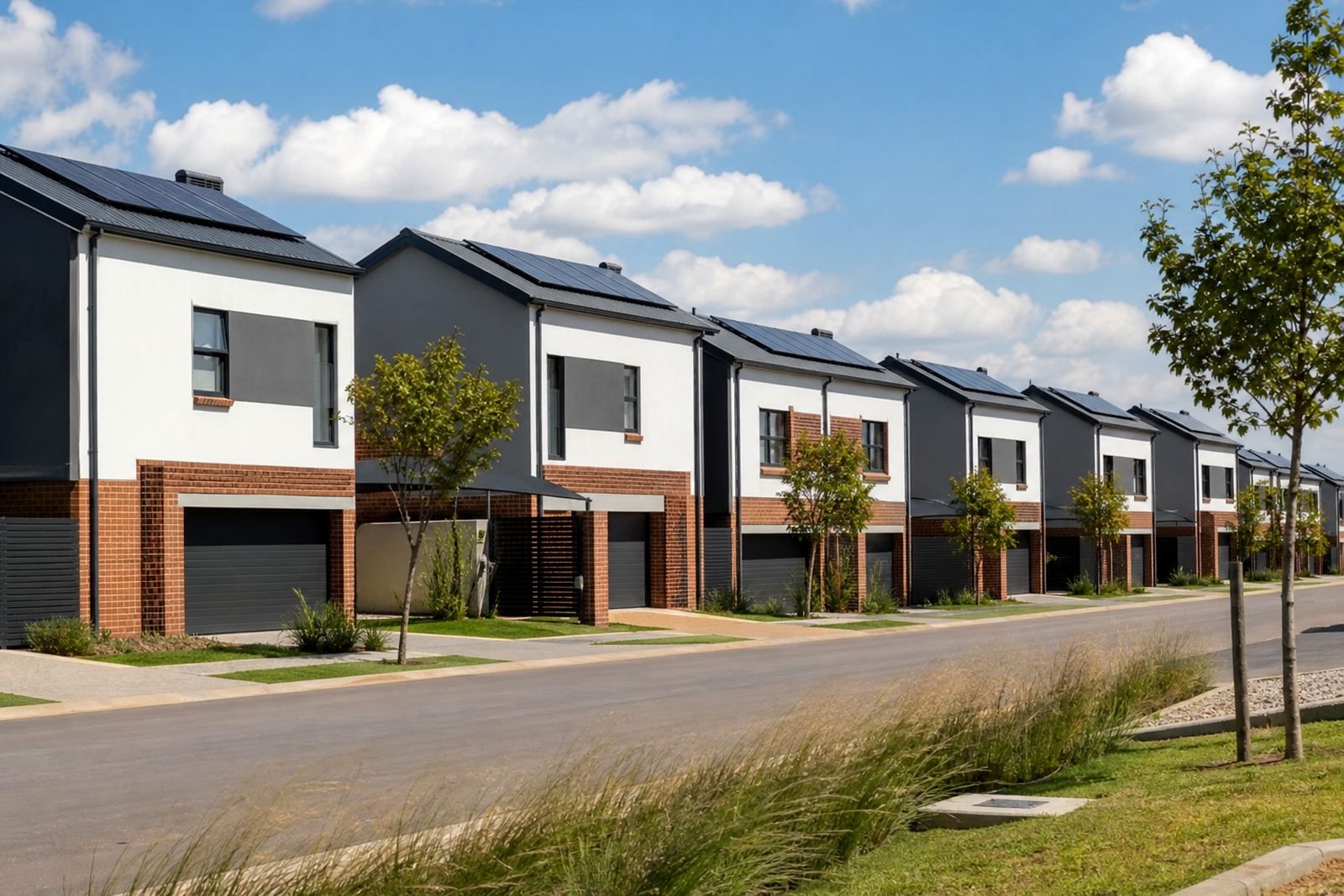
A townhouse usually has less roof area than a free-standing house, and the usable sections are often split by hips, ridges, parapet walls or shadow from nearby units. That means a one-size-fits-all approach does not work. The right system starts with a proper site assessment, checking roof direction, shading through the day, metre position, DB board space and where cables can run without creating a mess.
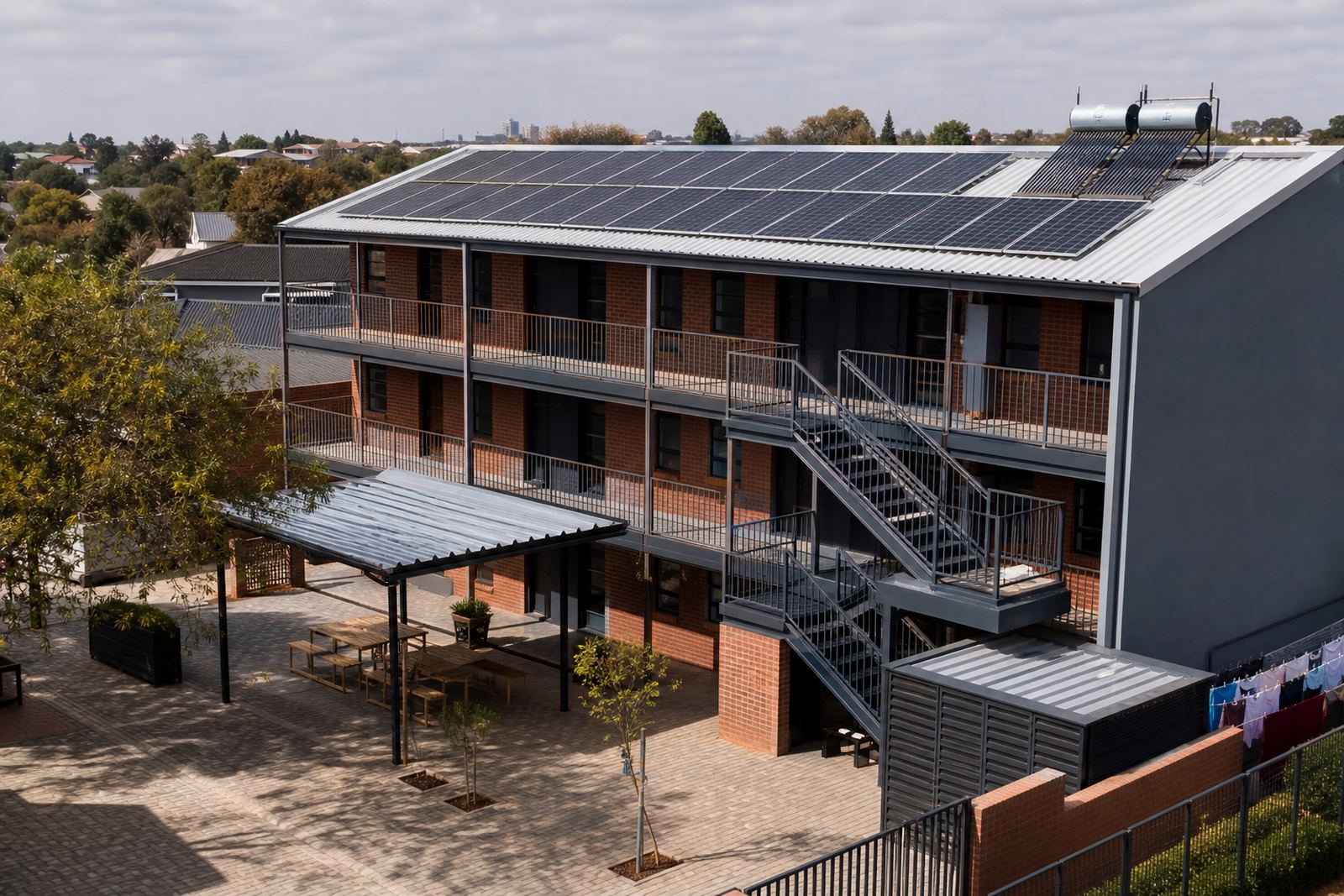
In Pretoria and Centurion, many townhouse complexes have tiled roofs or light steel roof structures, while some Durban and Cape Town properties have tighter roof pitches and stronger coastal wind exposure. We plan for those conditions from the start. If the roof is small, the answer may be a smaller panel array paired with a battery, rather than trying to force a large system onto an awkward layout. In some cases a solar water heater on the roof can free up electrical demand and reduce pressure on the rest of the installation.
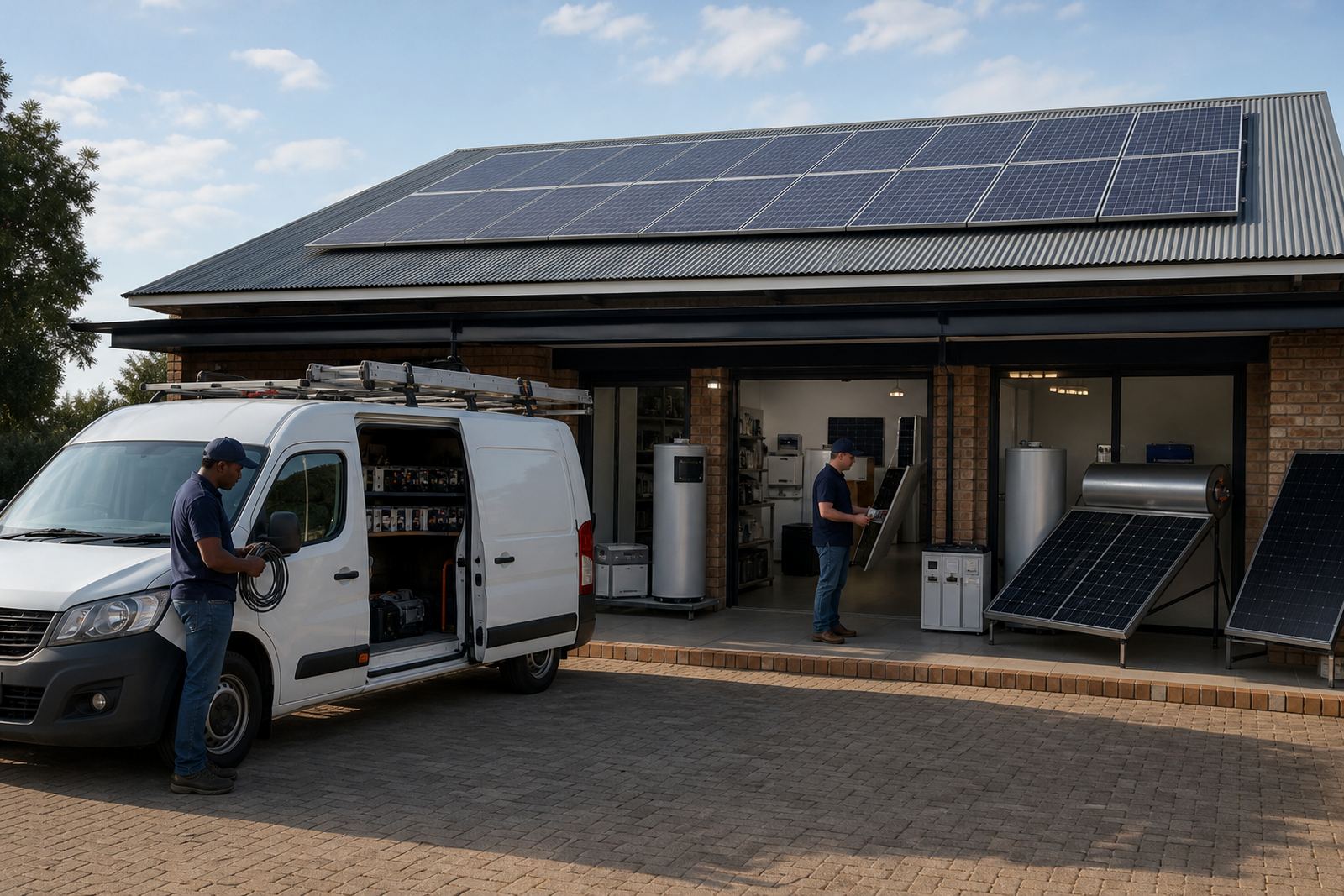
Typical equipment for a compact townhouse setup
Most townhouse projects use a practical mix of equipment rather than a full ground-mounted style setup. The exact size depends on how many appliances you want to run, whether you are trying to cover evening loads, and whether the unit has electric geysers or a separate solar water heating option. Electrical work is done by qualified installers, and the system should be commissioned properly so that changeover and protection gear are set correctly.
- Solar panels sized to fit the available roof face
- Inverter chosen for the actual load profile, not guesswork
- Battery storage for evening use and load-shedding backup
- Solar water heater or hot water support where the roof and plumbing allow it
- Mounting rails, isolators, cabling and protection devices suited to the site
For some townhouses, a smaller hybrid-style setup works well. For others, the best option is to keep it simple with panel installation, inverter installation and battery installation focused on key circuits. If hot water is the biggest problem, a water heater installation can make more sense than pushing every appliance onto the same system.
Layout and planning for garages, courtyards and utility corners
Townhouse residents often ask where the rest of the equipment can go if the roof is full. The answer is to plan the layout carefully before anything is drilled or mounted. Garages, external utility areas and small service corners are often the best places for batteries, inverters and protection equipment, provided there is enough ventilation and the area stays dry. In coastal towns, salty air and humidity can shorten the life of poorly protected parts, so enclosure choice matters.
We also look at how the installation affects daily living. Cables should not run across visible walls where they can be damaged, and equipment should not block storage or parking space. In complexes with body corporate rules, the owner may need approval for visible roof work or external conduit runs. That is worth sorting out early. A tidy plan saves time later and avoids disputes with neighbours or managing agents.
- Keep inverter and battery close enough to reduce cable losses
- Allow space for future maintenance and fault finding
- Use shaded, ventilated locations for indoor equipment where possible
- Check access for installers, especially on upper units
Hot water choices that suit townhouse living
Townhouses often have high hot water demand in the morning and evening, especially when the geyser is serving a family in a compact space. Solar water heaters are useful because they can reduce the strain on your electrical system without needing a large panel array. They are also a strong option where the roof space is too limited for a full electrical-only approach.
There are two things to plan carefully. First is the roof structure, because a water heating system adds weight and needs proper fixing. Second is the pipe run, because the unit has to connect neatly back to the geyser and controls. On some sites the best result is a split approach, with water heating doing the heavy lifting for hot water and a smaller solar panel system handling lights, plugs and essential appliances. That balance often suits townhouse budgets better than trying to oversize the electrical side.
Common mistakes that make townhouse systems underperform
The biggest mistake is choosing equipment before checking the actual roof and electrical setup. A system that looks fine on paper can struggle if half the roof is shaded by a neighbouring block or if there is no sensible place for the inverter and batteries. Another common problem is mixing too many high-demand appliances onto a small system, which leads to tripping during load-shedding or at night when the battery is low.
Other mistakes include poor cable routing, weak mounting on older roofs, and skipping proper commissioning. Some owners also forget maintenance. Townhouse systems still need panel cleaning, fault finding and occasional support callouts, especially in dusty inland areas like Gauteng or after coastal storms. If panels are installed with a poor tilt or in the wrong position, output drops and the payback becomes disappointing. A neat, correctly sized system is usually better than a bigger one fitted badly.
- Do not assume every townhouse roof can take the same panel count
- Do not place equipment where it overheats or gets wet
- Do not ignore body corporate rules and approval steps
- Do not leave the system without basic maintenance planning
Budget ranges for townhouse solar in Rand
Budget depends on whether you want electricity backup, hot water support, or both. Townhouse owners often start with a modest system and add more later, but it helps to understand the rough price bands before requesting quotes. A smaller panel and inverter setup with limited battery storage will usually sit at a lower cost than a larger hybrid system with more backup time. Solar water heaters can be priced separately, and plumbing complexity may affect the total.
As a practical guide, compact townhouse projects often start from about R45,000 for a simple entry-level electrical setup and can move into the R90,000 to R180,000 range where more panels, larger batteries or more detailed electrical integration are needed. A solar water heating installation may add its own cost depending on tank size, roof access and pipe work. For many buyers, the sensible approach is to match the budget to the most important load first, then expand later if needed.
We work from Centurion, Pretoria and support clients in Johannesburg, Midrand, Durban, Cape Town and Bloemfontein. If you need a system that suits townhouse living, the safest first step is an on-site assessment and a clear design based on your roof, your usage and your rules.
What happens from first enquiry to commissioning
Townhouse owners usually want a clean process with as little disruption as possible. After the enquiry form on our contact page, we arrange a site assessment and talk through the roof layout, the equipment you want and the space available for controls and batteries. From there, the system design is matched to the property instead of forcing a generic package onto it.
Once the plan is agreed, the installation team handles the panel installation, inverter installation, battery installation and water heater installation where required. Our technical support lead checks the electrical integration and the system is commissioned before handover. Naledi Kgosi oversees operations, Sarel Delport leads installation work, Palesa Mabena coordinates the project, Mothusi Mphahlele handles technical support, Faatimah Latief manages customer care and Unathi Tau handles solar water heating projects. It is a practical team setup, and that matters when a complex needs neat work done right the first time.