What guesthouses usually need from solar
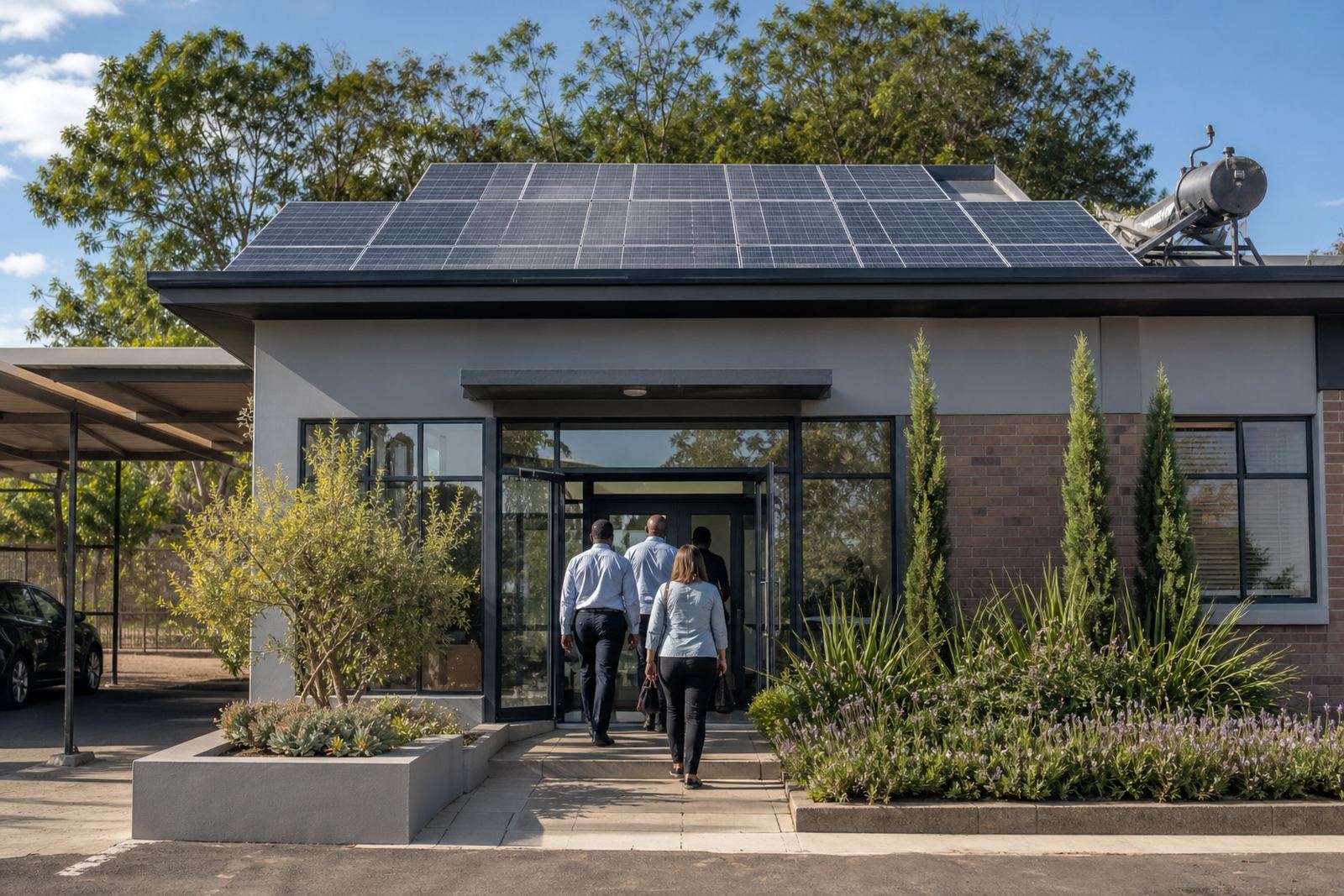
A guesthouse has different needs from a normal house. Guests expect lights, plugs, hot showers, working Wi-Fi and a calm stay, even when the municipal supply is interrupted. In Pretoria, Johannesburg, Durban, Cape Town and Bloemfontein, that means planning for evening check-ins, breakfast rushes and full occupancy at weekends.
Most guest accommodation starts with a system that keeps essential circuits running. That can include lighting, reception, internet equipment, fridges, security gates and selected room sockets. Hot water is just as important, especially where several rooms are used at the same time. A solar water heating setup can reduce pressure on the electricity supply and help keep showers available during load-shedding.
We work from Centurion, Pretoria and support guesthouses across Gauteng and further afield. The right system depends on room count, geyser size, roof space, water use patterns and whether the property has single-phase or three-phase supply.
Typical equipment set for a guesthouse property
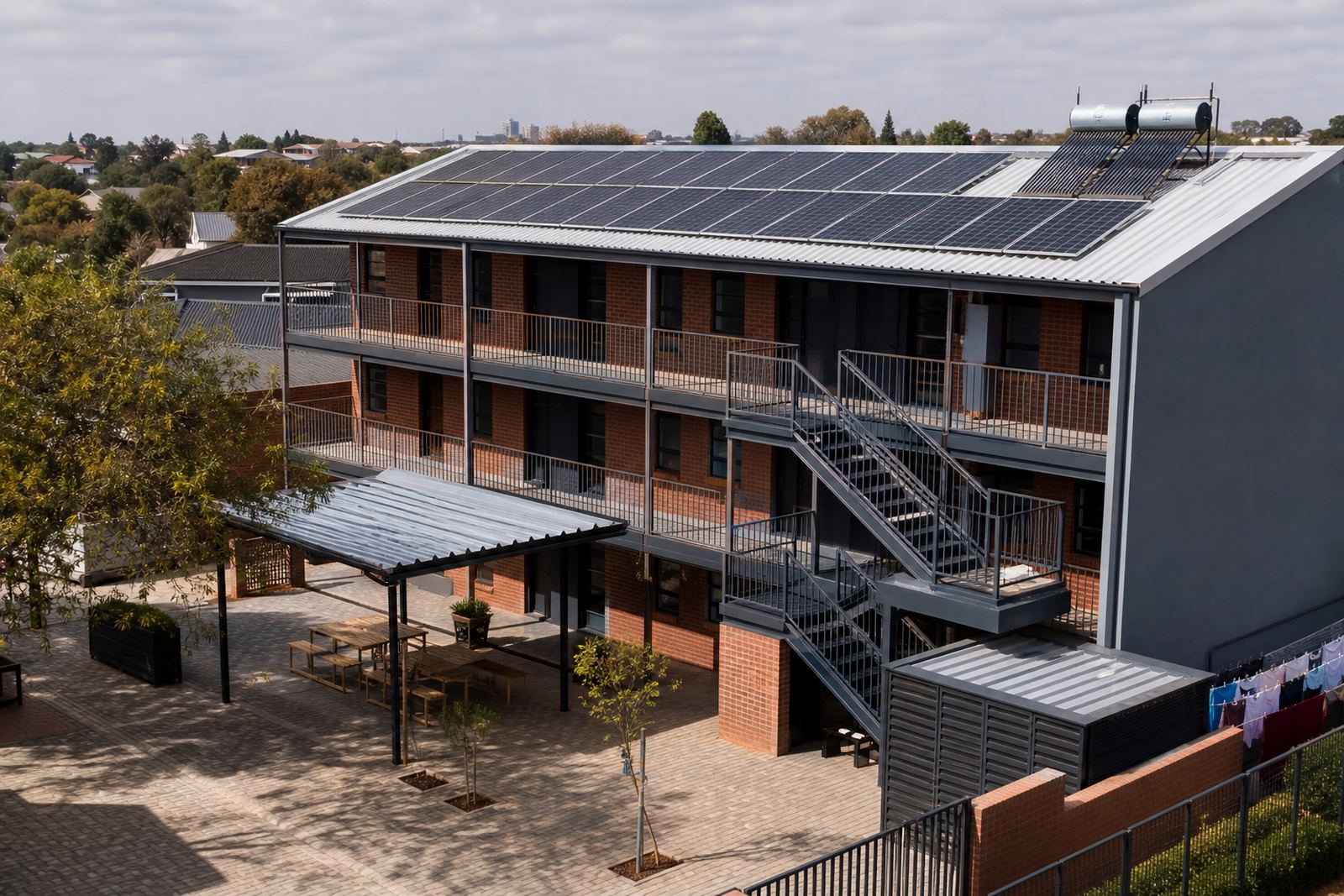
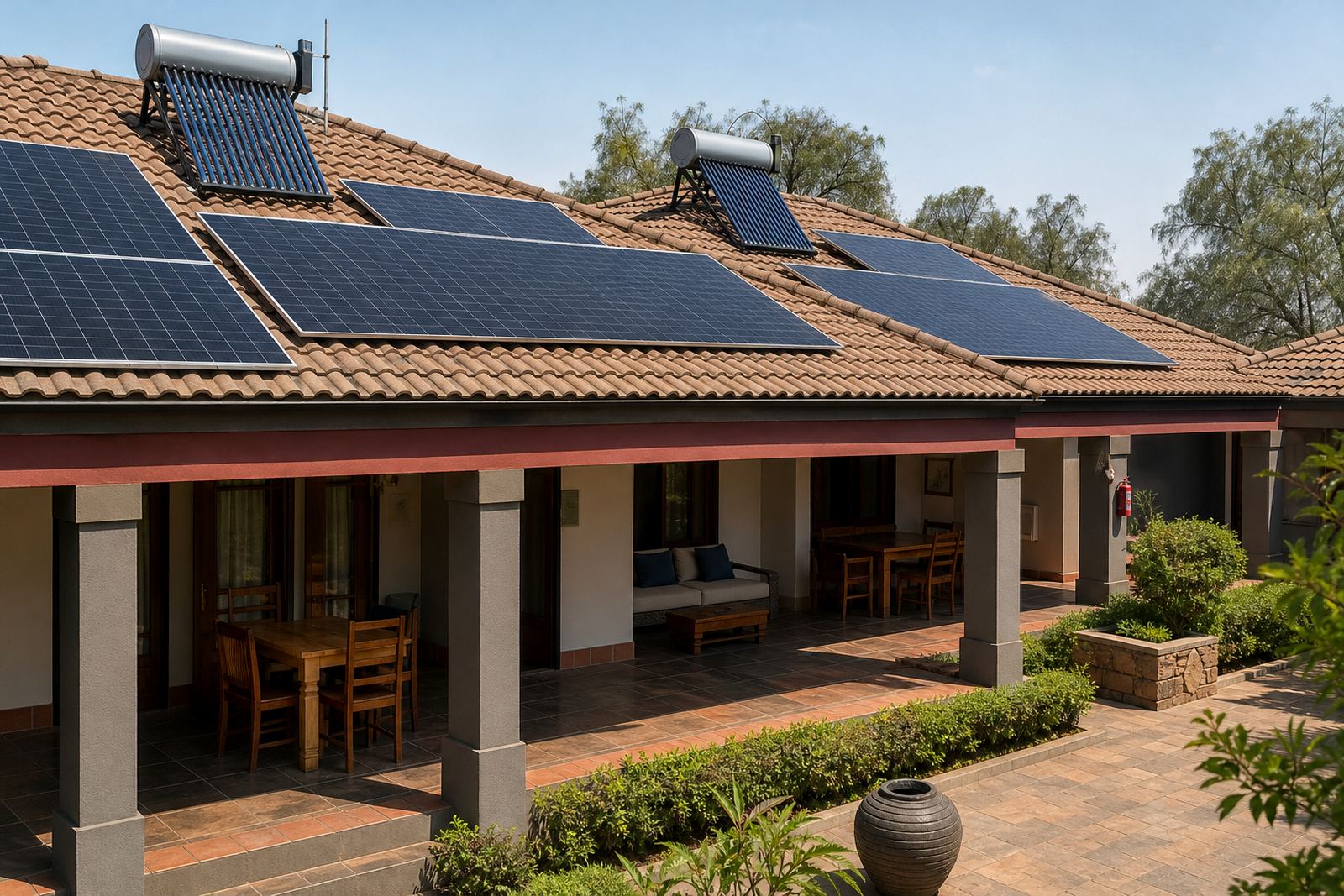
A practical guesthouse setup usually combines solar panels, an inverter, batteries and a solar water heating solution. The exact mix depends on how much of the property must stay on during outages and how much hot water is needed each day. For smaller properties, a compact system may cover only essentials. For larger guesthouses, the design often needs separate circuits for rooms, common areas and hot water.
Solar panels handle daytime generation. An inverter manages the switch between grid, batteries and solar supply. Batteries carry the load at night and during outages. Solar water heaters can be used for showers, staff ablutions and laundry hot water, which is important where water heating takes up a large part of the power bill.
All electrical work is done by qualified installers, with system commissioning and checks before handover. That matters on guest properties because an incorrectly connected system can trip circuits, overload geysers or leave essential loads off when they are needed most.
- Roof-mounted solar panels sized to available roof area
- Inverter matched to the property’s essential loads
- Battery bank for evening and load-shedding cover
- Solar water heater or assisted water heating setup
- Protective equipment, isolators and wiring for safe integration
Layout planning for rooms, dining areas and staff spaces
Good planning starts with a load list. A guesthouse owner should note which rooms are occupied most often, when hot water demand is highest and which appliances must stay on without fail. That gives us a clear basis for site assessments and system design. It also helps avoid wasting budget on power for items that do not need backup.
Roof layout matters too. Shade from chimneys, trees or neighbouring buildings can reduce panel output. On properties with several roof sections, panels may need to be split into strings to suit the roof angles. In coastal areas like Durban and Cape Town, the equipment choice also has to suit humidity and salt air. In Pretoria and Gauteng, high summer heat and dust can affect performance if maintenance is ignored.
For guesthouses with parking courts or courtyards, the installation route for cables and water lines should be planned before work starts. That avoids ugly runs across visible areas and keeps the property looking neat for guests.
Common mistakes that cause problems later
Guesthouse owners sometimes focus only on panel quantity and forget the rest of the system. That can leave them with enough daytime generation but not enough battery reserve at night, or plenty of hot water output and no proper control. Another common mistake is trying to power every appliance at once. That usually drives costs up and still does not give stable results during outages.
Overlooking maintenance is another issue. Solar panels need cleaning, especially in dusty inland areas. Batteries need the right operating conditions and regular checks. Solar water heating systems need correct piping, safe pressure control and a layout that suits the property’s plumbing. If the system is not designed for guest turnover, the first busy weekend can expose the weak spots.
We also see properties underestimating municipal and electrical requirements. Any integration with existing wiring must be done properly, with the right protections in place. That is not the place to cut corners, because guest safety and business continuity both depend on it.
- Choosing a system that is too small for peak occupancy
- Ignoring water heating when planning backup power
- Skipping proper installation and commissioning
- Leaving panels uncleaned for long periods
- Using poor cable routes or unlabelled circuits
Budget ranges for guesthouse solar in Rand
Budget depends on room count, hot water demand and how much of the property you want covered during load-shedding. A small guesthouse with a few rooms and essential backup only will usually sit in a lower range than a larger property with several geysers, reception equipment and laundry loads. The final price also changes with roof access, battery size and whether the water heating system is separate from the electrical backup system.
As a broad guide, a basic guesthouse backup package can start from around R85,000 to R150,000. A mid-sized setup with more battery capacity, stronger inverter support and solar water heating often falls between R150,000 and R350,000. Larger or more complex properties can go above that, especially if there are multiple geysers or three-phase supply. These figures are only guide ranges, not fixed quotes.
Site assessments help prevent surprises. They show what can be installed safely, what can be covered immediately and what can be added later if the guesthouse wants to phase the project over time.
How we support guesthouses after installation
Guest accommodation cannot afford long downtime, so support matters after the install. We provide solar maintenance, fault finding, support callouts, panel cleaning and system checks. That keeps the setup working well through peak season, school holidays and sudden weather changes. If a guesthouse has an issue with hot water, charging or backup supply, the cause must be identified quickly.
Our team includes experienced people in operations, project coordination, technical support and solar water heating. Under the direction of Vuyo Phasha, we handle guesthouse projects from planning through to commissioning and aftercare. From Pretoria and Centurion to Johannesburg, Midrand, Durban, Cape Town and Bloemfontein, the aim is the same: keep guests comfortable and the property operating properly.
For guesthouse owners, solar is not only about saving on electricity. It is about keeping the lights on, the showers hot and the stay reliable when the grid does not co-operate.