Solar for farm use needs careful planning
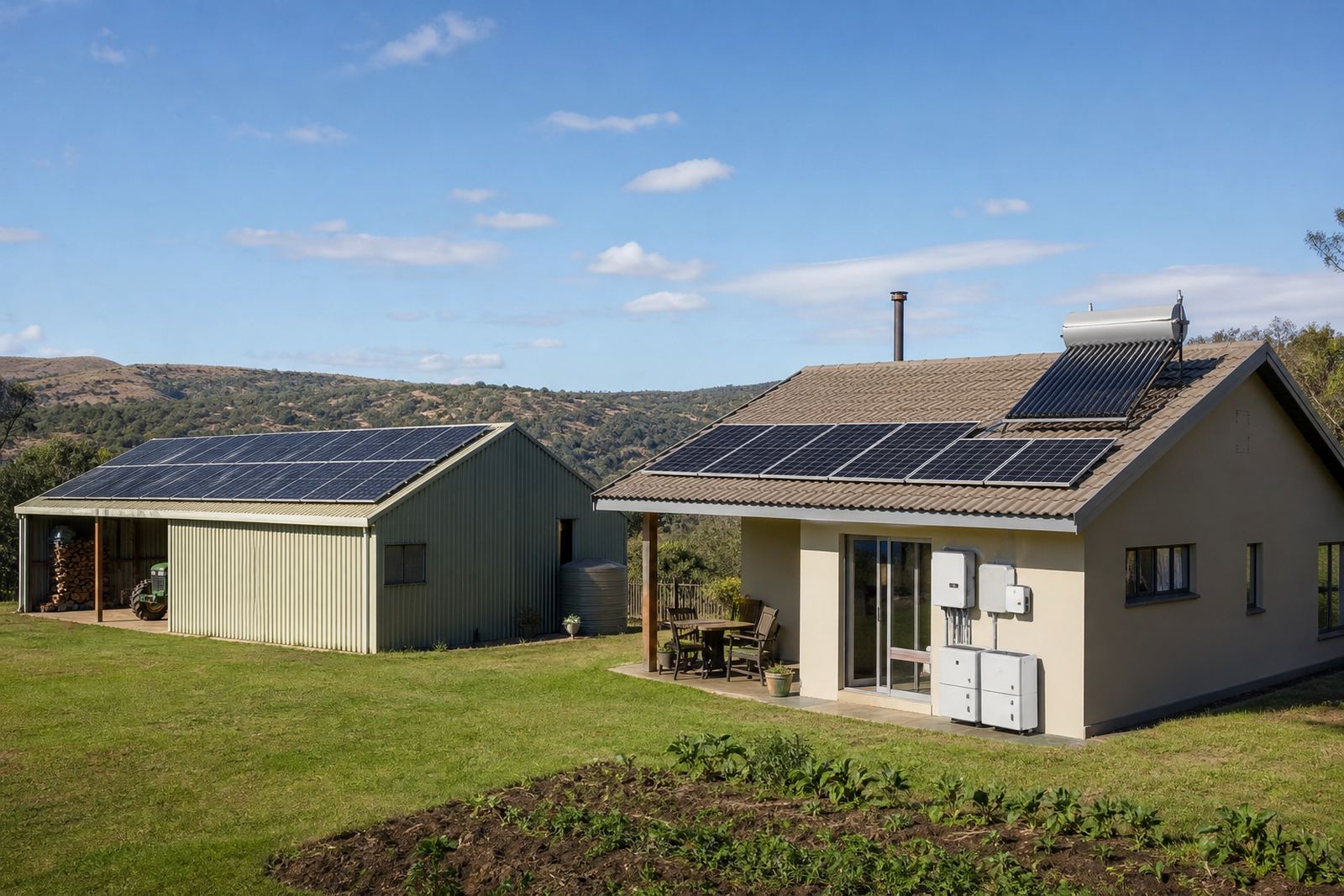
A farm is not the same as a suburban home. You may have a farmhouse, a storage shed, an outbuilding for staff, a pump room, a small office and a separate water heating need all in one property. Some buildings sit far apart, some roofs face the wrong direction and some loads must stay on when the grid drops. That is why the first step is a proper site assessment, not a guess.
We look at what must run during the day and what should carry on at night, then plan the system around that pattern. For many farms in Pretoria, Centurion, Midrand and further out into Gauteng, the roof space is practical but not always ideal, so layout matters. Panels, inverter placement, battery storage and cable runs must be arranged with dust, heat and distance in mind. On coastal properties in Durban and Cape Town, corrosion risk and stronger winds call for even more careful mounting.
We also check how the electrical work will be connected. All electrical integration is handled by qualified installers, which is important where old wiring, separate distribution boards or extension lines have been added over time. A neat setup is safer and easier to maintain, especially where power interruptions are common.
Typical equipment for farmhouses and sheds
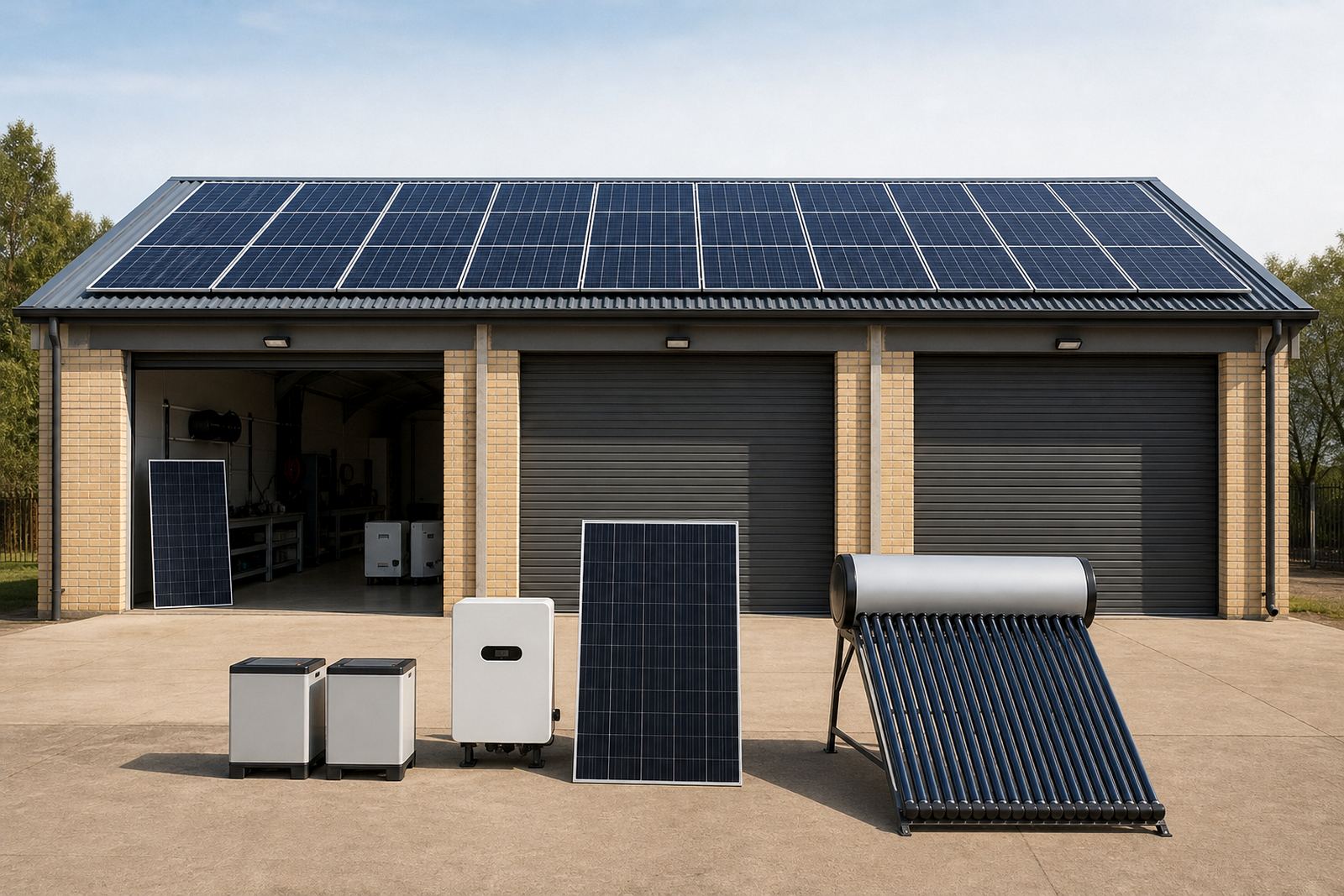
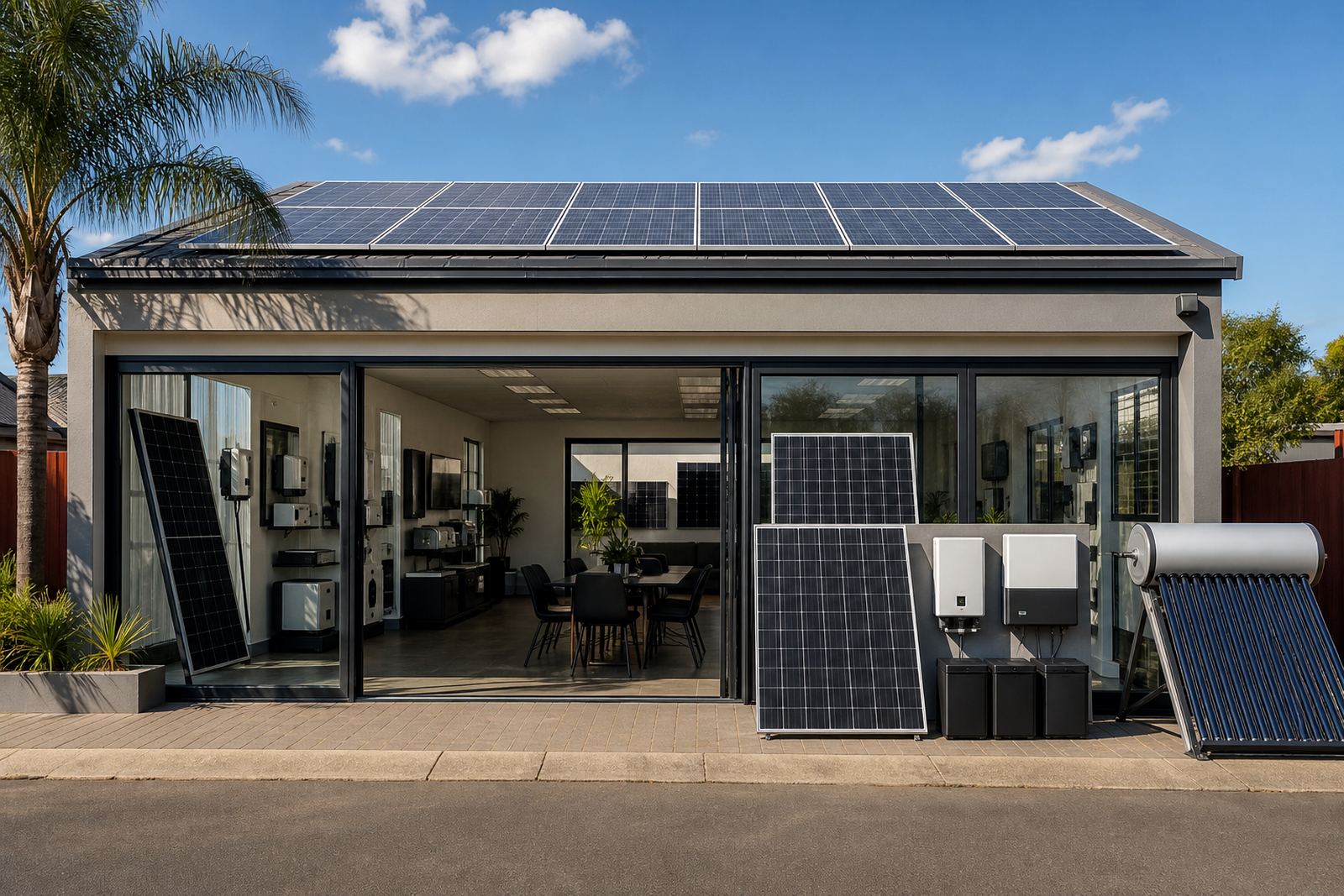
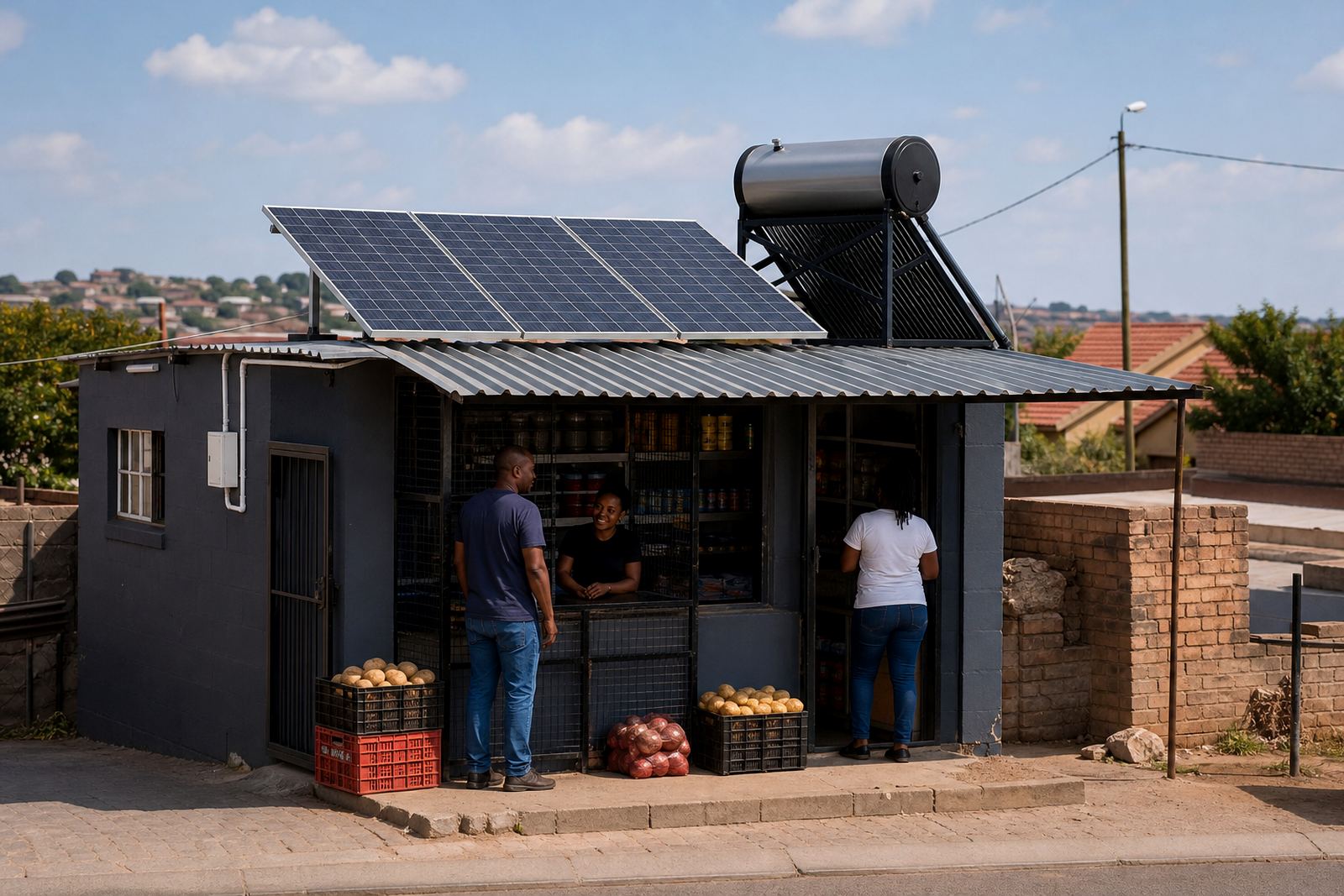
Most farm projects use a practical mix of solar panels, an inverter, batteries and, where hot water is needed, a solar water heater. The exact size depends on what you use most often. A farmhouse may need lights, fridge/freezer power, internet equipment, gate motors and a few small appliances. A shed or light agricultural building may need security lighting, workshop tools, borehole support or office equipment.
In many cases we recommend separating essential loads from non-essential loads. That means the inverter and batteries support what truly matters first, while heavier equipment can be kept off the backup side unless the system is designed for it. This approach keeps the system practical and helps avoid overspending on equipment that sits idle most of the time.
- Solar panels for daytime generation on roofs or suitable ground frames
- Inverter for converting solar power to usable electricity
- Batteries for evening use and backup during outages
- Solar water heater for farmhouse bathrooms, kitchens or staff accommodation
- Protection gear, cabling and distribution work sized for the site
We also supply support for panel cleaning, maintenance and fault finding, which matters on farms where dust, pollen and bird mess can build up faster than expected.
Layout choices that make a farm system work properly
Good planning starts with where the sun hits the property through the year. Roofs on farmhouses are often simple, but sheds and stores can have mixed angles or patchy shade from tanks, trees and nearby structures. If panels are placed without checking shade, output drops and the owner only notices it later when the batteries are not charging as they should.
We usually suggest keeping the inverter and battery bank in a dry, cool, accessible room with enough airflow. On farms in warmer parts of Gauteng, heat can shorten the working life of equipment if the space is too tight. In coastal areas the installation point should be protected from damp air and salty conditions. Cable runs should be kept as short as practical and properly secured so they are not damaged by rodents, tools or passing equipment.
For solar water heaters, the geyser position, roof pitch and water pressure all matter. A tank that is too far from the points of use can waste heat, while a system set up without pressure checks can give trouble when more than one tap is opened at once. It is practicaly better to plan the hot water side at the same time as the electrical side, not after the panels are already up.
- Place panels where shade from trees, tanks and sheds is lowest
- Keep batteries and inverter in a ventilated indoor area
- Plan cable routes that allow for future expansion
- Separate critical loads from high-demand equipment where needed
- Check water heater placement before roof work starts
Common mistakes on farm installations
One common mistake is undersizing the system for evening use. A farm may look modest in the day, then the loads rise after dark when security lights, freezers and household appliances all start running. Another mistake is putting too much faith in a single building's roof when the load actually belongs across several structures. In that case the system may look neat but work poorly.
People also sometimes skip maintenance planning. Dust on panels, loose fittings and poor battery room conditions can cause problems that are easy to avoid. On properties with boreholes, pumps can create a large short burst of demand that needs to be accounted for in the design. If not, the system can trip or the battery can drain too quickly.
It is also important not to ignore municipal rules or electrical compliance needs where a farm is near a town boundary or within an area with utility approvals. A proper commissioning process gives you a cleaner handover and fewer issues later on. We see this often around Pretoria, Johannesburg and Bloemfontein where older buildings have been altered many times over the years.
What farm clients usually spend
Budget depends on how many buildings need support, how much backup is required and whether hot water is part of the project. A small farmhouse system with panels, an inverter and limited battery storage will usually sit in a lower range than a broader setup that also covers a shed, office or water heating. The final figure changes again if cable runs are long, the roof is difficult, or the site needs extra protection gear.
As a working guide, many small farm projects fall somewhere between R45 000 and R180 000, while larger mixed-use properties can move higher depending on equipment choice and installation complexity. Solar water heaters are often quoted separately because the plumbing, roof position and hot water demand differ from property to property. We do not push unnecessary items into the design, because that only makes the system harder to manage.
Clients in Pretoria, Centurion, Midrand, Durban, Cape Town, Bloemfontein and across Gauteng can use the enquiry form on our contact page to request a site assessment. From there we design a setup that fits the buildings on the farm, the daily routine and the available budget.
Support after installation matters on farms
Farm systems work best when someone is available to keep an eye on them after the first few months. Our team handles maintenance, support callouts, panel cleaning and fault finding, which helps when a battery is not holding charge, a breaker has tripped or an inverter needs attention. On remote sites, quick diagnosis saves time and prevents small issues from becoming bigger ones.
The team is led by Vuyo Phasha and supported by Naledi Kgosi, Sarel Delport, Palesa Mabena, Mothusi Mphahlele, Faatimah Latief and Unathi Tau. That mix of operations, installation, project coordination, technical support and customer care keeps the process organised from first visit to commissioning. We work with homes, sheds and light agricultural support buildings across South Africa, with a base in Centurion, Pretoria.
For farm clients, the goal is simple: enough power where it is needed, proper electrical integration and a system that can be maintained without drama. That is what makes solar useful on a working property, not just on paper.