What a wall battery unit does in a solar setup
A wall battery unit stores electricity for later use, usually after the solar panels have charged it during the day or when municipal supply is available. In a basic home system it can keep lights, routers, TVs and a few essential plugs running when the power goes off. In a small business it can support tills, computers, security systems and selected office circuits, depending on the size of the battery bank and the inverter fitted with it.
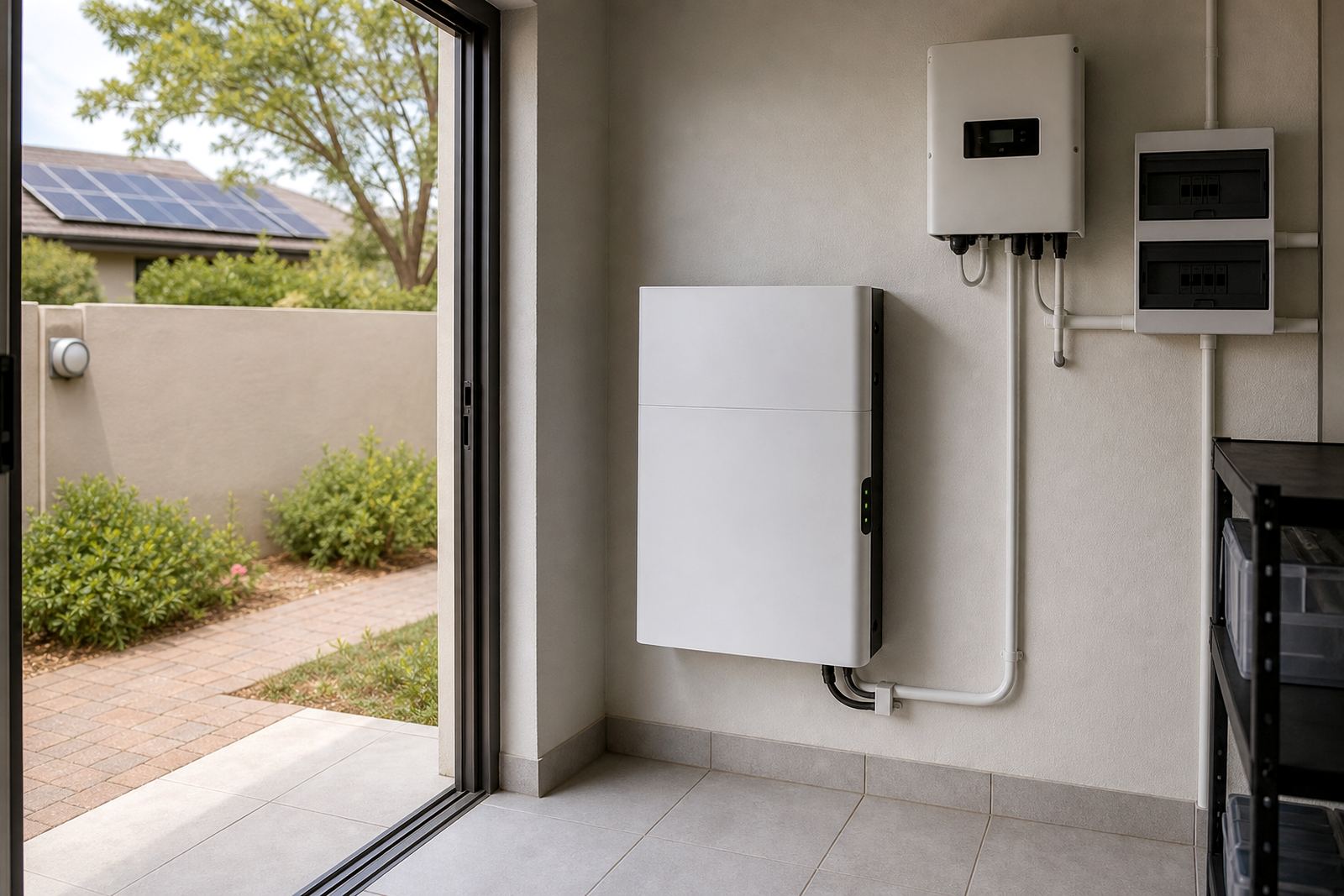
These units are designed to mount neatly on a solid wall, which helps when garage floors are full, store rooms are cramped, or you simply want a cleaner layout. Wall-mounted storage is common in Pretoria homes, Midrand offices and shops in towns where space is tight and power interruptions are part of daily planning. The battery itself is only one part of the system, so correct pairing with the inverter, isolators, cabling and protection gear matters just as much as the battery size.
Battery sizes, voltage options and practical layouts
Wall battery units are available in a range of storage capacities and voltage options, so the setup can be matched to the property and the way power is used. Smaller units are often chosen for essential backup only, while larger units suit households that want longer runtime or small businesses with more regular evening or daytime demand. Most wall units are compact, but the cabinet size, weight and cable routing still need to be checked before installation.
- Compact home units: Suitable for basic backup, modem support and a few lights
- Mid-size units: Good for family homes with more appliances and longer load-shedding periods
- Higher-capacity units: Better for bigger homes, small shops or offices with steady daily use
- Parallel setups: Useful where more storage is needed and the site allows additional units
The right choice depends on how many appliances must stay on, the inverter capacity, and how often the battery will be cycled. A well-sized unit is usually better than oversizing for no reason, because battery care, cabling and space all form part of the final arrangement.
Where wall battery units suit homes and businesses
Wall-mounted batteries are a good fit for homes, sectional title properties, retail counters, salons, small workshops and office spaces. They are especially useful where floor space is limited or where you want the installation to look tidy and easy to service. In coastal areas like Durban and Cape Town, a cleaner wall mount can also help keep the unit away from damp floors and general congestion, provided the room is well ventilated and protected from direct moisture.
These units can be installed in garages, storerooms, utility rooms and dedicated plant areas, as long as the wall is suitable and the environment is not too hot or dusty. In Gauteng, many clients prefer a wall battery unit for homes with solar panels on the roof and a compact inverter nearby. For businesses in Johannesburg or Bloemfontein, the same approach works well where a small backup system must be kept orderly and easy to access by qualified technicians.
- Homes with limited garage or yard space
- Shops needing neat backup for lights and point of sale equipment
- Small offices with critical circuits that must stay on
- Properties that want battery storage off the floor and out of the way
Installation, electrical work and site requirements
Wall battery installation should be handled by qualified installers who understand battery placement, inverter compatibility, earthing, protection devices and safe cable sizing. The wall must be strong enough to carry the load and the mounting position should allow for maintenance access, airflow and safe isolation. For most installations, the battery will sit close to the inverter to keep cable runs short and reduce voltage drop.
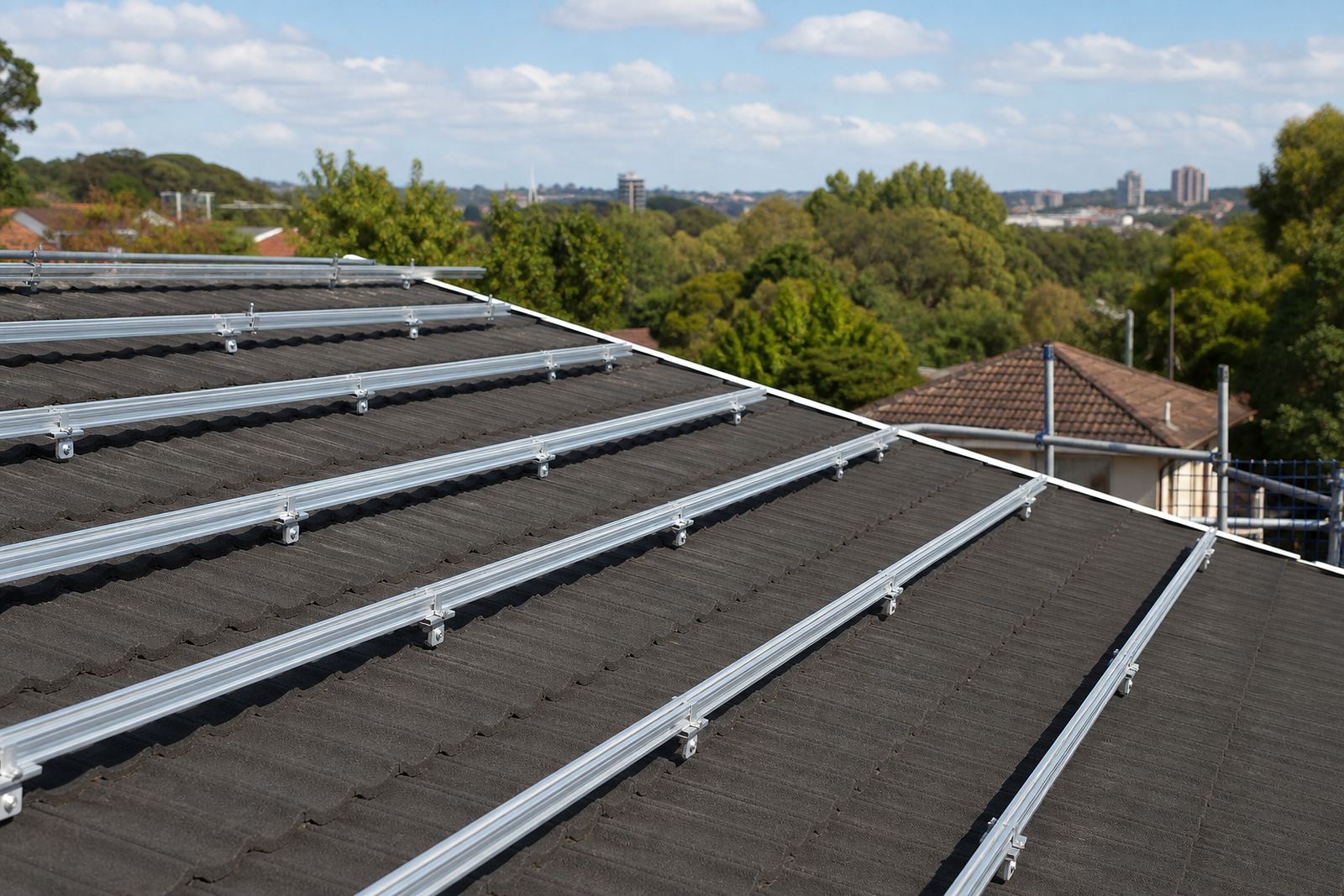
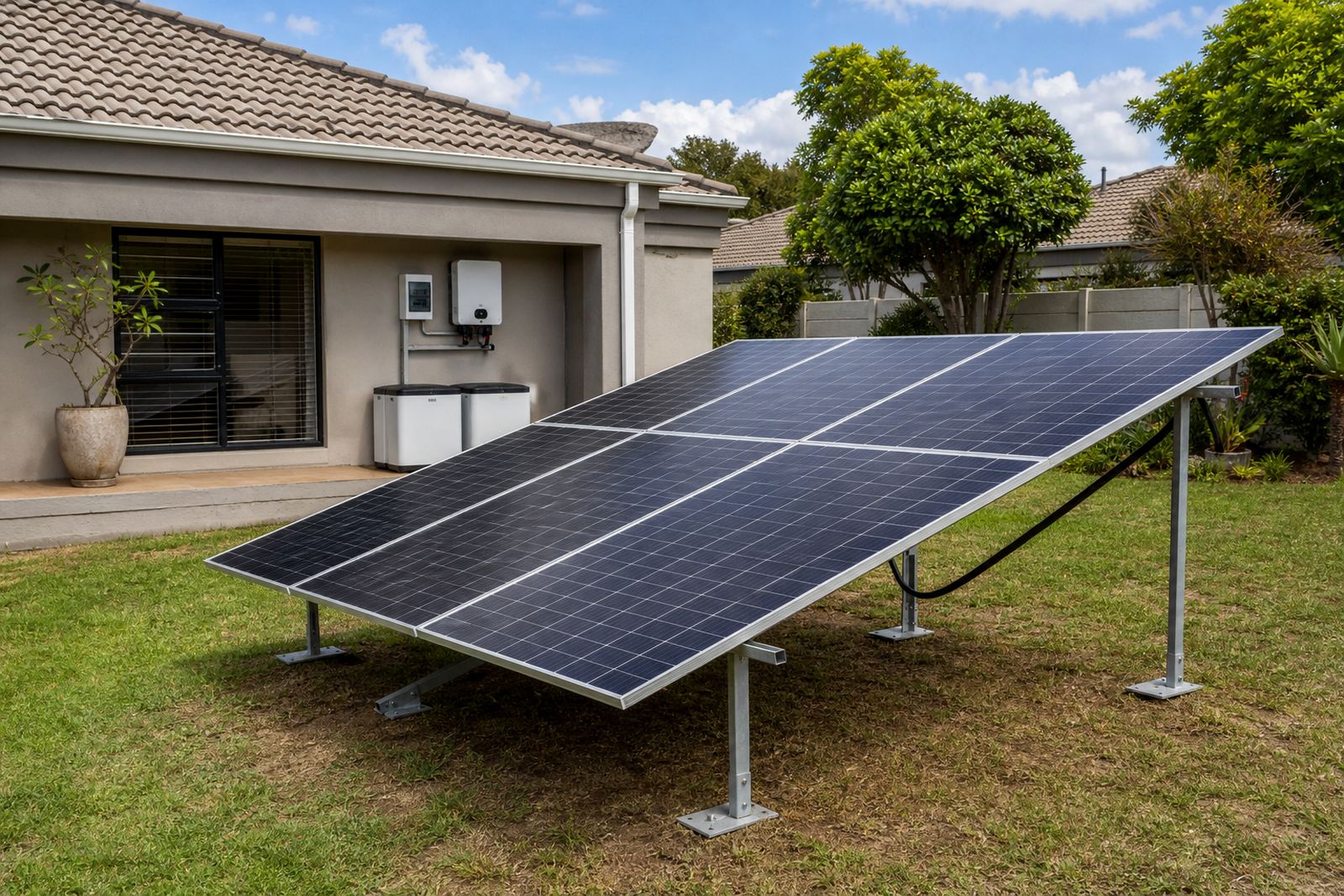
The electrical work normally includes DC and AC isolation, circuit protection, cable termination, system commissioning and checks on the load plan. If the property already has solar panels, the battery can be added into the existing system if the inverter and charge settings are compatible. If the site is starting from scratch, the panel array, inverter and battery should be designed together so the battery can charge properly during local weather conditions and daily usage patterns. In many Pretoria and Centurion homes, this means planning for strong daytime charging and enough reserve for evening loads and load-shedding.
Where municipal rules or estate guidelines apply, those requirements should be checked before work starts. The installer must also make sure the battery room stays dry, tidy and safe from heat, pets and unnecessary traffic.
Power needs, charging habits and backup expectations
Battery performance depends on how much power is drawn, how often the unit is charged, and how the system is managed during outages. A wall battery unit can be used for backup only, or as part of a solar-first setup where daytime solar power carries most of the load and the battery fills the gap after sunset. Homes with heavy cooking loads, geysers or multiple air-conditioners will need a bigger system than a house that only runs lights, internet and a few plugs.
It also helps to think about the type of backup needed. Some clients want short load-shedding coverage, while others need a longer runtime for working from home or keeping a business open during interruptions. A proper site assessment will show whether one unit is enough or whether the design should include more storage. The inverter size, cable run, breaker arrangement and charging source all influence how the battery behaves day to day.
- Confirm which circuits must stay on during outages
- Check inverter capacity and battery compatibility
- Allow enough wall space for access and ventilation
- Plan charging time around local load-shedding and solar output
Upkeep, maintenance and checks before you buy
Wall battery units need simple but regular attention. Keep the area clean, dry and clear of stored goods, and arrange periodic checks on cables, terminals, software settings and mounting brackets. If the property is dusty or close to the coast, inspections matter even more because moisture and fine grime can shorten the life of electrical connections. The battery should not be boxed in tightly or left in direct sun.
When ordering, check the usable storage size, physical dimensions, mounting weight, compatible inverter type, charge settings and warranty terms supplied by the installer or distributor. It is also worth confirming whether the system needs one battery or more, and whether the existing electrical board has enough space for the required protection devices. For small businesses, ask how the load will be split so the battery is not drained by non-essential equipment. Our team in Centurion assists clients across Pretoria, Johannesburg, Durban, Cape Town and Bloemfontein with site assessments, system design, installation, commissioning and fault finding, all with the electrical work handled by qualified installers.
Key facts
| Product type | Wall-mounted battery storage unit |
|---|---|
| Typical use | Backup power and solar energy storage for homes and small businesses |
| Mounting | Wall installation on a suitable load-bearing surface |
| Capacity options | Available in compact, mid-size and higher-capacity storage sizes |
| System compatibility | Works with selected inverter and solar configurations |
| Installation | Must be fitted and commissioned by qualified installers |