What MC4 connectors do on a solar array
MC4 connectors are weather-resistant plug and socket fittings used to join solar panel cables in a safe, tidy way. In a home or small business system, they are commonly used on the roof or mounting structure, where panels are linked into strings before running down to an inverter or other balance of system components. The name is used widely in solar work, but the main point is simple: they help keep the connection firm, polarised correctly and protected from rain, dust and everyday handling.
On a site in Pretoria, Midrand or Durban, these connectors need to cope with strong sun, afternoon storms and regular temperature swings. Around Cape Town and coastal areas, salt air matters too, so the connector body and seal should be in good condition. For small business roofs, agricultural buildings and homes with limited roof space, correct connector choice helps avoid loose joins and unnecessary downtime.
They are not a power source on their own. They form part of the wiring system that carries DC power from the panels into the rest of the installation, where an inverter, battery bank or solar water heating control setup may be involved. Our qualified installers handle the electrical work, test polarity and confirm that each connector is matched properly before commissioning.
Sizes, cable options and matching parts
Most MC4 connectors are used with solar cable in common DC sizes, and the connector choice must match both the cable size and the current the string will carry. The wrong combination can create heat, resistance or a poor seal. For South African homes and small businesses, the usual decision is not only about the panel count but also the layout, cable run length and where the strings will terminate.
Typical options include connector sets for 4 mm² and 6 mm² solar cable. Some systems need inline connectors for panel-to-panel linking, while others need extension leads or branch arrangements for parallel strings. For a roof in Centurion with short cable runs, a standard pair may be enough. On a larger warehouse in Johannesburg or a multi-roof property in Bloemfontein, the installer may specify several connector types to suit the array plan.
- Connector bodies for outdoor DC use
- Male and female matching pair
- Seal and locking mechanism for secure fit
- Compatible with 4 mm² or 6 mm² solar cable, depending on the system
- Suitable for string wiring, extensions and panel interconnections
Always check that the connectors are a proper match for the panel cable, the inverter input limits and the intended string configuration. If the system includes batteries, the DC layout may be different again, so the wiring plan should be checked before any parts are ordered.
Where MC4 connectors suit best
These connectors suit almost any grid-tied or hybrid solar panel installation where outdoor DC cabling is required. They are common on domestic roofs, home offices, workshop units, spaza shop backups and small commercial buildings. They also work well on systems feeding solar water heaters where the electrical control and panel side need reliable connections on site.
In Pretoria and Gauteng, they are often used where installers need quick, neat assembly with a secure lock. In Durban and other humid coastal areas, the sealing quality is important because moisture ingress can cause trouble over time. In Cape Town, wind and salt exposure make good cable dressing and solid locking even more important. In rural or semi-rural areas around Bloemfontein and beyond, dust and heat can shorten the life of poor quality fittings.
They are especially useful where panel strings have to be routed around roof edges, parapets, gutters or plant rooms. Because the connection is compact, it reduces clutter on the roof and keeps maintenance easier later. For small businesses that need access to panels for cleaning or servicing, a neat connector layout also helps technicians work faster and safer.
Installation, electrical work and site practice
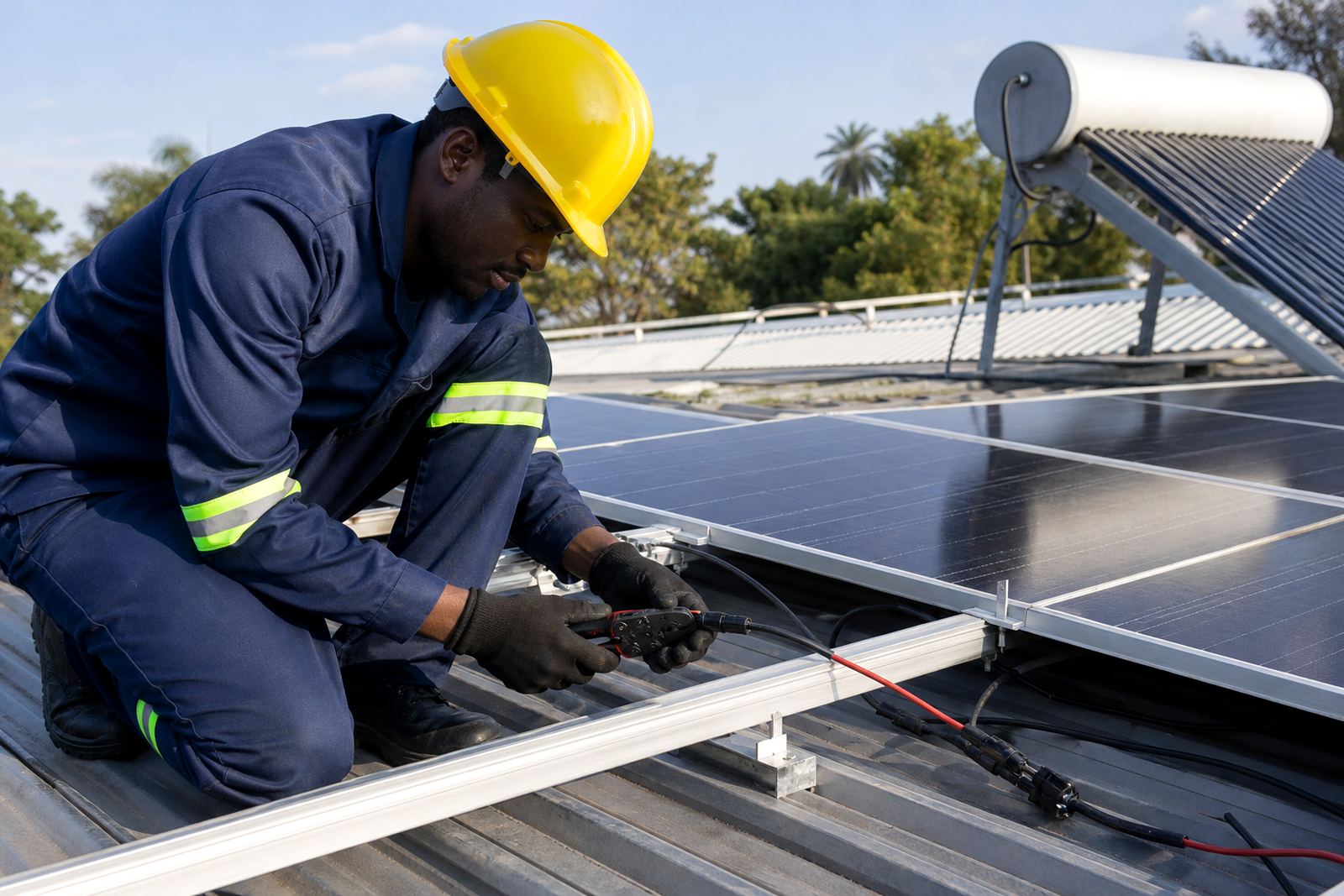
MC4 connectors should be installed by qualified installers who understand solar DC wiring, polarity, string sizing and isolation procedures. A loose crimp or poor seal can create overheating or arcing, which is a serious risk on any solar site. Before final connection, cables must be cut cleanly, stripped to the right length and crimped with the correct tool. The lock should click into place fully and the joint should be checked by hand, not just pushed together and left.
For homes and small businesses, good site practice includes keeping the connections off standing water, out of roof drainage paths and away from sharp sheet metal edges. Where cabling runs through conduit or under panels, the installer should allow for movement from heat and wind. On projects in Pretoria and Johannesburg, summer heat can expand cable runs. On coastal sites, fittings must be checked for any sign of corrosion or salt build-up during service visits.
- Use matched male and female parts only
- Confirm cable size before crimping
- Check polarity before energising the string
- Keep joints accessible for future fault finding
- Use proper DC isolators and commissioning tests
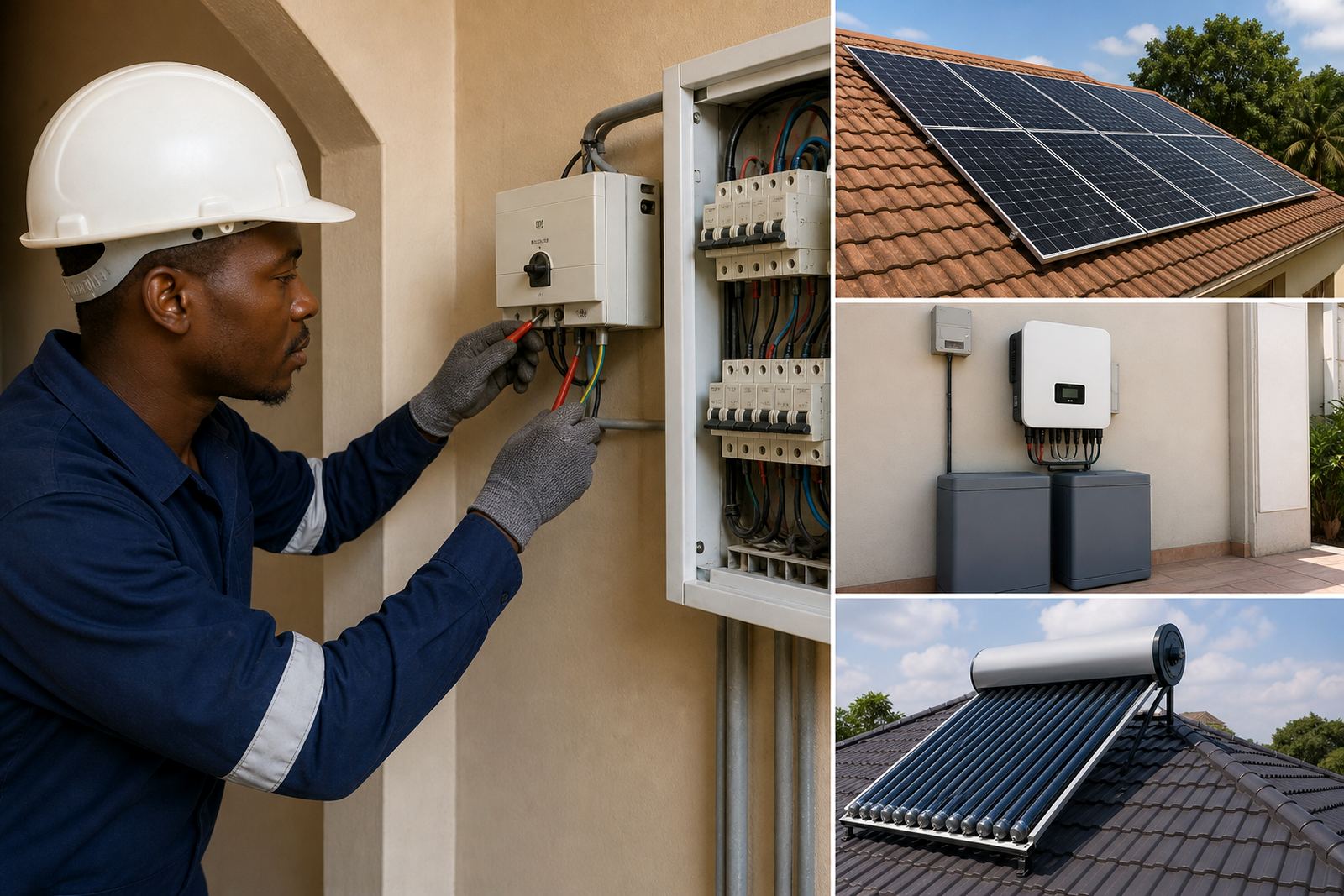
If the system includes inverters, batteries or solar water heating controls, the wiring route may need additional protection and labelling. Our team in Centurion handles site assessments, system design, panel installation, inverter installation, battery installation, water heater installation, electrical integration and system commissioning across Gauteng and other major centres.
Care, servicing and fault finding
MC4 connectors do not need much day-to-day attention, but they should be checked during solar maintenance visits. A connector that has worked loose, heated up or been exposed to moisture can cause intermittent faults that are hard to trace later. If a system starts tripping, underperforming or showing string errors, the connectors are one of the first places a technician should inspect.
Panel cleaning and general roof maintenance are also a good time to look for cracked housings, discoloured plastic, damaged seals or signs of cable stress. On older installations, UV exposure can make some parts brittle. In windy areas, cable strain from poor clipping can also put pressure on the joint. Regular servicing is especially useful for small businesses that rely on solar to keep basic operations going during load-shedding.
If replacement is needed, it is better to change both sides of the pair rather than just one part of the connection. A fresh connector fitted to an aged or damaged mate may still give trouble. Our support callouts and fault finding service can identify whether the issue is with the connector, the cable, the string layout or another part of the solar system.
What to check before you order
Before ordering MC4 connectors, make sure you have the right details for the job. The most useful information is the solar cable size, the number of strings, the panel layout and whether you need straight pairs, branch connectors or extensions. If you are adding them to an existing system, check the make-up of the current wiring carefully so the new parts match the old ones properly.
It also helps to know where the system will be used. A roof in Pretoria may face different heat and dust conditions from a coastal site in Durban or a commercial building in Cape Town. If the installation includes batteries, the DC side may need a separate arrangement from the panel string connections. For solar water heaters, confirm whether the connector is needed on the panel circuit or on a related control line.
- Cable size: 4 mm² or 6 mm², or another specified size
- Type needed: straight pair, branch or extension
- System type: grid-tied, hybrid or solar water heating support
- String count and panel layout
- Exposure conditions: inland, coastal, roof or plant room
If you are unsure, send the details through our enquiry form on the contact page and we can help assess the right option for your site. We work from our base in Centurion, Pretoria, and supply and install for homes and small businesses across South Africa, including Pretoria, Johannesburg, Durban, Cape Town and Bloemfontein.
Key facts
| Product type | Weather-resistant DC solar connector set |
|---|---|
| Typical cable compatibility | 4 mm² and 6 mm² solar cable, subject to system design |
| Use | Panel string connections, extensions and branch wiring |
| Environment | Outdoor roof use, dust, heat, rain and coastal humidity |
| Installation | To be fitted by qualified installers only |
| Common system fit | Homes and small businesses with solar panels, inverters, batteries or solar water heaters |