What lithium batteries do in a solar system
A lithium battery stores electricity from solar panels or the grid so it can be used later when demand is higher or when supply drops during load-shedding. In a properly sized system, it works with the inverter to keep lights, Wi-Fi, fridges, security equipment, office point of sale gear and selected plugs running for the right amount of time.
These batteries are built for repeated charge and discharge cycles, which makes them suitable for daily use in South African homes and small businesses. They are a practical choice where battery storage is needed often, not only once in a while.
- Stores power for evening use and outages
- Supports daily cycling better than older battery types
- Works with solar inverters and controlled charging settings
- Useful in areas with frequent load-shedding or unstable supply
Sizes and setup options to match your load
Lithium batteries are available in a range of storage sizes, usually measured in kilowatt-hours (kWh). Smaller homes may only need one compact unit for backup essentials, while larger homes, workshops and offices may need multiple units connected together for more storage and longer runtime.
The right size depends on what you want to keep running, how long you need backup for, and how much solar charging you have during the day. A fridge, gate motor, lights and internet need a very different battery size from an office with computers, printers and air conditioning. It is worth planning this properly before ordering.
- Common storage ranges include smaller, medium and larger battery banks
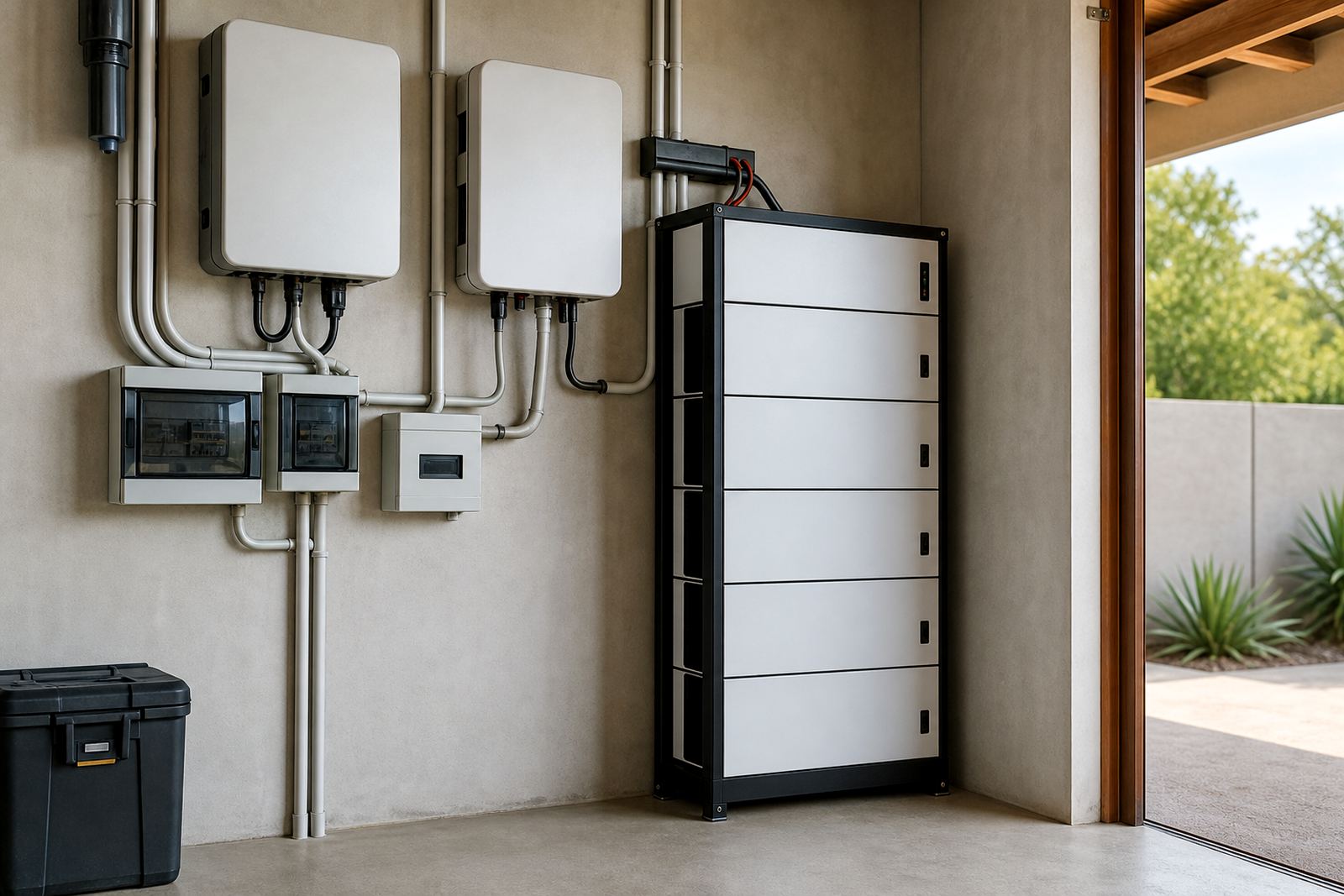
- Can be used as a single unit or combined in parallel, where supported
- Useful for both compact backup systems and larger hybrid systems
- Best matched to inverter size and daily usage pattern
Where lithium batteries suit homes and businesses
In Pretoria, Centurion, Johannesburg, Midrand, Durban, Cape Town and Bloemfontein, many properties use lithium batteries because they handle regular power interruptions and daily cycling well. They are suitable for suburban homes, townhouse complexes, small retail shops, medical rooms, offices, guest houses and small production spaces.
They are also a good option in coastal areas where humidity can be higher, as long as the installation is done correctly and the battery is kept in a dry, ventilated space. In hotter inland areas, placement matters too. A battery that sits in a sealed scullery or direct sun can age faster, so the location should be planned with care.
- Homes needing backup for lights, internet and fridges
- Small businesses that cannot afford long downtime
- Sites with regular daily charging and discharging
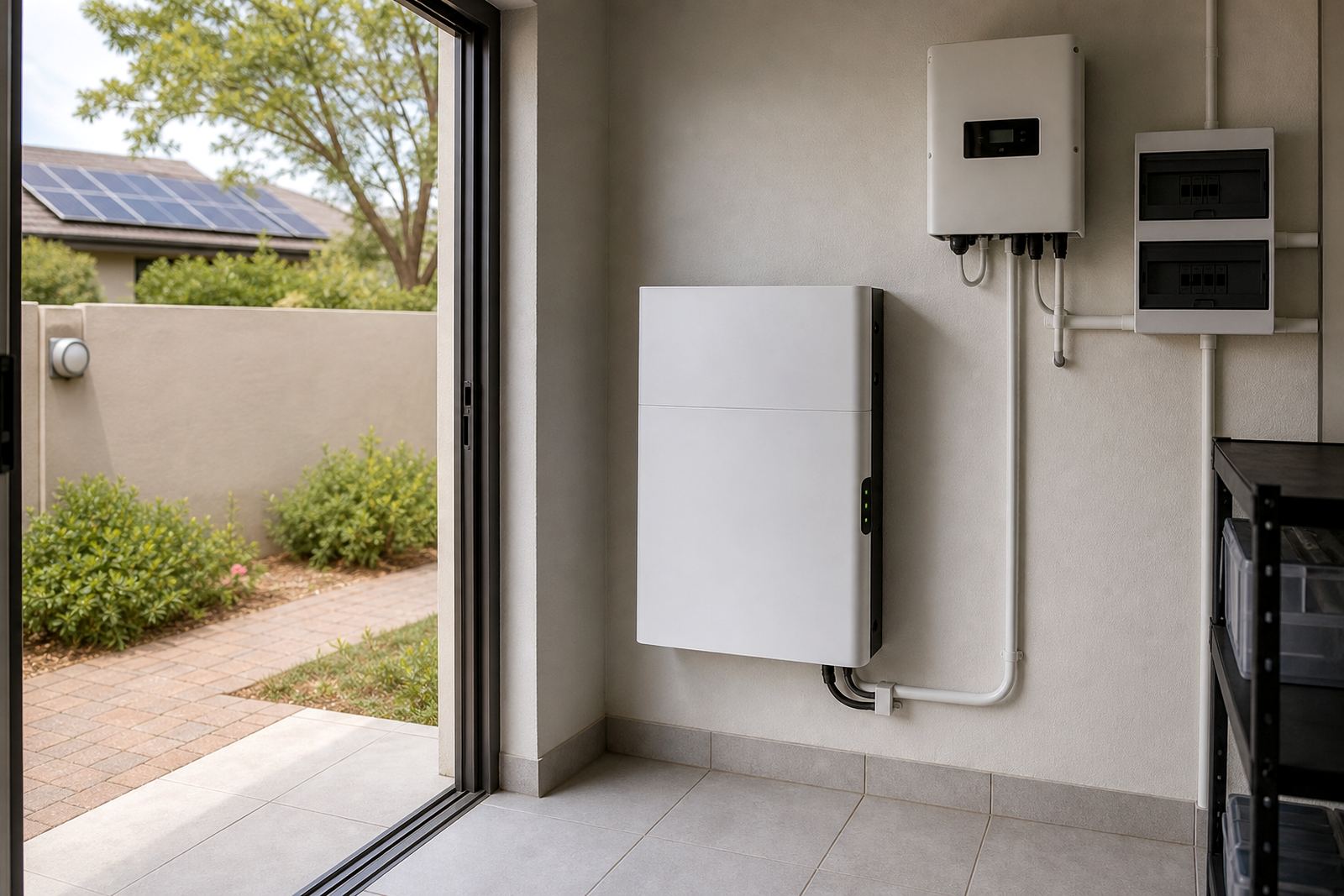
- Properties where neat wall or floor mounted storage is needed
Installation, electrical integration and power needs
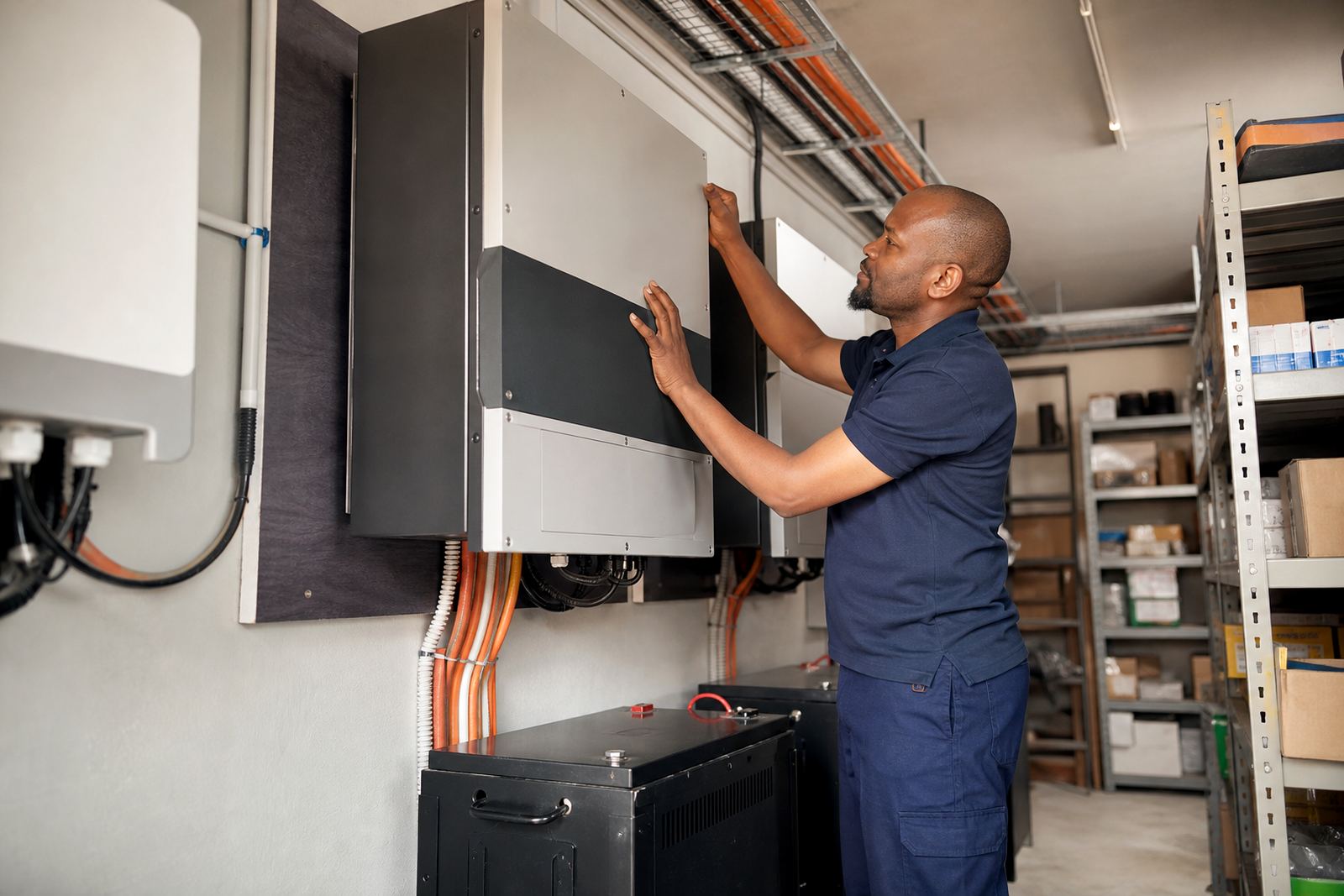
Lithium batteries must be installed by qualified installers, with the electrical work done properly and in line with safe practice. The battery is connected to the inverter, protection equipment and cabling, then commissioned so charging limits, cut-off settings and communication settings are correct for the system. This is not a plug and play item for a solar system.
Battery installations also need enough ventilation, suitable cable sizing, correct isolation and a tidy mounting position. For homes and businesses in Gauteng and other regions, the installer should check whether the battery room, garage or utility area has enough space and whether the inverter and battery can be mounted where they are protected from heat dust and moisture.
- Requires inverter compatibility and correct battery communication where applicable
- Needs suitable cabling, breakers and isolation devices
- Should be installed in a dry, cool and accessible area
- May need wall mounting or a floor standing cabinet, depending on the model
Care, servicing and battery health
Lithium batteries need less day-to-day attention than many older storage options, but they still benefit from proper care. Keep the area clean, avoid blocking airflow, and make sure the system is not overworked by appliances that were not included in the original design. Regular servicing helps pick up loose connections, warning codes, communication faults or unusual charging behaviour before they become bigger problems.
In places with heavy dust or coastal moisture, a periodic check is sensible because terminals and connections must remain sound. If the system is used every day, the battery should be reviewed as part of solar maintenance, along with the inverter and panels. That way the full system keeps performing as expected.
- Keep the battery area dry and free from clutter
- Check for warning lights, alarms or app notifications if used
- Arrange periodic inspection of cabling and terminations
- Do not overload the system by adding extra appliances without review
What to check before you order
Before ordering a lithium battery, check your inverter size, the appliances you want to back up, and how long you need power during an outage. It also helps to know whether you want backup only, or a battery that will cycle every day with solar charging. These choices affect the size and type of battery you need.
You should also check the mounting space, indoor temperature, and whether the battery will be installed near an electrical board or in a utility area with enough room for service access. If you are buying for a small business, include the start-up surge of equipment such as pumps, fridges or office machines. That detail is often missed and then the battery is undersized.
- Inverter compatibility and battery voltage range
- Required backup time and expected daily cycling
- Available wall or floor space for installation
- Indoor conditions, especially heat, dust and moisture
- Which loads must stay on during load-shedding
Ordering support from Pretoria to the rest of South Africa
We supply and install solar batteries for homes and small businesses from our base in Centurion, Pretoria, and work across Pretoria, Johannesburg, Midrand, Durban, Cape Town and Bloemfontein. Our team can assess the site, recommend a suitable storage size, carry out the installation and commission the system so it is ready for use.
Whether you are planning a new solar system or adding storage to an existing one, the process starts with a proper enquiry and site review. That lets the team check the electrical setup, your daily usage and the room available for the battery. It saves time later and helps avoid ordering the wrong size, which is a costly mistake.
- Site assessments for homes and small businesses
- Battery installation and electrical integration by qualified installers
- System commissioning and after-installation support
- Support callouts, fault finding and maintenance if needed
Key facts
| Battery type | Rechargeable lithium storage for solar systems |
|---|---|
| Typical use | Backup power and regular daily cycling |
| Common applications | Homes, small businesses, offices, shops and guest houses |
| System compatibility | Works with suitable solar inverters and charge settings |
| Installation | Qualified installers handle mounting, wiring and commissioning |
| Service areas | Pretoria, Centurion, Johannesburg, Midrand, Durban, Cape Town, Bloemfontein |