How AC Changeover Units Work in a Solar Setup
An AC changeover unit is switching equipment fitted on the alternating current side of a solar installation. It lets the installer select where the load is fed from, usually from municipal supply, an inverter output, or a backup source, while keeping the changeover controlled and visible. In practical terms, it helps prevent unsafe back-feeding and reduces the risk of damage to appliances or the inverter when power returns or fails.
For many Pretoria homes and small business premises, this is the part that makes the electrical layout easier to manage. It is especially useful where essential circuits must stay powered, but non-essential loads need to be isolated during outages or when running on limited backup capacity.
- Used on AC circuits after the inverter
- Helps isolate loads during supply interruptions
- Supports manual or automatic switching, depending on the unit selected
- Installed as part of a properly planned solar or backup system
Sizes, Ratings and Switching Options Available
AC changeover units come in different current ratings and enclosure sizes, so the right choice depends on the size of the property and the load being carried. Smaller homes often need a compact unit for a few essential circuits, while shops, offices and small workshops may need a larger distribution layout with more pole capacity and stronger cable terminations.
Common options include single phase and three phase changeover arrangements, with manual switch units and controlled automatic types for installations that need quicker transfer. Some setups only need a basic two source switch, while others require a more detailed arrangement that separates lighting, plug points, geysers, pumps or office equipment.
- Single phase or three phase options
- Manual and automatic switching styles
- Different current ratings to suit light or heavier loads
- Wall mounted enclosures for neat indoor installation
When selecting the size, it is important to check the inverter output, the supply type, the number of circuits to be changed over and the cable size already in place. A unit that is too small can run hot, while one that is oversized for the job may add cost without improving performance.
Where AC Changeover Units Suit Best
These units suit properties that need a clear and safe way to move between utility power and solar backup. In houses, they are often used for kitchen sockets, lights, gate motors and selected appliance circuits. In small businesses they can support tills, office lighting, security systems, routers and refrigeration where an uninterrupted supply matters.
They are also useful in coastal areas such as Durban and Cape Town where humidity can affect electrical fittings if the enclosure is poor or the installation is rushed. In hotter inland areas like Gauteng, good cable routing and ventilation help reduce wear on nearby equipment. For farms, home offices, clinics, workshop units and small retail spaces, the main benefit is orderly switching with less disruption to daily work.
- Homes with essential backup circuits
- Small businesses with critical equipment
- Properties adding solar panels and batteries later on
- Installations needing cleaner separation between grid and inverter supply
Installation, Electrical Integration and Power Needs
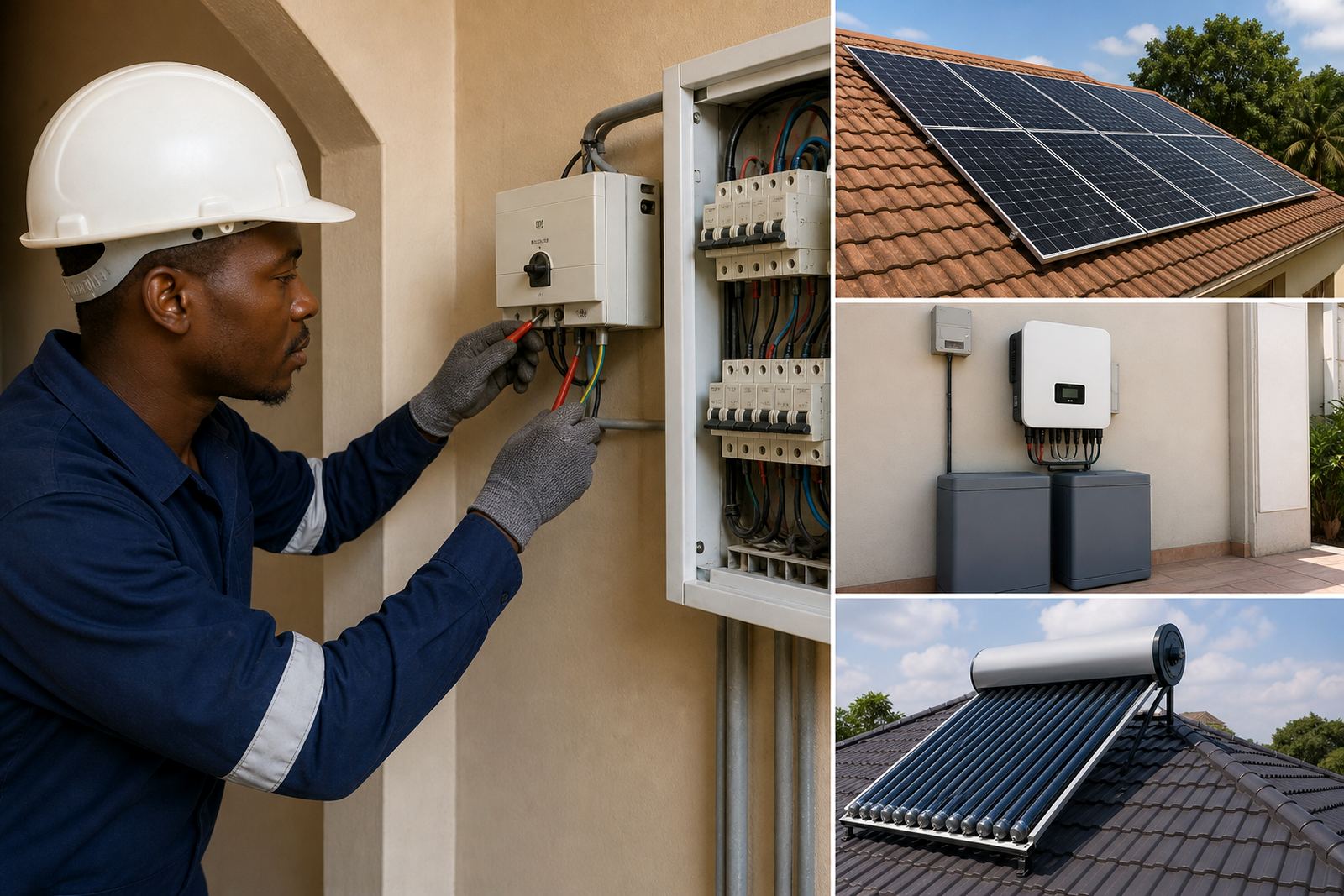
AC changeover units must be installed by qualified installers, with the electrical work carried out to suit the full system design. That includes checking the inverter output, battery support, load profile, earthing and the arrangement of the distribution board. If the switch is fitted badly, the whole system can become unsafe or trip at the wrong time.
Our team in Centurion, Pretoria handles site assessments, system design, electrical integration and commissioning for homes and small businesses across Pretoria, Johannesburg, Midrand, Durban, Cape Town and Bloemfontein. The right installation will also consider municipal supply rules, the position of the main isolator, cable protection, and whether the property needs a dedicated essential loads board or a full changeover arrangement. Electrical work is done by qualified installers, and the switchgear is tested before handover.
Power needs are important. A changeover unit must match the supply type and the expected current draw, and it must allow for future changes if you later add a battery bank, extra panels or a bigger inverter. In some cases a manual switch is enough. In others, an automatic unit is better where quick transfer is needed for security systems or equipment that cannot be left off for long.
Care, Testing and Routine Servicing
AC changeover units do not need complicated care, but they do benefit from regular checks. Dust, heat, loose terminals and moisture can affect performance over time, especially where the enclosure is outside or near a laundry, garage or workshop. During routine solar maintenance, the installer should inspect the switch, test the transfer action and look for signs of burning, discolouration or mechanical wear.
If a property has frequent load-shedding, the unit may be operated often, so a simple visual inspection can prevent bigger problems later. Cleaning around the enclosure, keeping insects out and checking that cable glands are tight all help. Where the installation is close to the coast, corrosion should be watched more carefully. In Gauteng, the main issue is often dust and heat buildup.
- Check for loose terminals and heat marks
- Test switching action during planned maintenance
- Keep the enclosure clean and dry
- Use fault finding support if loads trip unexpectedly
What to Check Before Ordering One
Before ordering an AC changeover unit, it helps to know the supply type, the inverter size and which circuits must be included. A good order starts with the number of poles required, the current rating, the mounting style and whether the unit must work with a generator, inverter or both. If the property is adding solar water heaters or other equipment later, it is worth planning for the future now rather than replacing switchgear later.
Have the following details ready when you send through an enquiry form on our contact page:
- Single phase or three phase supply
- Inverter rating and backup source type
- Essential loads to be switched
- Indoor or outdoor mounting location
- Preferred manual or automatic switching
- Any space limits in the existing distribution board
Our team can then advise on a practical setup for your home or business, whether you are in Pretoria, Centurion, Johannesburg, Midrand, Durban, Cape Town, Bloemfontein or elsewhere in South Africa. The aim is simple: a neat installation that works properly when the power goes off and that still makes sense when the supply comes back on.
Key facts
| Type | AC changeover unit for solar and backup installations |
|---|---|
| Supply options | Single phase or three phase |
| Current ratings | Selected to suit the inverter and load, from smaller home setups to heavier small business use |
| Switching style | Manual or automatic, depending on system design |
| Typical use | Changeover between grid, inverter and backup supply |
| Installation | Qualified electrical installation with testing and commissioning |
| Maintenance | Periodic inspection, terminal checks and functional testing |