What half cell panels are and why they suit local roofs
Half cell panels are solar panels built with cells split into two halves, which helps reduce internal resistance and improve performance when the panel is working under mixed conditions. On South African roofs that can mean a better fit for morning shade, afternoon heat and the patchy cloud cover that comes through in places like Pretoria, Johannesburg and Durban. They are commonly used where owners want a practical panel setup that handles day to day use well, without needing a complicated roof layout.
These panels are suitable for tiled roofs, IBR roofs and flat roof mounting systems, provided the structure is sound and the mounting plan is correct. They are often chosen for homes, small offices, retail units and light commercial sites where roof space matters and a clean installation is important. In areas with coastal humidity, dust, or frequent load shedding, good panel placement and correct wiring make a real difference to how the system performs over time.
Panel sizes, ratings and layout options
Half cell panels come in different sizes and power ratings, so the right choice depends on roof space, electricity use and the rest of the system. For smaller homes, a panel with a lower watt rating may suit a modest roof area. For larger homes, workshops and small businesses, higher output panels can reduce the number of modules needed. We help customers compare the options in plain terms, not just by wattage but by how they will actually fit on the roof.
Common layout choices include single row arrays, split roof arrays and east west arrangements where available roof space is limited. The panel choice also needs to match the inverter and battery setup if the property is going off grid or using backup storage. If the roof has shade from trees, parapet walls or nearby buildings, panel positioning should be planned carefully so the system is not held back by one poor spot.
- Suitable for smaller and larger roof spaces
- Works with grid tied, backup and hybrid solar setups
- Can be arranged around chimneys, vents and roof angles
- Useful where one section of the roof receives more sun than another
Where half cell panels fit best in Pretoria and beyond
Half cell panels are a strong option for residential properties, sectional title homes, small business premises and agricultural outbuildings that need dependable daytime generation. In Pretoria and Centurion, they are often installed on family homes with pitched roofs and on business units where roof space is shared with other equipment. In Johannesburg and Midrand, they are useful on sites where shading changes during the day. In Durban and Cape Town, they also need good mounting, corrosion aware fixings and sensible cable routing because coastal humidity can shorten the life of poor quality parts.
They work well on properties that want to run essential appliances during outages, or reduce reliance on the grid during the day. For small businesses, that can include lights, office equipment, fridges, access control and point of sale equipment. For homes, it may include geysers, pool pumps, fridges and everyday plug loads. The panel itself is only one part of the system, so the final setup should be matched to the inverter, batteries if needed, and the load profile of the building.
Installation, electrical integration and roof safety
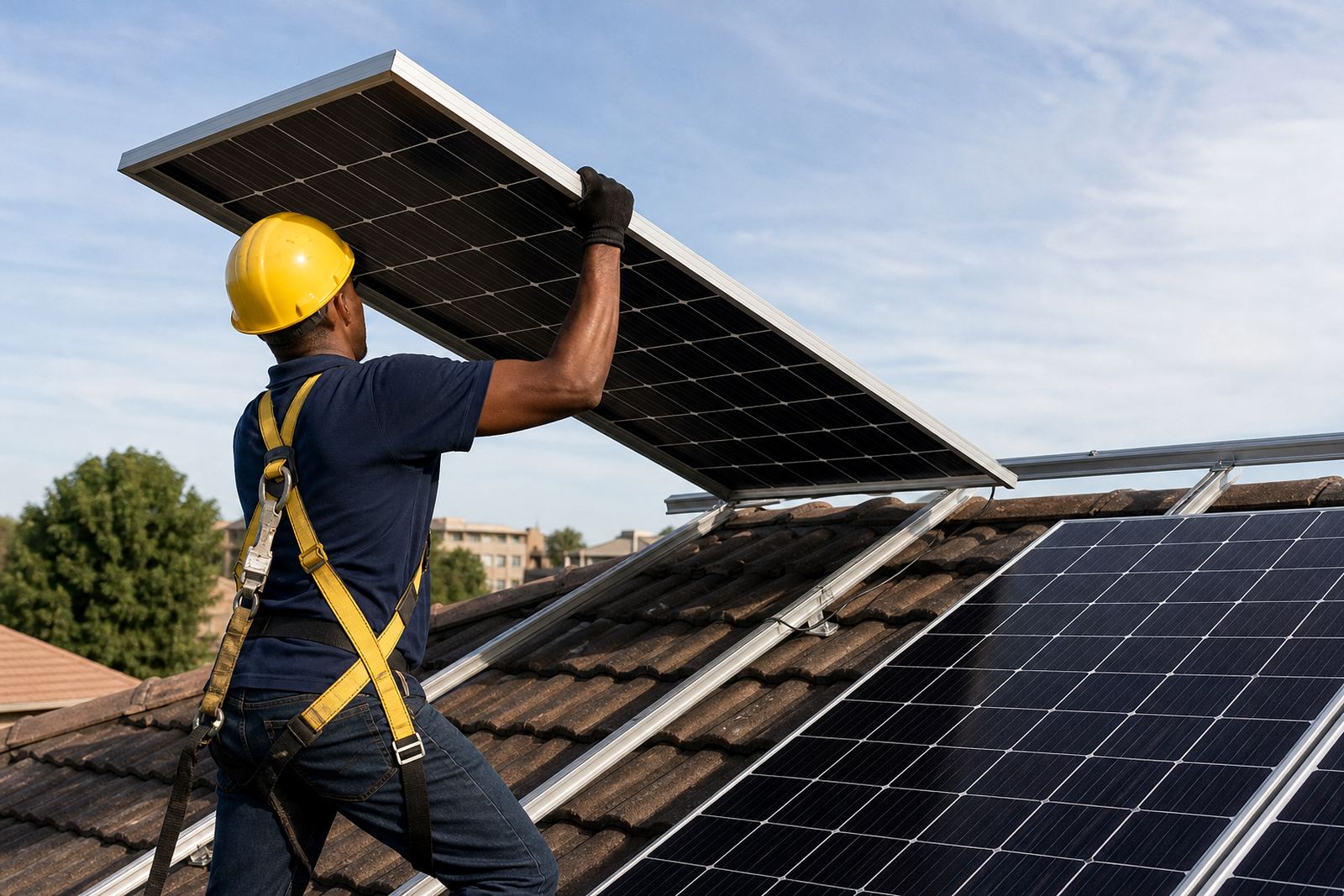
Every panel installation starts with a site assessment. We look at roof condition, shade, cable routes, mounting points and the expected electrical load before recommending a layout. After that, our team designs the system and carries out the installation with qualified installers handling the electrical work. This includes the inverter connection, protection devices, earthing and final commissioning so the system is safe and properly set up.
Good installation is not only about bolting panels to the roof. It is also about using the correct brackets, keeping water out of roof penetrations, and making sure the cabling is neat and protected from sun and wind. If the property has an older electrical board or needs extra circuits for backup, that should be checked before the job starts. In South Africa, a neat installation also helps with future maintenance and avoids problems when municipal rules or property management requirements need documentation.
- Site assessment before any work starts
- Roof mounting matched to roof type and condition
- Qualified installers handle all electrical connections
- System commissioning after installation
Care, cleaning and servicing after installation
Half cell panels do not need daily attention, but they do need occasional care. Dust, bird droppings, pollen and salt build up can reduce output, especially on roofs near busy roads or in coastal areas. A gentle panel cleaning service helps keep the modules working properly, and it also gives us a chance to check the mounting, cable condition and isolators. In dry parts of Gauteng, dust can collect quicker than many owners expect, so a regular check makes sense.
We also offer solar maintenance, fault finding and support callouts where panels are underperforming or the system is tripping. If production drops off, the problem may be shading, dirt, loose wiring or an issue elsewhere in the system. It is worth checking the inverter screen, battery status and the visible condition of the array before assuming the panels are faulty. A small issue left for too long can become a larger one, so early servicing is worth the effort.
What to check before you order panels
Before ordering, it helps to know how much roof space is available, what the building uses power for, and whether the system is for daytime use only or backup during load shedding. You should also check the roof type, the age of the roof, and whether there is any shade at different times of day. If you are adding batteries later, it is better to plan for that from the start so the inverter and panel count are suitable.
It also helps to confirm whether the installation will include electrical integration, commissioning and any follow up support. For water heating projects, we can also include solar water heater installation where that makes sense alongside panels. When you send through an enquiry from our contact page, we can talk through the layout, the roof conditions and the product mix that will suit the property best.
- Roof size and roof type
- Shade from nearby trees or buildings
- Whether you need backup power or daytime use only
- Inverter and battery compatibility
- Access for safe installation and future servicing
Key facts
| Product type | Half cell solar panels for residential and small business use |
|---|---|
| Typical use | Daytime generation, backup support and hybrid solar systems |
| Available sizes | Multiple watt ratings and panel dimensions depending on roof space |
| Mounting options | Pitched roofs, flat roofs and mixed roof layouts |
| Installation | Site assessment, panel installation, electrical integration and commissioning |
| Service coverage | Pretoria, Centurion, Johannesburg, Midrand, Durban, Cape Town, Bloemfontein and wider Gauteng |