Battery cabinet basics for indoor solar storage
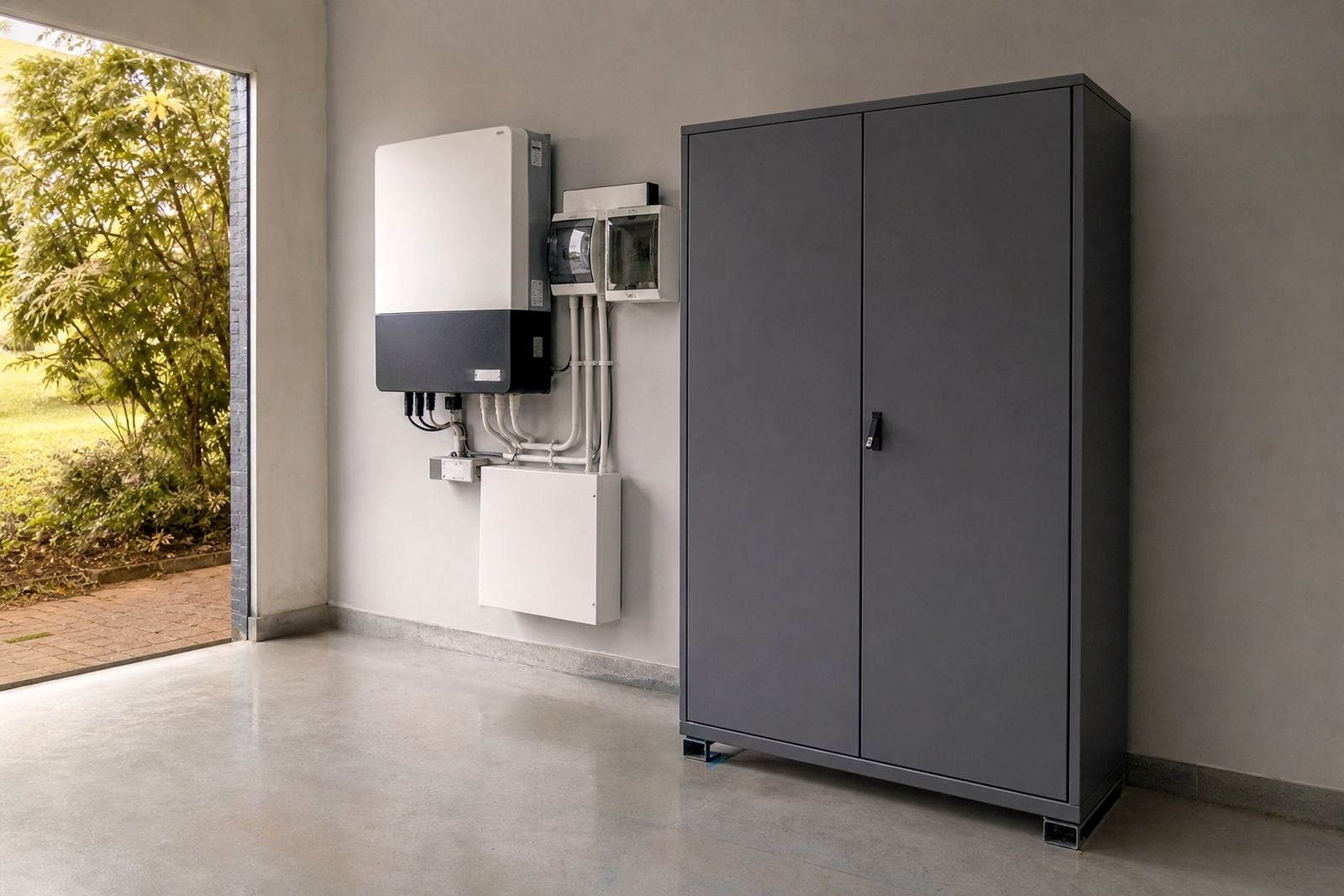
A battery cabinet is a lockable steel enclosure that houses one or more batteries in a fixed, organised position. It helps keep the installation tidy, limits accidental contact with live terminals and makes it easier for an installer to route cables, fit protection equipment and carry out checks later on. In a solar setup, the cabinet usually sits close to the inverter and distribution board so the cable runs stay short and neat, which is important in homes and small businesses where wall space is often limited.
For Pretoria, Centurion and the rest of Gauteng, indoor battery storage is common because batteries need shelter from direct sun, rain, dust and coastal humidity when equipment is being used in other parts of the country. A cabinet is not a power source by itself, but it forms part of a complete storage system that includes batteries, an inverter and the right protection gear. Electrical work must be handled by qualified installers, especially where changeover, isolation and earthing are involved.
Cabinet sizes and layout options
Battery cabinet options vary by battery count, cabinet depth and whether the system uses wall-mounted or floor-standing units. Some installations only need a compact enclosure for a small backup setup, while others need a taller cabinet with room for several batteries, busbars, breakers and monitoring equipment. The right size depends on the battery chemistry, total storage capacity, available wall space and the airflow needed around the batteries.
- Single-battery or small backup cabinets for light domestic use
- Mid-size floor cabinets for a few batteries and tidy cable entry points
- Larger multi-battery enclosures for small business loads
- Cabinets with adjustable mounting rails or shelves
- Ventilated models for systems that need extra air movement
Some customers want a narrow cabinet that fits in a passage cupboard, while others need a heavier enclosure in a storeroom or utility area. For homes in Johannesburg or Cape Town where indoor space is tight, a slimmer cabinet can be useful. For shops, medical rooms or small offices in Durban or Bloemfontein, a larger unit may be better if the system will be expanded later.
Where a battery cabinet suits best
Battery cabinets suit locations where the batteries must stay protected and out of sight, yet remain easy to service. They are commonly used in garages, utility rooms, storerooms, back offices and dedicated plant spaces. They are also useful where children or staff move around the area and the batteries need a proper barrier. In a small business, a cabinet can help keep the solar installation in line with house rules, fire safety planning and general workplace order.
They are a practical choice for load shedding backup, small commercial solar storage and hybrid systems that carry daytime loads and evening backup. If the site is dusty, exposed to moisture or has frequent foot traffic, an enclosed cabinet can help protect the battery bank from knocks and debris. It does still need to be placed where there is enough clearance for inspection, cable work and heat movement, so it should not be jammed into a sealed corner.
- Homes wanting neat indoor battery storage
- Small businesses with limited back-of-house space
- Sites that need controlled access to the batteries
- Installations where cable management matters
- Systems that may be expanded in stages
Installation, ventilation and electrical integration
A battery cabinet has to be installed on a level surface or properly fixed to the wall or floor, depending on the model. The installer must check weight, floor strength and access before placing any batteries inside. Good practice is to allow space around the cabinet for airflow and servicing, and to keep it away from heat sources, damp walls and direct sunlight. If the cabinet is used in an enclosed room, ventilation should be considered carefully so heat does not build up around the batteries or inverter gear.
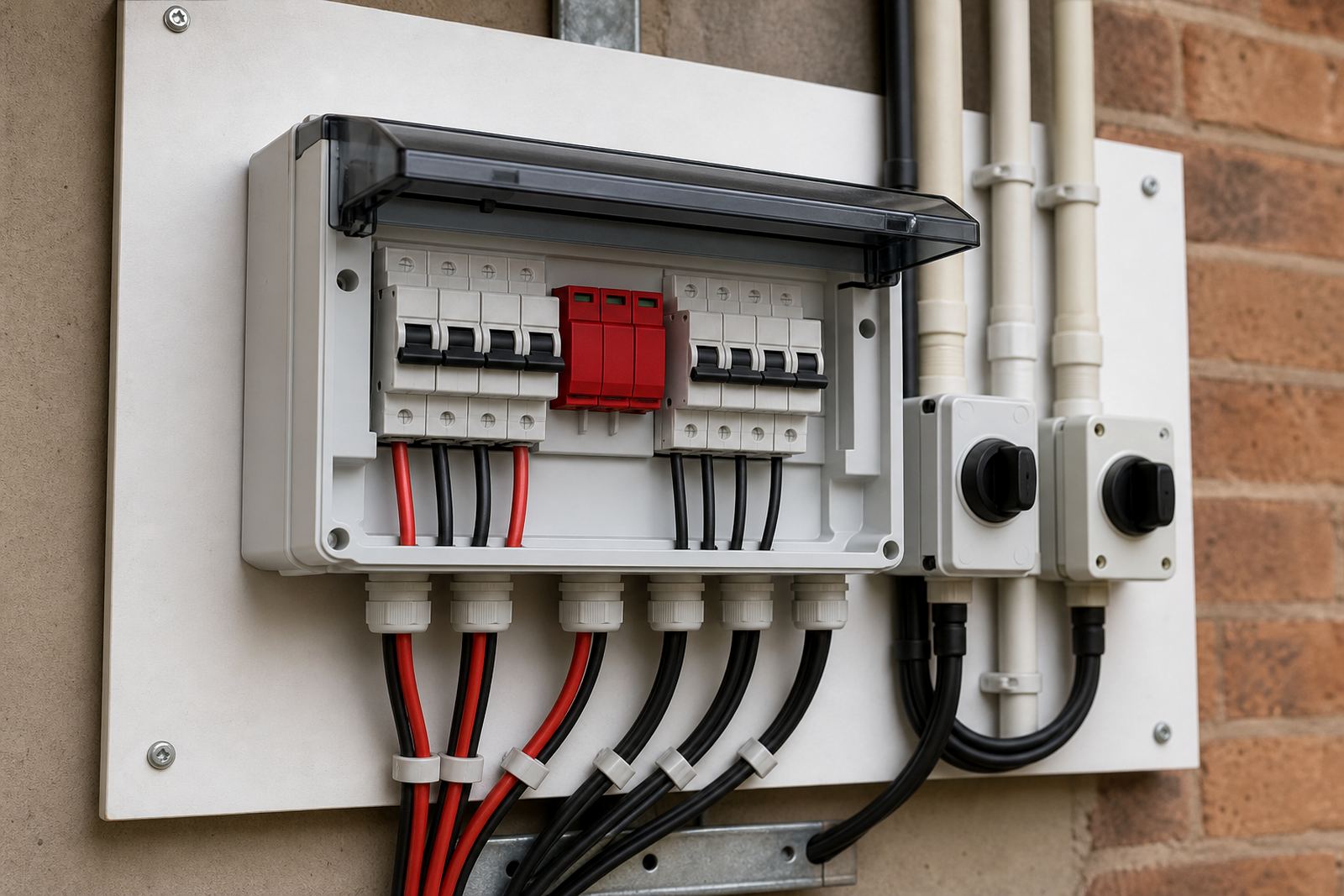
Battery systems also need correct electrical integration. That includes suitably sized cable, protective devices, correct polarity, isolation points and a clear route for maintenance. Some systems require communication wiring to the inverter or battery monitor as well. There is no gas supply needed for the cabinet, but there must be enough airflow for the equipment fitted inside. All electrical connections should be done by qualified installers, not by general labour, because poor terminations can cause fault trips, heating or system failure.
Care, cleaning and long-term servicing
Once installed, a battery cabinet needs simple but regular care. Keep the area around it clear, wipe off dust, and check that vents, latches and access doors still close properly. If the cabinet is installed in a coastal or high-humidity area, inspect it more often for corrosion on fasteners or cable entry points. In inland areas, dust from garages and workshop spaces is often the main issue, especially where vehicles are parked nearby.
Regular servicing should include checking cable tightness, temperature around the batteries, signs of swelling or damage, and any alarms from the inverter or battery management system. If the cabinet has filters or ventilation openings, these should be cleaned as part of routine maintenance. A battery cabinet should not become a storage shelf for paint, tools or cleaning chemicals, because that blocks access and raises risk.
- Check for loose fixings and worn cable glands
- Keep vents and access paths clear
- Remove dust with a dry cloth or soft brush
- Watch for rust, heat marks or unusual smells
- Book fault finding early if the system trips often
What to check before ordering a cabinet
Before ordering, measure the installation area carefully and confirm the number of batteries, their dimensions and their total weight. It helps to know whether the batteries will stand on a shelf, a tray or a base plate, and whether the inverter will be mounted inside the same room or nearby. Also check the doorway width, the route to the installation point and whether the floor can take the load. For apartments, compact townhouses and older buildings in Pretoria or Johannesburg, access can matter as much as cabinet size.
You should also confirm whether the cabinet needs front access only or front and side access, how much airflow is required, and whether there is enough room for future expansion. If the site uses solar water heating as well, keep that equipment separate so maintenance stays simple. A proper order also considers cable entry, lock type, finish colour, and whether the cabinet must be fixed against vibration or placed where municipal or building rules apply.
- Battery count, chemistry and overall weight
- Cabinet height, width and depth
- Clearance for doors, cable bends and servicing
- Ventilation needs and room temperature
- Fixing method and floor loading
Key facts
| Cabinet type | Indoor steel battery enclosure for solar storage |
|---|---|
| Common use | Homes, small businesses and backup power rooms |
| Typical fitment | One battery up to multi-battery bank layouts |
| Mounting | Floor-standing or wall-fixed, depending on model |
| Environment | Dry indoor space with clearance and ventilation |
| Installation | Done with electrical integration by qualified installers |