What a String Inverter Does on a Solar System
A string inverter is the unit that takes direct current from a group of solar panels and changes it into alternating current for your building. In a simple setup, several panels are linked in a string and brought back to one inverter, which keeps the system neat and easier to manage. For many Pretoria homes, offices, shops and small workshops, this is still one of the most practical options because it is straightforward to install and service.
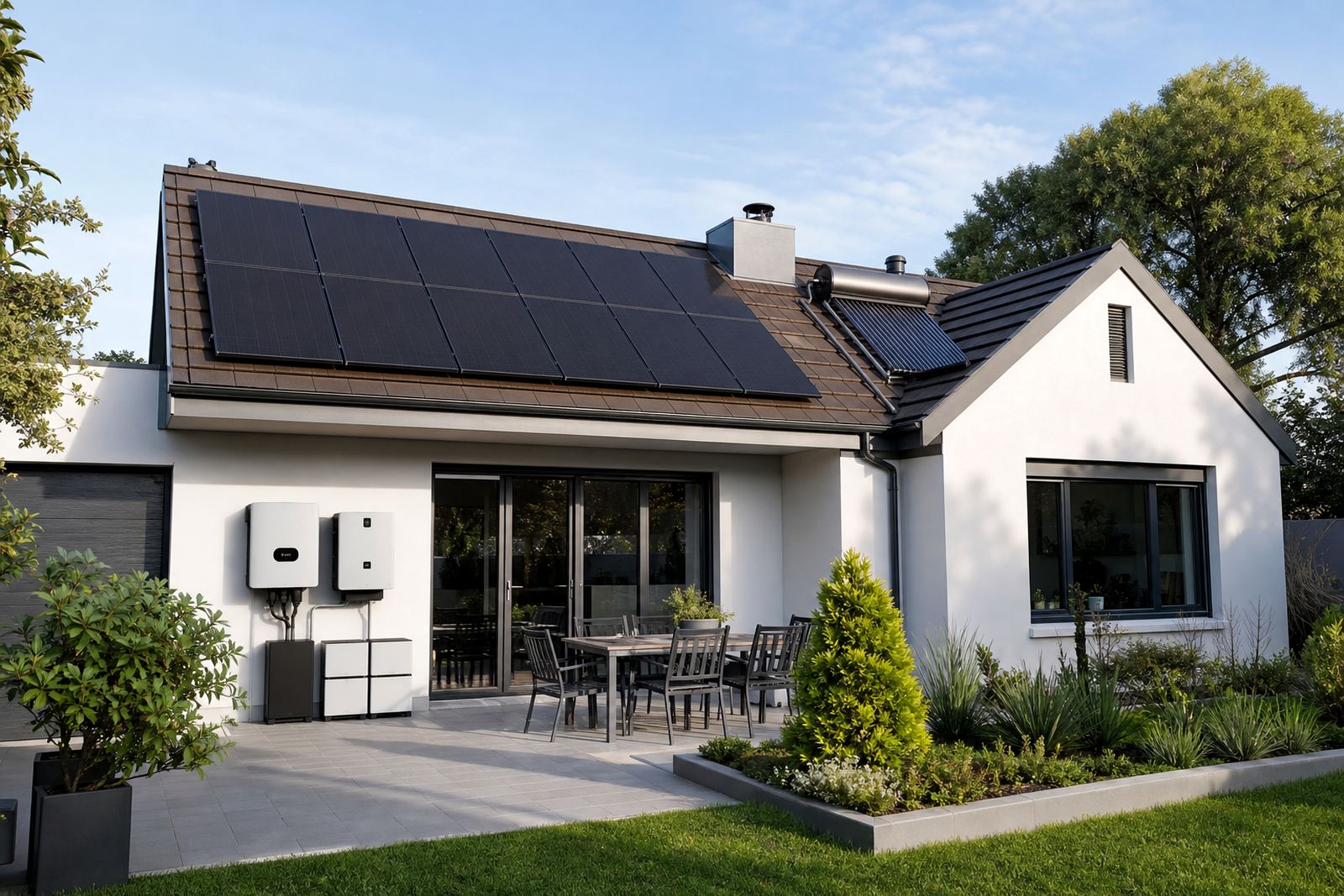
This type of inverter is usually fitted where the solar array has a clear roof orientation and limited shading. It works well on tiled roofs, corrugated metal roofs and ground mounted arrays where the panel layout is planned properly. If you have load-shedding, a small daytime business load or need to support essential circuits, a string inverter can form the core of a sensible solar setup.
It is important to match the inverter to the panel string voltage, the number of panels and the expected load. Getting that right from the start helps the system run properly in Gauteng heat and in coastal humidity if you are supplying a site in Durban or Cape Town.
Common Sizes and Options for Local Properties
String inverters come in different sizes, usually measured in kilowatts. The right size depends on how many panels are installed and how much power you need during the day. For smaller homes, a unit in the lower kilowatt range may be enough, while a larger home or small business can need a bigger unit with more input capacity. On a commercial site, it is often better to size the inverter to the load profile instead of guessing.
When we spec a system, we look at the array voltage range, the number of MPPT inputs and whether the inverter is intended for grid tied use, hybrid use or solar plus battery use. Some string inverters are set up for only one roof face, while others can handle more than one input group. That matters on sites with different roof angles, partial shading or separate building blocks.
- Smaller homes: suitable for essential daytime loads, lighting and basic appliances
- Medium homes: suited to broader household use with careful load planning
- Small business sites: useful for offices, retail spaces and light workshop loads
- Multi roof layouts: best when the panel strings can be grouped by orientation
We also check whether the inverter can work with future battery addition, or if it will stay as a solar only unit. That gives you room to expand later without redoing the whole system.
Where String Inverters Suit Best
This product suits sites with simple roof structures and regular sun exposure. If the roof faces in one main direction and shade from trees, water tanks or nearby buildings is limited, a string inverter is often a cost conscious choice. In Pretoria, Centurion, Midrand and Johannesburg, it is common on homes, clinics, offices and small retail units where the day load is steady.
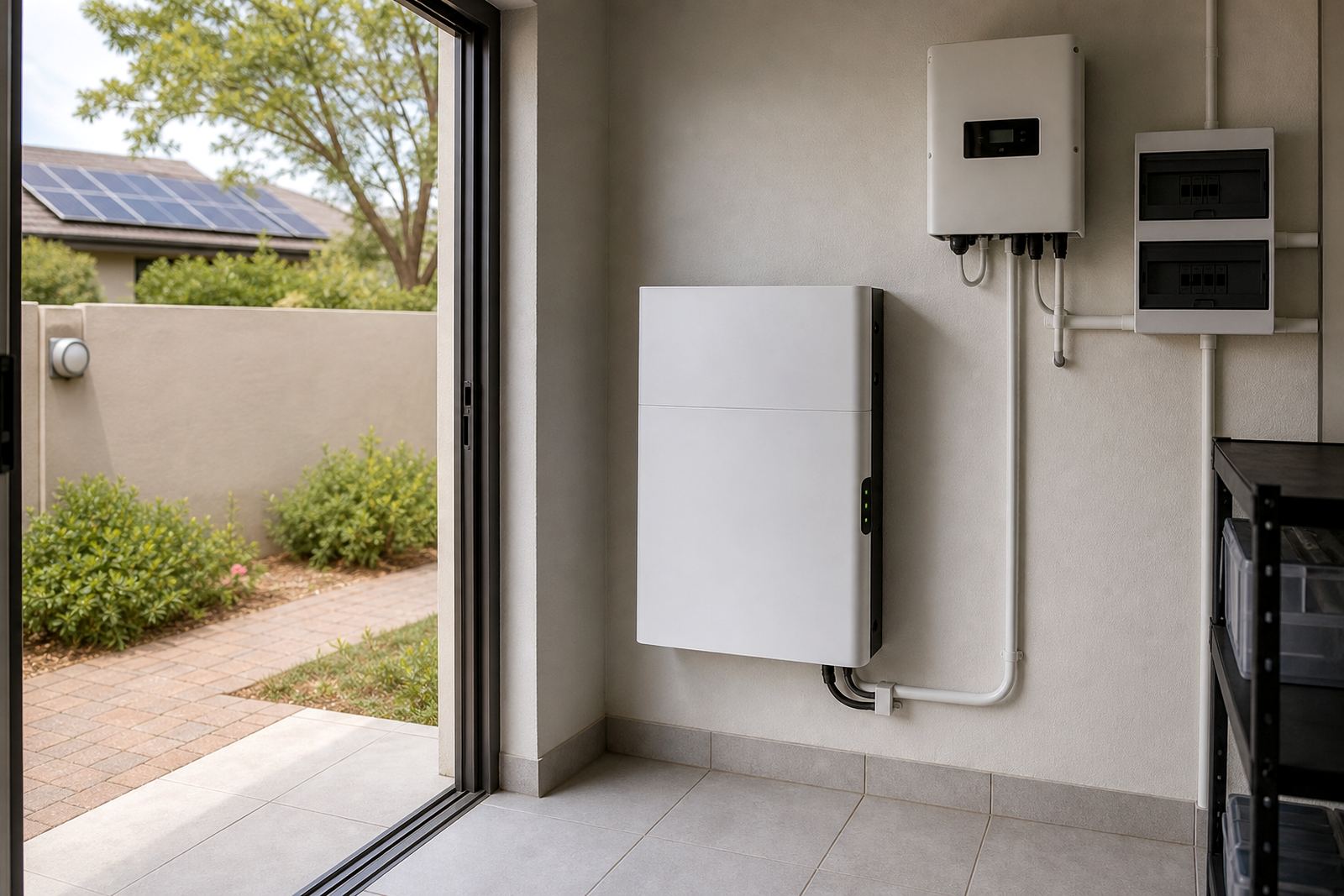
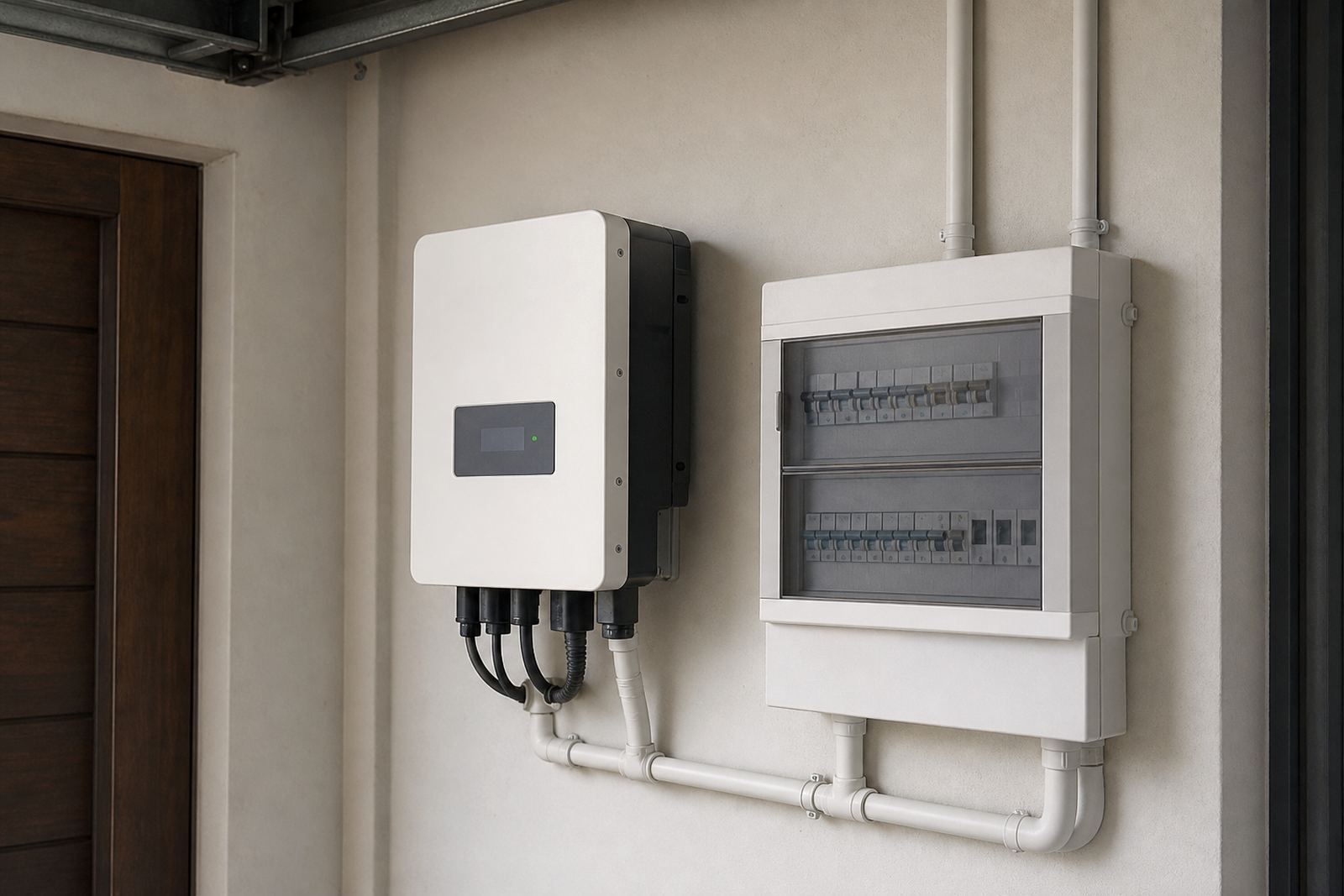
It is also a practical option for properties that want a cleaner installation with fewer components on the roof and fewer things to maintain there. Because the inverter sits at a central point, fault finding is usually more direct. That can be helpful when power interruptions happen and a site needs a quick check from a technician.
- Homes with one main roof face and limited shading
- Small businesses with consistent daytime use
- Buildings where cable runs can be kept tidy and short
- Sites that want a simple solar panel system without complex routing
If your property has heavy shade, multiple roof directions or frequent growth from nearby trees, we may recommend a different layout. The aim is to make sure the inverter and panel arrangement match the real site conditions, not just the brochure numbers.
Installation, Electrical Integration and Power Requirements
Installation is done by qualified installers, and all electrical work must be handled correctly from the start. That includes DC cabling from the panels, AC connection to the distribution board, protection equipment, earthing and final commissioning. On many sites in Gauteng, we also need to check the existing board layout and whether the property is ready for solar integration without overloading the main supply arrangement.
A string inverter needs enough space for ventilation and safe access. It should not be squeezed into a hot storeroom, damp corner or a place with poor airflow. In coastal towns like Cape Town and Durban, we also look at corrosion resistance, mounting height and cable protection because humidity can shorten the life of poor fittings. If the system includes a battery later, the layout must allow for that connection path too.
Some string inverter systems run only when grid power is present, while others can work with batteries and backup arrangements. The exact setup depends on the model, the battery interface and the site load. For small businesses, we normally plan around what must stay on during outages, such as lights, routers, point of sale equipment and selected plugs.
Care, Servicing and Fault Finding
A string inverter needs modest but regular care. The unit itself should be kept clean, dry and well ventilated. The panel side of the system should also be checked for dust, bird droppings and debris, especially after dry windy periods in Pretoria or winter dust around industrial areas. Dirty panels can reduce the input going into the inverter and make the whole system underperform.
Servicing usually includes checking cable terminations, isolators, mounting points, display readings and any warning lights or fault codes. If the site has battery support, we also inspect the battery interaction and charging behaviour. Fault finding is often quicker on a string system because the layout is structured, but it still needs a proper diagnosis by someone who understands solar and electrical work.
- Check airflow around the inverter every few months
- Keep the area free of dust and stored materials
- Watch for unusual heat, noise or error messages
- Book a service if output drops or trips keep happening
For small businesses, scheduled maintenance is useful before the busy season or after a storm. It helps avoid downtime when you need the system most.
What to Check Before You Order
Before ordering a string inverter, confirm the size of your panel array, the roof layout and the loads you want to run. If the panels are split across different directions, ask whether the chosen inverter has enough MPPT inputs. If the system is meant for both solar and battery use, make sure the inverter is compatible with that plan from the beginning. It saves time and avoids replacing parts later.
Also check the installation space, ventilation, cable route and the condition of the existing electrical board. If the property is in a municipality with specific connection rules, the design should be prepared with that in mind. On residential sites and light commercial sites across South Africa, proper planning often makes the difference between a neat reliable system and one that keeps giving trouble.
- Number of panels and expected panel voltage
- Single roof face or multiple roof faces
- Need for battery support now or later
- Available wall space, ventilation and cable routing
- Load profile during load-shedding and normal daytime use
At Linuo Solar, we help customers in Pretoria, Johannesburg, Durban, Cape Town and Bloemfontein choose the right setup for the site. Enquiries come through the contact page form, and our team can assist with system design, panel installation, inverter installation, electrical integration, commissioning and aftercare.
Key facts
| Type | String inverter for solar panel systems |
|---|---|
| Typical use | Homes and small businesses |
| Power range | Available in several kilowatt sizes |
| Inputs | Single or multiple MPPT options depending on model |
| Installation | Wall mounted, installed by qualified installers |
| Maintenance | Cleaning, inspection and fault finding as needed |