What rack battery units do in a working business
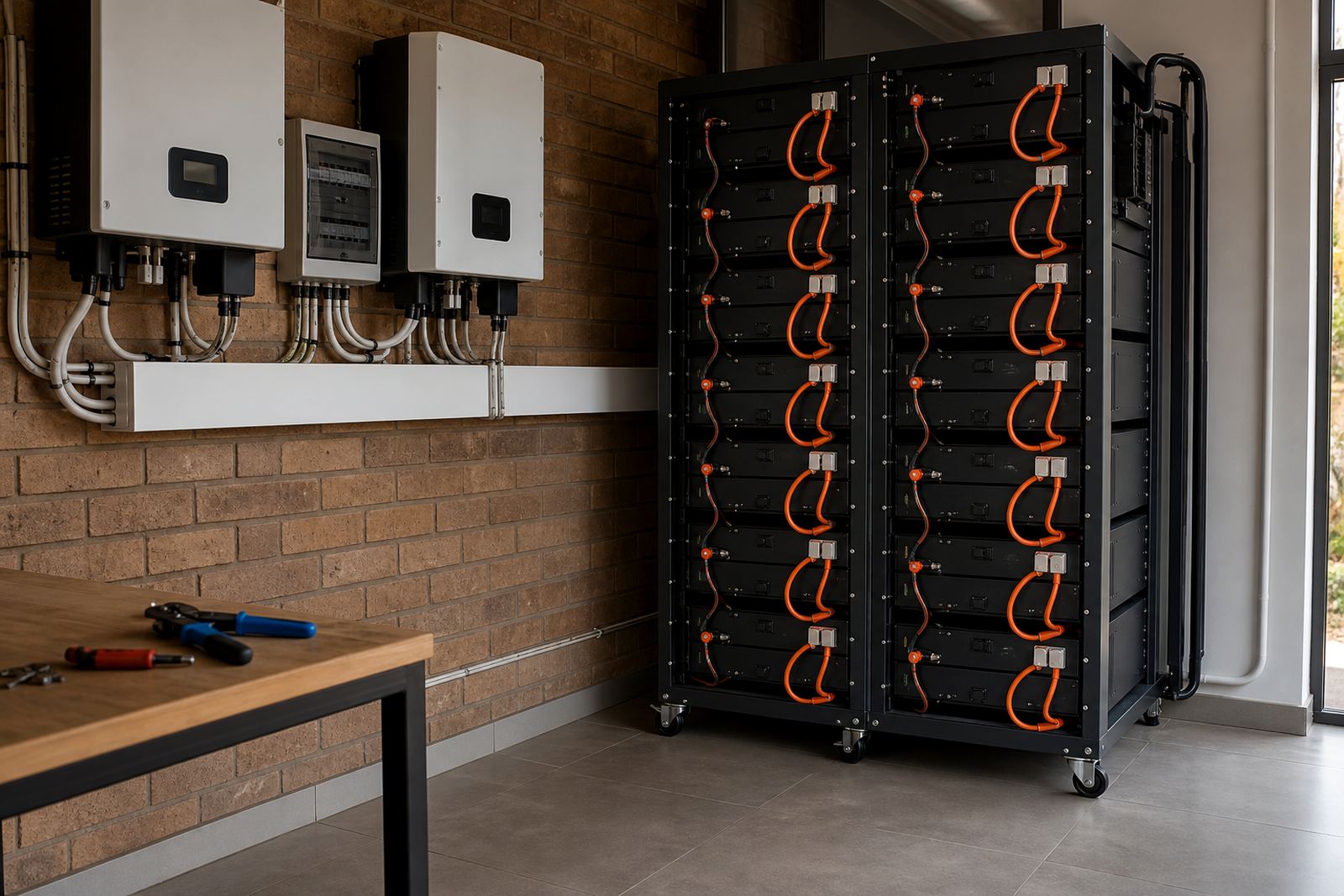
Rack battery units are modular batteries arranged in a stack or cabinet, so you can start with one capacity and add more later as your needs change. They are commonly used with solar panels and an inverter to store daytime power for evening use, or to keep essential circuits running during outages. In a small office, retail store, workshop or consulting space, this helps keep lights, routers, security systems and selected plug points running when the grid is unstable.
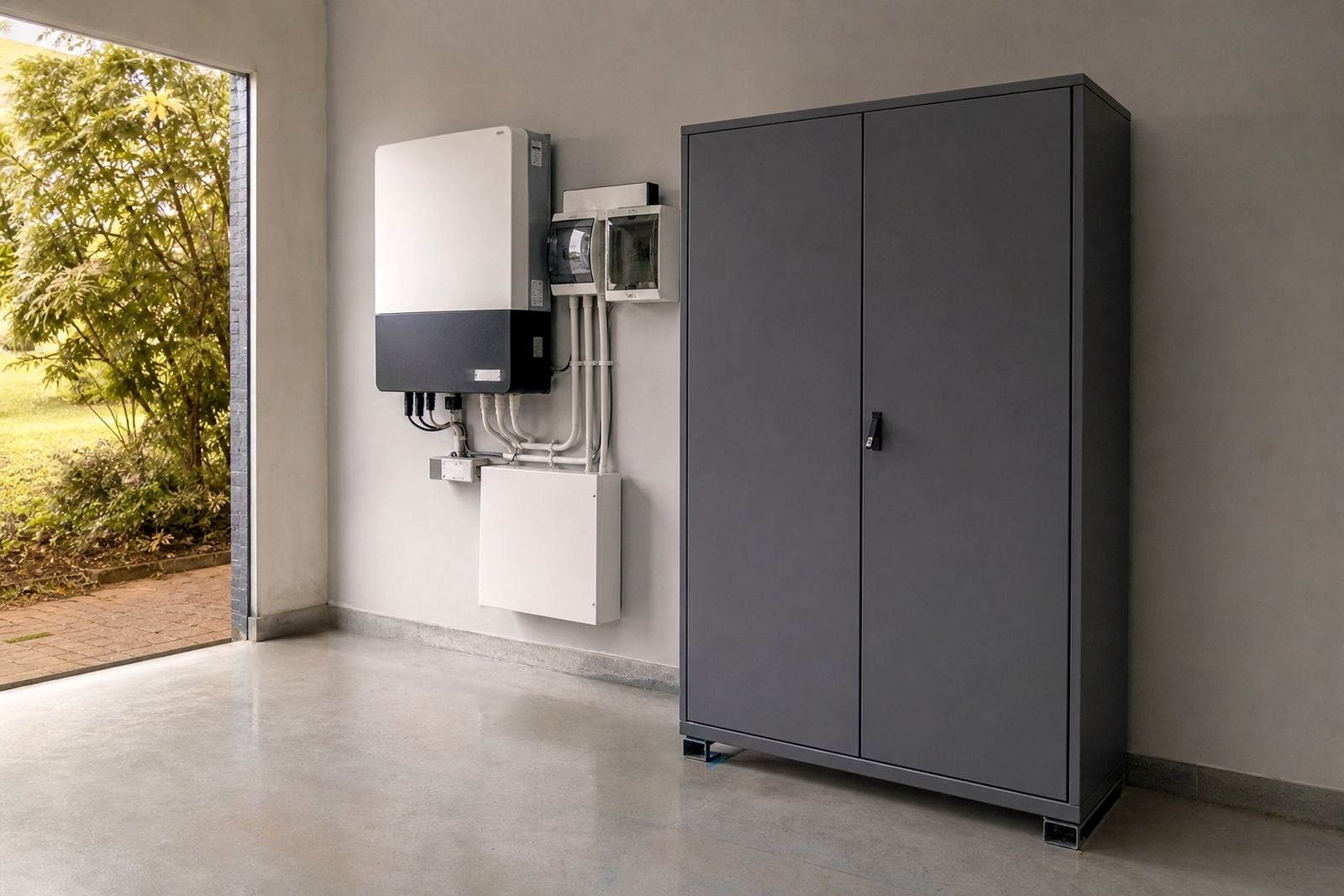
These batteries are not a generator and they do not make power on their own. They store electricity and release it when needed, which is why the inverter setup, battery size and charge settings all have to be matched properly. In Pretoria and Centurion we often see businesses want a tidy indoor battery bank that does not take up floor space, and rack units are a practical answer for that.
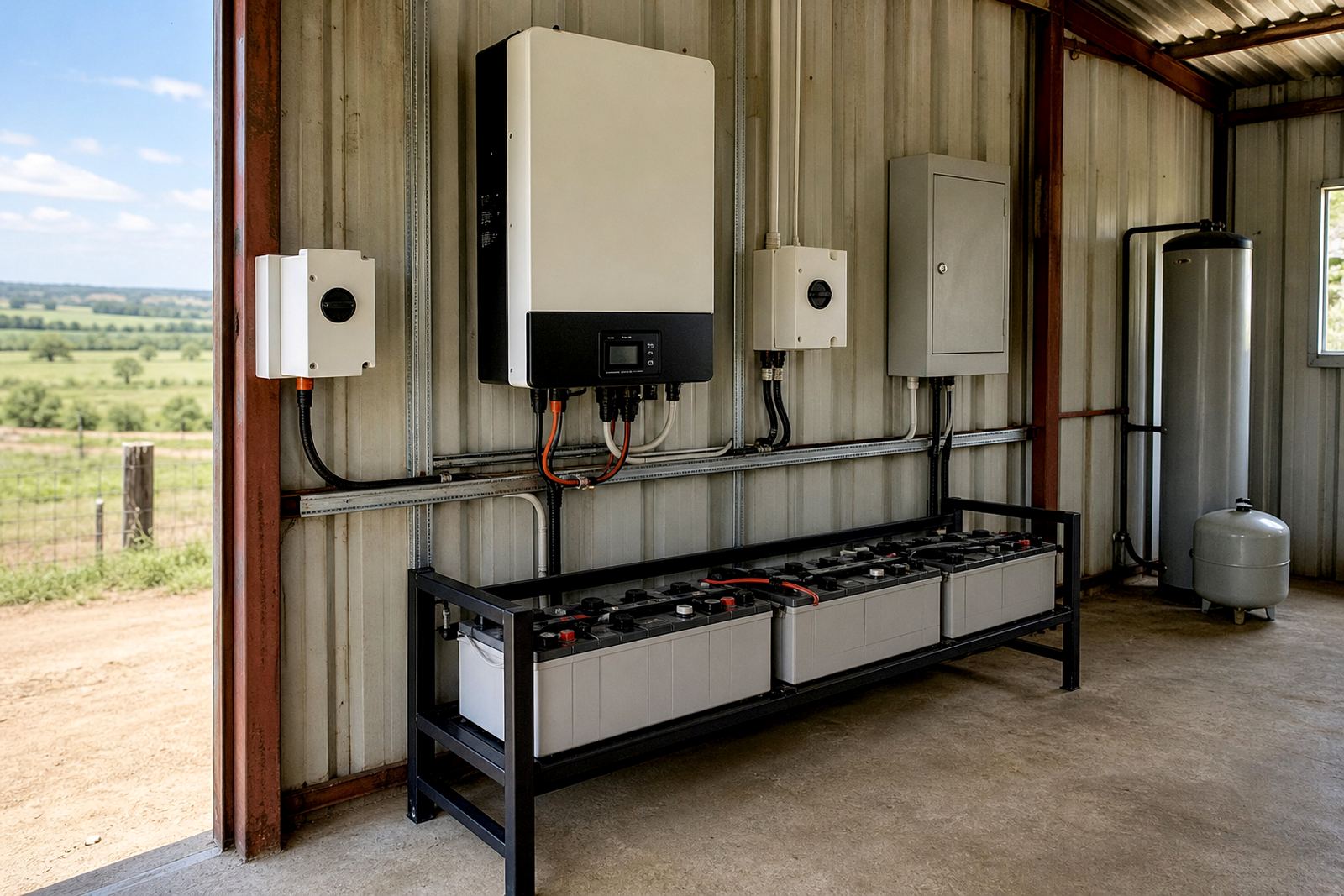
The battery bank is usually built into a metal rack, with each module carrying part of the total storage. That makes the system easier to scale later. If your business grows, you can add modules without redoing the whole room, provided the inverter and wiring are sized for the extra load.
Sizes and options for different storage needs
Rack battery units come in different storage capacities and physical sizes, so the right choice depends on your daily usage, the number of backup hours you want, and the inverter you are using. Smaller systems suit reception areas, admin spaces and compact offices. Larger banks are better for shops, medical rooms, training spaces or light industrial use where more circuits need support.
Common options include lower-capacity modules for basic backup and higher-capacity modules for longer run times or heavier loads. In practical terms, that means you can build a system that supports essentials only, or one that carries more of the business through a power cut. A good design will also take charging speed into account, because a larger battery bank needs enough solar input or grid charging time to recover properly after use.
When choosing an option, check the system voltage, usable storage, maximum charge and discharge rates, physical dimensions, and whether the cabinet or rack is included. It is also worth confirming whether the batteries can be placed indoors or need a ventilated store room, especially in coastal areas like Durban and Cape Town where humidity can affect the space around the equipment.
- Useful for homes running a home office too, if the load is modest and the inverter is correctly matched
- Suitable for staged expansion when you do not want to buy the full bank on day one
- Best installed where the floor is level, dry and protected from dust
Where rack batteries suit best in South Africa
Rack battery systems suit small businesses that need orderly storage and predictable backup. They work well in offices, small retail units, estate agencies, consultants, clinics, security control rooms and home-based businesses. In places like Pretoria, Johannesburg, Midrand and Bloemfontein, they are often chosen where the owner wants a cleaner install than loose batteries on the floor.
They are also useful where the business expects future growth. If you are adding more panels later or planning to run more equipment after business hours, a rack system lets you increase storage in steps. That matters when a business is trying to manage monthly electricity costs while still keeping operations steady during load-shedding.
For coastal towns and humid environments, the room or cupboard must stay dry and well ventilated. Batteries should not sit in direct sun, next to chemical storage, or in places that overheat. In dusty industrial areas, a closed cabinet can help protect the system from dirt build-up and reduce the need for frequent cleaning.
Installation, electrical work and space planning
Rack battery units should always be installed by qualified installers, with the electrical work handled correctly from the start. That includes safe cabling, correct fusing, isolation, earthing and integration with the inverter and distribution board. A poor install can shorten battery life or create fault conditions that are expensive to sort out later.
Before installation, we assess the room size, wall strength, floor loading and cable routes. Rack batteries need enough clearance for maintenance and airflow, and the inverter should be mounted where it can be reached without disturbance. If the business runs during normal hours and cannot afford downtime, installation is often planned after closing or over a weekend to reduce disruption.
- Check that the battery room is dry and not prone to leaks
- Confirm the rack can hold the full planned battery weight
- Allow space for future modules and cable access
- Make sure the inverter and battery voltage match the system design
Care, servicing and fault finding
Rack battery units need straightforward but regular care. Keep the area clean, check for dust build-up around the cabinet, and make sure vents are not blocked. If the batteries are in a back room or storeroom, it is worth checking the temperature now and then, because excessive heat can affect performance over time. In hot Gauteng summers, this matters more than many people realise.
Maintenance usually includes checking cable tightness, monitoring battery communication, reviewing charge behaviour and confirming that the inverter settings still suit the battery bank. If a business notices shorter backup time, warning lights, or repeated shut-downs, fault finding should be done early rather than waiting for a complete failure. Small issues can sometimes be traced to settings, loose connections or a battery module that is not balancing correctly.
Our team also handles support callouts, system maintenance and fault finding for businesses across Pretoria, Centurion, Johannesburg, Durban, Cape Town and Bloemfontein. For sites with mixed loads, it helps to review the system after a few months of use, because actual demand often changes once the owner sees how the backup is being used day to day.
What to check before you order rack battery units
When ordering rack battery units, start with your real usage rather than the biggest number on paper. Decide which appliances or circuits must stay on during an outage, how long you want them to run, and whether the batteries will be charged mainly by solar panels or partly from the grid. That will guide the battery size, inverter rating and the number of modules needed.
It is also important to confirm the physical space, access path and ventilation. A common mistake is to buy a battery bank that fits the electrical design but not the room. Check whether the rack is included, whether the cabinet is indoor rated, and how much service space is needed around the front and sides. If the business is in an office park or shared building, there may also be body corporate or fire-safety rules to consider before installation starts.
Finally, ask about installation sequence, commissioning and future expansion. A proper system should be tested under load, with settings checked before handover. That gives you a clearer picture of how the batteries behave in your premises, not just on paper.
- Daily essential load list
- Preferred backup time in hours
- Available space for rack or cabinet
- Inverter type and voltage compatibility
- Future expansion plans for more storage
Key facts
| Product type | Modular rack-mounted battery bank for solar and backup systems |
|---|---|
| Typical use | Small business backup, evening use and solar energy storage |
| Common capacities | Available in stepped module sizes, from smaller starter banks to larger expandable banks |
| Installation | Mounted in a rack or cabinet and connected by qualified installers |
| Compatible systems | Works with correctly sized inverters and solar charging setups |
| Service support | Maintenance, fault finding, system checks and expansion planning |