How Tube Water Heaters Work
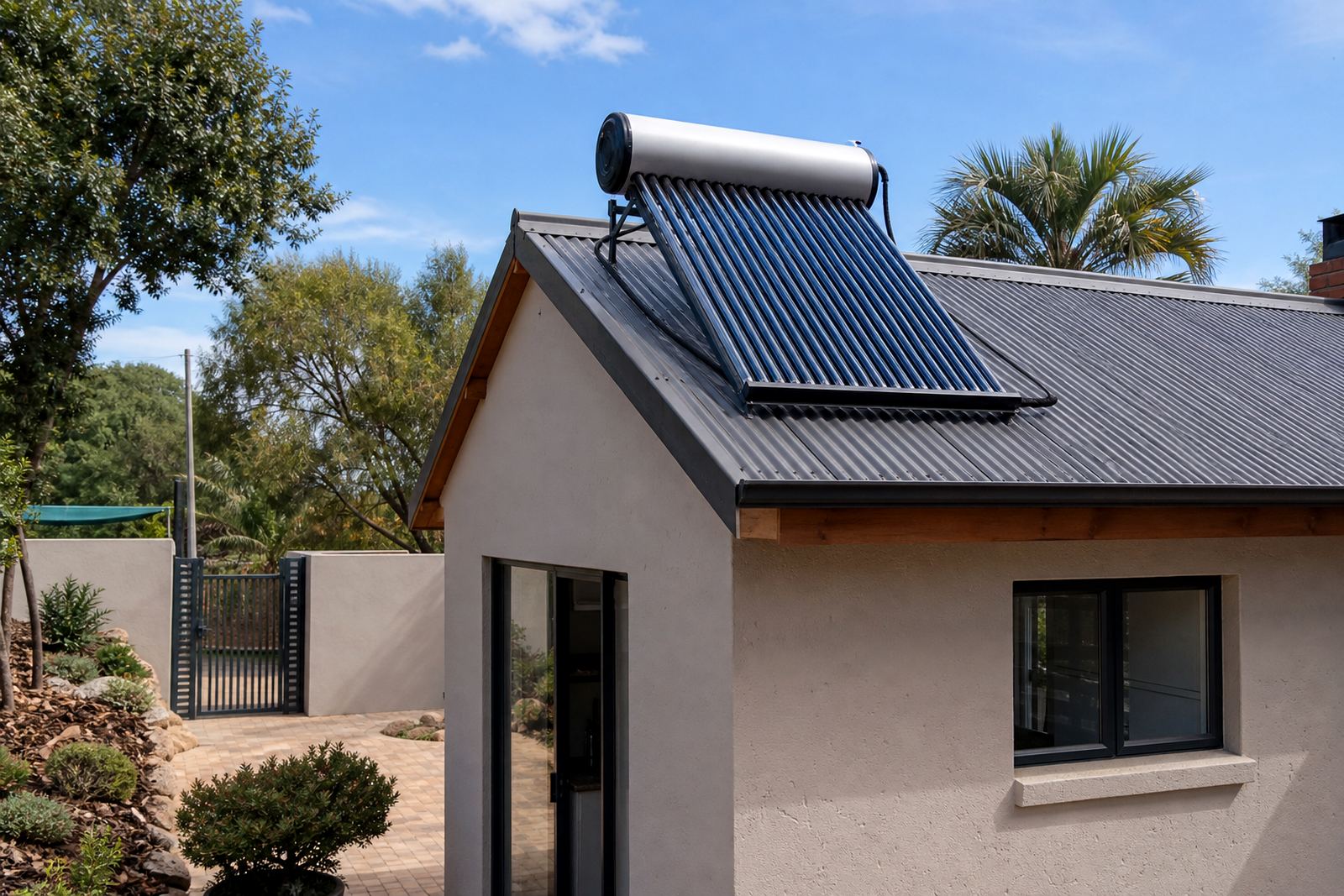
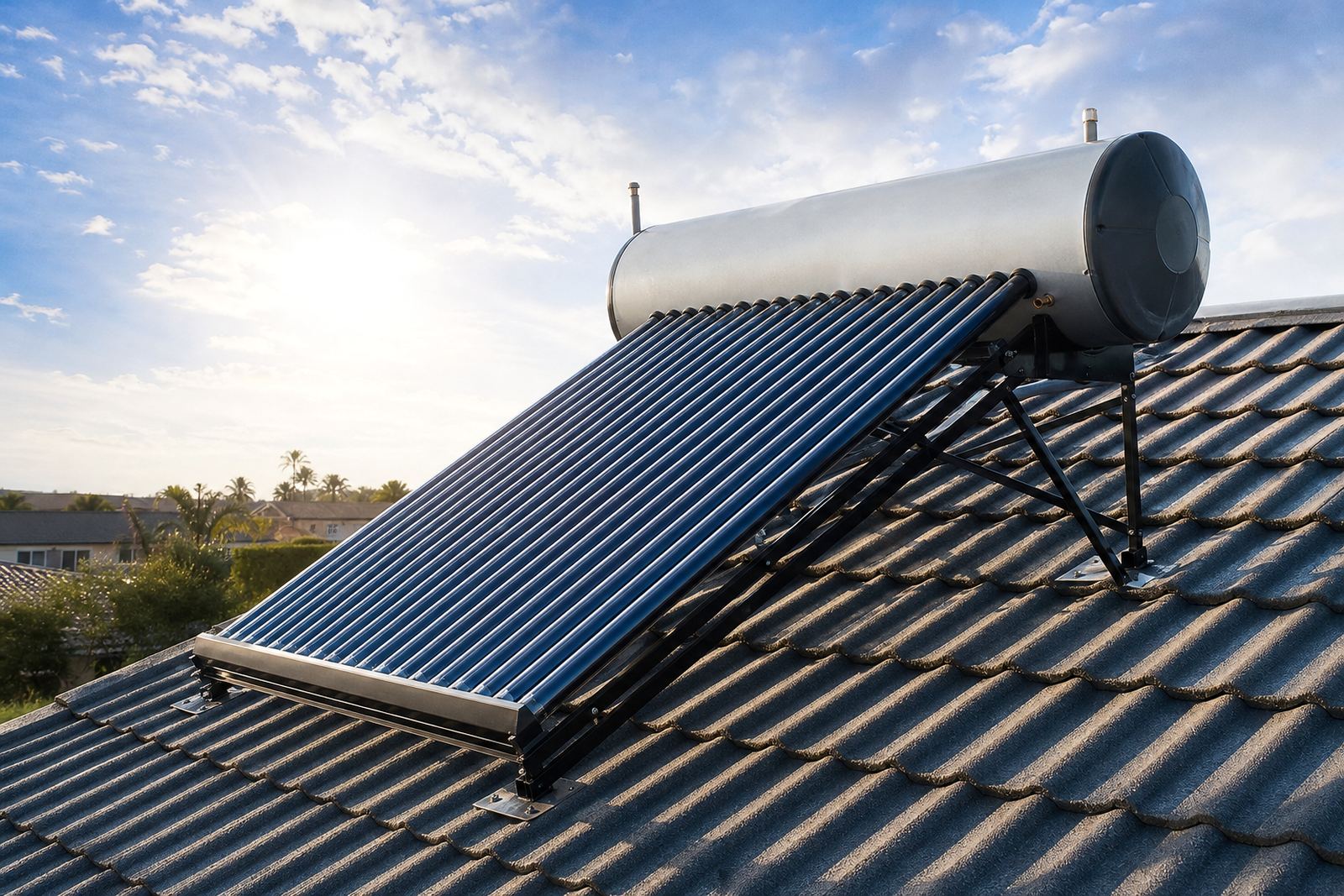
Tube water heaters are solar hot water systems that use a collector made up of individual glass tubes. Each tube is sealed and designed to limit heat loss, so the system can warm water well even in cooler weather and early morning conditions. The tubes absorb sunlight, transfer heat to the water or heat transfer medium inside the manifold, then the warmed water is stored in a tank for daily use.
This type of system suits households that want dependable hot water without relying only on electric elements. It is a practical choice for Pretoria, Johannesburg, Durban, Cape Town and Bloemfontein where sun exposure is generally good, but water use patterns and winter temperatures can vary. Tube systems are often chosen where the roof receives direct sun for most of the day and where there is enough space for a dedicated tank and collector layout.
- Evacuated tube collector for strong heat retention
- Storage tank matched to the household demand
- Suitable for new homes and retrofits
- Can be integrated with backup electric heating if required
Sizes And Setup Options For Different Homes
The right size depends on the number of people in the home, bathroom count, roof space and how much hot water is used each day. A smaller unit may suit a compact home or cottage, while larger families usually need a bigger tank and more tubes to keep up with morning and evening use. For small businesses such as guest houses, salons or light commercial kitchens, the system needs to be matched carefully to demand.
Common setup choices include direct systems where water is heated in the tank, or indirect arrangements where a heat transfer process helps reduce scaling and improves performance in some water conditions. In coastal areas such as Durban and Cape Town, material choice and proper corrosion protection matter more because of humidity and salt exposure. In inland Gauteng, roof orientation and winter performance are often the main concerns.
- Compact options for 1 to 3 people
- Medium systems for typical family homes
- Large domestic and light commercial options
- Roof mounted or ground supported layouts where suitable
Where Tube Heaters Fit Best
These systems are a good fit for homes that use a steady amount of hot water each day and have a roof with decent sun exposure. They work well for showers, baths, washing up and laundry, and they can reduce the load on the electrical geyser. In areas where load-shedding affects the day, a solar water heater gives households more control over hot water supply, provided the tank is sized properly and the plumbing is installed correctly.
Tube heaters are also useful where power costs are a concern or where the home has a mixed hot water setup. They can be paired with a backup element, and the electrical work should always be done by qualified installers. If the property uses gas for some appliances, the water heating system still needs proper plumbing, valves and safety controls, because the solar side and the backup side must work together without causing pressure issues or overheating.
- Free-standing homes with good roof access
- Townhouses and units where roof approval is in place
- Guest accommodation and small business premises
- Properties looking to reduce pressure on the electric geyser
Installation, Plumbing And Electrical Requirements
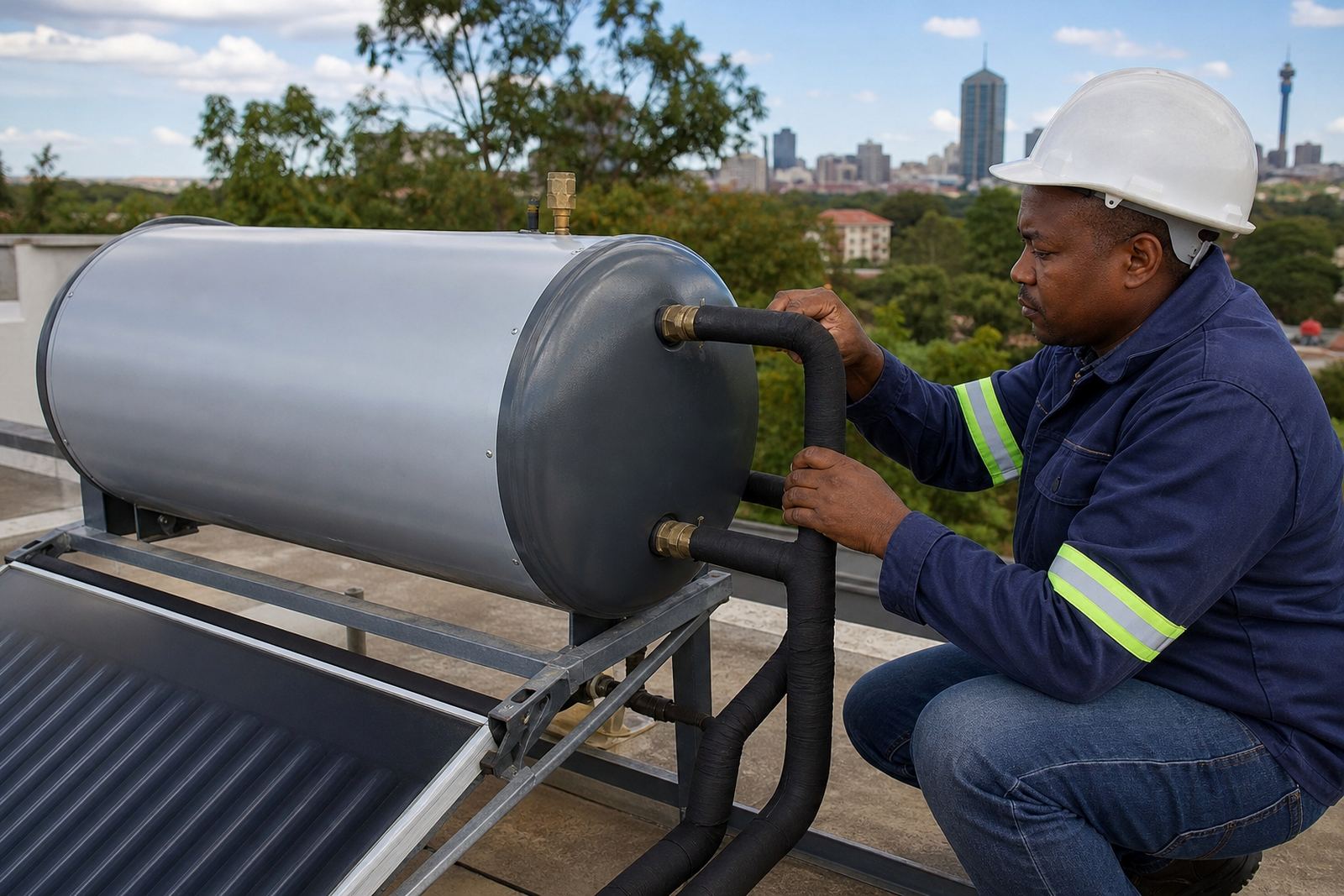
Installation starts with a site assessment. The installer checks roof direction, shade, pipe runs, structural support and where the tank can be placed safely. The collector angle needs to suit the site, and the plumbing should allow good circulation, safe pressure relief and easy maintenance access. On some homes the tank is installed on the roof, while on others it sits lower down with a pump or a gravity-fed arrangement, depending on the system type.
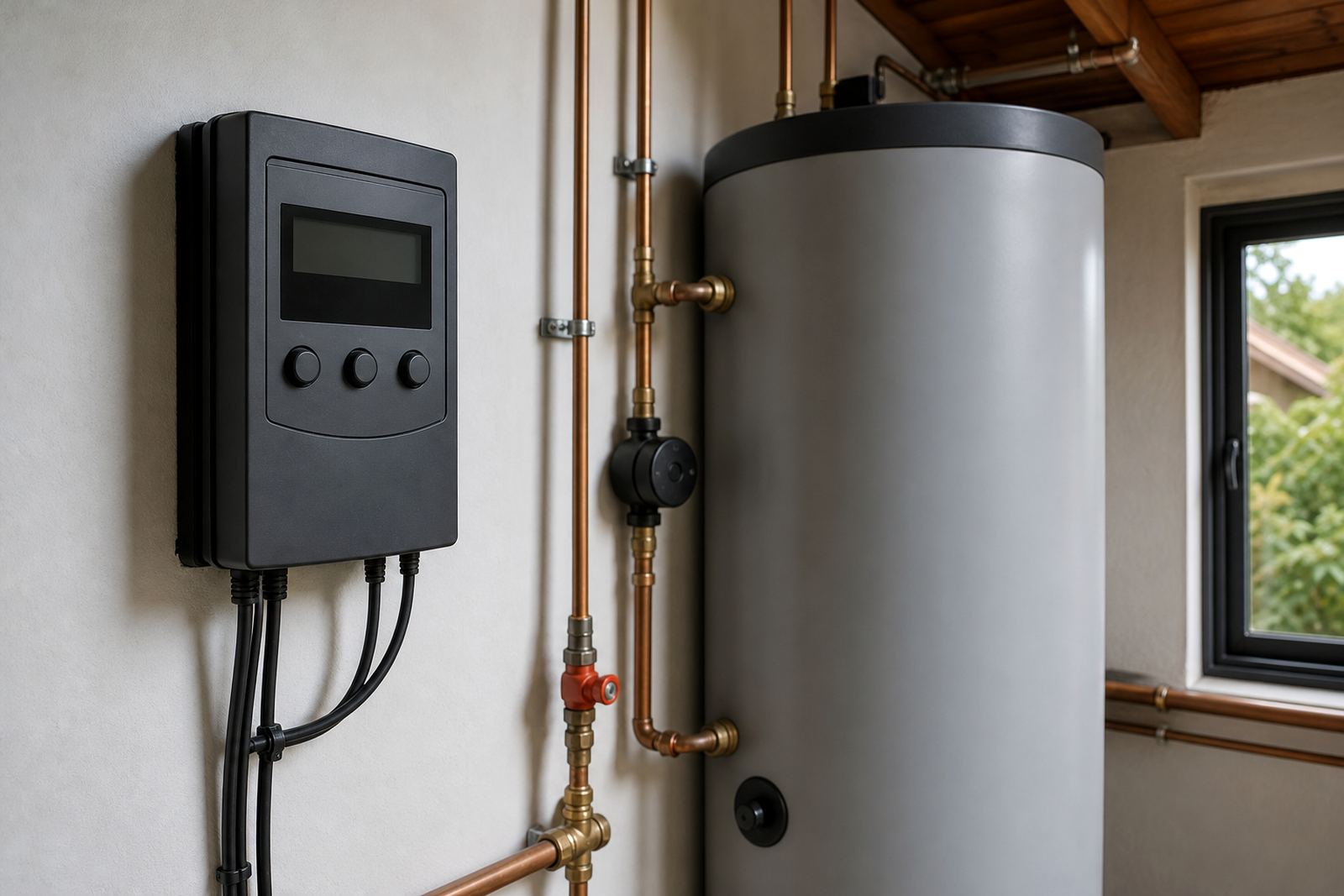
Electrical integration is handled where a backup element or control unit is part of the setup. Only qualified installers should handle the electrical work, because the system must meet local requirements and the wiring needs to be protected from moisture and heat. Where geyser changeover is involved, the installer also checks the existing plumbing, valves and isolators before commissioning the unit. That way the home can use solar heating first and switch to backup only when needed.
- Roof survey and shading check before installation
- Plumbing integration with existing hot water lines
- Qualified electrical work for backup heating and controls
- Commissioning test after installation is complete
Care, Cleaning And Servicing Over Time
Tube systems need simple but regular care to keep performing properly. The glass tubes should be kept clean so dust, pollen and coastal salt do not reduce sunlight absorption. The tank, valves and insulation should also be checked from time to time for leaks, heat loss or wear. In hard-water areas, scale can build up inside some parts of the system and reduce efficiency, so servicing matters.
After heavy storms, strong wind or roof work, it is worth checking that the tubes are still seated correctly and that no pipework has shifted. If water temperature drops or the backup element starts working more often than usual, the system may need fault finding. Linuo Solar handles maintenance, panel cleaning, support callouts and solar water heating servicing for homes and small businesses across Pretoria, Centurion, Johannesburg, Midrand, Durban, Cape Town and Bloemfontein.
- Clean tubes and check for dust build-up
- Inspect pressure valves and pipe insulation
- Look for leaks, corrosion or loose fittings
- Book servicing if hot water output changes
What To Check Before You Order
Before placing an order, it helps to confirm the number of people using hot water, the roof layout, the tank position and whether the home needs a backup element. You should also know if the roof has shade from trees, parapets or neighbouring buildings, because that affects the collector size and placement. If the property is in a windy area or near the coast, the mounting and material selection must be suitable for local conditions.
It is also useful to check existing plumbing, water pressure and where the isolator, valves and overflow will go. If you are replacing an old geyser, the installer needs to inspect the existing lines and electrical setup before recommending the right system. Our team based in Centurion works with homeowners and small businesses through the enquiry form on our contact page, and the process starts with a proper assessment not guesswork.
- Household size and daily hot water demand
- Roof space, angle and shade conditions
- Tank location and plumbing route
- Need for backup electrical heating
- Access for servicing and future maintenance
Key facts
| Product type | Evacuated tube solar water heater system |
|---|---|
| Application | Residential homes and small businesses |
| Typical setup | Collector tubes, storage tank, plumbing integration and optional backup element |
| Installation | Supply, fitting, commissioning and qualified electrical work where required |
| Maintenance | Cleaning, servicing, fault finding and support callouts |
| Service area | Pretoria, Centurion, Johannesburg, Midrand, Durban, Cape Town, Bloemfontein and wider South Africa |