What a battery combiner does in a storage bank
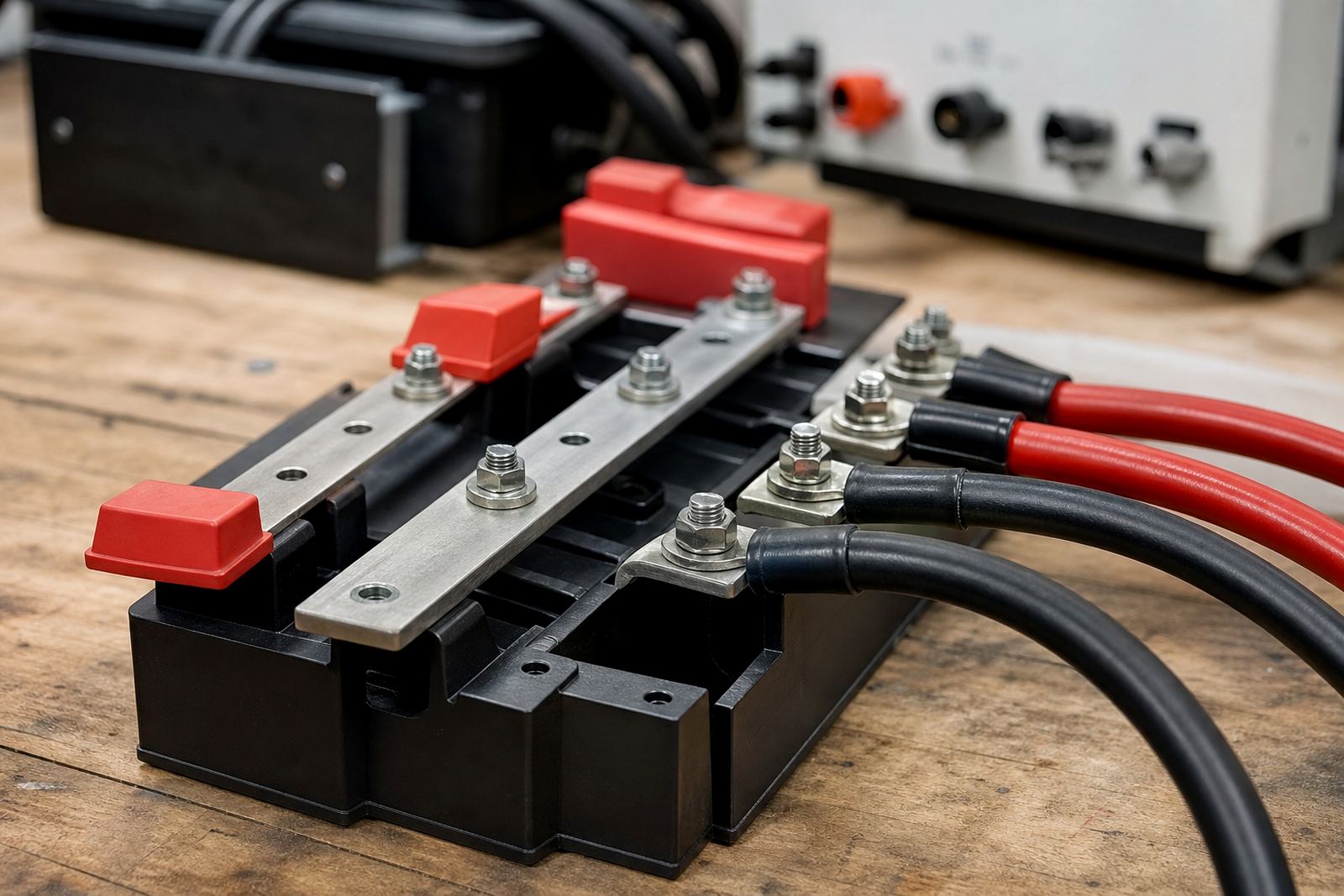
A battery combiner is connection hardware used to join multiple battery modules into one storage bank. It helps organise the positive and negative links so the battery set can be wired neatly and safely, with each module connected in the right configuration for the system design. In a solar setup, that matters because the batteries need to work with the inverter, charge controller and the rest of the electrical circuit without loose links or uneven loading.
For homes in Pretoria, Centurion and Johannesburg, a combiner is often used where the storage bank has more than one battery module or where the system may be expanded later. In small business sites, it is useful when backup power must carry fridges, lights, IT gear or gate motors during load-shedding. Electrical work is done by qualified installers, and all terminations should be checked properly before commissioning.
Sizes, layouts and current ratings to choose from
Battery combiners come in different layouts depending on the number of modules and the current required by the system. The right choice depends on the battery chemistry, the inverter size and whether the bank is fixed for a smaller home backup system or built for heavier daily cycling. In practical terms, the combiner must suit the cable size, fuse arrangement and the planned current draw, not just the physical space available.
- 2-way, 4-way and 8-way combiner layouts for small to medium storage banks
- Busbar and fuse based arrangements for clean current sharing
- Heavy-duty enclosures for indoor utility rooms or sheltered plant spaces
- Options for wall-mounted or surface-mounted installation
- Compact formats for tight metre-room or garage spaces
Where coastal humidity is a concern, such as Durban and Cape Town, a corrosion-resistant finish and a protected mounting position are worth checking. In hotter inland areas like Pretoria and Bloemfontein, ventilation around the battery bank also needs attention so the equipment does not sit in a cramped, heat-trapping corner.
Where battery combiners suit homes and small businesses
This product suits solar storage systems that are planned properly from the start, especially where several batteries are being installed together. It works well in homes that want longer backup during outages and in small businesses that need steady support for essential circuits. A combiner is also useful where there may be future growth, because the wiring can be arranged in a way that allows the storage side to be expanded with less disruption later on.
Battery combiners are commonly used with inverters in backup and hybrid systems. They are also useful in sites that already have solar panels and want to add storage without reworking the whole electrical board. For premises in Midrand, Pretoria East, Sandton or central Johannesburg, the installation must be planned around available wall space, cable runs and safe access for servicing. In coastal towns the enclosure should be kept out of direct spray and damp air, while inland dust calls for regular cleaning and inspection.
- Homes with 2 or more battery modules
- Small offices, workshops and retail spaces
- Systems that may be expanded later
- Backup circuits with higher starting loads
- Sites where tidy cable management matters
Installation details and electrical integration
Installation starts with a proper site assessment. The installer checks battery location, cable lengths, inverter position, ventilation and the protection devices needed for the circuit. The combiner is then mounted securely and connected to the battery modules using the correct cable size, lugs, fuses or breakers as required by the design. A neat installation reduces voltage drop and helps keep the whole storage bank easier to test later.
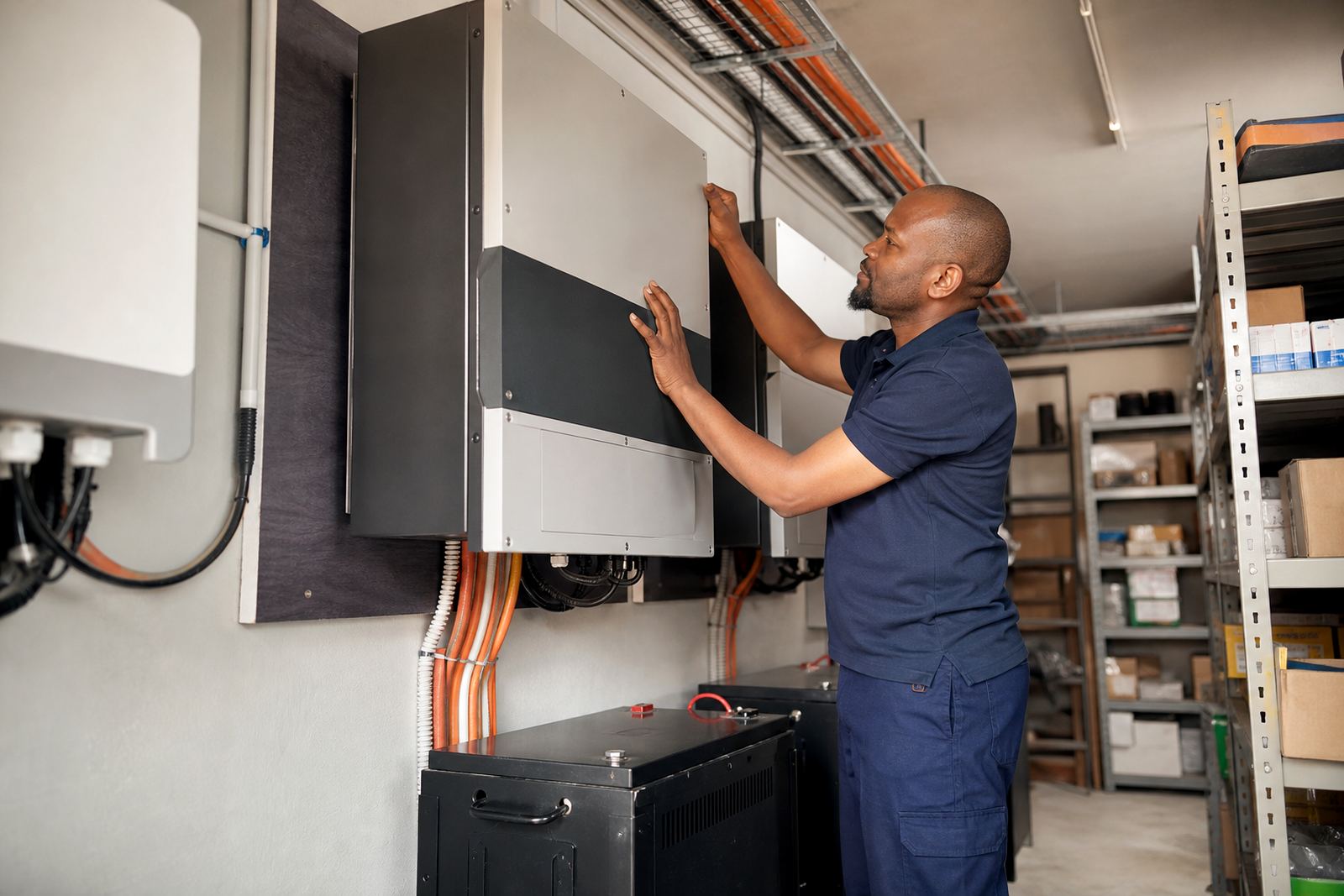
Electrical integration must be handled by qualified installers, especially where the battery bank connects to the inverter, isolator and distribution board. In many homes and small businesses, the battery combiner sits in a garage, utility room or secure store area. The space needs to stay dry, well ventilated and free from direct heat sources. If the system includes gas generating batteries or other ventilation-sensitive equipment, the installer must allow for safe clearance and the correct siting. During commissioning the team checks polarity, current paths and protection devices before the system is handed over.
Care, servicing and fault finding
Battery combiners need simple but regular checks. Dust, loose terminals and signs of heat on the connections should be inspected during routine solar maintenance. If the system has been through several load-shedding cycles, the combiner and nearby links should be tested for any signs of stress or uneven loading. In humid coastal areas, corrosion and condensation should be watched closely. In Gauteng, dust build-up around utility rooms and garages is often the bigger issue.
If a battery bank is not performing as expected, the combiner is one of the first places to inspect. Fault finding may include checking cable tightness, fuse condition, signs of arcing and whether the modules are balanced properly in the storage bank. Keep the area clear, avoid stacking items against the enclosure and do not try to rewire the bank without a qualified installer. A quick visual check every few months can prevent bigger problems later.
- Check for loose lugs and discolouration on terminals
- Confirm the enclosure is dry and free of dust
- Inspect fuses or breakers if fitted
- Book fault finding if the bank charges unevenly
- Keep access clear for servicing and testing
What to check before you order a battery combiner
Before ordering, confirm the number of battery modules, the battery type, the inverter size and the installation space. It helps to know whether the bank will stay fixed at its current size or whether more modules may be added later. The installer should also confirm cable lengths, mounting method and whether a fused or busbar-based arrangement is best for the job. A proper check at the start saves time on site and avoids mismatched parts.
For customers in Pretoria, Centurion, Johannesburg, Durban, Cape Town and Bloemfontein, Linuo Solar can assist with site assessments, system design, panel installation, inverter installation, battery installation, water heater installation, electrical integration, system commissioning, solar maintenance, fault finding, panel cleaning and support callouts. If the battery bank is part of a broader solar project, the combiner should be selected alongside the rest of the storage hardware so everything fits the space and the expected load. Our team works from Centurion and supports homes and small businesses across South Africa.
- Number of battery modules
- Battery voltage and chemistry
- Inverter size and storage demand
- Available wall or floor space
- Ventilation and access for maintenance
- Need for future expansion
Key facts
| Product type | Battery combiner for solar storage systems |
|---|---|
| Use | Links multiple battery modules safely in one bank |
| Typical layouts | 2-way, 4-way and 8-way options |
| Mounting | Wall-mounted or surface-mounted |
| Installation | Qualified installers only for electrical integration |
| Best suited to | Homes and small businesses with planned battery storage |