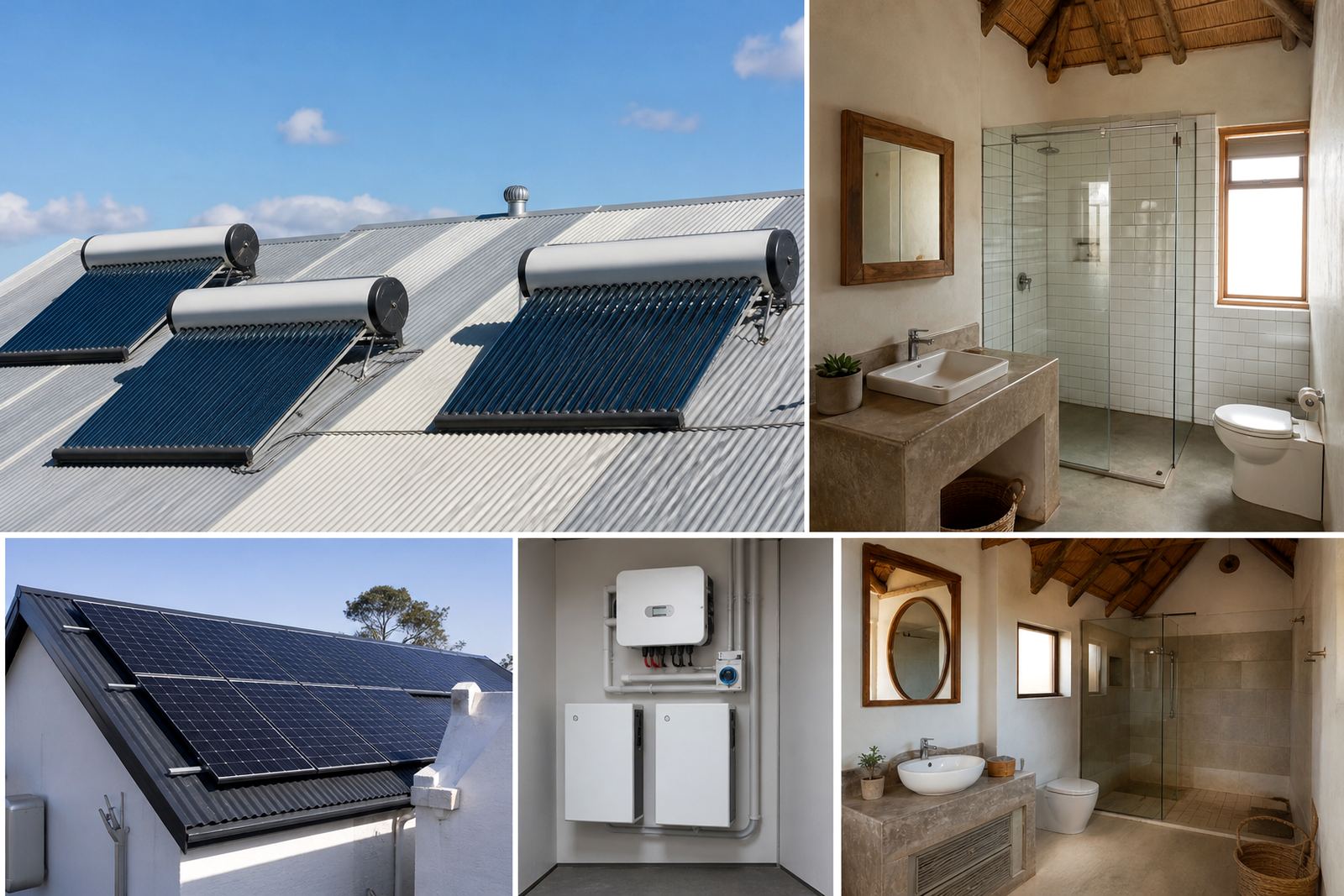
Start with the signs you can see from outside
The first clue is often visual. Walk around the property and look at the panels, roof fixings, pipes and the area around the tank or geyser. In Pretoria and Centurion, fine dust can build up quickly, while coastal humidity in Durban or Cape Town can leave salt residue on fittings and make corrosion show up sooner.
Book maintenance if you notice any of these signs:
- Panels look unusually dirty, cloudy or patchy after rain
- Mountings or brackets seem loose, bent or rusty
- Pipes, insulation or valve covers are damaged
- Water marks appear below the tank or around roof penetrations
- Bird droppings, leaves or other debris keep collecting in one area
A small issue on the roof can become a bigger repair if it is left too long. Even a bit of loose hardware can cause movement in strong wind, and that is not something to ignore.
When the numbers on the inverter do not look right
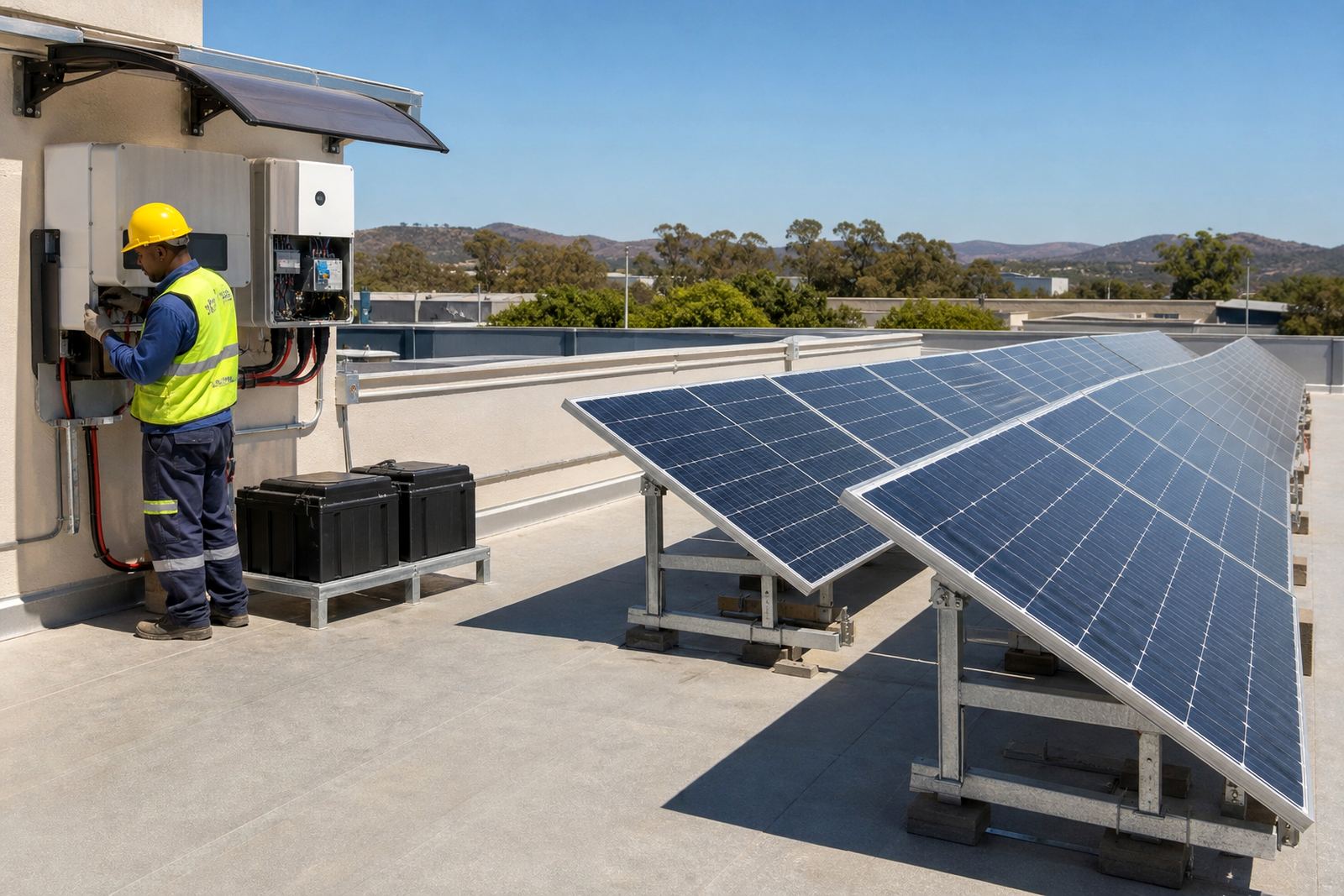
If you have a solar PV system with an inverter and battery setup, the display often gives the first warning. A change in output does not always mean a fault, but repeated alerts, unusual readings or frequent switching between grid and battery should be checked.
Common warning signs include:
- The battery is not charging as expected during the day
- The inverter keeps tripping or showing fault messages
- Power cuts over to backup, then drops out again too soon
- There is a new humming, clicking or fan noise from the unit
- Lights flicker when the system changes source
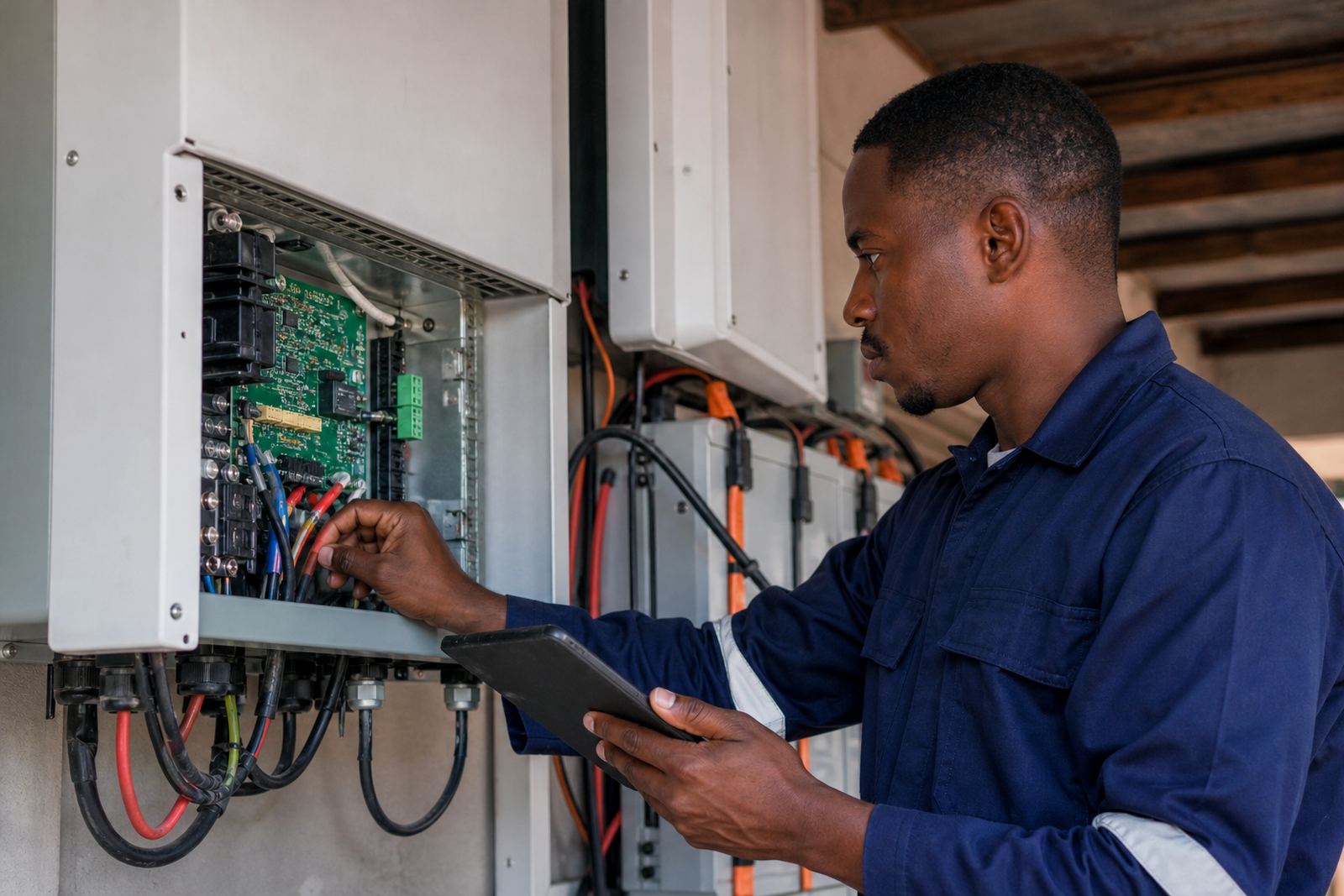
These symptoms can point to loose connections, a battery issue, dirty panel surfaces, shading, or a setting that has drifted out of range. Electrical work must be done by qualified installers, and it is best not to keep resetting a fault without finding the cause first.
Solar water heaters need attention before the cold season
Solar water heating systems are simple in principle, but they still need care. In winter, households often notice that hot water is less reliable, especially in early morning or after several cloudy days. A system does not have to fail completely before it needs a professional check.
Book a service if the water heater is:
- Taking longer than normal to heat water
- Giving inconsistent temperatures from one tap to another
- Making banging, hissing or gurgling sounds
- Leaking from joints, valves or the storage tank
- Showing signs of scale build-up or blocked flow
In Gauteng, hard water can leave mineral build-up inside pipes and components. Over time that can reduce efficiency and put strain on the system, so a planned inspection is better than waiting for a full breakdown.
After storms, load-shedding changes or electrical faults
Some maintenance calls are urgent because something in the system has changed suddenly. A heavy storm, nearby lightning, power surge or rough electrical interruption can leave damage that is not obvious from ground level. If your property has had recent work on the roof or electrical board, that is another good time to book a check.
Call for a professional inspection after:
- A hailstorm, strong wind or lightning strike nearby
- A new surge protector trip or repeated breaker fault
- Roof repairs, waterproofing or plumbing work close to the system
- Battery performance dropping sharply after a power interruption
- An inverter or controller shutting down without a clear reason
In places like Johannesburg and Midrand, where many homes and small businesses rely on backup power through busy periods, a quick fault finding visit can prevent avoidable downtime. It also helps confirm whether the issue is with the panels, inverter, batteries or the water heating side.
What a proper maintenance visit should cover
A good maintenance visit is more than just wiping panels. The system should be checked as a whole so that small problems do not keep coming back. For homes and small businesses, that means looking at the roof equipment, the electrical side and the hot water side where relevant.
A maintenance visit may include:
- Panel cleaning and a visual inspection for cracks or hotspots
- Checking inverter readings, cables and protection devices
- Testing battery performance and charge patterns
- Inspecting geyser components, valves and pipe insulation
- Looking for loose fixings, corrosion or weather damage
- System commissioning checks after repairs or upgrades
At Linuo Solar, our team works from Centurion in Pretoria and supports clients across Pretoria, Johannesburg, Durban, Cape Town, Bloemfontein and surrounding Gauteng areas. For electrical integration and fault finding, work is handled by qualified installers, which matters when you are dealing with roof access, live connections and backup power equipment.
A simple local rule for booking maintenance on time
A practical rule is this: do not wait until the system stops working. If you see a change in performance, hear a new sound, or notice a leak or warning light, book a check while the problem is still small. That is especially true for homes that depend on hot water every day or for small businesses that cannot afford a long interruption.
For example, a family in Centurion may notice that the solar water heater is taking longer to recover after cloudy weather, while a guesthouse in Pretoria East may see inverter faults during repeated evening outages. In both cases, a maintenance visit can identify whether the issue is dirt, a worn part, wiring, battery behaviour, or simple adjustment.
If you need support with site assessments, solar maintenance, support callouts, panel cleaning, water heater installation or fault finding, the enquiry form on our contact page is the best way to get in touch. Regular checks save time, and they help your system keep doing its job when the weather or the grid is not helping.