
Why flat roofs need a proper layout plan
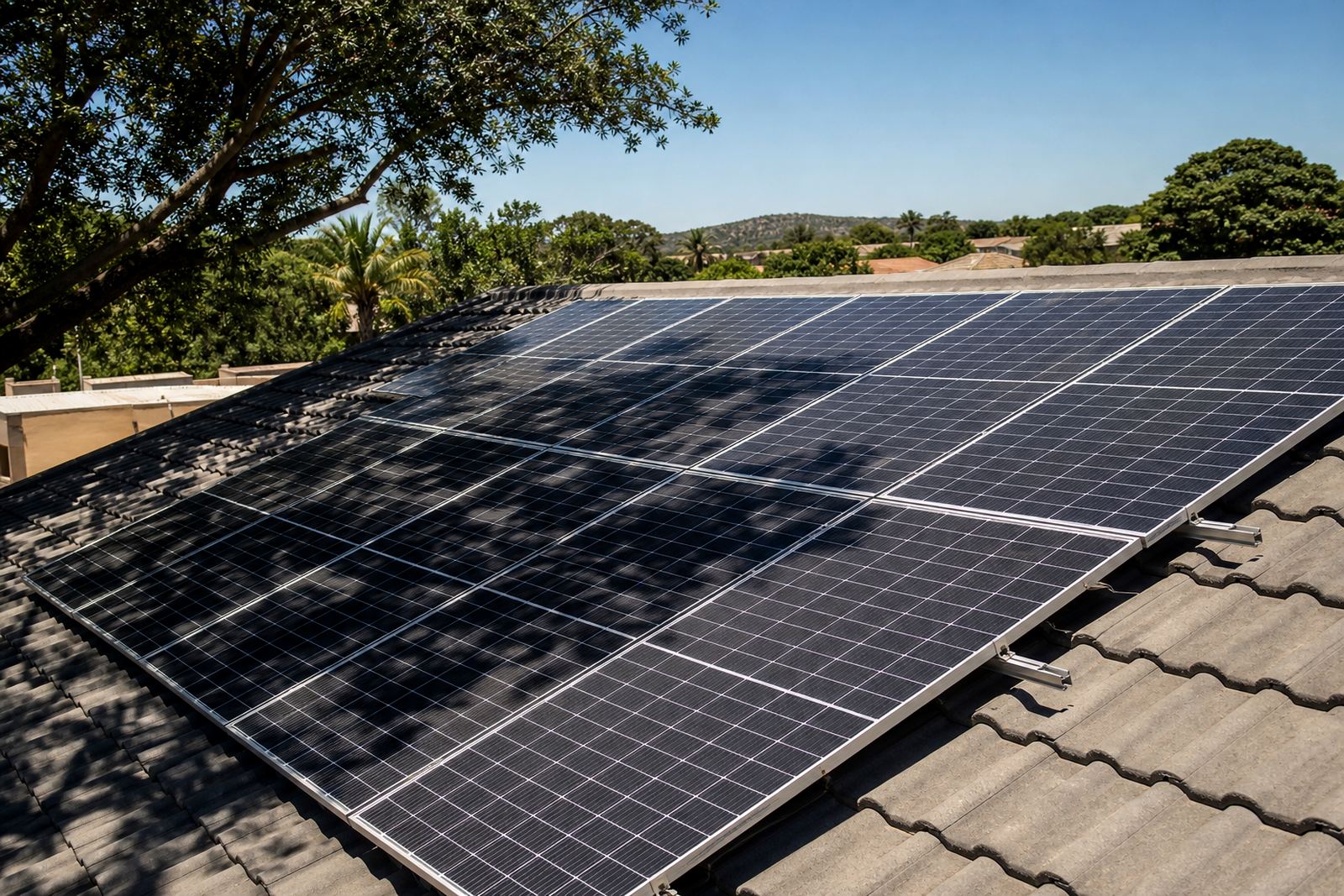
On a flat roof, panels are not simply laid out in rows and left there. The installer needs to look at roof size, parapet walls, waterproofing, drainage and the direction of the sun before deciding where each array will sit. In Pretoria and Centurion, where many homes and offices have low slope or flat concrete roofs, a poor layout can lead to shading from nearby walls, poor airflow under the panels, or water pooling around fixing points.
Good planning starts with a site assessment. That means measuring the roof, checking the roof structure, noting any vents, tanks, skylights and service routes, then deciding where the system can be placed without blocking access. For small businesses, it also helps to leave space for maintenance around aircon units and other plant equipment.
- Check roof condition before any mounting work starts
- Keep drainage channels clear
- Allow safe access for cleaning and fault finding
- Position arrays to limit shading through the day
Angled frames and the balance between output and space
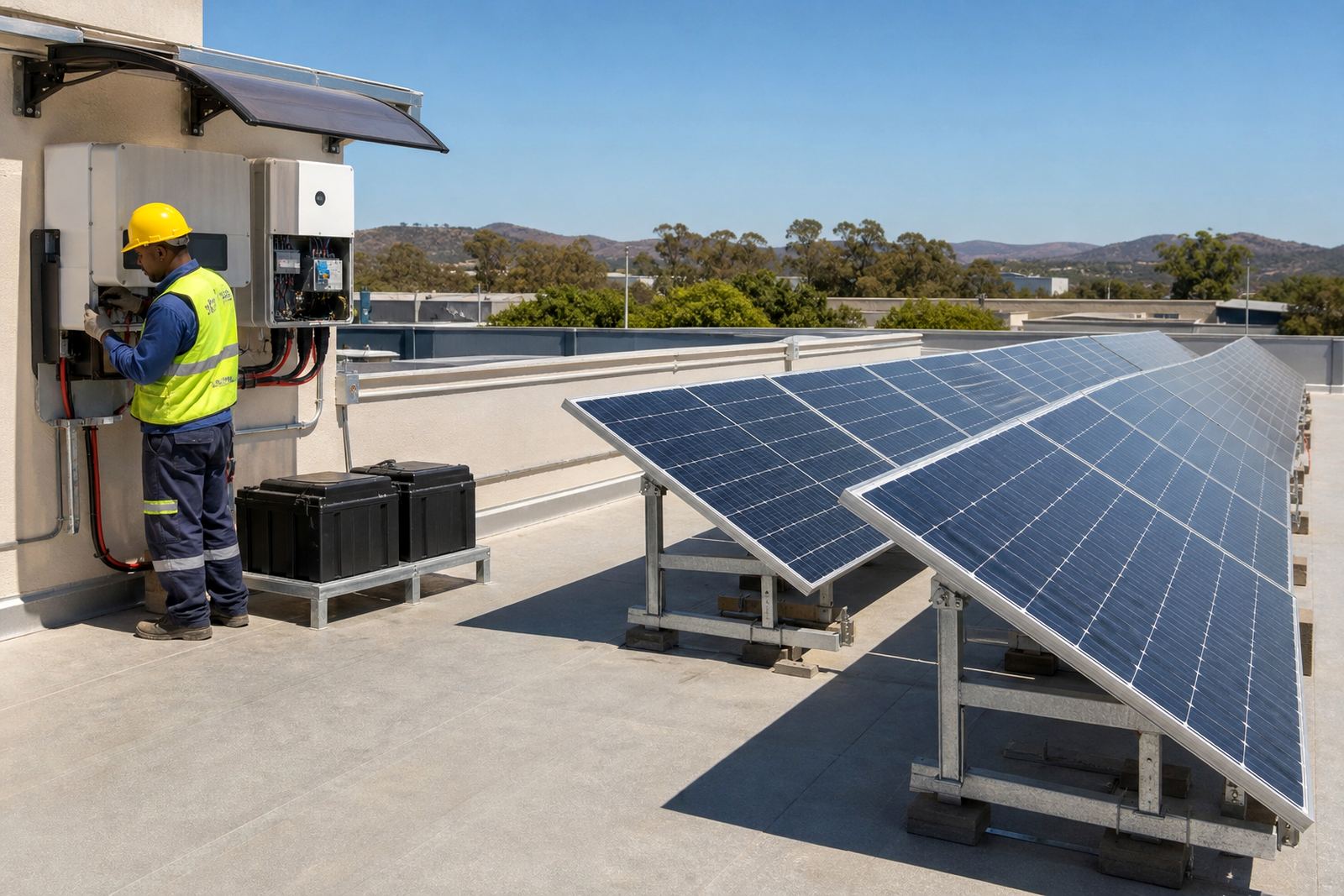
Flat roof systems usually use angled frames to tilt the panels toward the sun. The right tilt depends on the available roof area, the local wind conditions and the system goal. A steeper angle can improve seasonal performance, but it may also increase row spacing and catch more wind. A lower angle uses less space and can be better on roofs where every square metre counts.
In practice, the layout is a balance. A home in Durban may need a slightly different arrangement from a warehouse in Bloemfontein because coastal humidity, wind and roof materials all affect the final design. The installer should also consider whether the array will be east west or north facing, since this changes how much energy is produced through the day.
Useful layout choices include:
- Low tilt for tighter spacing on smaller roofs
- Higher tilt where there is room and better airflow is needed
- East west rows for broader daily coverage
- North facing rows where the roof shape allows it
Spacing, wind uplift and roof protection
Wind uplift is one of the main concerns on flat roofs, especially on taller buildings and in open areas. The frame system must be fixed in a way that suits the roof structure and local conditions, while protecting the waterproofing layer underneath. That is why proper mounting methods matter as much as the panels themselves.
Spacing between rows is also important. If the rows sit too close together, one row can shade the next, particularly in winter or during early morning and late afternoon. On the other hand, leaving enough gap helps with cooling and access. Hot panels work less efficiently, so airflow under and around the array is worth planning carefully.
- Use secure fixing methods suited to the roof type
- Keep a clear path for maintenance and cleaning
- Allow for wind conditions common to the site
- Protect waterproofing with the correct mounting approach
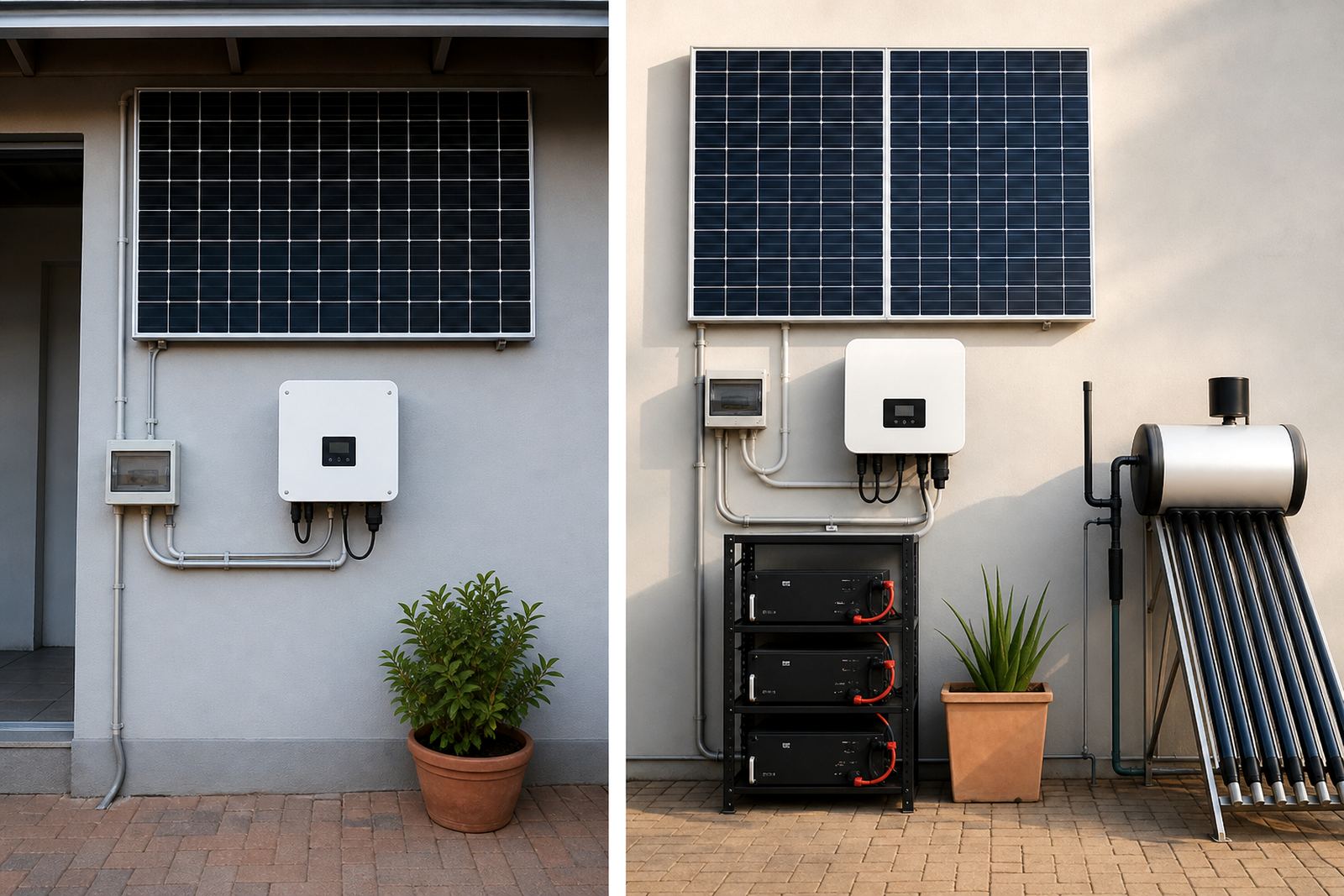
Electrical work must be done by qualified installers, and that includes the wiring between the panels, inverter, batteries and protection equipment.
Matching the layout to the property type
A home in Midrand will not need the same layout as a factory office in Johannesburg or a guest house in Cape Town. Smaller roofs usually need tighter planning, while larger roofs can support more spacing between rows. The installer needs to think about roof traffic, load bearing limits and where future maintenance will happen.
For small businesses, the aim is often to keep the roof clear for service access and to avoid shading from existing equipment. For homes, the layout may be built around geysers, satellite dishes or roof windows. In both cases, a tidy arrangement helps the system look organised and makes it easier to clean panels, test connections and do fault finding later on.
When we assess a roof, we normally look at:
- Roof material and condition
- Available unshaded space
- Direction of the roof pitch
- Safe access routes for installers
- Future maintenance requirements
Solar water heaters on flat roofs
Flat roofs are also common for solar water heaters, which need careful placement because tanks, collectors and pipe runs all have to work together. The collector angle affects how well the system picks up sunlight, while the tank position affects pipe length and heat loss. In coastal areas such as Durban and Cape Town, the layout must also cope with humidity and corrosion exposure.
Where possible, the water heater should be placed so that pipes run neatly and with as few bends as possible. That keeps the system easier to service and may help with heat retention. On some roofs, the water heater and panel arrays can share the same roof space, but only if the layout leaves enough room between them and does not create shading.
- Keep pipe runs short and tidy
- Allow access to valves and service points
- Set the collector angle to suit the roof plan
- Check that the roof can handle the system weight
A Pretoria example: planning a mixed roof system
In Centurion, a small business recently needed a layout for a flat concrete roof with enough space for panels and a solar water heater. The roof had parapet walls on three sides, plus two air conditioning units and a service ladder. The first step was to map out the usable area and check where shadows fell through the morning. From there, the installer could place the array in a way that left a clear access route and kept the water heater close to the service area.
Because the site had to deal with load shedding and daytime usage, the electrical design included panel installation, inverter installation, battery installation and the correct electrical integration. Once the mechanical layout was confirmed, the system could be commissioned and tested properly. That kind of job is easier when the roof plan is thought through before anything is mounted, not after.
For property owners in Pretoria, Johannesburg, Durban, Cape Town and Bloemfontein, a well planned flat roof layout makes the whole system easier to live with, less likely to cause maintenance issues, and better suited to the roof in front of you.
What to ask before you approve a layout
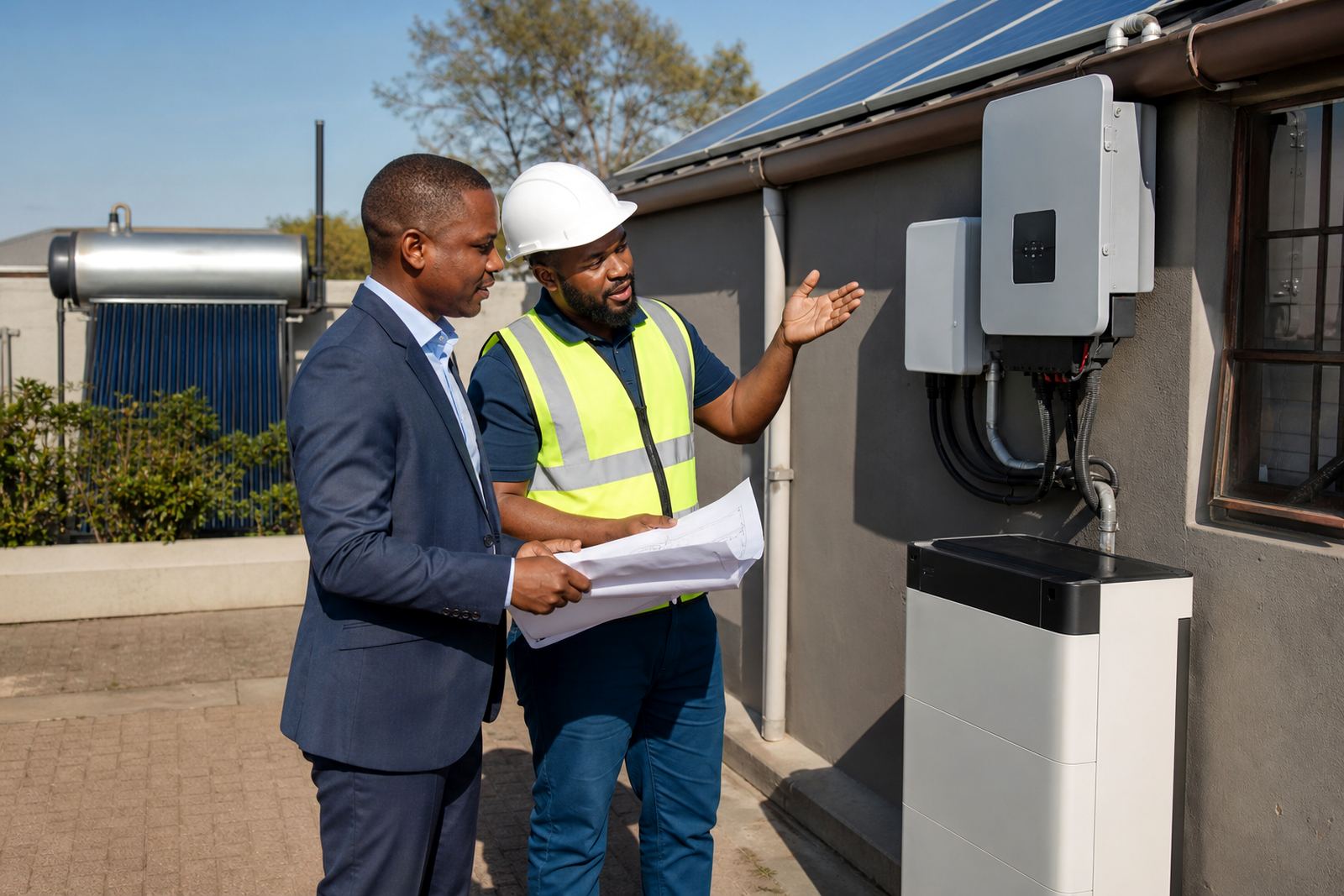
Before work starts, it is worth asking a few direct questions. These help you understand whether the layout is practical, safe and suited to the roof. A good installer should explain the spacing, fixing method and service access clearly, without making the roof feel overcrowded.
Questions worth asking include:
- How will the panels be angled on this roof?
- Will the layout affect waterproofing or drainage?
- Is there enough access for cleaning and maintenance?
- Will the electrical work be handled by qualified installers?
- How will the system cope with wind and local weather conditions?
Our team in Pretoria and Centurion works on site assessments, system design, panel installation, inverter installation, battery installation, water heater installation, solar maintenance, fault finding, panel cleaning and support callouts for homes and small businesses across Gauteng and beyond.