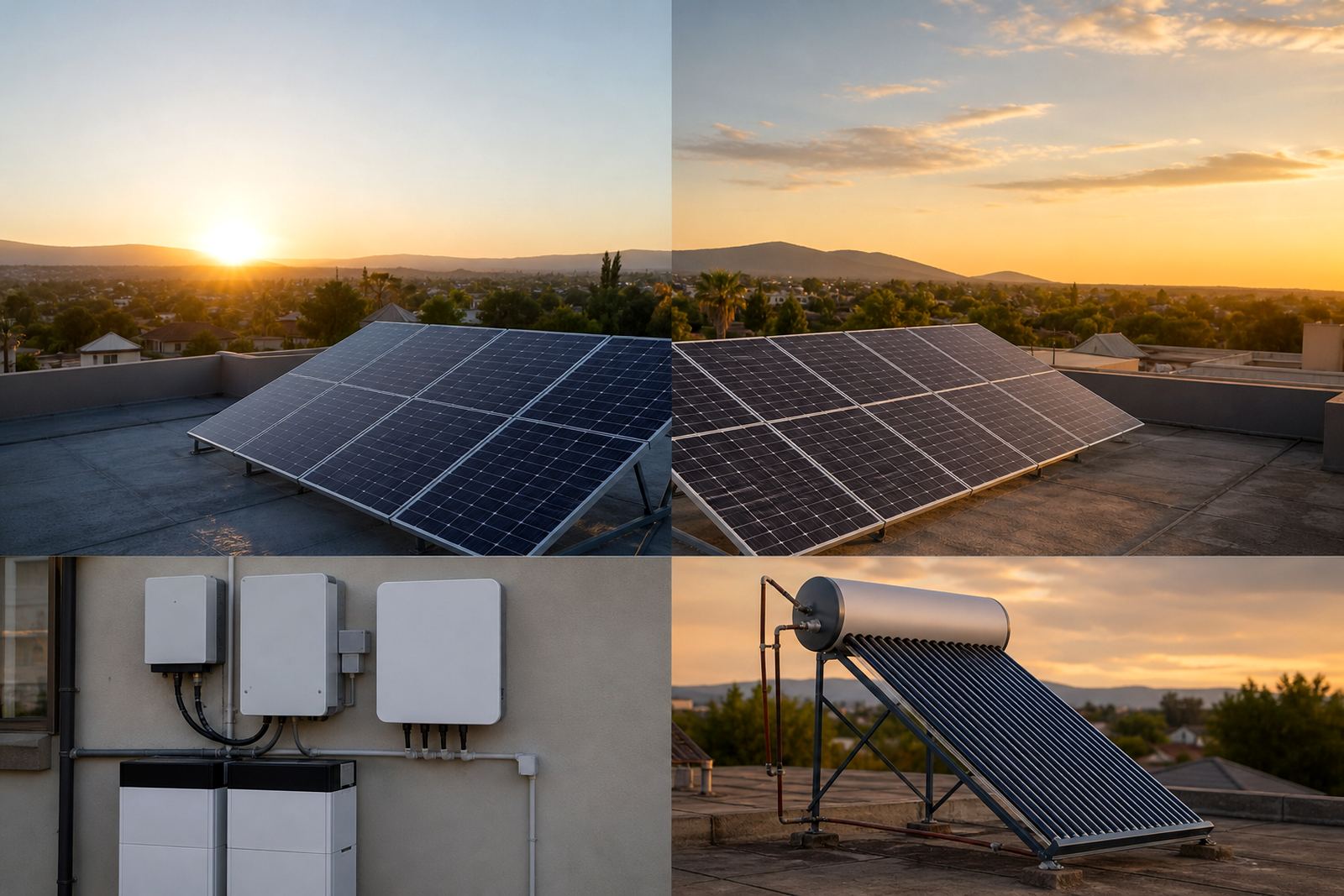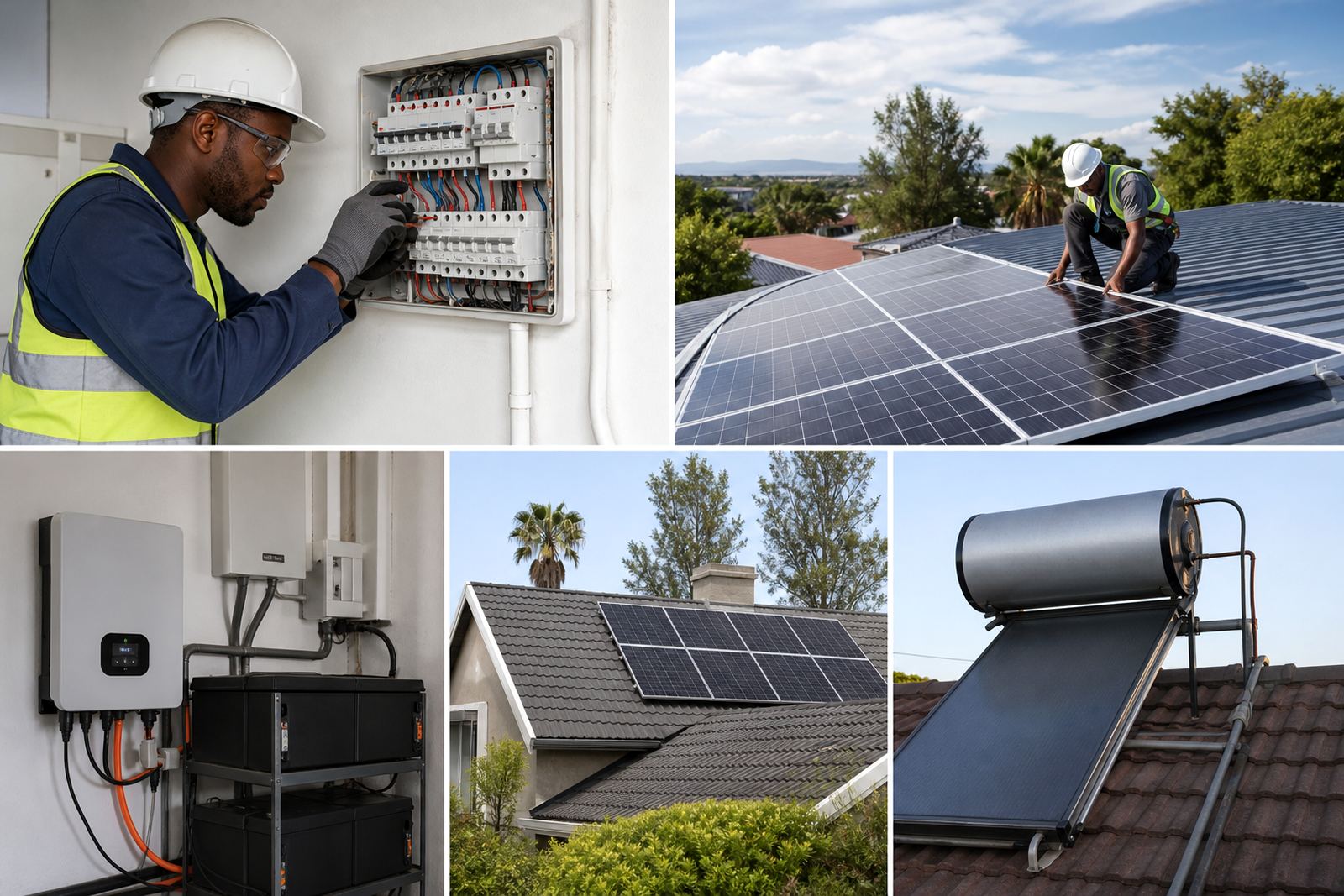
Before The Crew Arrives At Your Property
Good installation days start before a single tool comes out of the vehicle. The site should already have been assessed, the system design confirmed and access arranged for roofs, ceilings, walls, gate motors or plant rooms where the work will happen. If you are in Pretoria, Centurion, Johannesburg or further afield in Durban or Cape Town, the same rule applies: clear access saves time and keeps the work safe.
On the day, you can expect the team to check the final layout again and confirm the exact positions for solar panels, inverters, batteries and solar water heating components. They will also look at practical details such as parking, ladder access, cable runs, roof condition and whether there is enough space for working around the electrical board. If municipal or body corporate rules affect where equipment can be fitted, that is usually handled before the first hole is drilled.
Homeowners often ask if they need to be present all day. In most cases, it helps to be available at the start and again near commissioning, but the work itself is handled by the installation team. For small businesses, a nominated contact person makes things easier if there are decisions about routing, shutdown times or access to locked areas.
How The Day Usually Starts
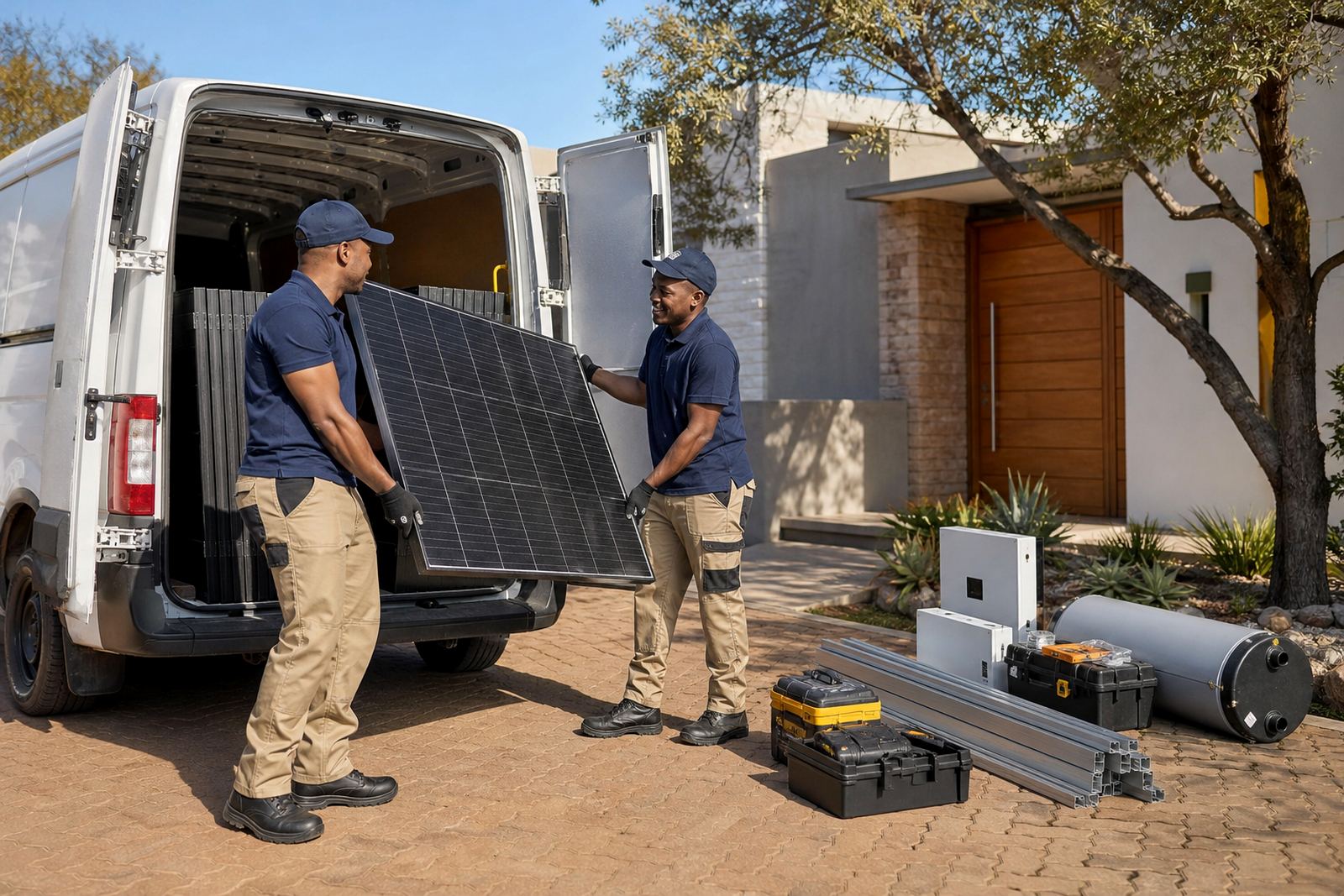
The first part of the day is all about safety and planning. The crew will unload equipment, inspect the site and confirm the work sequence. In Pretoria and across Gauteng, roofs can vary from tile to sheet metal to flat concrete, so the fixing method may differ from one property to the next. On coastal sites in Durban or Cape Town, extra care is taken with corrosion-prone fittings and cable protection because moisture and salt air can shorten the life of poor-quality work.
You should expect a quick walk-through before drilling or lifting begins. This is when the team checks for fragile ceiling sections, water pipes, shaded areas, and any existing electrical issues that could affect the installation. If load-shedding has been affecting your premises, the team may also discuss the best way to stage the electrical changeover so essential circuits are handled carefully.
- Protective gear is worn throughout the job
- Work areas are marked off where needed
- Tiles, gutters and painted surfaces are handled carefully
- Electrical work is done by qualified installers
What Happens During Panel And Inverter Work
When solar panels are being installed, the mounting structure is fixed first, then the panels are set in place and aligned. The aim is not only to secure them properly but also to allow good airflow underneath, which helps performance in hot weather. In Gauteng summers, roof heat can build up quickly, so spacing and positioning matter. Once the panels are in place, cabling is routed neatly and secured so it does not flap, rub or sit where it can be damaged.
The inverter installation is usually one of the more important stages for the customer to understand. This is the unit that manages the flow of power between the panels, battery storage if included, and the building’s electrical circuits. The crew will choose a sensible location with enough ventilation and safe access for future maintenance. In homes, that may be in a garage, storeroom or utility area. In a small business it could be a secure back office or service room, provided the space is suitable.
Some jobs are completed in a single day, while others take longer depending on roof access, the number of panels, whether battery installation is included and how complex the electrical integration is. A neat, well-planned install may take longer than a rushed one and that is usually time well spent.
Solar Water Heater Installation And Plumbing Checks
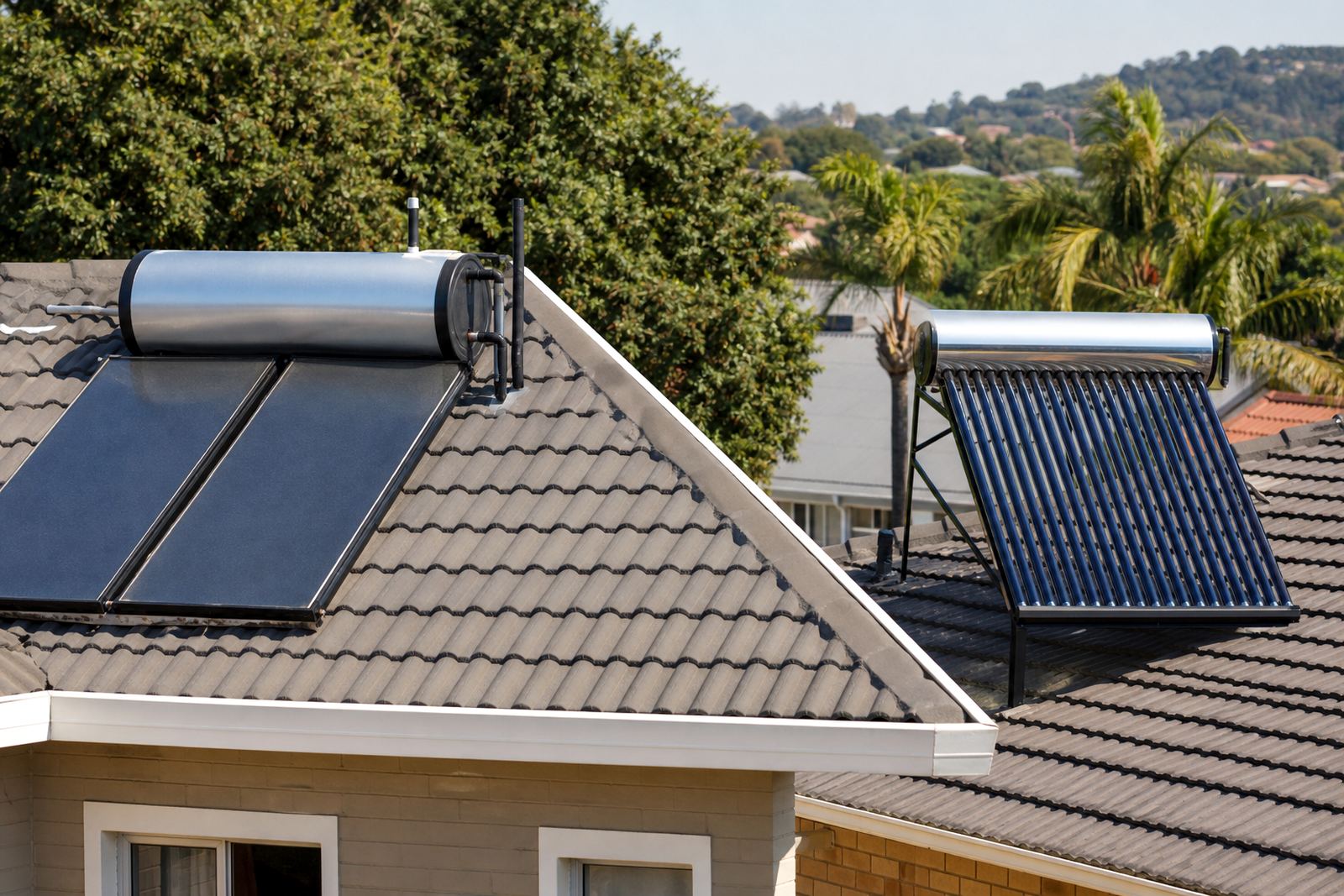
Solar water heaters need careful handling because the work involves both plumbing and roof fitting. The team will position the collector and cylinder or geyser-linked components according to the design, then connect the pipework and valves so hot water can circulate properly. On homes in places like Bloemfontein where winter mornings can be cold, or in Johannesburg where temperatures swing between seasons, the setup has to be practical as well as efficient.
Before the system is left running, the team checks for leaks, proper insulation and secure supports. If your current geyser or plumbing line needs adjustment, that is usually sorted during the same visit where possible. In some properties the installer may also need to confirm water pressure, roof load suitability and the safest route for pipes through the ceiling or wall.
- Pipework is tested for leaks
- Valves and insulation are checked
- Roof mounts are secured against wind movement
- Water flow is confirmed before handover
Because plumbing and electrical work often happen on the same day, clear communication matters. If something on site is not as expected, the team should explain what needs to change before proceeding. That approach avoids rushed decisions and helps prevent call-backs later.
Keeping Your Business Running During The Installation
Small businesses usually want the job done with as little interruption as possible. For offices, workshops, shops and light commercial sites, the installation plan may be staged around opening hours, customer traffic or load-shedding windows. A careful installer will identify which circuits can be isolated safely and which areas must stay live until the end of the job.
If the work includes battery installation or electrical integration, you may need a brief shutdown while the qualified installer connects the system and tests the changeover. That is normal and should be kept as short as practical. In some cases, the crew will advise switching off non-essential loads before they arrive so there is less pressure on the system during commissioning. It helps if staff know in advance which areas may be offline for a short period.
A local example is a Centurion printing workshop with a tiled roof and a small distribution board in a back room. The day may begin with roof work before the midday heat builds, then move inside for inverter and battery placement, and finish with testing after essential machines have been powered down for a short while. That sort of sequence keeps the site organised and avoids unnecessary back-and-forth.
Testing, Commissioning And The Handover
The final part of installation day is where the system is tested and commissioned. This is not just a quick switch-on. The team checks wiring, confirms the settings, verifies that the equipment is communicating correctly and makes sure the system responds as expected under load. If a solar water heater has been fitted, the pipework and circulation are checked again before the job is signed off.
You should also expect a handover conversation. This is when the installer explains how to monitor the system, what normal operation looks like and what signs might point to a fault later on. If there are user controls, isolation points or basic maintenance needs, those should be shown clearly. It is a good time to ask about panel cleaning, seasonal performance and what to do if a breaker trips or the system behaves differently after a storm.
- Ask where the main isolators are located
- Confirm who to contact for support callouts
- Keep the handover notes in a safe place
- Report unusual noises, smells or error messages quickly
At Linuo Solar, the team is based in Centurion, Pretoria and works across Pretoria, Johannesburg, Midrand, Durban, Cape Town and Bloemfontein. The practical aim on install day is simple: finish with a tidy site, a working system and clear next steps. When you know what to expect, the whole process feels far less stressful.