Start With the Way Your Property Uses Hot Water
Before looking at tank sizes or collector shapes, think about the property itself. A family home in Centurion with two bathrooms has very different demand from a small guesthouse, church kitchen or office block in Johannesburg. The same applies to small businesses in Durban and Cape Town where staff use hot water through the day, not only in the morning.
As a guide, ask these simple questions: how many people use hot water daily, when is most of it used, and does the building have enough roof space with decent sun? If there are long showers, laundry use or a sink that must stay hot for cleaning, the heater type must support that pattern. A system that is too small will struggle by late afternoon, while one that is oversized can mean unnecessary cost and roof loading.
- More people usually means a larger storage tank and collector area
- Short morning use may suit a simpler system
- All day demand often needs stronger storage and better pressure handling
Thermosyphon Systems Work Well on Many Homes
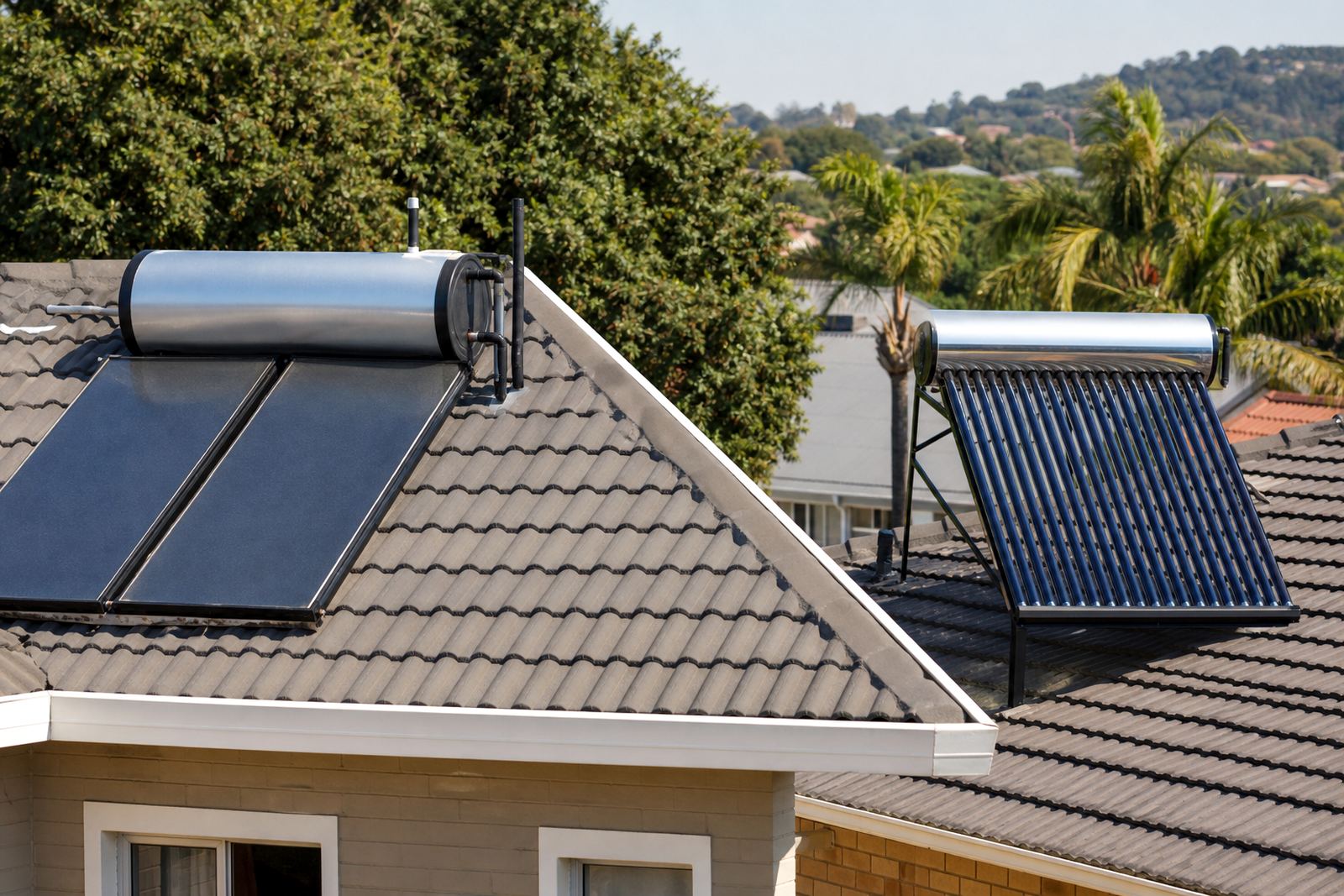
One common option is the thermosyphon type, where hot water rises naturally from the collector to the tank. It is a practical choice for many homes because it has fewer moving parts and can be straightforward to maintain. For a single-storey house in Pretoria or Bloemfontein, it is often worth considering if the roof is strong enough and the tank can sit above the panels.
This type suits owners who want a dependable system with simple operation. It does need good planning, because the tank position matters and the roof layout must allow for correct flow. On windy coastal sites around Durban or Cape Town, the mounting must be secure and the system should be specified for the local conditions. A quick on-site check can save a lot of trouble later on, especially where tiles are brittle or the roof pitch is awkward.
- Good for homes with suitable roof height and space
- Simple operation with low day to day attention
- Needs correct tank placement for proper circulation
Pressurised Systems Make Sense Where Water Pressure Matters
If your household likes strong shower pressure, or your business has multiple taps and mixers, a pressurised solar water heater is often the better fit. These systems are built to work with mains pressure, so they are popular where people want a more familiar hot water feel. In a Midrand townhouse complex or a busy family home in Johannesburg, this can make a big difference to comfort.
They do require proper installation and electrical work by qualified installers, especially where pumps, controls or backup heating are part of the setup. That is not a corner to cut. Good pressure also depends on the plumbing condition inside the building. Old galvanised pipework, undersized valves or poor isolation can limit performance even if the heater itself is well chosen. For that reason, a site assessment should include the roof, plumbing and geyser location not only the solar parts.
- Useful where consistent pressure is important
- Suited to homes and small premises with higher hot water demand
- Needs careful integration with existing plumbing and electrical systems
Flat Plate or Evacuated Tube Collector: Which Suits Your Roof?
Another choice is the collector style. Flat plate collectors and evacuated tube collectors both collect solar heat, but they behave differently. Flat plate units are often chosen for simpler roof profiles and places with strong, steady sun. Evacuated tube collectors can be useful where hotter water output is needed or where the system must perform well in cooler conditions, although the right fit depends on the full design.
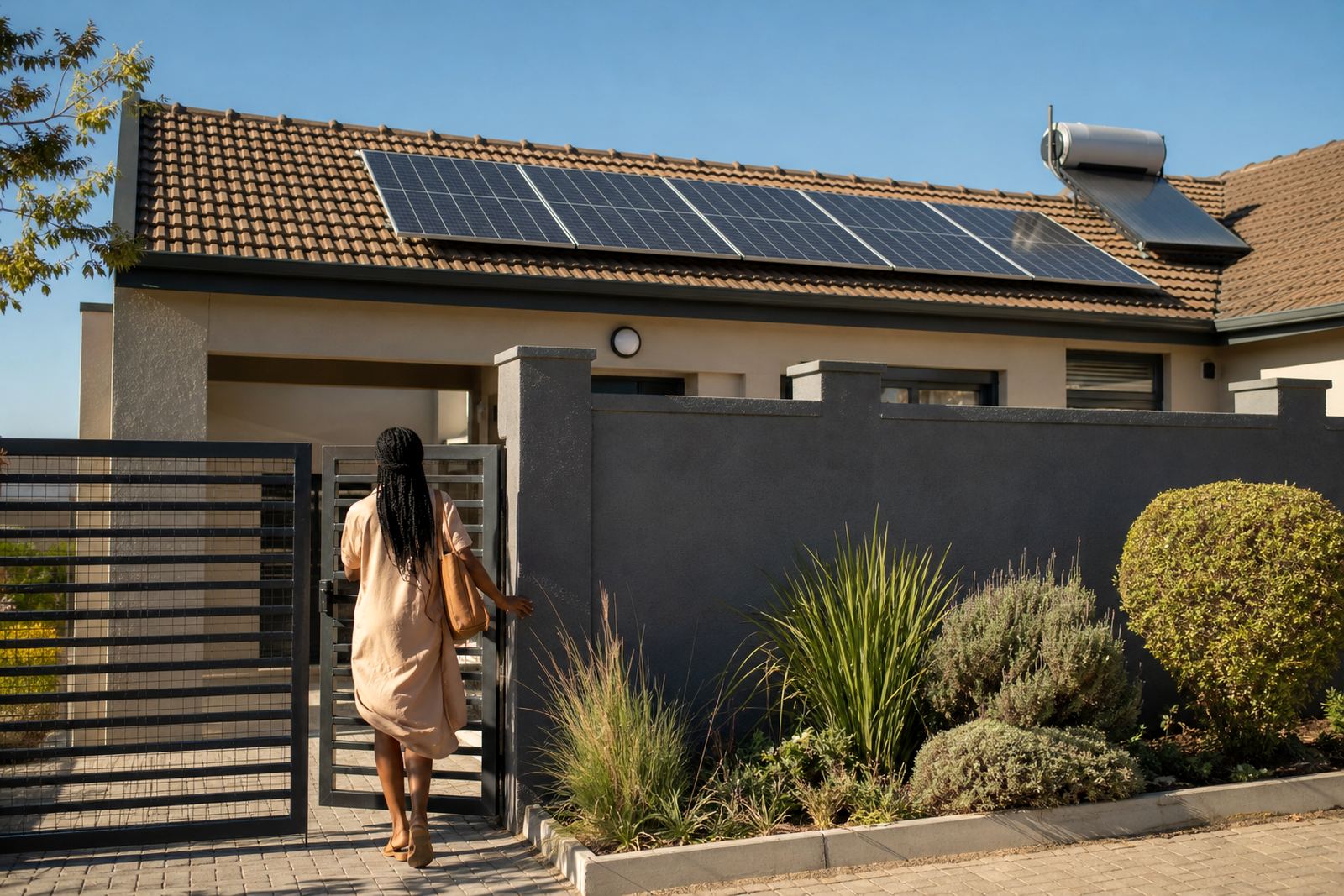
In Pretoria, where summer sun is strong but winter mornings can be cool, either type may work well when sized properly. On a shaded roof, or where nearby trees and parapets block sun for part of the day, the collector choice alone will not fix the problem. The system needs proper placement. The installer should look at north-facing exposure, shading through the day, and whether the roof can carry the load safely. A small roof on a back room may not be ideal, even if there is plenty of space elsewhere on the property.
- Flat plate collectors suit many straightforward roof layouts
- Tube collectors can help where stronger heat capture is needed
- Shading and roof direction are just as important as collector type
How Small Businesses Should Choose Differently
Small businesses often need hot water for handwashing, kitchen work, guest facilities or light cleaning. That means the system should be chosen around operating hours, not just household habits. A salon in Cape Town, a small lodge near Bloemfontein, or an office kitchen in Gauteng may need hot water at different times across the day, sometimes with quick recovery after a busy period.
For these sites, it is smart to consider how the system will be used during load-shedding as well. Solar water heating can reduce pressure on electrical supply, but the plumbing, valves and backup arrangement still matter. If the building has more than one use, such as staff bathrooms and a wash-up area, the system may need zoning or a larger storage option. Maintenance access is important too because business owners often need quick fault finding and support callouts without long downtime.
- Match the heater to trading hours and peak use times
- Allow for backup hot water needs during load-shedding
- Plan for easy access if cleaning or servicing is needed
What a Proper Site Assessment Should Cover
A proper assessment is the best way to avoid buying a heater that looks fine on paper but underperforms at the property. The visit should check roof angle, orientation, available space, water pressure, piping route, and whether the system can be mounted safely. In some Pretoria suburbs, the roof pitch and shade from boundary walls can influence the result more than people expect. In older houses, the condition of the roof structure may also affect what can be installed.
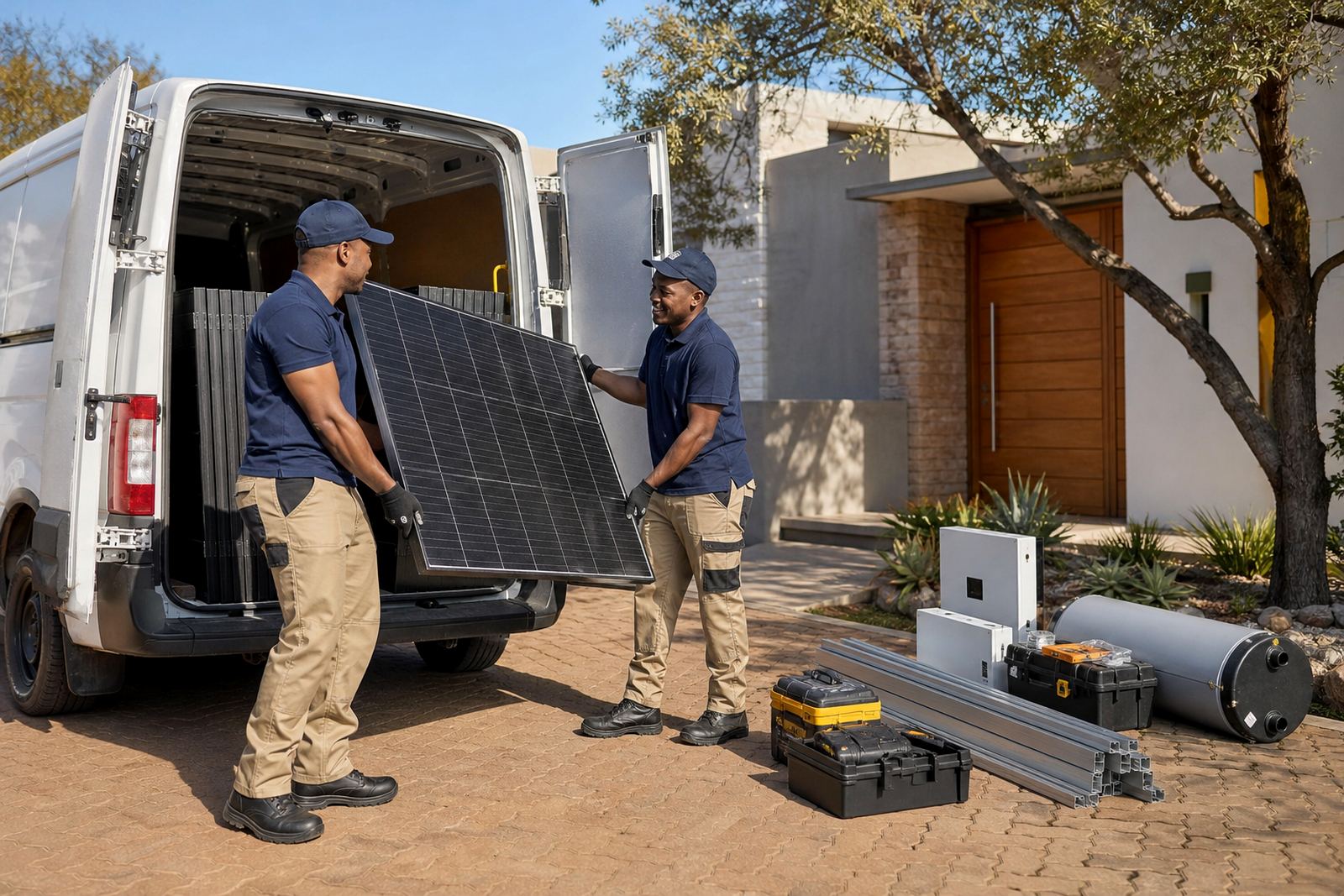
At Linuo Solar, the team works from Centurion and supports homes and small businesses across Pretoria, Johannesburg, Durban, Cape Town and Bloemfontein. Our installers and support staff, including specialists in solar water heating, system design and electrical integration, help customers compare options in practical terms. The goal is to pick a heater type that suits the property, the daily hot water pattern, and the local conditions. That is the part that keeps the system useful over time, not just on the day it is fitted.
A Simple Way to Narrow the Choice
If you are still deciding, start with three basics: how much hot water you need, how much roof space you have, and whether water pressure is important. From there, a suitable heater type becomes much easier to identify. A home with moderate use and a sound roof may do well with a simple thermosyphon setup. A business with steady demand and pressure requirements may need a pressurised option with more careful integration.
It also helps to think about maintenance. Any system with exposed roof components should be inspected after storms, heavy dust or prolonged dry weather. In some areas, panel cleaning is worth scheduling because dust, leaves and coastal moisture can affect performance. The right choice is not only about purchase day, it is about how the system behaves through summer heat, winter mornings and the odd week of stubborn load-shedding.