How a solar battery fits into your power setup
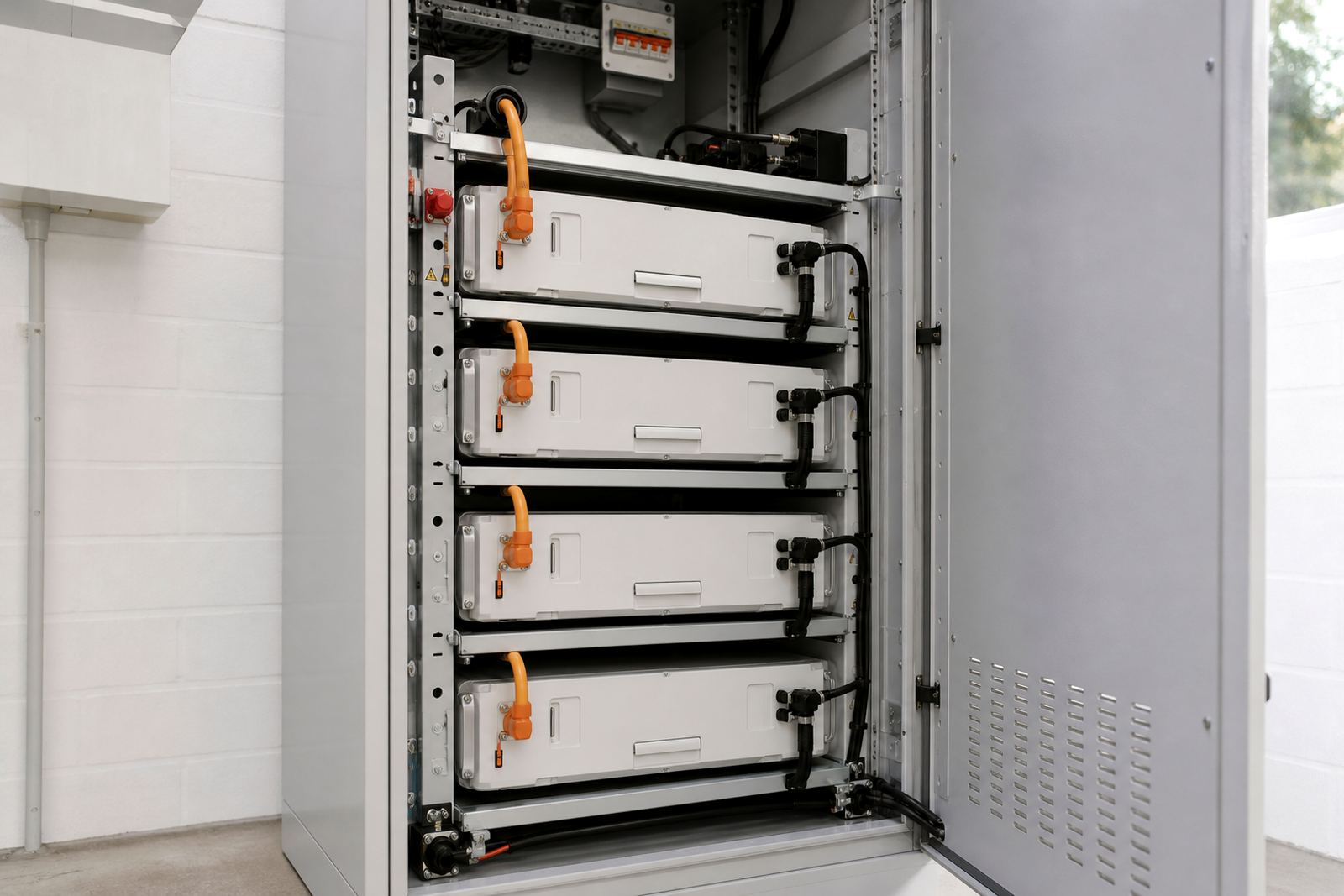
A solar battery sits between your solar panels, inverter and the parts of the property you want to keep powered. During the day, excess solar energy is stored instead of going straight back to the grid or being lost. Later, that stored energy is used when the sun is down or when demand on the system is higher than what the panels are producing.
In practical terms, the battery gives you a buffer. In Pretoria, where load-shedding can interrupt a workday or evening routine without much warning, that buffer matters. A properly sized battery can help keep a household going through an outage, and for a small business it can keep critical loads online long enough to avoid downtime and spoilage.
Battery performance depends on the full system, not just the battery itself. Panel size, inverter size, electrical load and how the system is used all affect the result. That is why site assessments and system design are worth doing properly before anything is installed.
What batteries actually do when the grid goes off
Think of a solar battery as stored energy ready for use. It does not make electricity on its own. It holds power collected from the panels or, in some setups, from the grid when charging conditions allow. When Eskom supply drops or the power trips, the battery can take over for selected circuits.
That backup can cover simple essentials such as lights, a fridge, a Wi-Fi router, security equipment or a point-of-sale unit. Some people try to run everything from battery power and that usually leads to disappointment. A better approach is to decide which loads matter most and design around them.
- Lighting for main rooms and work areas
- Internet and communication equipment
- Fridge or freezer circuits
- Security gates, alarms and cameras
- Office gear for small business use
For coastal towns like Durban, humidity also needs to be considered. Equipment must be installed neatly and in a suitable location so that corrosion, moisture and poor ventilation do not shorten the system life.
Choosing the right battery size for your daily use
Battery size is usually where people get stuck. A larger battery is not always the best answer, because the size should match your actual usage and the size of your solar array. If the battery is too small, you will run out of stored power too quickly. If it is too large for the system, you may pay for capacity you seldom use.
Good sizing starts with a load review. The installer should look at the appliances you want backed up, how many hours they run, and whether the property needs short-term outage cover or longer evening support. For a family home in Centurion, that may mean lights, the router and a fridge. For a small office in Johannesburg, it may include computers, network gear and a few workstations.
- List essential appliances first, not every appliance in the building
- Check how many hours you need backup for
- Match battery capacity to the inverter and panel output
- Allow for future changes in household or business demand
It is also wise to plan for practical matters like where the battery will sit, how hot the room gets, and whether the area has enough airflow. Batteries do better in a clean, dry, shaded spot than in a cramped room next to heat sources.
Installation, wiring and why qualified work matters
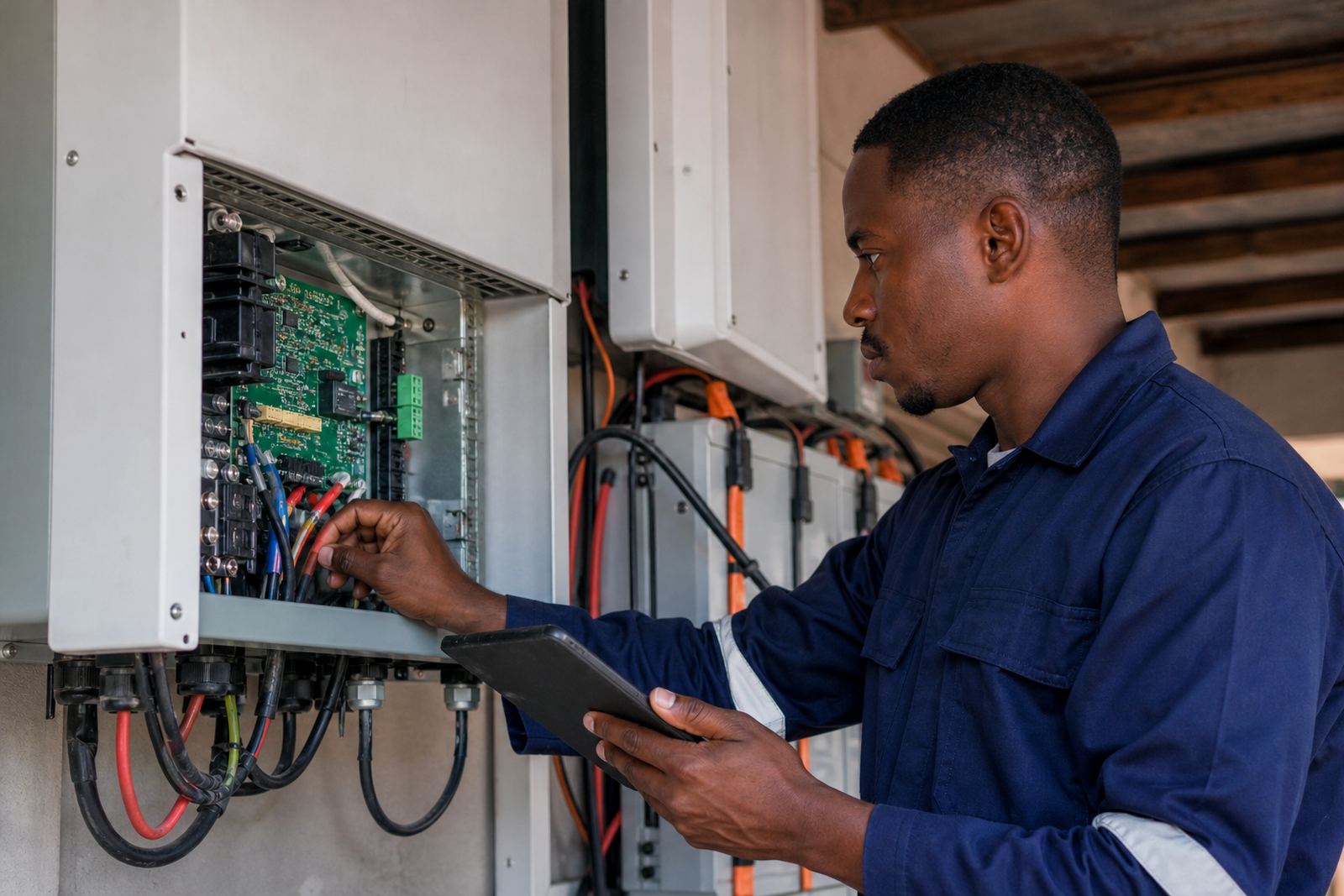
Battery installation is not a casual plug-in job. It ties into the inverter, the distribution board and the rest of the electrical system, so the wiring must be handled by qualified installers. That is important for safety, performance and compliance with local electrical rules.
Electrical integration often includes isolators, protection devices, tidy cabling and clear labelling. If the system is not wired properly, you can get nuisance trips, poor charging, or damage to equipment. In more serious cases, unsafe work can create a fire risk. A proper commissioning step should follow the installation so the settings are checked before handover.
In Gauteng, many homes and small businesses want backup without rewiring the whole property. That can be done, but only if the system is designed properly from the start. The installer should explain which circuits are backed up and which are not, so there are no surprises when the power fails.
How batteries support solar water heating too
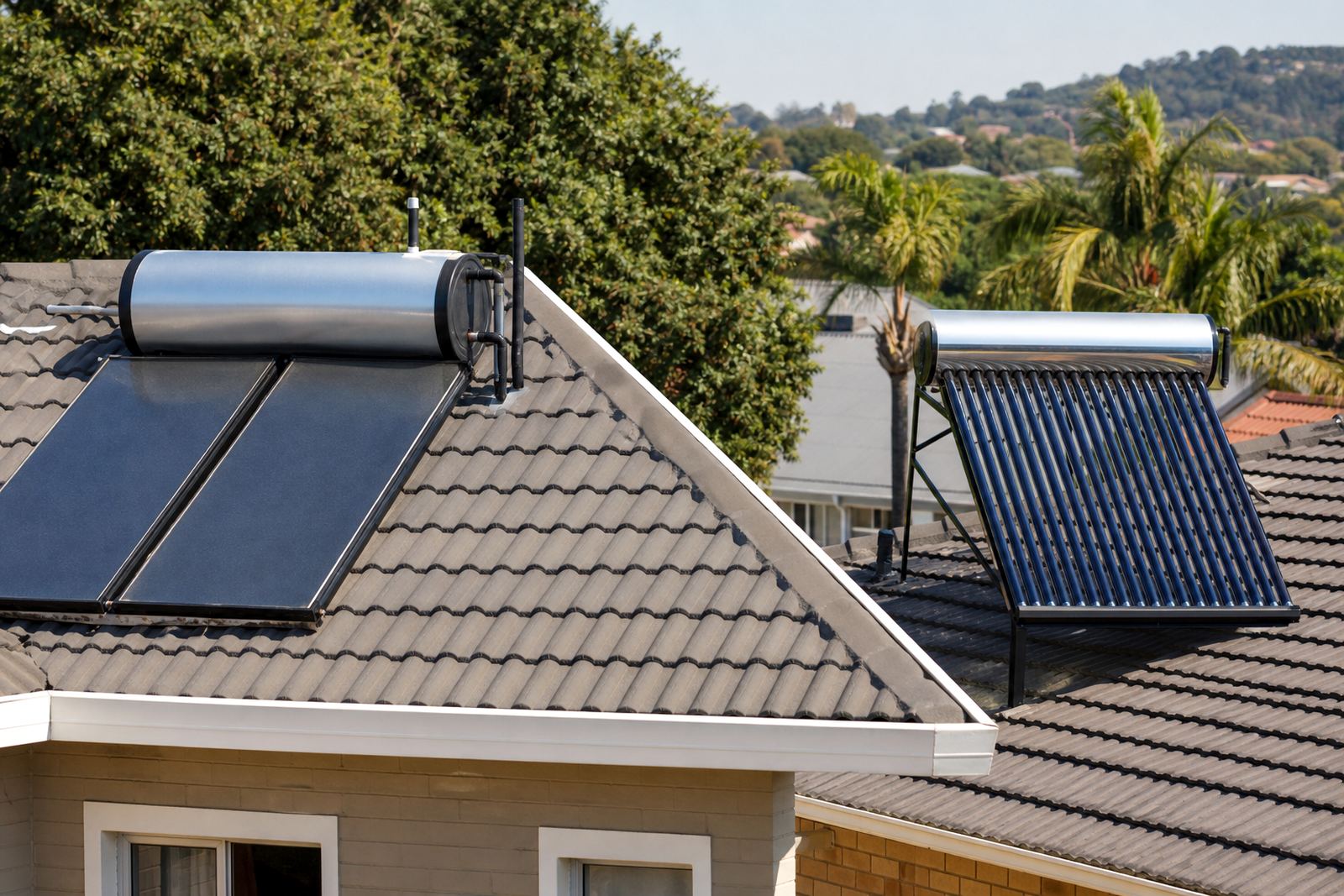
Solar batteries are most often linked to electrical backup, but they can also support broader energy management in a property that uses a solar water heater. While a solar water heater works differently from a battery system, both help reduce pressure on the grid and improve daily comfort.
For example, a small business in Bloemfontein might use solar panels and a battery to keep lights and office equipment running, while a solar water heater reduces the electrical load used for hot water. In a home, that can ease pressure during winter when hot water demand rises and the grid is under strain.
The point is not to overload one system with every job. It is to use each part for what it does best. Panels produce, batteries store, and water heaters reduce electrical demand in another part of the property. When these are planned together the result is far more practical than a one-size-fits-all approach.
Maintenance that keeps battery systems working properly
Batteries need less day-to-day attention than many people expect, but they still need basic care. Dust build-up, poor ventilation, loose connections and heat can affect performance over time. A maintenance visit should check the physical condition of the battery bank, the connections, the inverter settings and any warning messages.
Solar maintenance is also about keeping the rest of the system in good shape. Dirty panels produce less, so battery charging drops too. Fault finding becomes much easier when the system has been installed neatly and serviced on a regular basis. For properties near the coast or in high-dust areas, this is especially important.
- Keep the battery area clean and well ventilated
- Watch for warning lights or unusual beeping from the inverter
- Arrange panel cleaning when dust or bird droppings start affecting output
- Book support callouts quickly if the system changes behaviour
A small fault caught early is usually cheaper to fix than a system left struggling for weeks.
A Pretoria example: backup power for real daily pressure
Consider a small consulting office in Centurion with a few staff, a router, printers and a security system. During load-shedding, the business cannot afford to lose internet or shut down every few hours. A properly sized battery, paired with suitable panels and an inverter, can carry the essential load through the outage and smooth out the day.
Now compare that with a family home nearby. They may not need a large backup system, but they do need the fridge, lights and internet to keep going when the power fails in the evening. The right battery choice depends on how the property is used, not just on how many items are in the house.
That is the practical side of solar storage. It is not about having the biggest battery on the street. It is about having the right storage for your actual use, installed neatly, sized correctly and supported by people who know the system from end to end.