Why battery storage matters after dark
Solar panels do their work in daylight, but the real test for many households comes at night. That is when lights, security gates, Wi-Fi, TVs, computers and small kitchen appliances all need power at the same time. A battery gives you a buffer between what your solar system makes during the day and what your property needs once the sun is down.
In practical terms, battery storage is not only about backup during load-shedding. It also helps you use your own solar power later in the evening instead of drawing straight from the grid. For many homes in Pretoria, Centurion and Johannesburg, that means a steadier routine when Eskom cuts or municipal outages interrupt the supply. Small shops, medical rooms and offices get the same benefit, especially where closing time runs into the evening peak.
What a battery can cover in a typical evening
The right battery size depends on what you want to keep on. A modest setup may keep the essentials going for several hours, while a larger one can support more of the house or business. The point is to match the storage to the load, not simply buy the biggest unit available.
Common night-time loads include:
- LED lights in living areas, passageways and outside security spots
- Wi-Fi routers, fibre equipment and phones
- TV sets, decoders and a few small appliances
- Fridges and freezers where the starting current is managed properly
- Office laptops, printers and point-of-sale equipment in small businesses
- Gate motors, alarm systems and security cameras
It helps to separate essentials from heavy users. Kettles, stoves, geysers and pool pumps can empty a battery quickly, so these need to be planned carefully. A good installer will talk through what must run during the night and what can stay off until morning.
How the system is set up for safe night use
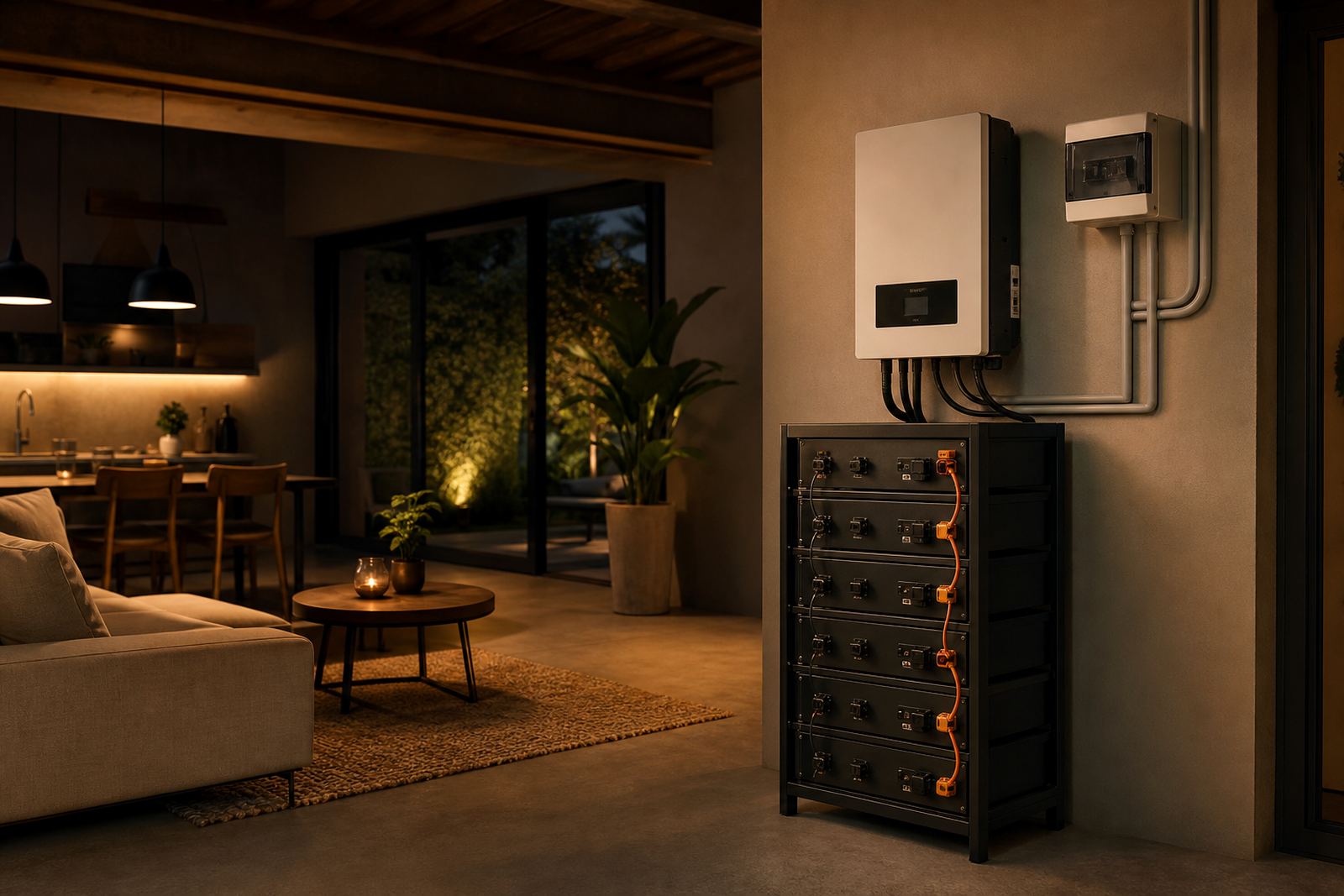
A battery does not work alone. It sits with solar panels, an inverter, protection devices and proper electrical wiring. The inverter manages the change from DC power in the battery to the AC power used in the building. It also helps balance charging during the day and discharging at night.
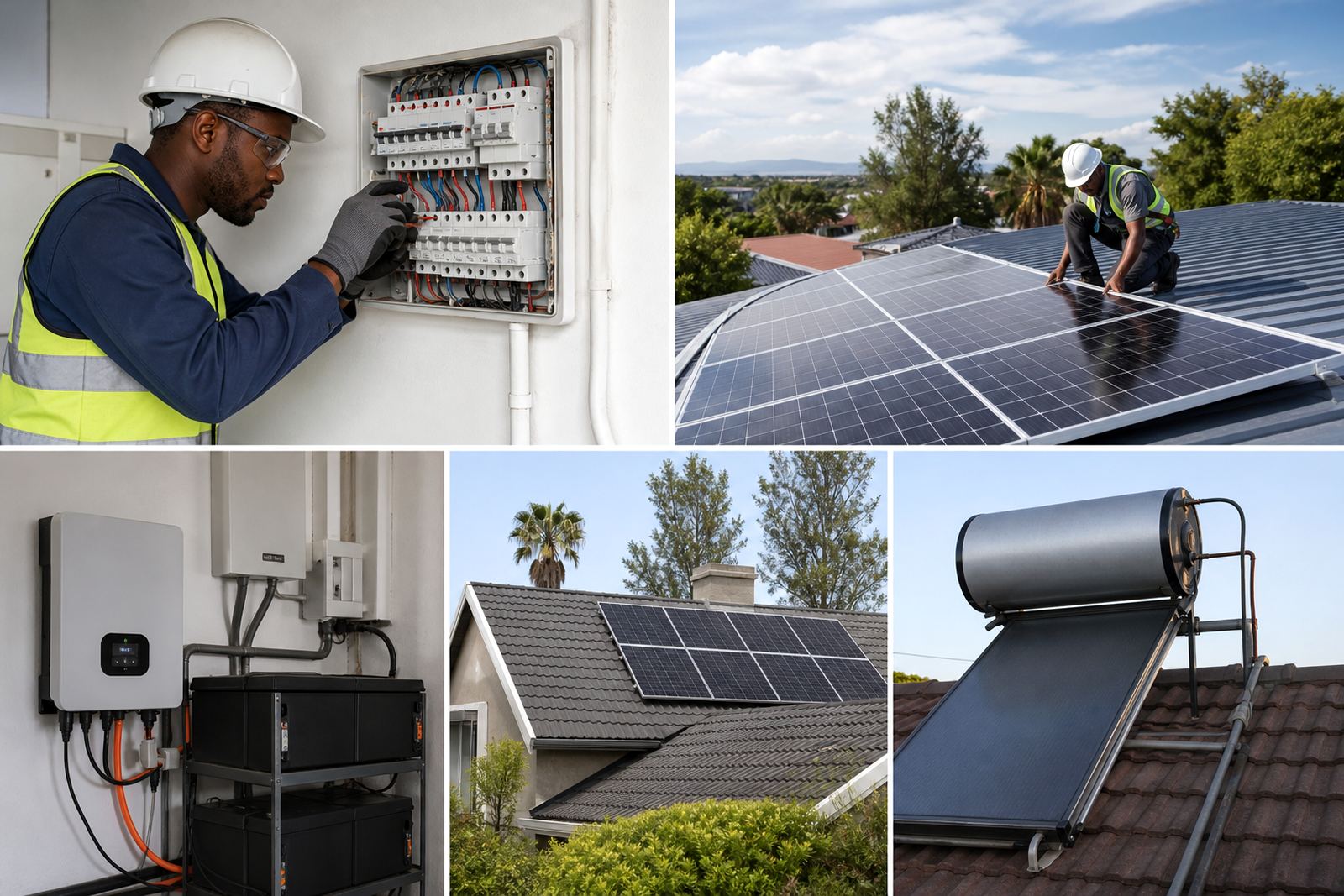
At Linuo Solar, electrical work is done by qualified installers, which matters because battery systems must be connected correctly and safely. Poor wiring, undersized cables or weak protection can cause nuisance trips, damaged equipment or fire risk. That is not worth the gamble, especially in a home with children or in a business that depends on steady power.
For coastal areas like Durban and Cape Town, equipment placement also matters. Humidity and salty air can shorten the life of poorly protected components, so cabinets, enclosures and cable routes need proper planning. In Gauteng, heat and dust still need attention, especially in garages, outside rooms and utility spaces. The system should be laid out for easy inspection and maintenance.
- Correct battery sizing for the expected night load
- Proper inverter matching for starting surges and running demand
- Safe cable routing and isolation points
- Protection against overcharging, over-discharging and overloads
- Clear labelling for switching during maintenance or fault finding
A Pretoria example: evening power at home
Take a family in Centurion that works from home during the day and watches load-shedding schedules closely. The panel array charges the battery through the afternoon. At sunset the battery takes over for lights, the router, the television and the fridge. If the power cuts at 8 pm, supper continues, the children can finish homework and the security system stays active.
This kind of setup is not only about comfort. It reduces the rush to charge devices before dark and keeps the household calm when the grid goes off unexpectedly. In many Pretoria suburbs, that matters just as much as the money side. Families want a system that is quiet, predictable and easy to use, not one that needs constant tinkering.
The same logic works for a small salon in Johannesburg, a convenience shop in Midrand or a consulting office in Bloemfontein. Keep the business lights on, avoid losing card payments and maintain service through the evening peak. For Durban premises, the load can be adjusted around air movement and humidity control too, which changes the battery plan slightly.
What to ask before you choose a battery system
Battery storage should be specified around your actual routine. A good site assessment looks at when you use power, which appliances matter after dark and how often outages occur in your area. That is the only reliable way to size the system properly.
Before you commit, ask these questions:
- How long do you need essential loads to run at night?
- Will the battery support your fridge, Wi-Fi and lights together?
- Do you need one battery or more than one for the evening demand?
- Can the inverter handle the start-up surge from appliances?
- Is the electrical board ready for integration, or does it need upgrades?
- What maintenance is needed for the panels, batteries and wiring?
If you are in a place with frequent outages, it is worth planning for the worst evening, not just the best one. Winter load-shedding in Pretoria can arrive when the battery is already working harder because the day was short. That is where proper design makes a real difference.
Keeping batteries working well over time
Battery systems need a bit of care if you want them to last. They do not like being pushed flat every day, and they perform better when the charge pattern is managed properly. Regular panel cleaning also helps, especially in dusty areas or where birds leave dirt on the roof.
Maintenance checks should cover charging behaviour, cable condition, signs of overheating and any warning lights on the inverter. If something changes, fault finding should happen early rather than after the system fails at night. Small issues are easier and cheaper to sort when they are caught quickly.
Our team in Centurion supports homes and small businesses across Pretoria, Johannesburg, Durban, Cape Town and Bloemfontein with site assessments, system design, panel installation, inverter installation, battery installation, electrical integration, commissioning, maintenance and support callouts. If you need a practical battery setup for night use, the right place to start is a proper assessment and a clear plan for what must stay on after dark.
That is usually the difference between a system that looks good on paper and one that actually carries the evening.