Why metal roofs need a different solar approach
On a metal roof, the installer is working with a surface that expands and contracts through the day. That movement is normal in Gauteng sun and it is one reason fixing points, clamps and rail layout must be selected carefully. On older sheeting, the condition of the purlins, screws and flashings also needs checking before any solar panels go up.
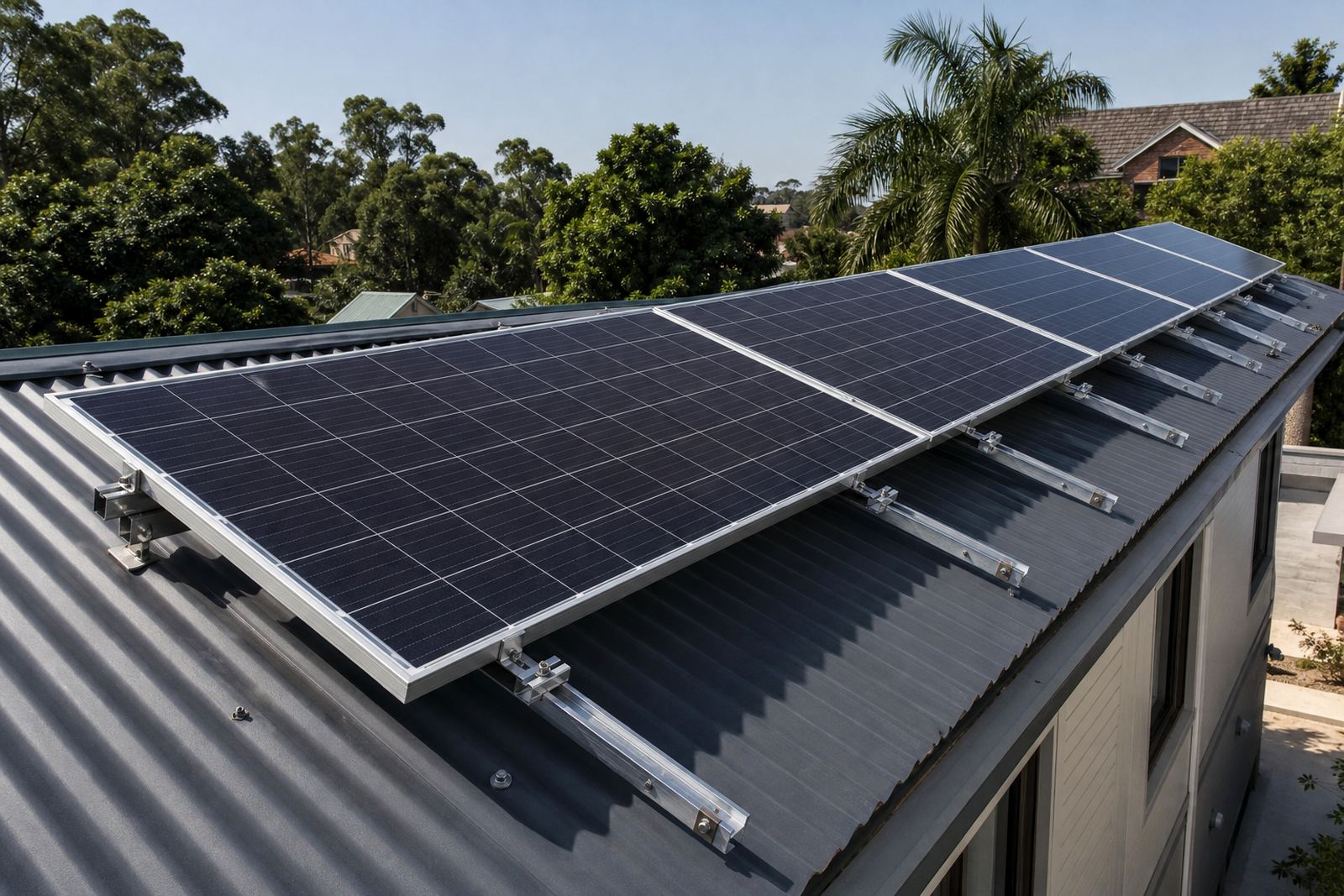
Unlike a tiled roof where brackets often anchor through the tile line, metal roofs may use standing seam clamps, through-sheet fixings or mounting feet depending on the profile. The goal is simple: keep the roof watertight, keep the panels secure in high wind, and avoid unnecessary holes. A neat installation also helps with maintenance later, especially when a small business needs access for cleaning or fault finding.
What we check before any fixings go in
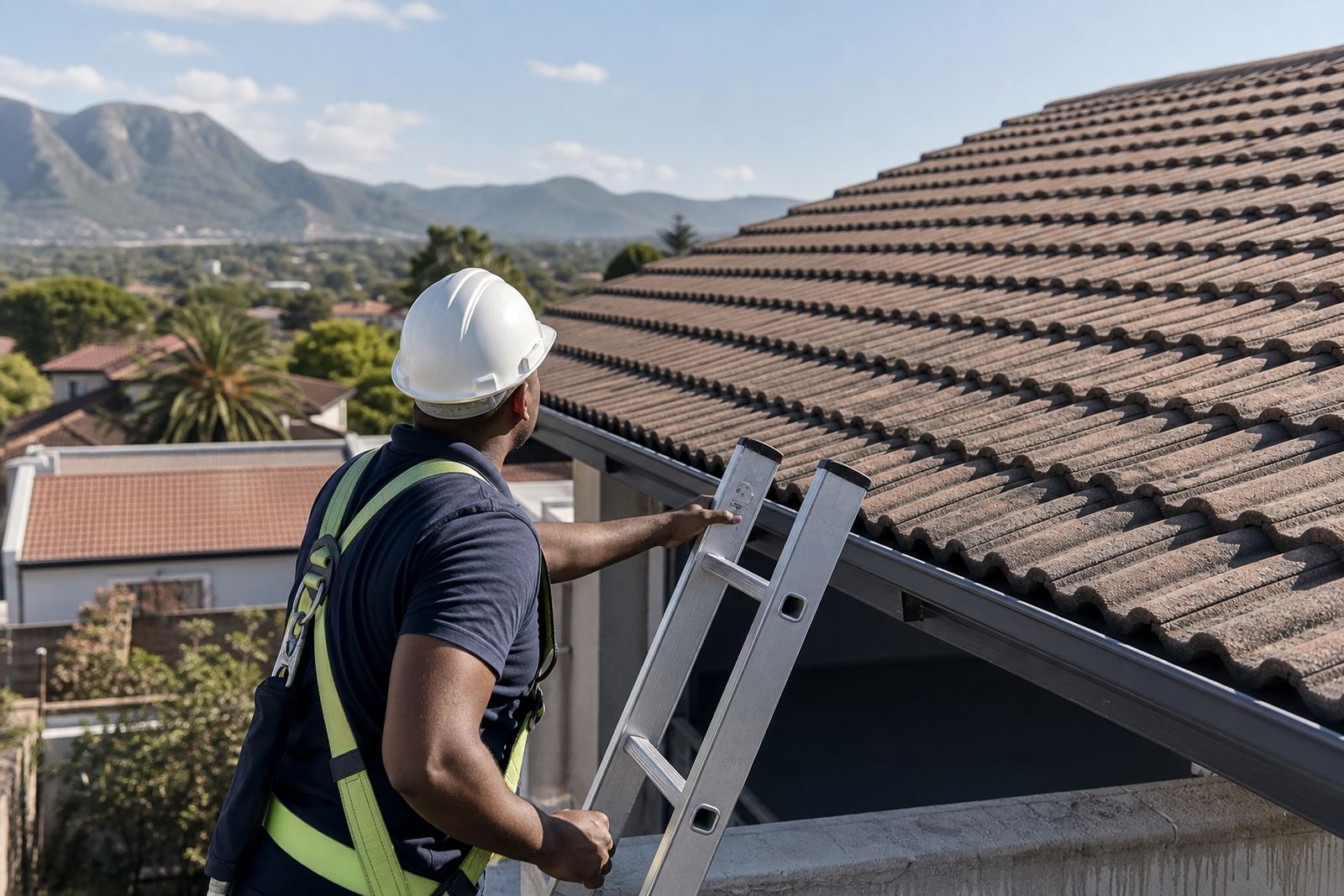
A proper site assessment starts with the roof itself. Not every sheeted roof is ready for solar, and not every section of a roof is worth using. South-facing roofs are not always the best option in our part of the country, so the layout must be planned around available sun, shade from trees or neighbouring structures, and the roof pitch.
- Roof age and rust around screw points
- Sheet profile, thickness and span between supports
- Condition of flashings, gutters and ridge capping
- Wind exposure, especially on corner units and high roofs
- Space for inverter placement, battery location and cable runs
If a roof is thin, damaged or already leaking, the answer is not to force the system onto it. It may be better to repair sections first or shift the layout to a stronger area. That is especially important for farms, warehouses and light industrial units where a roof can be long and uneven.
Fixing methods that suit metal and sheeted roofs
The mounting method must match the roof type. Standing seam roofs usually allow clamp based mounting so the installer does not have to drill through the sheet. Corrugated and IBR style sheets often need carefully sealed through-sheet fixings with the correct support below. On some roofs, extra care is needed near overlaps, because a screw placed in the wrong spot can create a slow leak that only shows after the first heavy rain.
Rail spacing, clamp position and panel orientation all influence how the load is shared. In windy areas like Pretoria East, Midrand and coastal cities such as Durban and Cape Town, uplift protection matters. Panels also need enough clearance from the roof surface for airflow, since hot metal roofs can push temperatures up under the array. Better airflow helps the system run more comfortably through summer afternoons.
For homes and small businesses, the best layout is usually the one that uses the roof cleanly without overcomplicating the wiring. Simple runs are easier to inspect and less likely to be damaged during later maintenance.
Waterproofing, flashings and the risk of small leaks
Most callouts on metal roof systems are not about the panels themselves. They are about water ingress around fixings, lifted sealant or cable entry points. That is why waterproofing is a critical part of the job, not an afterthought. A qualified installer should use suitable washers, sealants and grommets, and route cables so they do not sit in standing water or rub against sharp edges.
On sheeted roofs, flashings around penetrations must be checked after installation and again after the first serious rain. In coastal areas where humidity and salt air can speed up corrosion, the quality of exposed fasteners and cable supports is just as important as the array layout. We often advise owners to inspect gutters at the same time, because overflowing gutters can make a healthy roof look like it is leaking.
Good practice on metal roofs includes:
- Using fixings suited to the roof material and thickness
- Sealing every penetration properly, with no gaps around washers
- Keeping cables off sharp edges and away from hot sheet joins
- Leaving clear access for future maintenance and roof repairs
How electrical integration is handled on a metal roof job
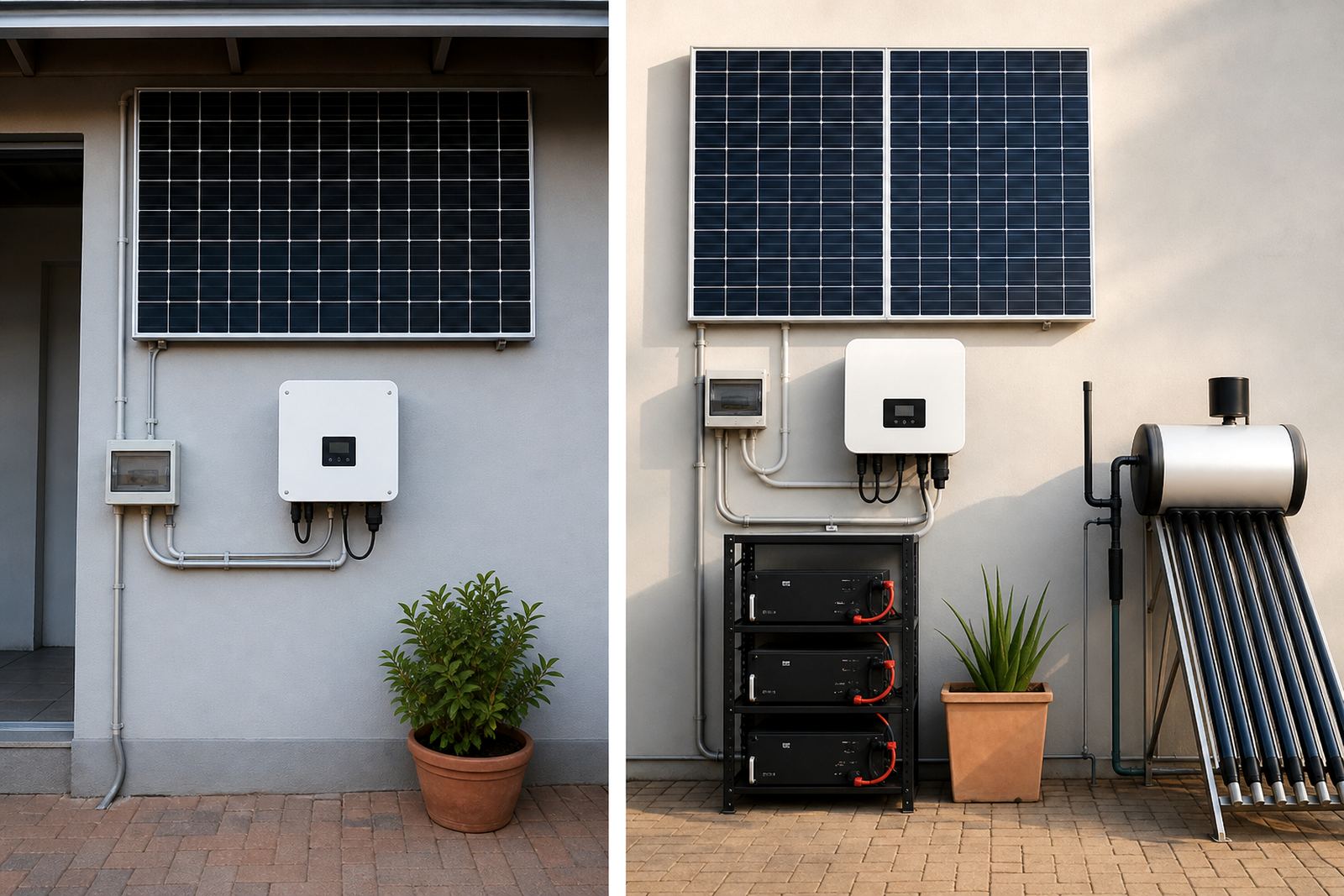
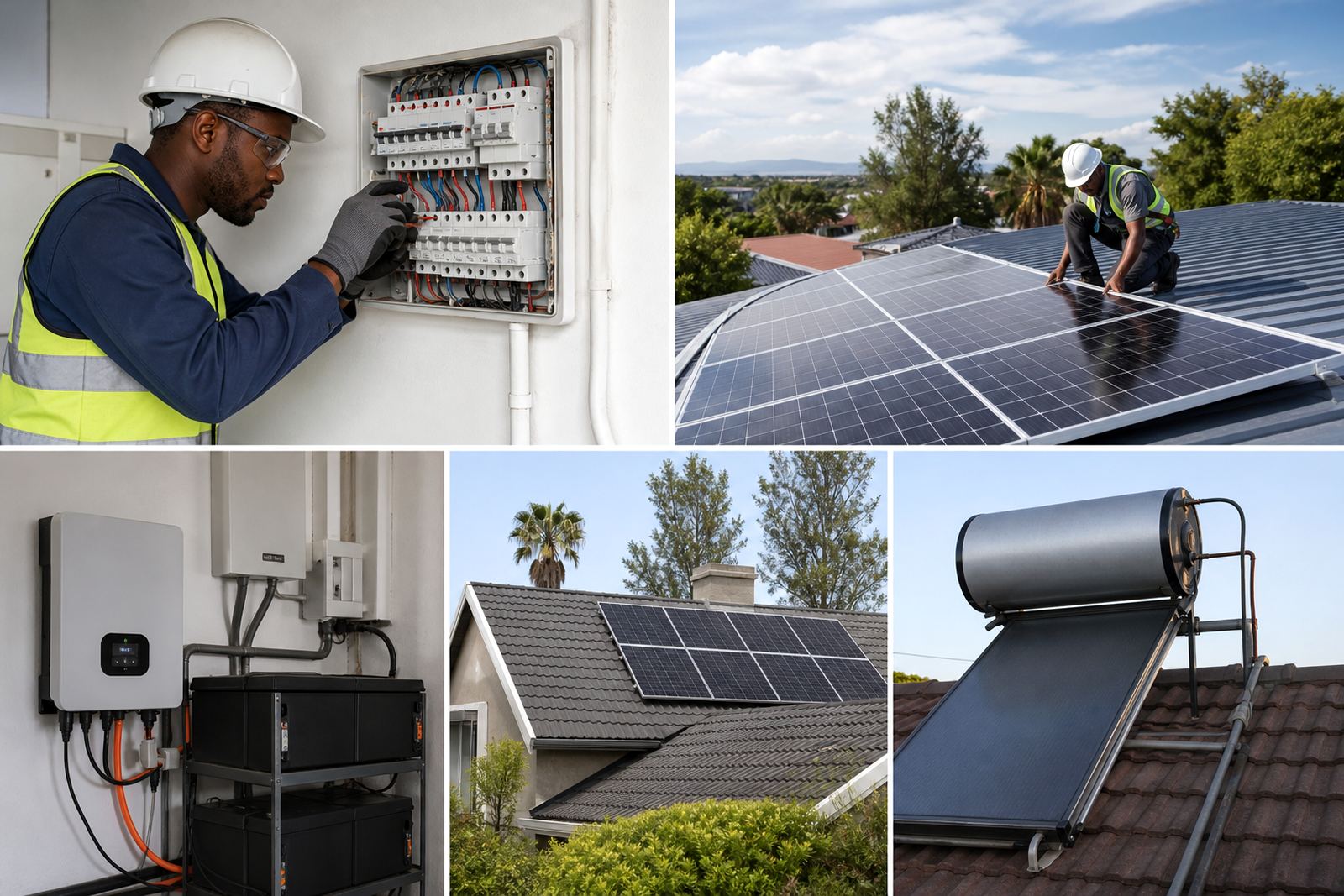
The roof mount is only one part of the system. The electrical side still needs careful planning, including inverter installation, battery installation where required, and integration with the building’s existing distribution board. Electrical work is done by qualified installers, and that matters on both domestic and commercial sites where safety and compliance are not negotiable.
On a small business in Centurion, for example, a roof may suit a good panel layout but the board room or production area may not be the best place for equipment. Heat, dust and access all play a role. We usually look for a practical spot that allows clean cable routing, safe ventilation and easy access for maintenance. If the customer also needs a solar water heater, that planning must happen at the same time so the roof layout does not conflict with pipes or service access.
Commissioning should include checks on polarity, protection devices and the full system start-up. That way the owner knows the panels, inverter and battery bank are working together as intended before the handover.
A Pretoria example: what changed on a steel warehouse roof
A light industrial client in Pretoria North had a long sheeted roof with strong sun exposure and regular afternoon wind. The first concern was not panel size, it was the roof condition around several old fixing points. After the assessment, the team shifted the array to the soundest sections, replaced worn fasteners where needed and kept the cable route short to the inverter location inside the building. That reduced the chance of future leaks and made maintenance easier.
The same roof also had a solar water heater requirement for staff wash facilities, so the pipework had to be planned around the panel rows. It was a straightforward project in the end, but only because the roof details were respected from the start. On metal roofs, that is often the difference between a system that works well for years and one that causes repeat callouts.
For property owners in Pretoria, Johannesburg, Durban, Cape Town and Bloemfontein, the lesson is the same: the roof profile drives the installation method, not the other way around.
What owners should ask before approving the job
Before any solar panels are installed on a metal roof, it helps to ask a few direct questions. These questions are not technical for the sake of it. They help you understand whether the installer has considered the roof properly and whether the final setup will be easy to live with.
- How will the panels be fixed to this specific roof profile?
- Where will the cables run and how will they be protected?
- What waterproofing method will be used at every penetration?
- Will the electrical work be done by qualified installers?
- How will future maintenance be handled, including cleaning and fault finding?
A careful answer is usually a good sign. A rushed answer is not. Metal roofs can carry solar very well when the installer respects the structure, the weather and the building's daily use.