Why Clean Panels Matter in Gauteng, the Coast and Inland Towns
Solar panels do not need constant attention, but they do need a bit of care. In Pretoria and Centurion, fine dust from dry spells and road grime can settle on the glass after a few windy days. In Johannesburg and Midrand, pollution and soot can add to the film. In Durban and Cape Town, salt spray, sea mist and sticky residue can leave marks that are harder to rinse off later.
When dirt sits on the surface, the panels get less sunlight. That does not mean every dirty panel is failing, but it can mean less output during the same sunny hours. For a home or a small business, that can show up as the system drawing more from the grid than expected during the day, especially when load-shedding is already putting pressure on daily use.
- Dust builds up faster on tilted roofs near open land and busy roads.
- Bird droppings and tree sap can block small areas and should be removed sooner.
- Coastal homes may need more regular rinsing because salt sticks to the glass.
Signs Your Panels May Need a Clean
Many owners only notice a problem when they see a drop in performance, but there are often early signs. A visible grey film, patches of grime or hard water marks are easy to spot from ground level. If the array looks dull rather than clean and reflective, it may be time for a wash.
Some systems also show a change in daytime generation after a dust storm, a long dry spell or nearby roof work. If one section of the array is noticeably dirtier than the rest, that uneven build-up can affect the whole string. On flat roofs, leaves and windblown dirt can gather along the bottom edge where water does not run off as easily.
- Look for patchy discolouration after rain that did not properly rinse the panels.
- Check for droppings under trees or near nesting areas.
- Watch for stubborn marks after nearby building work, roofing repairs or plaster dust.
- If a clean panel still looks cloudy, the issue may be mineral deposits from hard water.
How Often Cleaning Is Usually Needed
There is no single rule for every property. A home in a leafy Pretoria suburb may need less frequent cleaning than a warehouse yard in Bloemfontein or a retail roof near a busy road. As a practical guide, many owners check their panels every few months and clean them when dirt is clearly visible or when the system seems underperforming.
After a season of heavy dust, strong winds or nearby construction, a panel clean may be needed sooner. In Durban and other humid areas, grime can stick more firmly and grow into a thin film if it is left too long. During the dry winter months in Gauteng, dust can also build up quickly because there is less rain to rinse it away naturally.
- Inspect after dust storms, roof repairs or long dry periods.
- Check more often if panels are close to trees, chimneys or busy roads.
- Coastal properties may need a shorter cleaning cycle than inland properties.
Safe Cleaning Starts With the Right Method
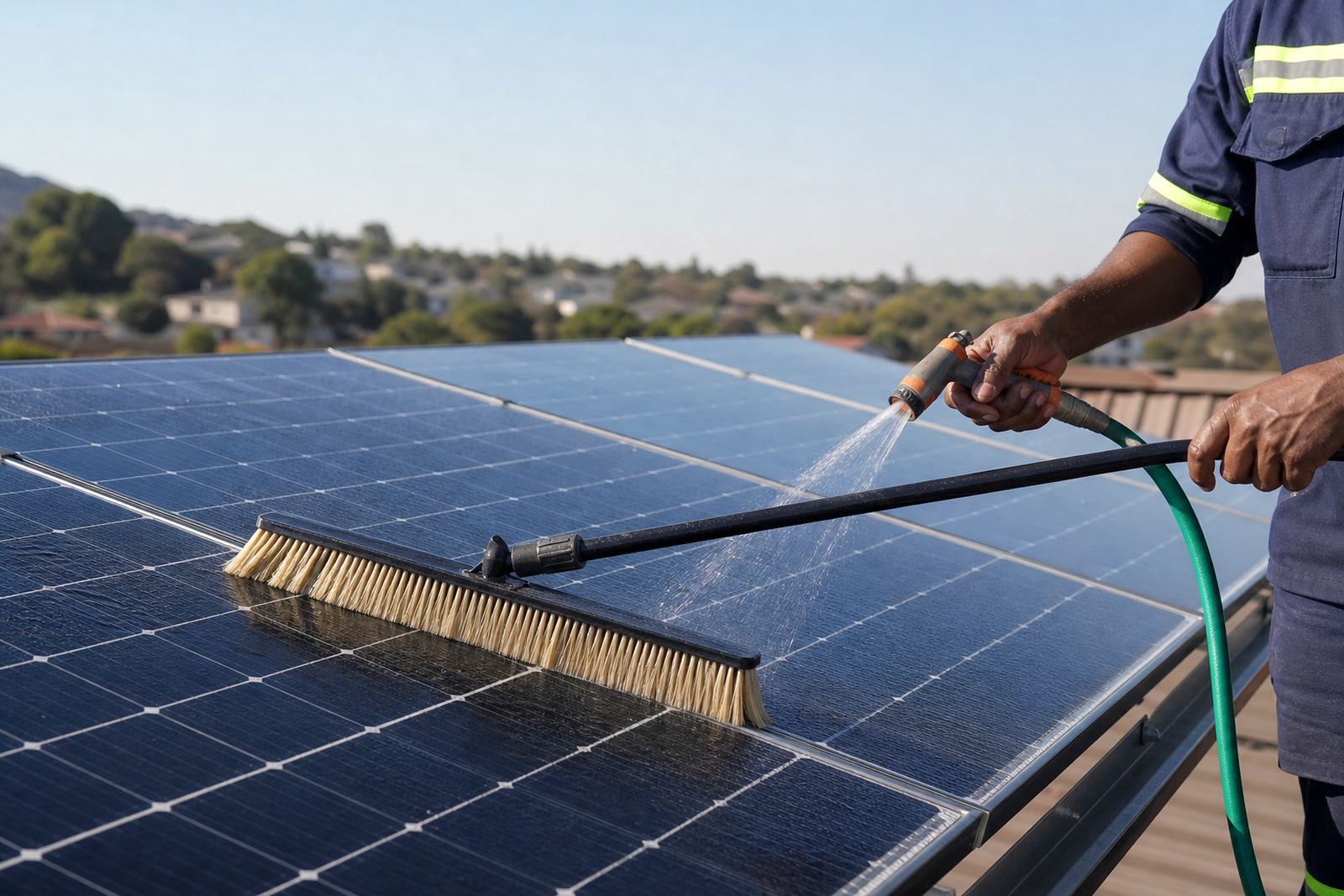
Solar panels should be cleaned carefully. Harsh brushes, strong chemicals and high-pressure washing can damage the glass, seals or mounting hardware. The aim is to remove dirt without scratching the surface or forcing water into places it should not go. This is especially important on roof systems where access is awkward and the roof pitch adds risk.
For most panels, a soft cloth, soft brush or sponge with clean water is enough. If the dirt has dried hard, it may need a gentle soak before wiping. Cleaning is best done early in the morning or late afternoon, when the panels are cooler. Sudden cold water on hot glass can cause stress, and working on a hot roof is not pleasant either.
- Do not use abrasive pads, metal tools or household scouring powders.
- Avoid standing on panels or leaning heavy equipment against them.
- Never spray water into cabling, junction boxes or inverter areas.
- If the roof is steep or slippery, leave the job to trained hands.
Why Some Roofs Need Professional Panel Cleaning
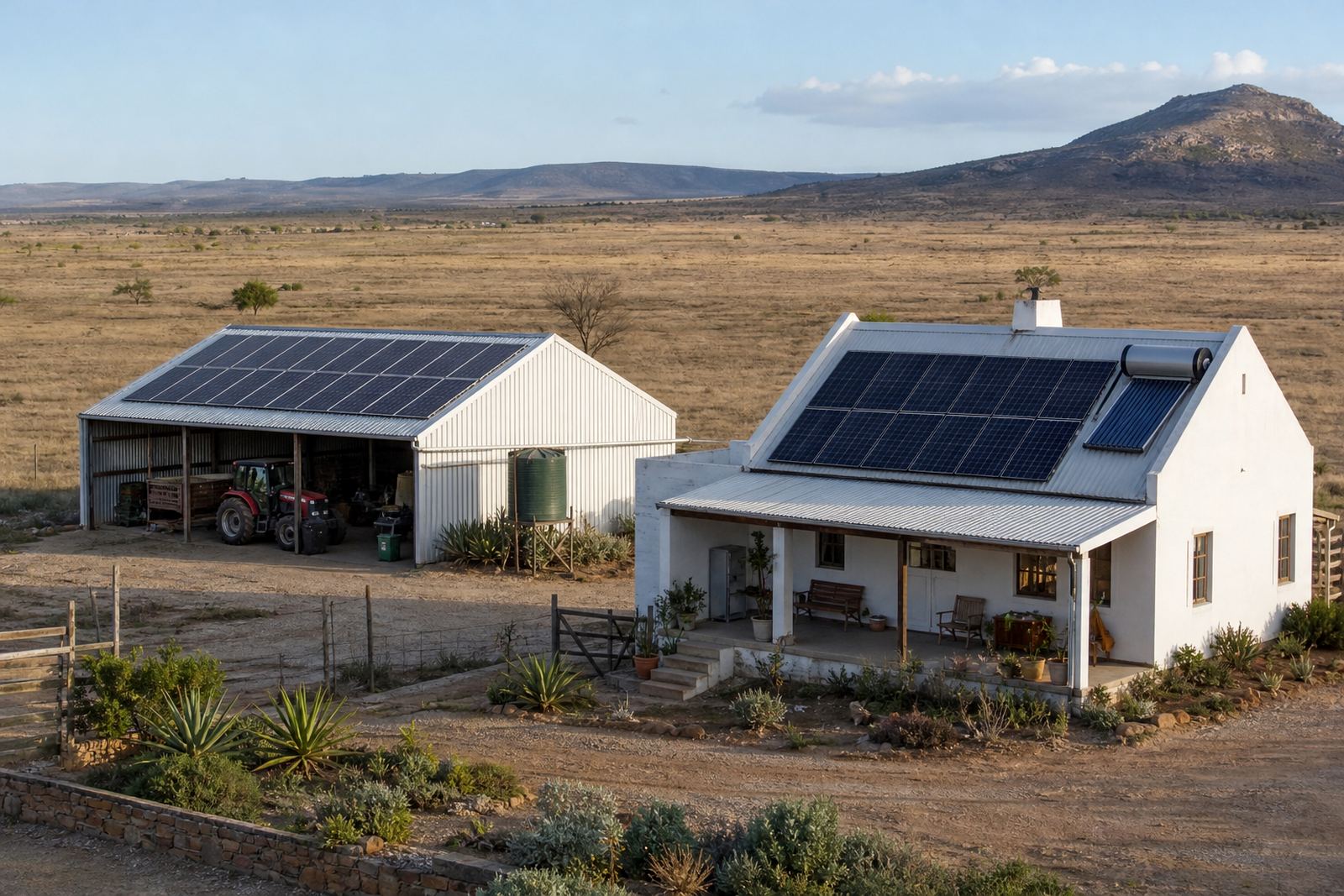
Not every clean is a simple hose-down. A higher roof, a fragile tile roof or a large commercial array can call for proper access equipment and a careful method. In some cases, the issue is not just dirt. Loose brackets, damaged cable clips or shading from new growth can be found during a routine clean, and it helps to have a trained installer look over the system at the same time.
At Linuo Solar, panel cleaning can be arranged as part of regular maintenance, with support for homes and small businesses in Pretoria, Centurion, Johannesburg, Midrand, Durban, Cape Town and Bloemfontein. Electrical work is done by qualified installers, and that matters when a system has both roof-mounted equipment and live components nearby. A proper clean is also a good time to check that the inverter, batteries and wiring are still working as they should.
For example, a small office in Centurion with a low-pitched metal roof may only need occasional cleaning, while a guest house in Durban close to the coast may need more frequent attention because of salt and humidity. The right schedule depends on the site, the roof and the surrounding environment.
A Simple Routine That Protects Output
The best approach is to treat panel cleaning as part of basic system care, not a once-off fix. A quick visual check every so often, plus a proper clean when needed, can keep the array in better shape for longer. That is especially useful for small businesses that depend on daytime solar supply and for homes that want to use as much self-generated power as possible.
If you are unsure whether the panels need cleaning, a site assessment can help. The team can look at the roof layout, local dust exposure, water access and safe access points before advising on a sensible cleaning schedule. That way the system is looked after properly, without unnecessary work.
- Make cleaning part of regular maintenance, not an emergency response.
- Keep an eye on output trends after dusty weather or bird activity.
- Arrange a professional check if the panels are hard to reach or the roof is unsafe.