Why farm buildings need a different solar approach
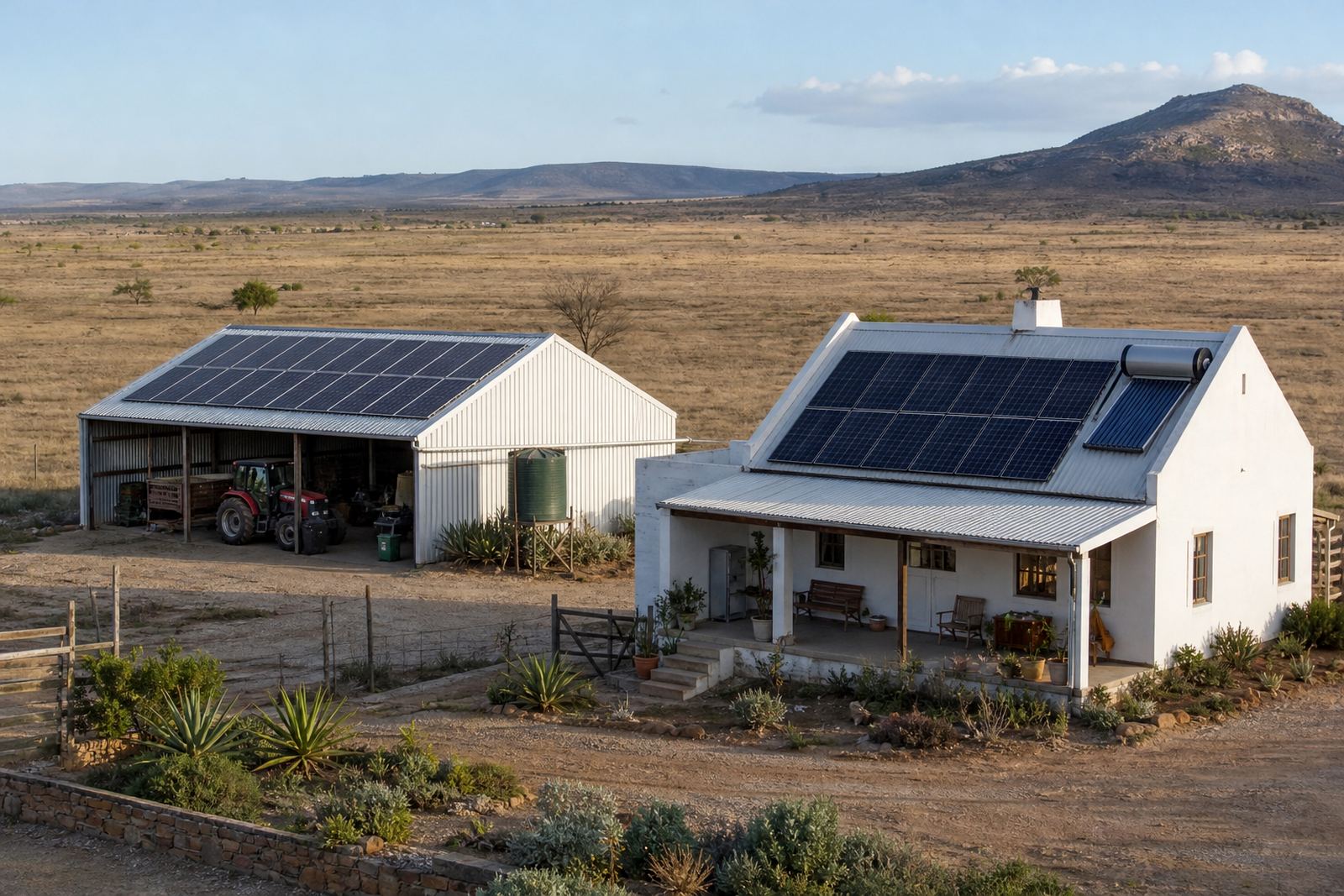
Solar for a farm is rarely a one-size job. A farmhouse, storage shed, staff quarters, workshop and packing room can all have very different power needs, and the distance between buildings often affects cable runs and system design. On rural properties around Pretoria, Centurion and the wider Gauteng area, we look at how each building is used before suggesting panels, inverters, batteries or solar water heating.
It also matters that farm sites are exposed to dust, wind and coastal moisture if the property is near Durban or Cape Town. Panels need a position with good sun exposure, while inverters and batteries should be kept in a dry, secure space with proper ventilation. For water heating, tank placement and pipe runs must be planned carefully so hot water is available when it is needed and not lost through poor insulation or long pipe runs.
What solar can cover on a working property
Most farm owners want a practical system that supports day to day work rather than trying to power every item on the property at once. A good setup can cover lighting, kitchen loads, security systems, office equipment, borehole support, small workshop tools and hot water for staff or guest accommodation. The exact mix depends on the size of the buildings and how much power is used during the day versus at night.
- Farmhouse lights, fridge and general plug points
- Shed lighting and small power tools
- Gate motors and security systems
- Office equipment for admin and stock control
- Solar water heating for bathrooms, laundry and kitchens
If the property has a cold room, large motors or heavier machinery, those loads need separate planning. Our team checks the starting surge, daily usage and whether a battery backup is needed for overnight power or only for essential circuits.
Panels, batteries and inverters for rural use
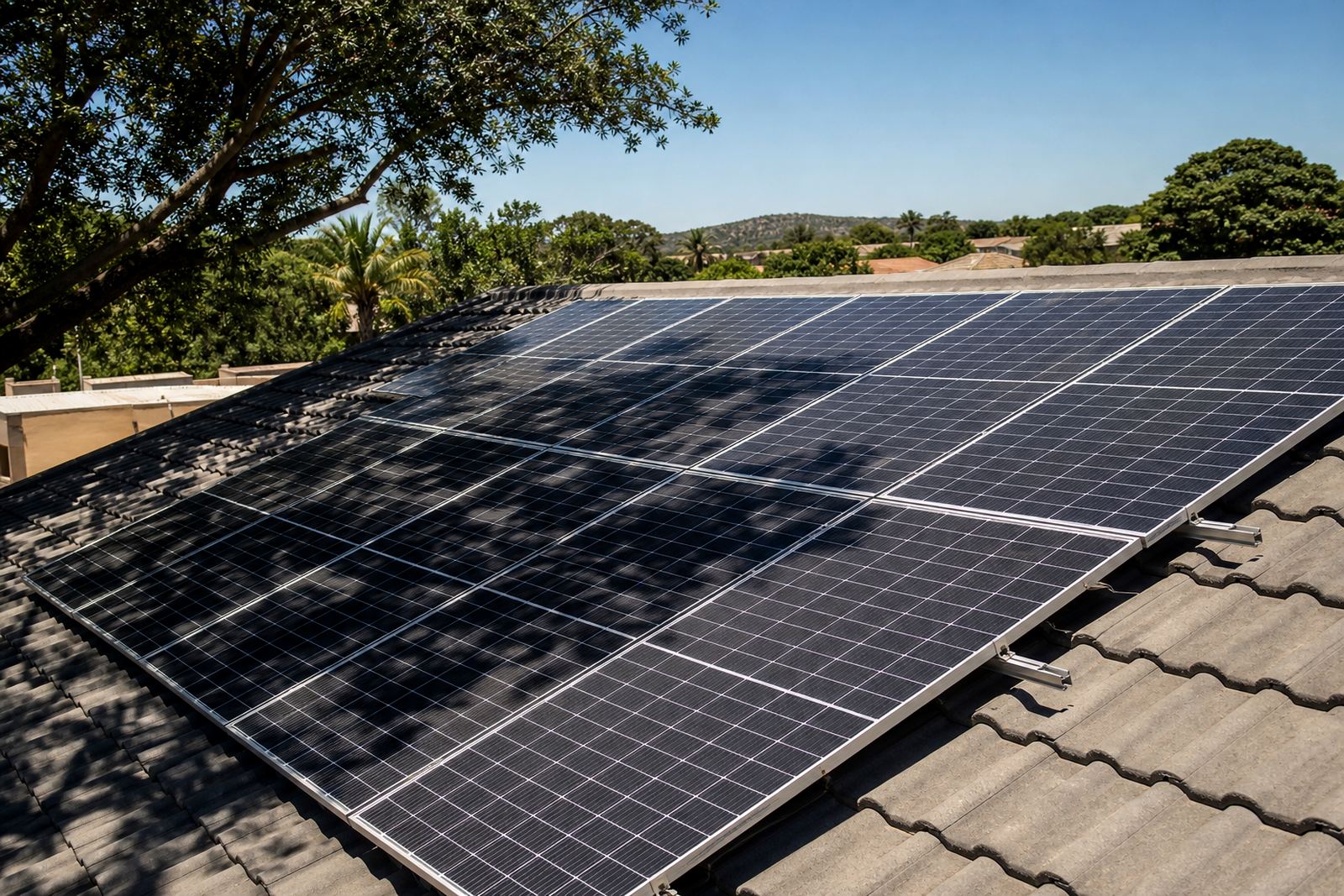
Solar panels on farm buildings should be installed where they get clean, consistent sunlight and are not shaded by silos, water tanks or tall trees. On metal roofs, the fixing method must suit the roof profile and coastal humidity if the site is near the sea. On tiled or flat roofs, the mounting must be set out properly so the roof stays watertight and accessible for maintenance.
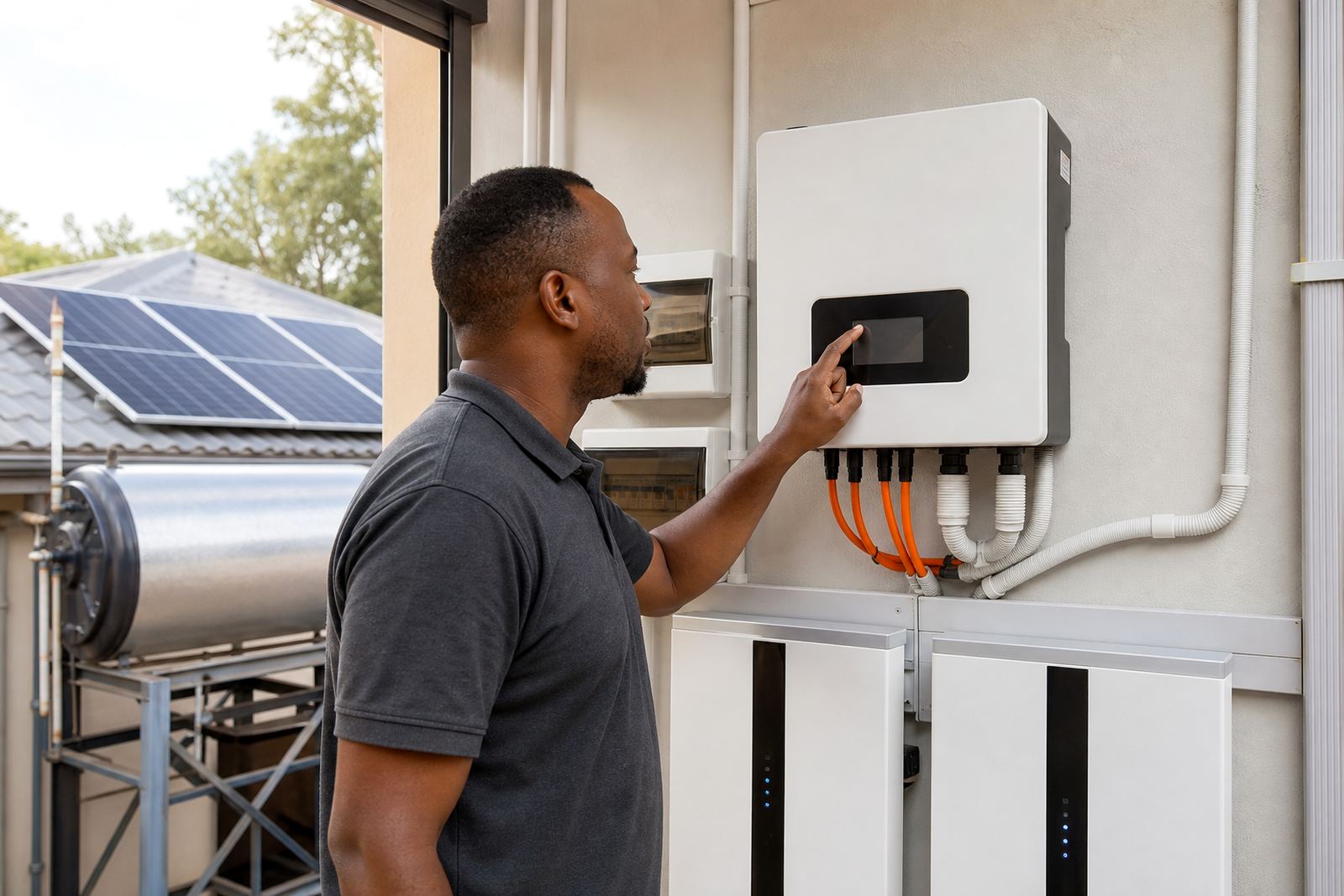
Inverters are the centre of the system because they manage how power moves from the panels and batteries into the building. Batteries are useful where farm work continues after sunset or where loadshedding interrupts milking, feeding, security or office work. We size the system around actual use and then allow for growth if the property adds more cold storage or another shed later.
Our electrical work is done by qualified installers, which is important on rural sites where long cable runs and mixed building types can create faults if the work is rushed.
Solar water heaters for farmhouses and staff accommodation
Hot water is one of the easiest places to reduce pressure on the grid. Solar water heaters suit farmhouses, guest cottages, labour housing and wash-up areas where hot water is needed every day. In many rural properties the demand is steady, which makes solar water heating a practical choice for both comfort and running costs.
We assess roof orientation, tank size, pipe distance and how the building is occupied. A shed converted into accommodation may need different water heating from the main house, especially where several people shower before work starts. In winter, Pretoria mornings can be cold enough that a poor installation leaves water lukewarm by the time the first shift begins, so the sizing and insulation have to be done properly.
- Single or multiple bathrooms
- Kitchens and wash areas
- Staff accommodation and ablutions
- Guest cottages and farm stays
A Pretoria farm example: steady power for mixed buildings
One common local setup is a property outside Pretoria with a main farmhouse, a general-purpose shed and a small office near the entrance. The owner wants lighting, plug points, gate access and hot water kept going during outages, but does not want to overspend on a system sized for equipment that is only used once in a while. In a case like that, the installation is usually split into priority circuits so the household and key buildings stay active while non-essential loads are managed separately.
That approach makes day to day life easier. The staff have light in the shed before sunrise, the office can still handle records and communication, and the farmhouse has hot water ready for use. The owner also gains a cleaner view of how much energy each building uses, which helps when planning future upgrades or maintenance. It is practical and there is less guesswork.
Maintenance, fault finding and keeping the system reliable
Farm buildings collect dust fast, and that affects solar performance. Panels should be cleaned when dirt, pollen or bird droppings build up, especially after dry windy periods in Gauteng or during harvest seasons when the property is busy. Batteries and inverters also need proper placement and periodic checks to keep heat and moisture under control.
We provide solar maintenance, fault finding, support callouts and panel cleaning for homes and small businesses across Pretoria, Johannesburg, Midrand, Durban, Cape Town and Bloemfontein. If a system starts tripping, a heater stops performing or a battery bank is not holding charge as expected, we inspect the wiring, connections and settings before recommending the next step. It is far better to sort a small fault early than wait for it to affect the whole property.
How to plan the right installation for your property
The best farm building solar setup starts with a site assessment. We look at the buildings, roof space, electrical layout, water heating needs and whether the property has one central supply point or several separate structures. That information is used for system design, panel installation, inverter installation, battery installation, water heater installation, electrical integration and commissioning.
If you are in Pretoria, Centurion, Midrand, Johannesburg, Durban, Cape Town or Bloemfontein, you can send an enquiry through the contact page and our team will take it from there. Linuo Solar is based in Centurion, Pretoria, with support from Vuyo Phasha and a team that includes Naledi Kgosi, Sarel Delport, Palesa Mabena, Mothusi Mphahlele, Faatimah Latief and Unathi Tau. For rural properties, the goal is simple: keep the important parts of the farm powered, keep the water hot, and keep the system practical for daily use.