Why appliance choices matter before you size a solar system
When people ask about solar, they often start with the panels. That is useful, but the better place to start is the appliance list: fridge, lights, TV, laptop charger, kettle, microwave, washing machine, pump and geyser. Each one draws power differently, and some only run for short bursts while others sit on in the background all day.
A proper site assessment looks at what is used daily, what must stay on during outages, and what can be shifted to daytime. A small business in Pretoria may need office lights, computers, a router and a few fridges covered. A home in Centurion may care more about the fridge, Wi-Fi, a gate motor and hot water for the family. The mix changes the system design more than most people expect.
- High demand appliances need more careful inverter sizing
- Long running loads affect battery planning
- Water heating can reduce pressure on the rest of the system
- Daytime use helps solar panels do more work directly
What solar panels handle well in a typical South African home
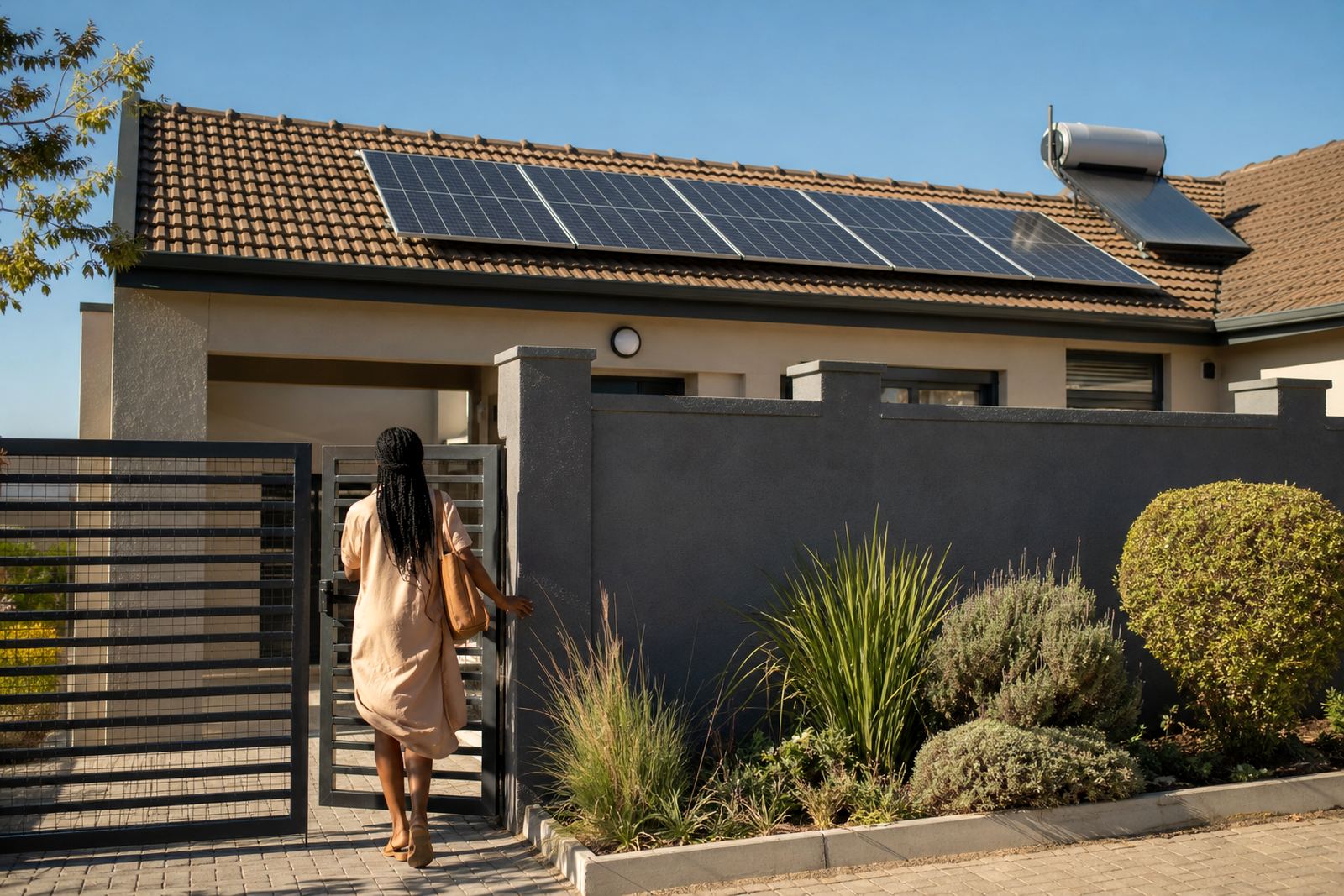
Solar panels are strongest when they can feed loads during the day. That includes fridges, routers, office equipment, pool pumps on a timer, and appliances used while the sun is out. In Pretoria and Johannesburg, many households can shift washing and ironing into the middle of the day without changing much else. In Durban and Cape Town, coastal humidity and salt air make good mounting and cable protection important too.
Panels do not run appliances on their own. They generate DC power that is managed through an inverter and then used by the home. That means the total system must be planned around roof space, shade from trees or neighbouring buildings, and the daily load profile. If the roof faces a poor angle or has patchy shade, a system can still work, but the layout needs to be planned properly.
- Best suited to daytime appliances and steady background loads
- Roof direction, shade and pitch affect output
- More roof space is useful for future expansion
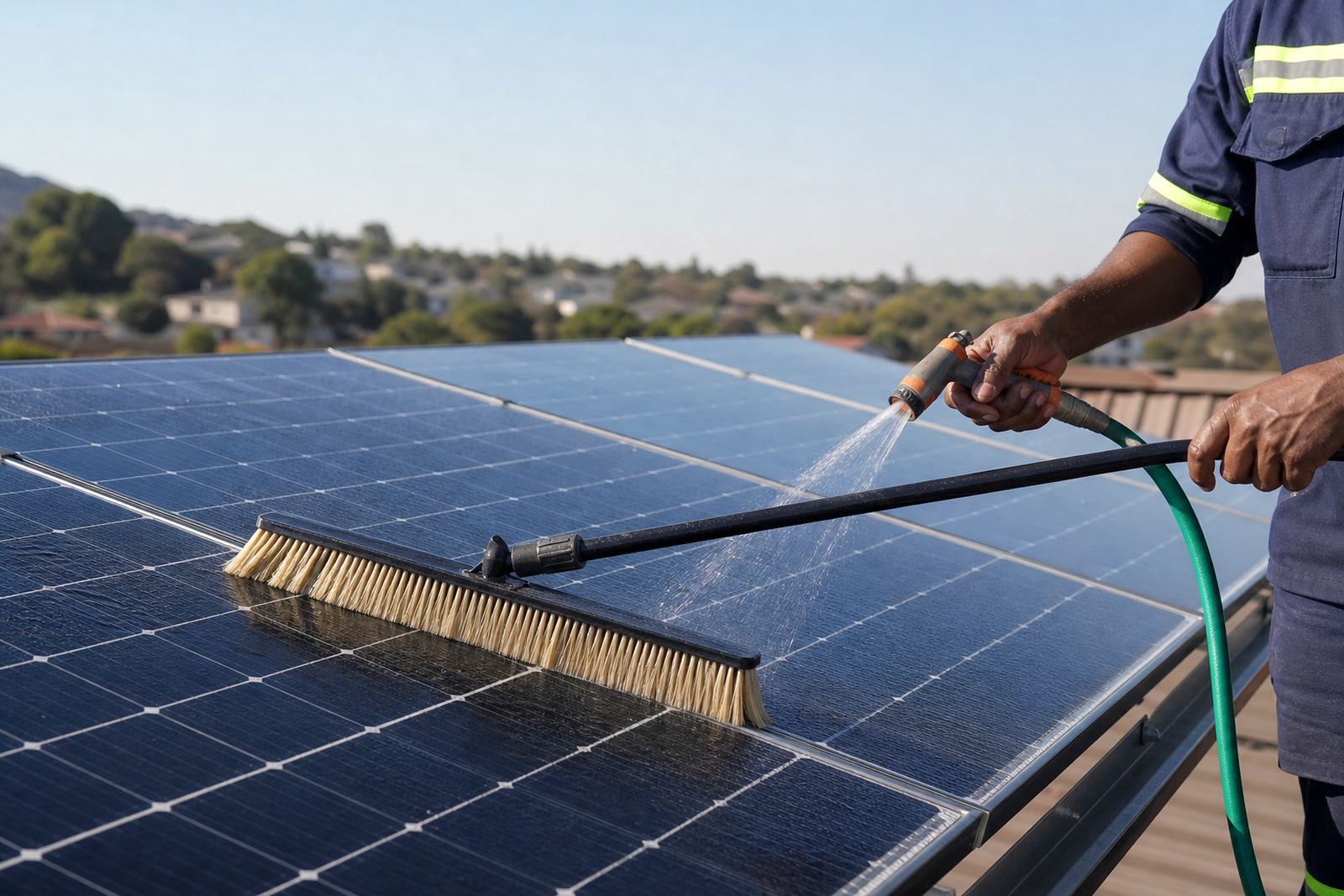
- Cleaner panel surfaces help maintain output over time
Inverters, batteries and the appliances that test them most
The inverter is what makes the system practical for normal appliance use. It must cope with starting surges from fridges, pumps and some power tools, not just the steady running load. Batteries then decide how long the house stays powered once the sun goes down or when cloudy weather reduces solar input. If both are undersized, the system may work in the morning but trip later in the day, which is frustrating during load-shedding.
For homes and small businesses, the biggest lesson is that not every appliance should be treated as a backup load. Kettles, heaters and tumble dryers can drain storage fast if they are used carelessly. Some clients in Bloemfontein or Midrand prefer to keep the basics on backup and use heavy appliances only when solar output is strong. That approach keeps the system more stable and helps batteries last longer.
- Fridges and freezers need reliable continuous supply
- Pumps and motors need start-up capacity
- Kettles and heaters are heavy users and should be managed carefully
- Battery autonomy depends on the number of appliances left on after sunset
Hot water is often the easiest place to make solar work harder
Solar water heaters are one of the most practical parts of a broader solar plan because they take a large thermal load away from the electrical system. A home that relies on an electric geyser all day can put strain on panels, inverter and batteries before the family has even switched on other appliances. Moving water heating into a solar setup changes that equation quickly.
This matters in houses with multiple bathrooms, guest accommodation, small salons, or staff facilities at a business. In colder parts of Gauteng and inland towns, water heating can be a real energy drain in winter. A properly installed solar water heater, with electrical work done by qualified installers, can support a more balanced system and reduce the pressure on battery storage. It also makes planning easier when the household wants to run lights, internet and kitchen appliances during outages.
- Water heating can be separated from day to day electric loads
- Good for homes with high geyser use
- Useful for guesthouses, salons and small offices
- Needs proper plumbing and electrical integration
A practical appliance plan for Pretoria and nearby areas
Local conditions matter. In Pretoria and Centurion, summer storms can bring sudden power cuts and winter mornings can start with heavy geyser demand. In Johannesburg and Midrand, many offices and home businesses want the internet, lights and a few key appliances to stay on through short outages. In Durban, humidity affects equipment placement and cable routing, while Cape Town sites often need careful planning around wind and coastal conditions.
A typical appliance plan starts with three groups: essentials, comfort loads and heavy loads. Essentials are the fridge, lights, internet and security. Comfort loads might include a TV, a fan or a laptop station. Heavy loads are kettles, heaters, iron, microwave and pool pumps. Once these are separated, it becomes much easier to decide what belongs on solar, what belongs on backup, and what should be used only in daytime.
- Essentials should stay on during outages
- Comfort loads can run when there is enough solar input
- Heavy loads need careful timing or separate planning
- Small businesses should include work equipment in the assessment
What a proper installation visit should check before anything is fitted
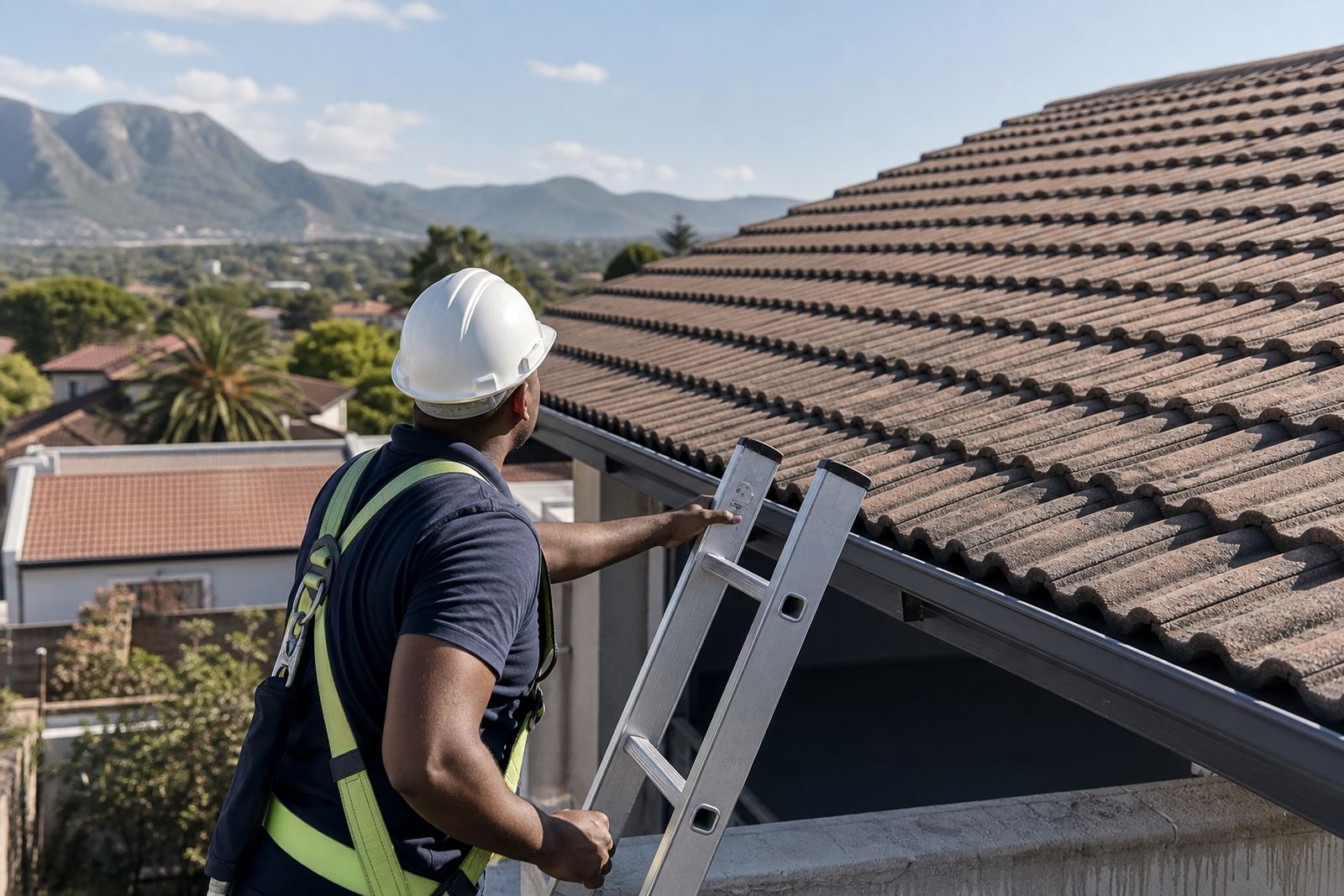
A solid installation starts with a site assessment, not guesswork. The installer should check roof condition, cable routes, distribution board space, geyser location, shade patterns and where batteries can sit safely. If the property is older, the electrical system may also need updates before new equipment is added. That is normal, and it is better to find out early than after the panels are already on the roof.
In a place like Centurion or Pretoria East, a family might want solar for a house with a geyser, freezer and gate motor. A small business in Johannesburg may need a different answer because of computers, printers, backup lights and security systems. We also look at maintenance needs, because dusty inland conditions and coastal air call for different levels of care. Fault finding, panel cleaning and support callouts are part of keeping the system working as it should.
- Check the roof, battery location and cable route
- Confirm which appliances must stay online
- Plan for future additions if the family or business grows
- Use qualified installers for the electrical integration and commissioning
The goal is not to power everything, just the right things well
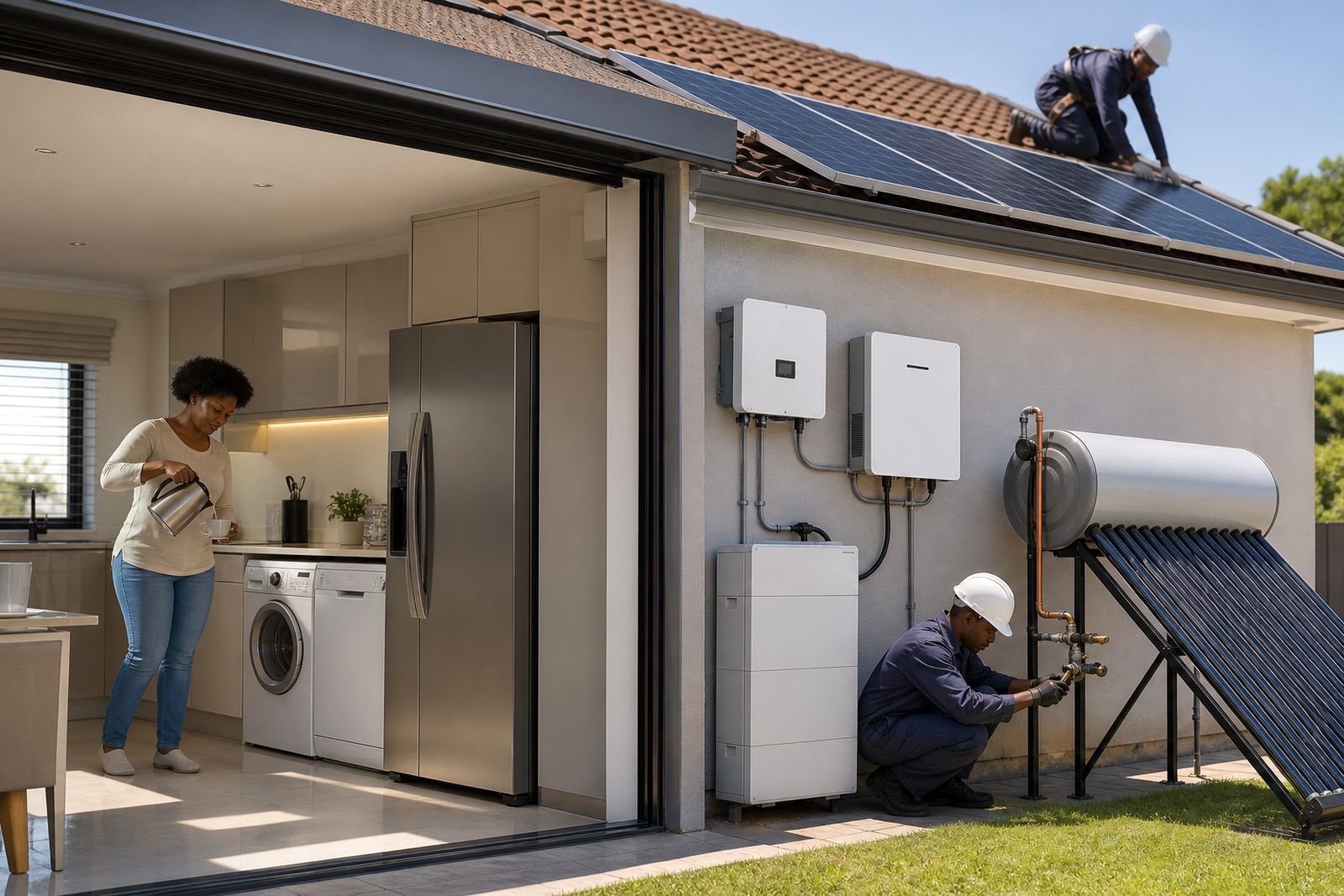
Good solar planning is about balance. If a system is expected to do too much, it will struggle. If it is matched to the household or business properly, it can carry the most important appliances through outages and use daytime solar where it matters most. That is why panel installation, inverter installation, battery installation and solar water heating should be designed as one plan, not separate jobs.
From our base in Centurion, we work with homes and small businesses across Pretoria, Johannesburg, Durban, Cape Town and Bloemfontein. The most useful systems are usually the ones that fit real routines: morning tea, school runs, office work, evening cooking and hot water for the family. Once those are covered, the rest can be added in stages if needed.
If you are planning solar, start with the appliance list and not the equipment list. That small shift usually leads to a better result.