Why the battery room matters more than people think
When homeowners or business owners ask where the batteries should go, the answer is not just about finding an empty corner. Battery units need a space that stays dry, tidy and easy to reach for inspection. In Pretoria and Centurion, many homes are adding indoor battery storage because it protects the equipment from heat, dust and sudden weather changes, especially during summer storms.
A good battery room also makes the rest of the solar system easier to manage. Cables are shorter, the layout is clearer and there is less chance of someone bumping into the equipment. For small businesses in Johannesburg or Midrand, that can matter a lot because staff need a clean, practical area that does not get in the way of daily work.
- Choose a dry indoor space, not a storeroom that gets damp
- Leave clear access for maintenance and fault finding
- Keep the area free of cleaning chemicals, paint and loose packing materials
- Make sure the room is large enough for safe cable routing and airflow
Ventilation, heat and the South African climate
Batteries perform best when they are kept within a suitable temperature range and away from direct sun. In Durban, coastal humidity can be a factor, while in Bloemfontein the main concern is often heat build-up in small enclosed rooms. That means the battery space should never be a sealed box with no air movement.
Ventilation does not have to mean an open window right next to the units. It can be simple, controlled airflow that helps the room stay dry and cool enough for steady operation. If the room is in a garage or storeroom, check that the roof does not trap too much heat and that the batteries are not placed against a hot wall or in front of a window where sun reaches them in the afternoon.
- Avoid direct sunlight on battery cabinets or wall-mounted units
- Allow space around the equipment for air circulation
- Keep batteries away from geysers, ovens and other heat sources
- Check for damp patches, roof leaks and condensation before installation
Clearances and floor space for safe access
A battery room should allow a technician to move around the equipment without climbing over boxes or squeezing past shelves. This is one of the simplest things to get right, yet it is often overlooked. The room needs enough floor space for the units themselves, plus room to work on the cables, isolators and protective gear if needed.
When we do site assessments in Pretoria or Cape Town, we often look at how people use the room day to day. If it is also storing bicycles, cleaning items or tools, the layout may need to change. A battery area should stay dedicated and orderly, because clutter can block airflow and make later maintenance awkward.
- Leave working space in front of the battery units
- Do not stack items against the batteries
- Keep the route to the room clear in case of an urgent callout
- Make sure the floor is level and can handle the installed load
Electrical integration belongs in the planning stage
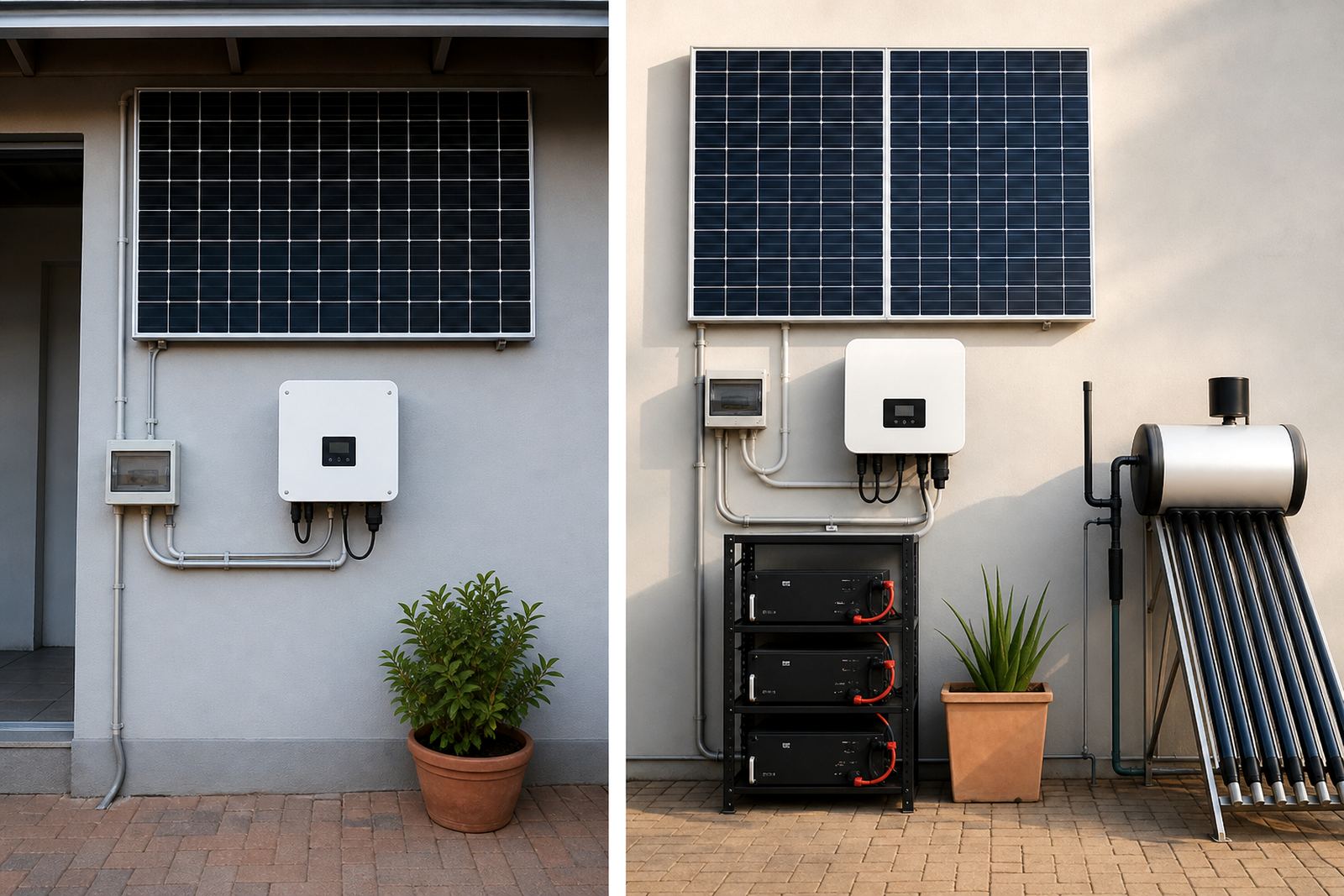
Battery room planning is not only about where the units sit, it is also about how they connect to the rest of the system. Inverter location, cable runs, isolators and protection devices all need to be considered before anything is mounted. This is where qualified installers are essential, because the electrical work must be done safely and in line with the site conditions.
For homes and small businesses, a tidy layout usually means shorter cable runs and fewer obstacles between components. That helps with neatness, but it also reduces the chance of installation problems later. If a battery room is far from the inverter or squeezed into an awkward corner, the installer may need to rethink the layout so that the system works properly and can be serviced without trouble.
- Plan the battery position with the inverter and distribution board in mind
- Keep cables protected and neatly supported
- Use clearly marked isolators and proper mounting hardware
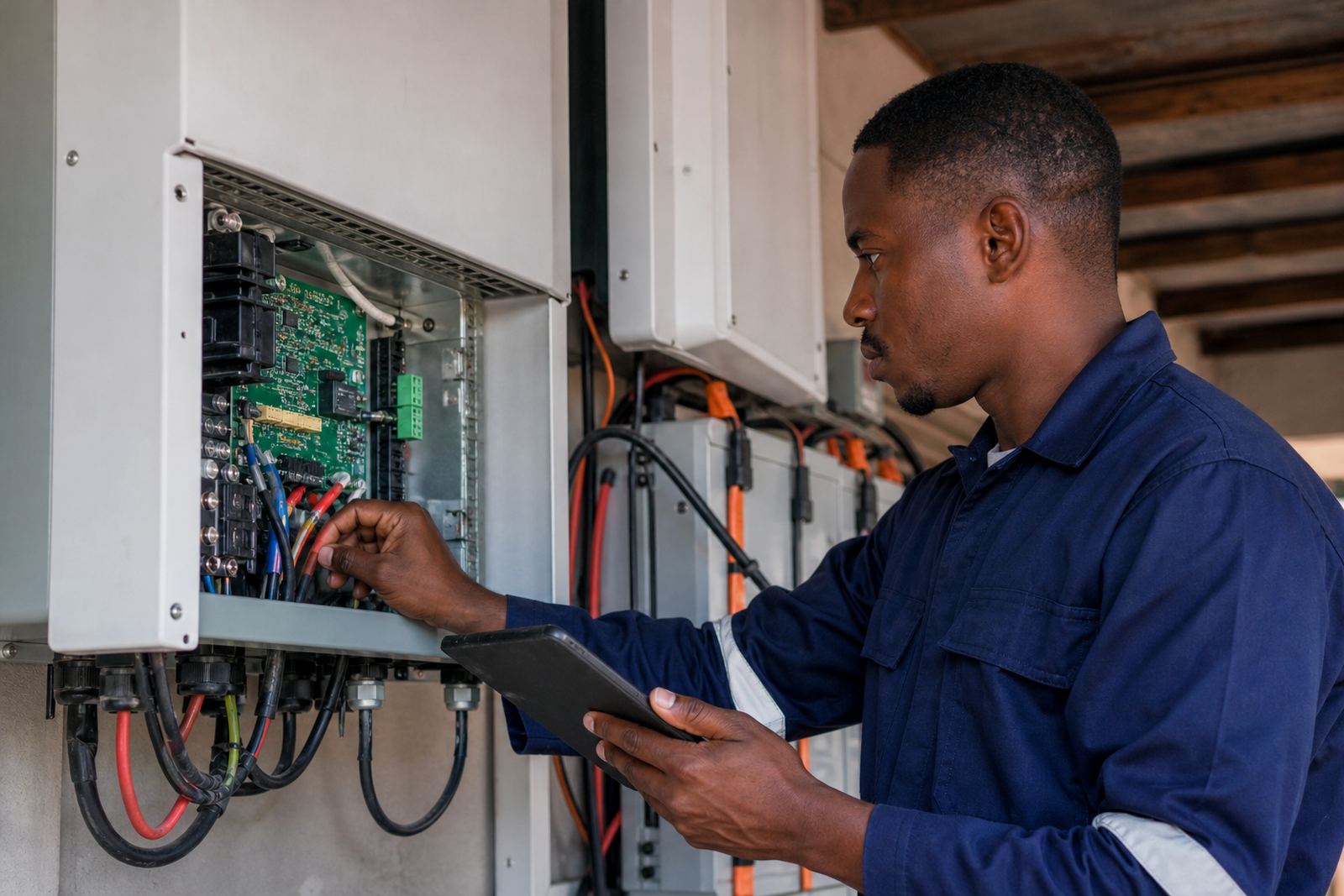
- Let qualified installers handle all electrical integration and commissioning
How to keep the room neat after installation
Once the system is installed, the battery room should stay simple to manage. That means keeping the area clean, checking for dust and making sure nobody has started using the room as a storage cupboard. A neat room is easier to inspect and it often helps spot early signs of trouble such as loose fittings, damage or unusual noise.
Small business owners in Gauteng sometimes ask how often the room needs attention. There is no complicated rule here. It is mostly about common sense and regular checks. A monthly visual inspection is useful, and so is clearing away anything that should not be in the room. In a busy household, that one habit can prevent problems before they start.
- Dust the room regularly so vents and surfaces stay clear
- Keep liquids and sprays away from the equipment
- Make sure labels and warning notices remain visible
- Arrange solar maintenance if anything looks out of place
A Pretoria example from a practical family home
One Centurion home had a neat spare room next to the garage, but it was being used for boxes, old paint tins and general storage. The family wanted indoor battery units, but the room had poor airflow and the floor space was cramped. We first cleared the area, checked the wall surface and planned the battery position so the units could be accessed properly without blocking the doorway.
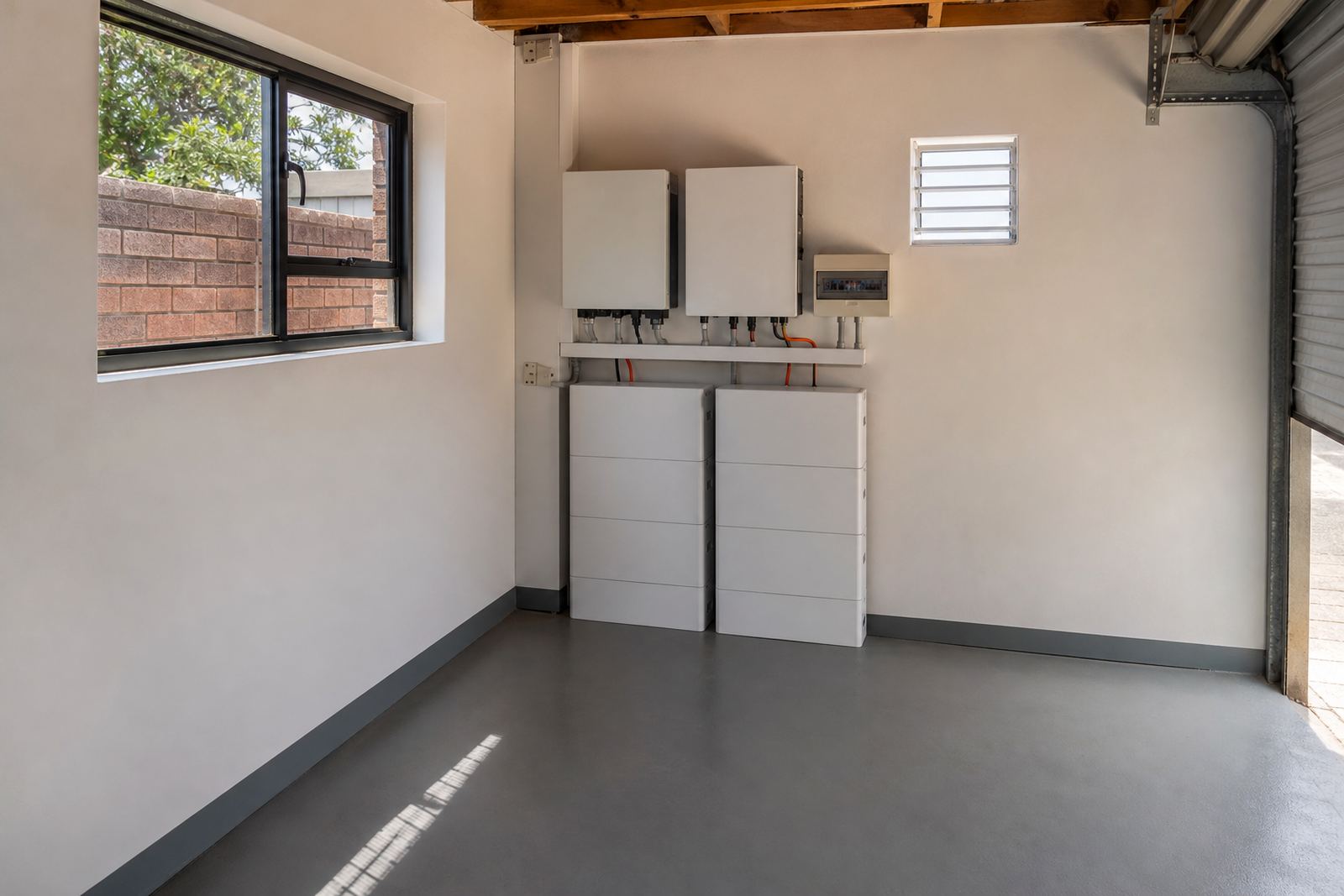
The result was a much better working space. The inverter and battery layout sat neatly along one wall, the cabling was kept tidy, and the room remained usable for normal household needs without becoming a dumping area. That kind of planning is often what makes the difference between a system that merely fits and one that works well for years. It also makes future fault finding less of a headache.
- Start with the room you have, then adjust the layout properly
- Do not force equipment into a space that is too tight
- Think about long term access, not only the install day
- A careful layout helps both safety and appearance