Start with your hot water use, not the hardware
Before comparing tanks and collectors, look at how much hot water your household actually uses. A family in Centurion with two bathrooms will need a different setup from a guesthouse in Johannesburg or a small office with a tea point and staff shower. Think about when the water is used, how many people are on site, and whether the geyser must recover quickly in the morning.
For many South African homes, a solar water heater works best when the system matches real demand rather than being oversized. Bigger is not always better. If the unit is too large it can cost more upfront and may not work as efficiently if the roof space and plumbing are not suited to it.
Choose the right type of solar water heater for your roof
Solar water heaters are usually split into two main types: direct systems and indirect systems. Direct systems heat the water itself in the collectors, while indirect systems use a heat transfer fluid between the roof and the storage tank. In colder inland areas such as Pretoria and Bloemfontein, the installer will check frost risk and exposure before recommending the right option.
For coastal towns such as Durban and Cape Town, salty air and high humidity can affect fittings and roof hardware over time. That means corrosion resistance matters, along with proper pipe insulation and tidy mounting. A well planned system should suit your roof pitch, shading from nearby trees and the direction your roof faces.
- Check roof space and available mounting area
- Look at shade from chimneys, walls and trees
- Ask whether the system suits inland or coastal conditions
- Confirm the tank placement and pipe route before work starts
Work out the tank size and collector area
The tank and collector area should be selected together. If the storage tank is too small, you may run out of hot water at peak times. If the collector area is too small, the tank may not heat properly on cloudy days or after heavy evening use. Your installer should assess both parts as one system.
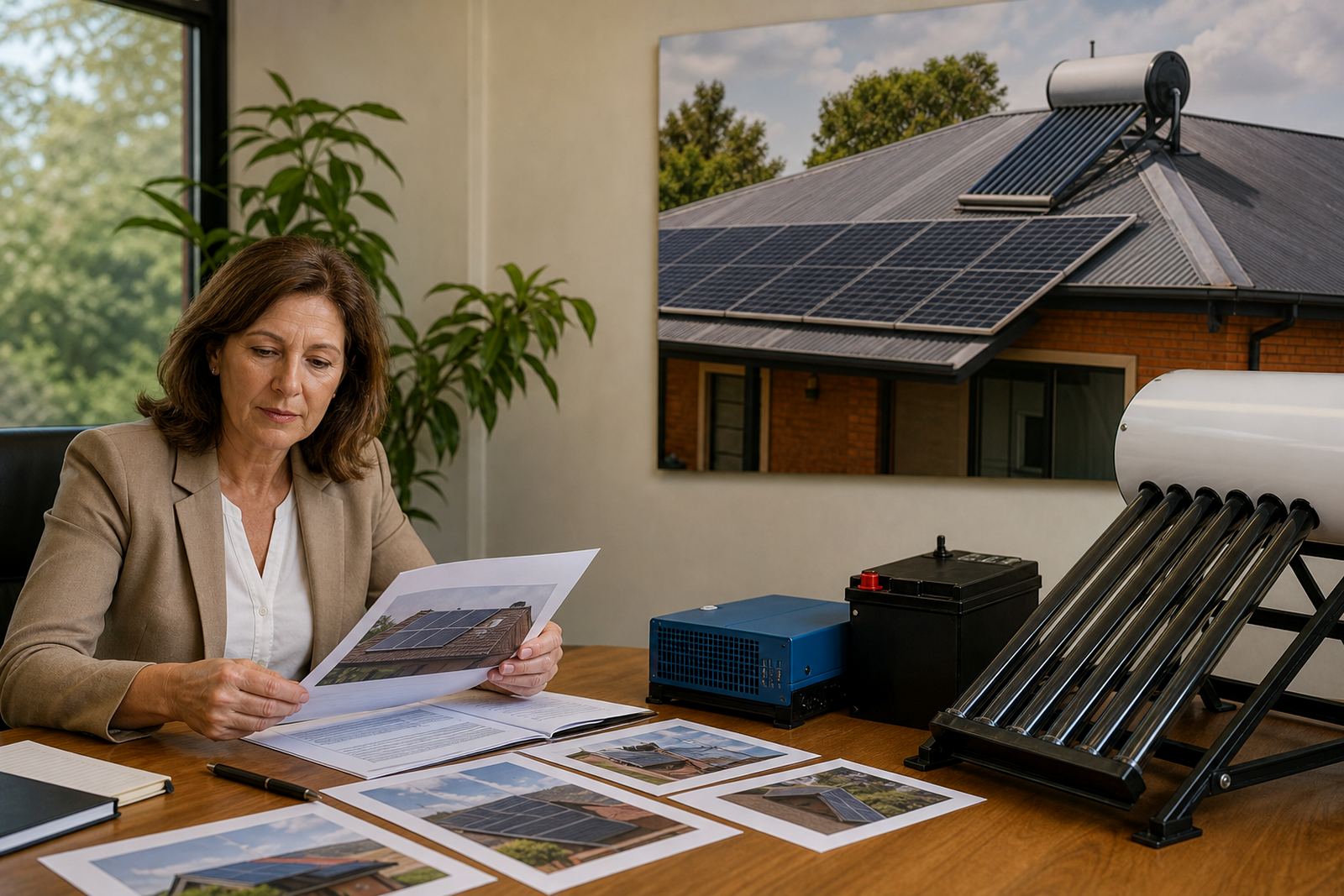
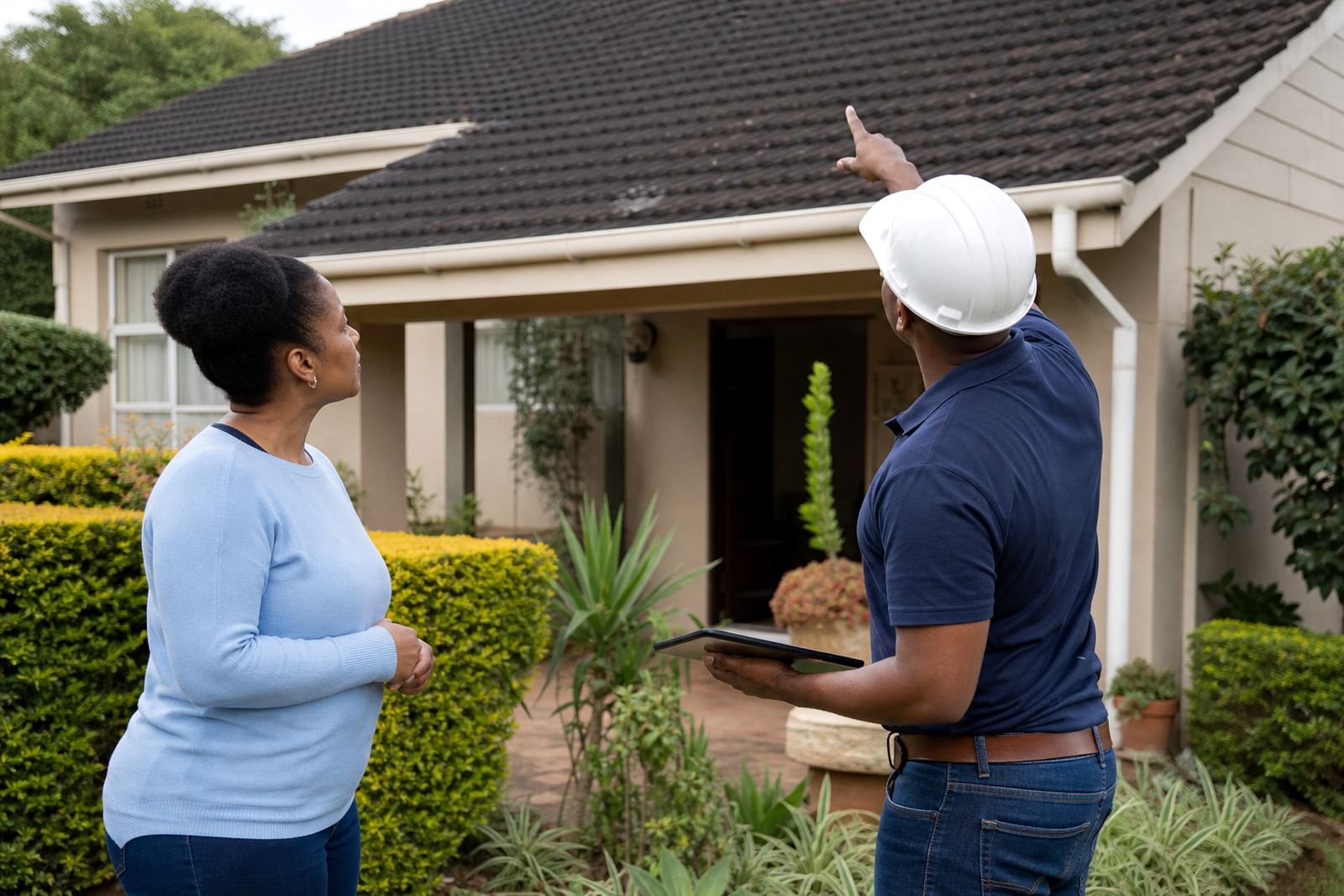
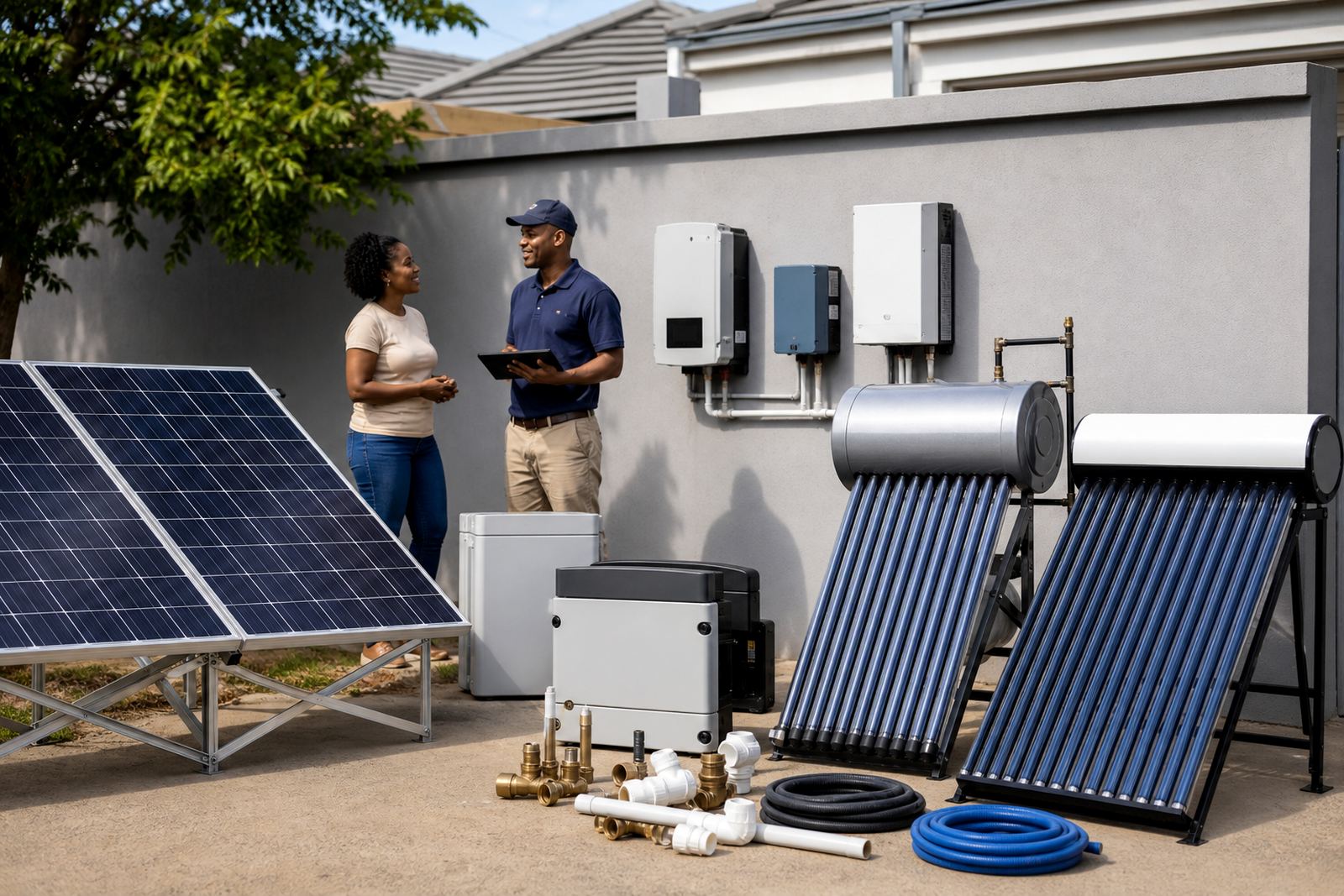
A practical site assessment will also check the existing geyser, roof structure, water pressure and the distance between the roof and the points where hot water is needed. In many homes, a solar water heater can be connected to an existing geyser as part of a retrofit. In other cases a direct replacement is more suitable. The key is proper matching and safe plumbing, not guesswork.
- Count the number of people using hot water daily
- Note baths, showers, laundry and kitchen use
- Check whether the current geyser is in good condition
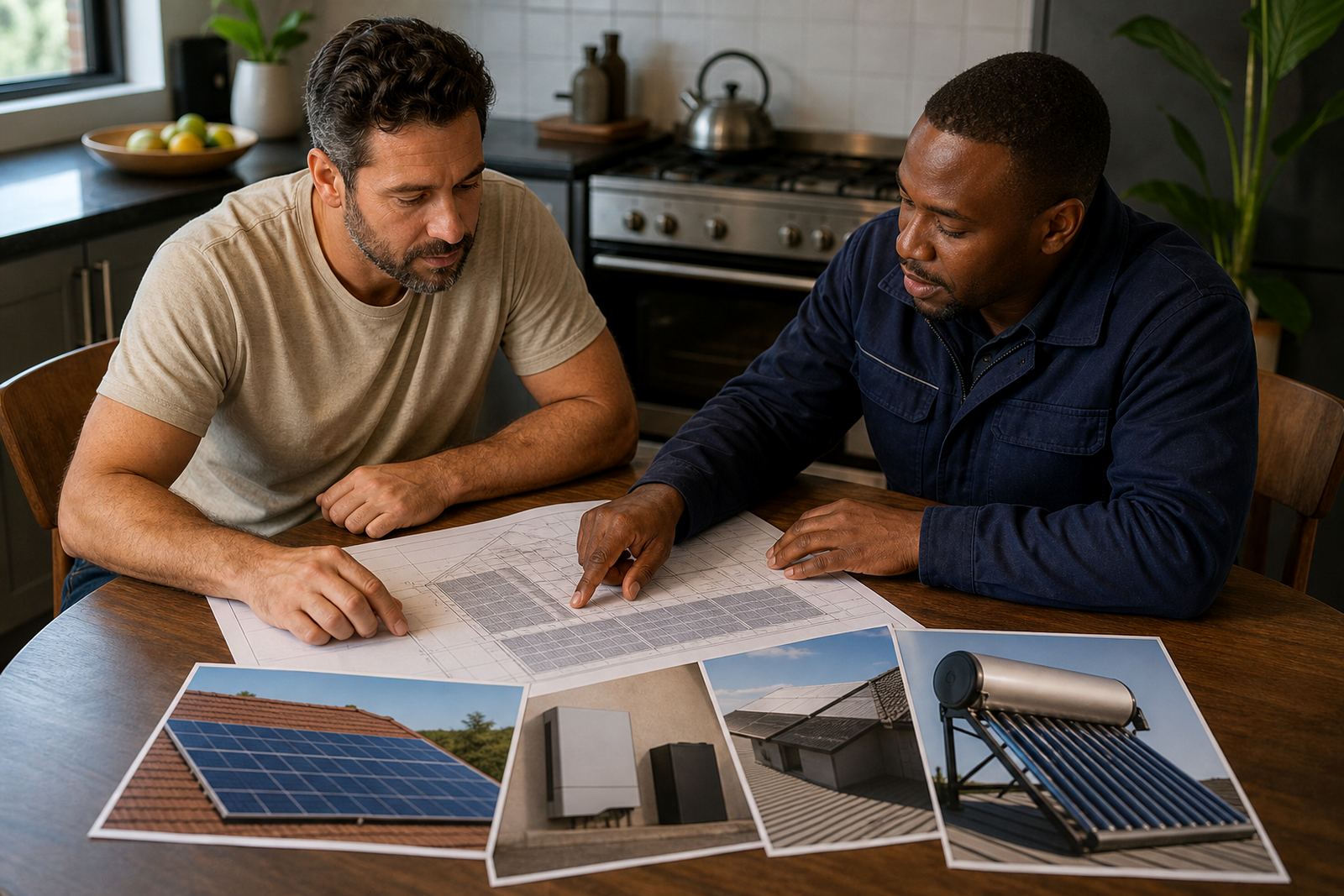
- Ask for a system layout that shows the tank, pipes and valves
Make sure the installation is done properly
Good equipment still needs careful installation. The roof frame must be fixed correctly, pipework should be insulated and electrical work must be handled by qualified installers. That includes any controls, backup heating connections and integration with the existing distribution board where required. A neat install is safer and easier to maintain.
Our team in Centurion works with homes and small businesses across Pretoria, Johannesburg, Midrand, Durban, Cape Town, Bloemfontein and the wider Gauteng area. We also manage commissioning so the system is tested before handover. That means checking water flow, valve operation, temperature response and any controls linked to the geyser or inverter supply.
Vuyo Phasha leads the business, with support from Naledi Kgosi on operations, Sarel Delport on installation, Palesa Mabena on project coordination, Mothusi Mphahlele on technical support, Faatimah Latief on customer care, and Unathi Tau on solar water heating. The right team makes a difference when a roof has limited access or the plumbing needs adjustment.
Keep an eye on maintenance from the start
A solar water heater should be checked regularly, especially after heavy wind, hail or long periods of dusty weather. South African roofs collect dirt quickly and panel surfaces can lose performance if they are not cleaned when needed. It is also worth checking for small leaks, loose brackets and worn insulation before they become bigger jobs.
Simple maintenance helps the system last longer and keeps hot water delivery more reliable through load-shedding periods. If your property sits near the coast, salt build-up can speed up wear on fittings and supports, so regular inspection is important. A small fault can affect the whole system if it is left too long.
- Inspect mounts and brackets after storms
- Check for leaks around valves and joints
- Keep collectors and exposed pipes clean
- Book fault finding if hot water output drops
Use this solar water heater checklist before you place an order
If you are ready to move ahead, use a simple checklist before you commit. This keeps the project practical and avoids later changes to the roof, plumbing or electrical side of the job. It also helps your installer give you a cleaner quote and a better plan for the work.
Ask these questions before installation day: Is the roof strong enough? Is there enough sunlight for the site? Can the system work with the current geyser or will a change be needed? Who is handling the electrical connection? What maintenance will be required after commissioning? If you are in Pretoria or anywhere else in South Africa, these checks should be done before the equipment arrives.
Clients can reach us through the enquiry form on our contact page for site assessments, system design, installation, maintenance and support callouts. We supply and install solar water heaters for homes and small businesses, with the same practical approach whether the project is in Pretoria, Johannesburg, Durban, Cape Town or Bloemfontein.