Start With the Rules Before You Buy Equipment
In estates and townhouse complexes, the first job is not picking panels, it is checking what the scheme allows. Some bodies corporate want drawings, roof photos, a municipal approval note, or written consent before any work starts. In Pretoria and Johannesburg this can save a lot of back and forth, especially where shared roofs, visible cabling or wall mounting are involved.
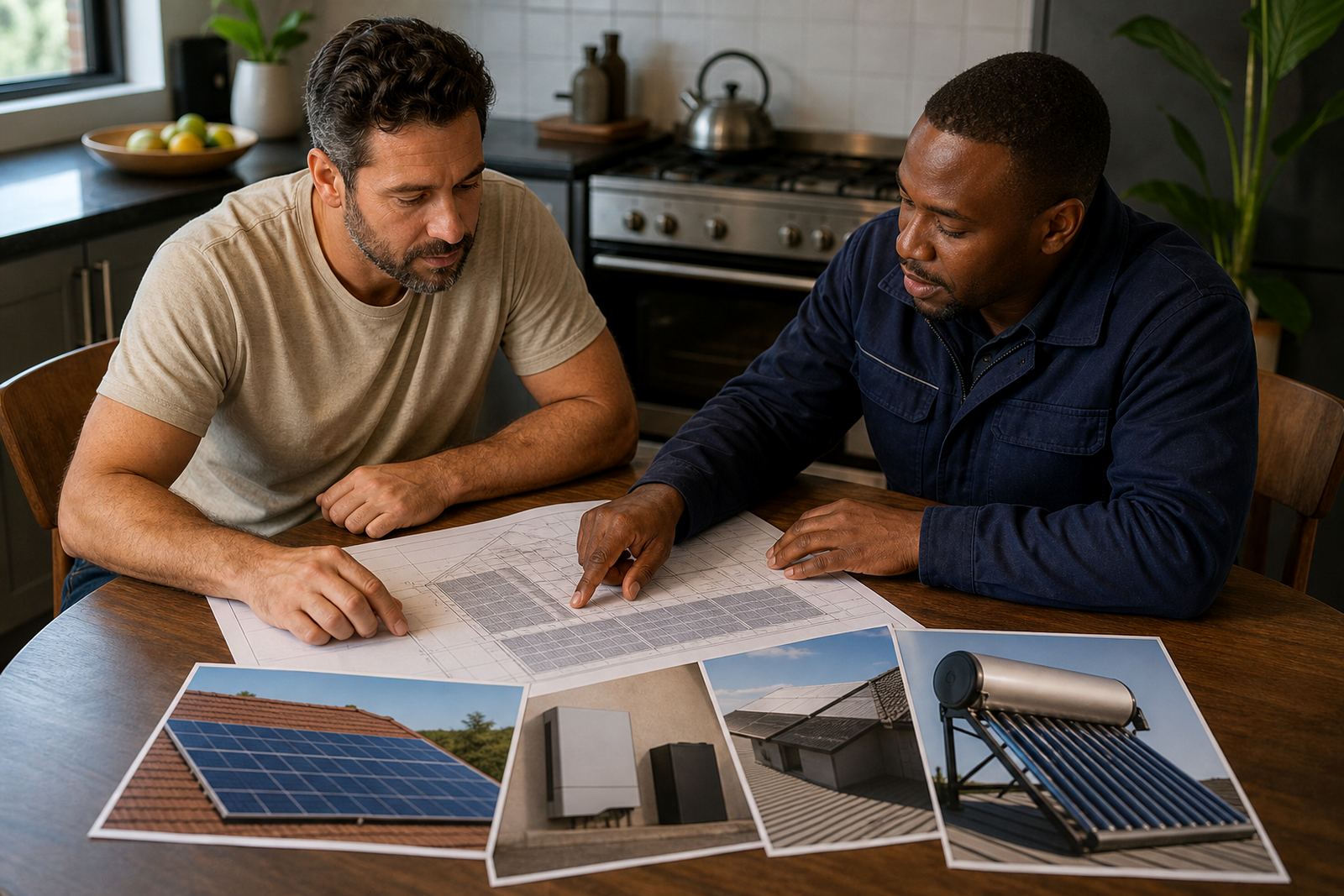
A proper site assessment should cover roof type, shading from nearby units, the direction of the roof slope, and where the inverter and batteries can sit safely indoors or in a protected utility area. Coastal humidity in Durban and Cape Town also affects mounting and cable routing, so corrosion resistance and neat sealing matter. We plan around load-shedding, but also around day-to-day use of geysers, kettles, aircon and pool pumps if a small business is operating from the same property.
- Check body corporate rules and any municipal requirements first.
- Confirm roof access, parking for installers and safe cable routes.
- Decide where the inverter and batteries will be placed.
- List high-use appliances that must stay on during outages.
Choose a System Size That Fits a Compact Roof
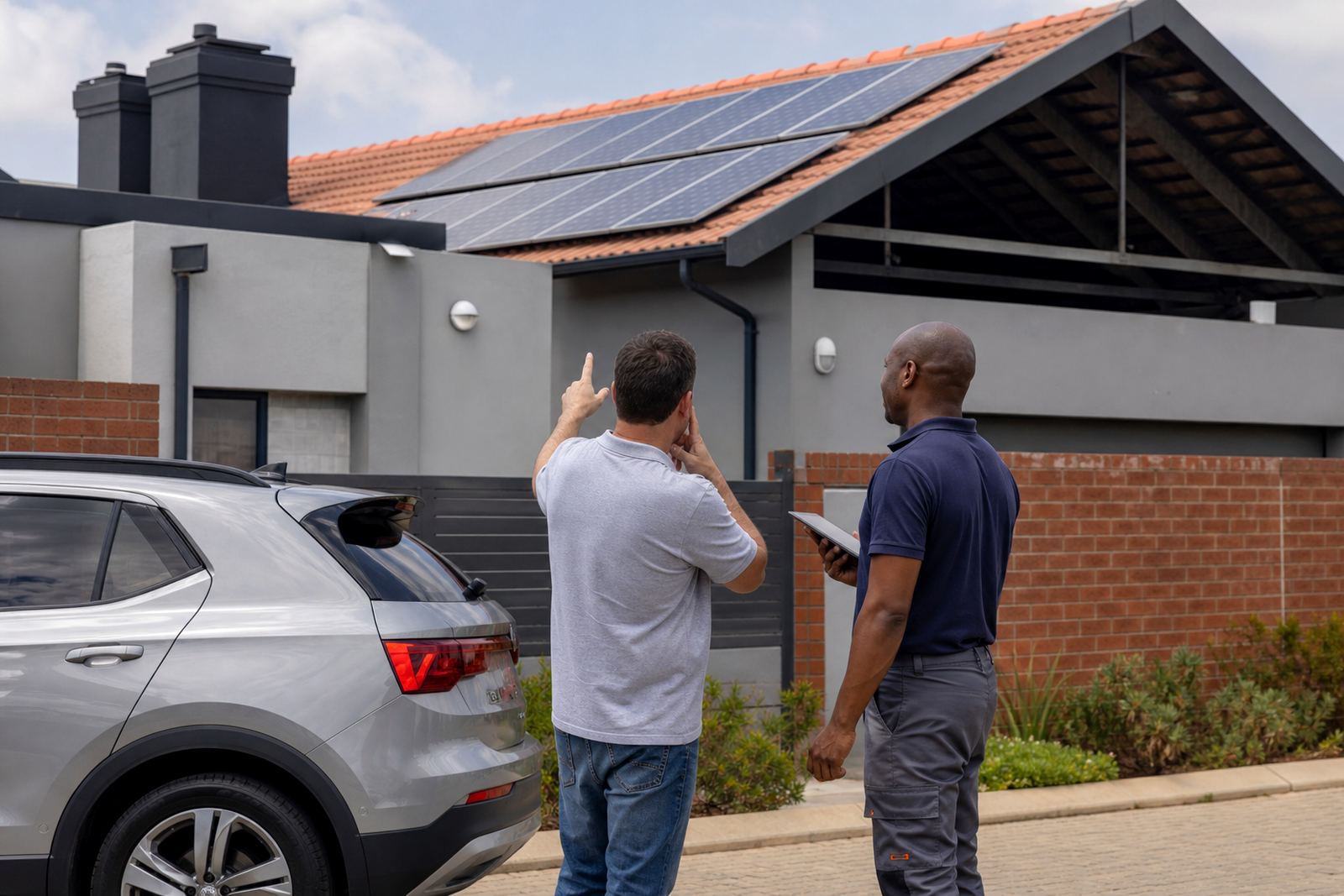
Townhouse roofs are often small, so every panel and metre of cable has to earn its keep. The right system is not always the biggest one. A compact roof in Centurion or Midrand may only carry a limited number of panels, which means the layout needs to be planned carefully to avoid waste and shading losses. For many homes, the best answer is a balanced setup that covers essential daytime loads first, then backs that up with battery storage.
For small businesses operating from a townhouse unit, such as a home office, salon or consulting room, the design may need separate thinking. Equipment like computers, printers, security systems and wi-fi can usually run well on a modest solar setup if the inverter, batteries and wiring are matched properly. The electrical integration should always be done by qualified installers, because neat work and safe protection devices make a big difference over time.
- Measure usable roof area, not just total roof area.
- Check for chimneys, vents, parapet walls and nearby trees.
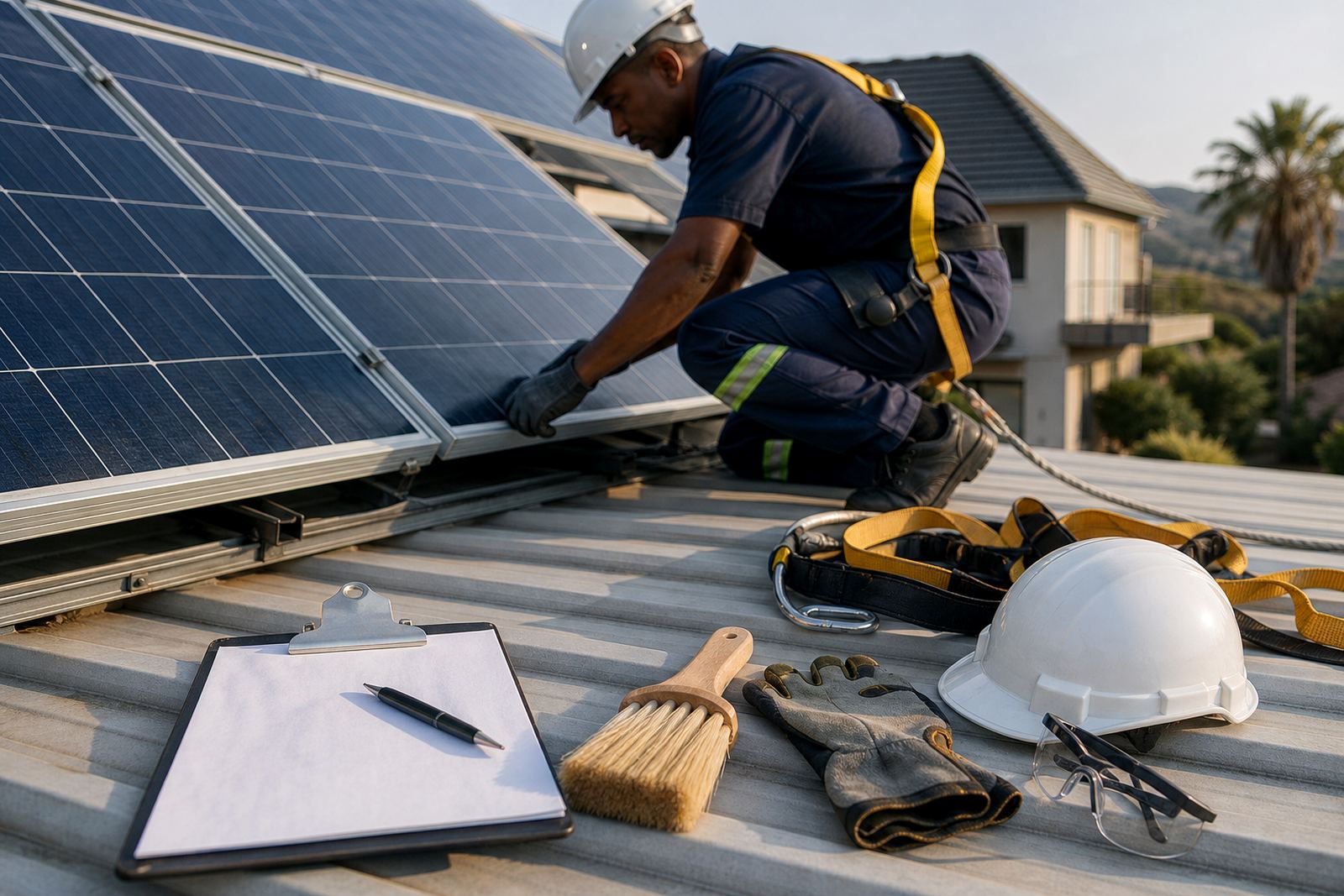
- Plan panel rows so maintenance access stays possible.
- Keep the system sized to real daily use, not guesswork.
Where Panels, Batteries and Inverters Work Best
The best place for panels is usually the section of roof with the most sun over the day and the least shade from neighbouring buildings. In townhouse rows, one shaded panel can drag down the output of the whole string if the layout is not planned properly. That is why a site visit matters. Our team, led from Centurion, looks at roof pitch, orientation and the way shadows move from morning to late afternoon.
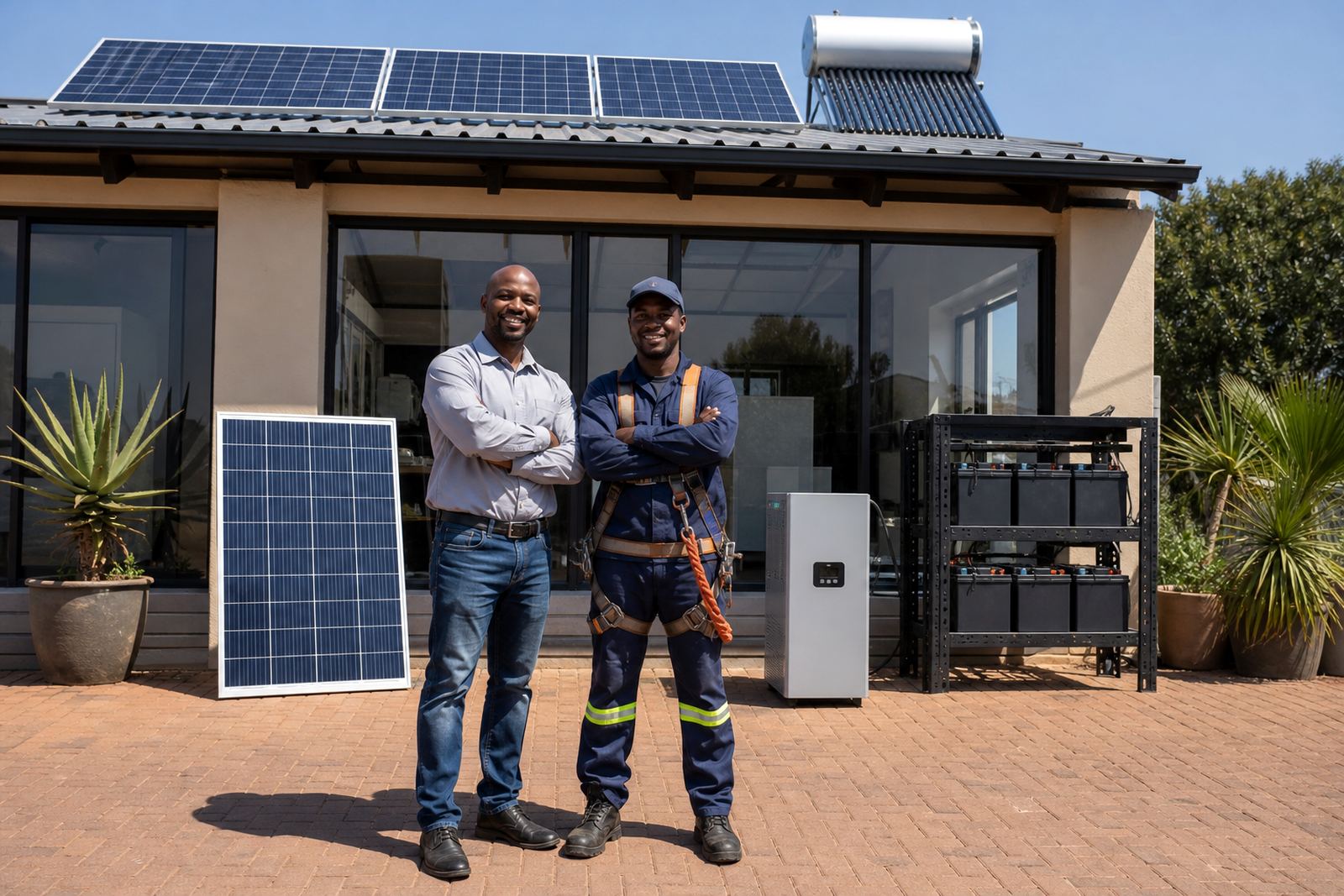
Inverters and batteries need a dry, ventilated place that is easy to reach for maintenance but still secure from accidental knocks. For compact homes, a passage cupboard, garage wall or enclosed utility area may work if there is enough airflow and safe clearance. Battery installation must also consider temperature and dust. In Durban, salt air and moisture can be an issue, while in Pretoria heat and dust call for good ventilation and sensible placement.
Solar water heaters need extra thought because tank position, pipe length and roof loading all matter. On some townhouse units, the geyser can be converted or connected in a way that reduces electricity use without overloading the roof or disturbing the neighbours below.
A Practical Step-by-Step Plan for Townhouse Owners
Many homeowners want to know where to begin. The easiest route is to break the project into clear steps and avoid moving ahead too fast. A good plan keeps the installation tidy, safe and easier to approve in an estate. It also helps prevent surprises once the electricians and installers are on site.
- Book a site assessment and get a written scope.
- Confirm rules from the body corporate or managing agent.
- Choose between panels only, a full backup system, or a solar water heating setup.
- Approve the panel layout, inverter position and battery location.
- Arrange electrical integration and system commissioning.
- Set a maintenance plan for cleaning, checking and fault finding.
For small businesses in the property, the load profile should be checked before anything is ordered. A fridge, alarm, gate motor and office equipment all behave differently during an outage. It is better to map those needs first than to fit gear and hope for the best. A little planning now avoids rework later, and that saves time for everyone.
What to Ask Your Installer Before Work Starts
A townhouse solar project should come with clear answers, not vague promises. Ask how the cabling will be routed, where the isolators will sit, and how the system will be protected from storms and load-shedding surges. If panels are going onto a shared roof or close to a neighbour’s boundary, ask how they will be fixed without creating leaks or noise.
It also helps to ask who will handle the electrical work and who will commission the system. Qualified installers should manage the connection and final checks so the system is safe and ready to use. If you are planning a solar water heater, ask how the pipes will be insulated and how the system will cope with winter mornings in places like Bloemfontein where temperatures can drop sharply.
At Linuo Solar, projects are handled by a local team that works across Pretoria, Centurion, Johannesburg, Midrand, Durban, Cape Town and Bloemfontein. Our team includes Vuyo Phasha, Naledi Kgosi, Sarel Delport, Palesa Mabena, Mothusi Mphahlele, Faatimah Latief and Unathi Tau, so the job is coordinated from first enquiry through to final handover.
Keep the System Working After Installation
Townhouse solar works best when it is maintained properly. Panels collect dust, pollen and coastal grime, and even a thin layer can affect output over time. In estates with limited roof access, it is worth setting up a cleaning and inspection routine so the system stays in good order without disturbing neighbours or drying washing lines. Faults should be checked quickly, because a small loose connection or a damaged cable can turn into a bigger problem if it is ignored.
Solar water heaters also need care. Valves, pipe insulation and tank condition should be checked from time to time, especially after strong wind or heavy rain. For battery-backed systems, it is wise to watch how the system behaves during peak use and outages so you know what is normal. If something changes, support callouts and fault finding can help identify whether the issue is with the panels, inverter, batteries or wiring.
For homeowners and small businesses alike, the goal is simple: use less grid power, keep the property neat, and make the most of the roof space you already have.