Start With What Your Shop Must Keep Running
Before you look at equipment, list the circuits that matter most during load-shedding and after-hours outages. A small shop may only need lights, point-of-sale equipment, routers, a few fridges, security cameras and a gate motor, while a larger retail space may also need shelving lights, stock room power and air movement. The first step is not buying panels, it is knowing what must stay on and for how long.
Walk through the shop at trading time and again after closing. Note what draws power all day, what starts up in the morning, and what cannot be allowed to stop. This gives the installer a proper picture of demand instead of a guess. In Centurion, Pretoria and Johannesburg, many owners also want to plan for both daytime trading and evening security, which changes the system size quite a bit.
- List essential loads only: lights, tills, routers, fridges, alarms and CCTV.
- Check which items can be switched off during outages.
- Note operating hours, peak trading times and any night-time security needs.
- Record whether your shop has single-phase or three-phase supply.
Choose Between Daytime Solar, Backup Power Or Both
Solar panels make power during daylight, so they are ideal for shops that trade during the day and want to reduce reliance on the grid. If you need support after sunset or through cloudy weather, you will usually also need an inverter and batteries. For some shops, a daytime-focused setup is enough, while others need a full backup arrangement that carries the business through repeated outages.
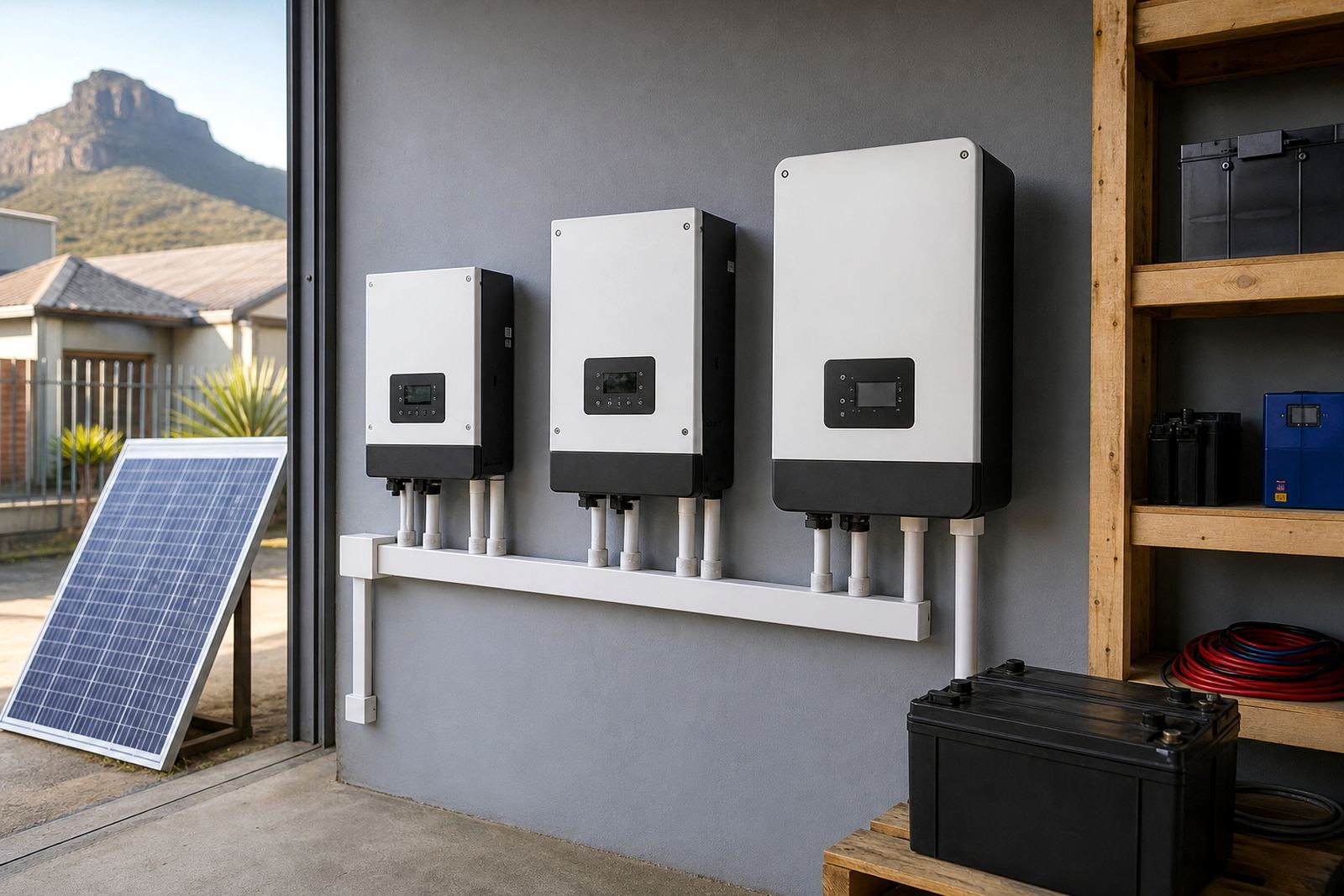
Think of the system in layers. Panels collect energy, an inverter manages how that power is used, and batteries store energy for later. If your business also needs hot water for staff facilities or customer use, a solar water heater can reduce the load on the electrical system. In coastal places like Durban and Cape Town, the installer should also consider salt air and corrosion resistant mounting where needed.
Ask the installer to explain what each part will do in your specific shop. You should be able to see where the solar will help trading, where it supports backup, and which loads must stay separate. A clear plan prevents overspending on equipment you do not need.
Use A Simple Site Check Before You Commit
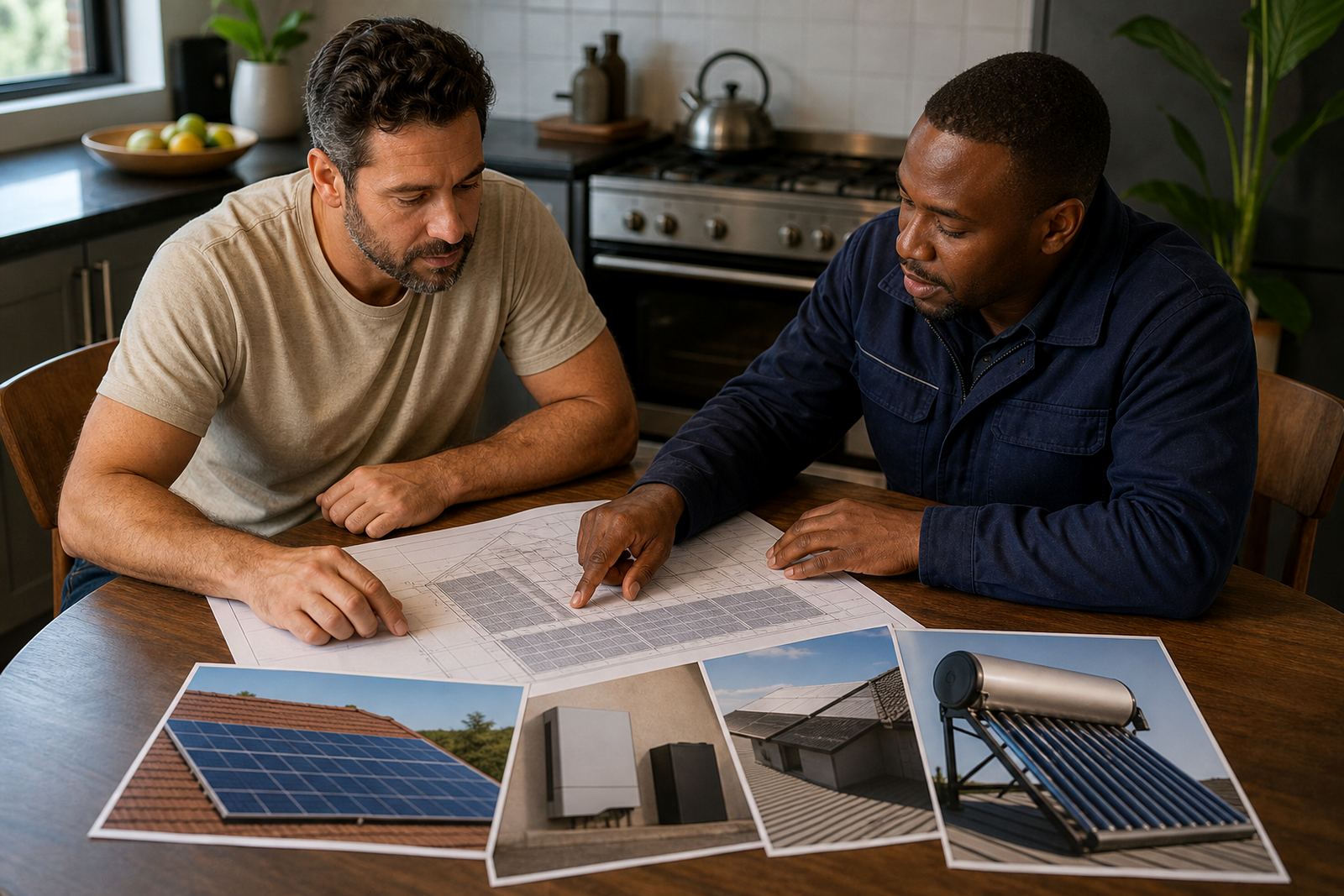
A proper site assessment is worth more than a quick quote from a phone call. The roof type, available space, shade from nearby buildings, cable routes, and access for maintenance all affect the final system. In Pretoria and Bloemfontein, dust can build up on panels and reduce performance, while in Johannesburg rooftop congestion and neighbouring structures can create shading issues that need attention.
The installer should look at your roof condition, available mounting area, metre position and the path from panels to electrical equipment. If the roof needs repairs first, do that before installation. It is also important to check whether your municipality has any approval or registration steps for grid-tied work. A shop owner should not have to sort out technical drawings alone, so ask for guidance before work starts.
- Roof condition and age
- Shade from trees, walls, nearby buildings or signage
- Space for inverters, batteries and safe ventilation
- Access for cleaning and maintenance
- Municipal and electrical compliance requirements
Ask For The Right Equipment Mix For Trade Use
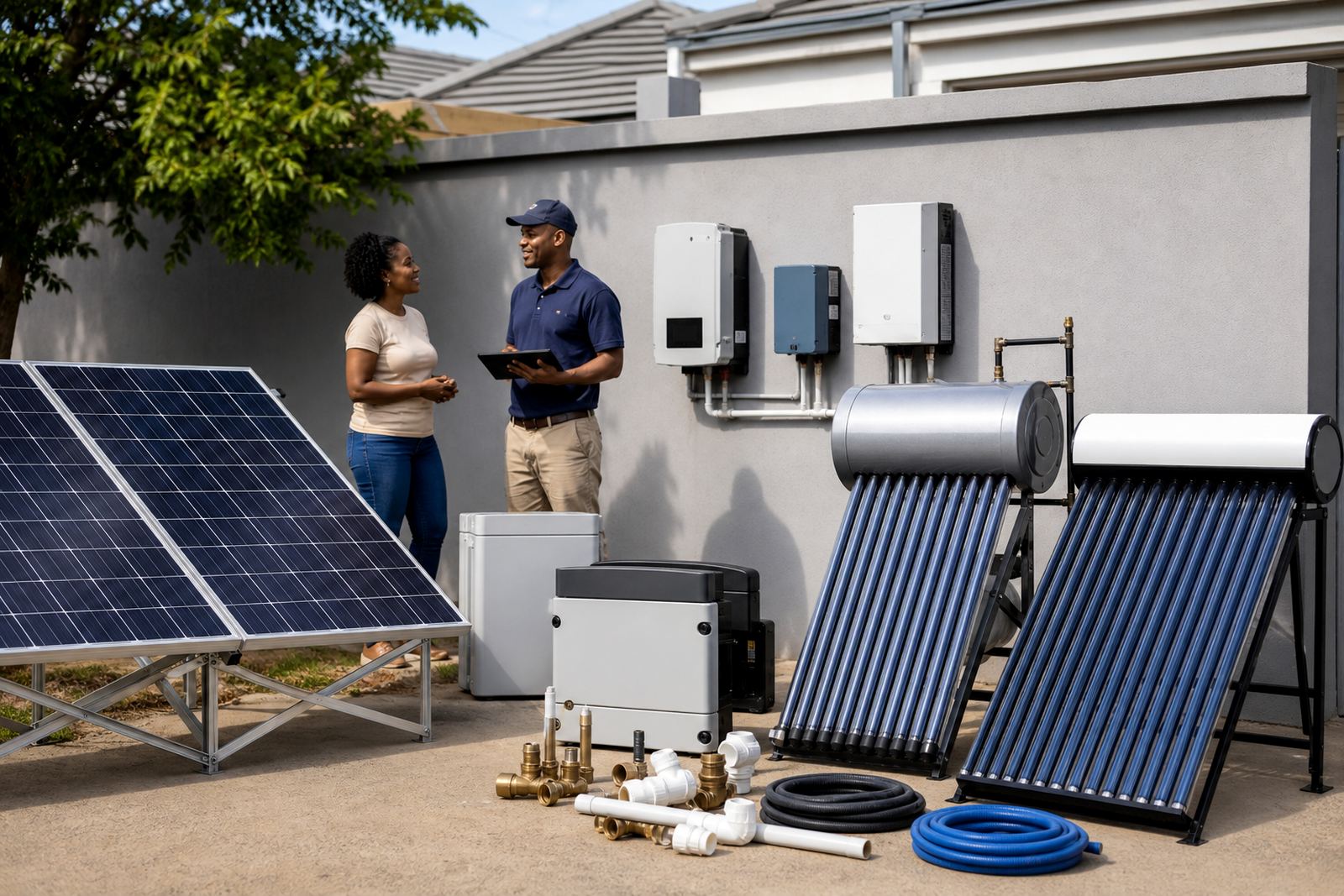
Shops need equipment that can handle regular switching, daily operation and changing demand. Solar panels should be sized to the roof and the load profile. Inverters should match the actual electrical load and allow for the types of appliances in the shop. Batteries should be chosen for the backup period you need, not just for the cheapest upfront cost. If you want hot water support, a solar water heater can be a practical addition for staff facilities, kitchen areas or small hospitality counters inside a retail setup.
Do not let anyone size the system only around one appliance or one sales promise. A retail store has a mix of steady and occasional loads, and those need to be balanced. If you run fridges, frozen stock or point-of-sale hardware, mention it clearly. If you have late trading hours in Midrand or Durban, say so. The more precise the load list, the cleaner the design.
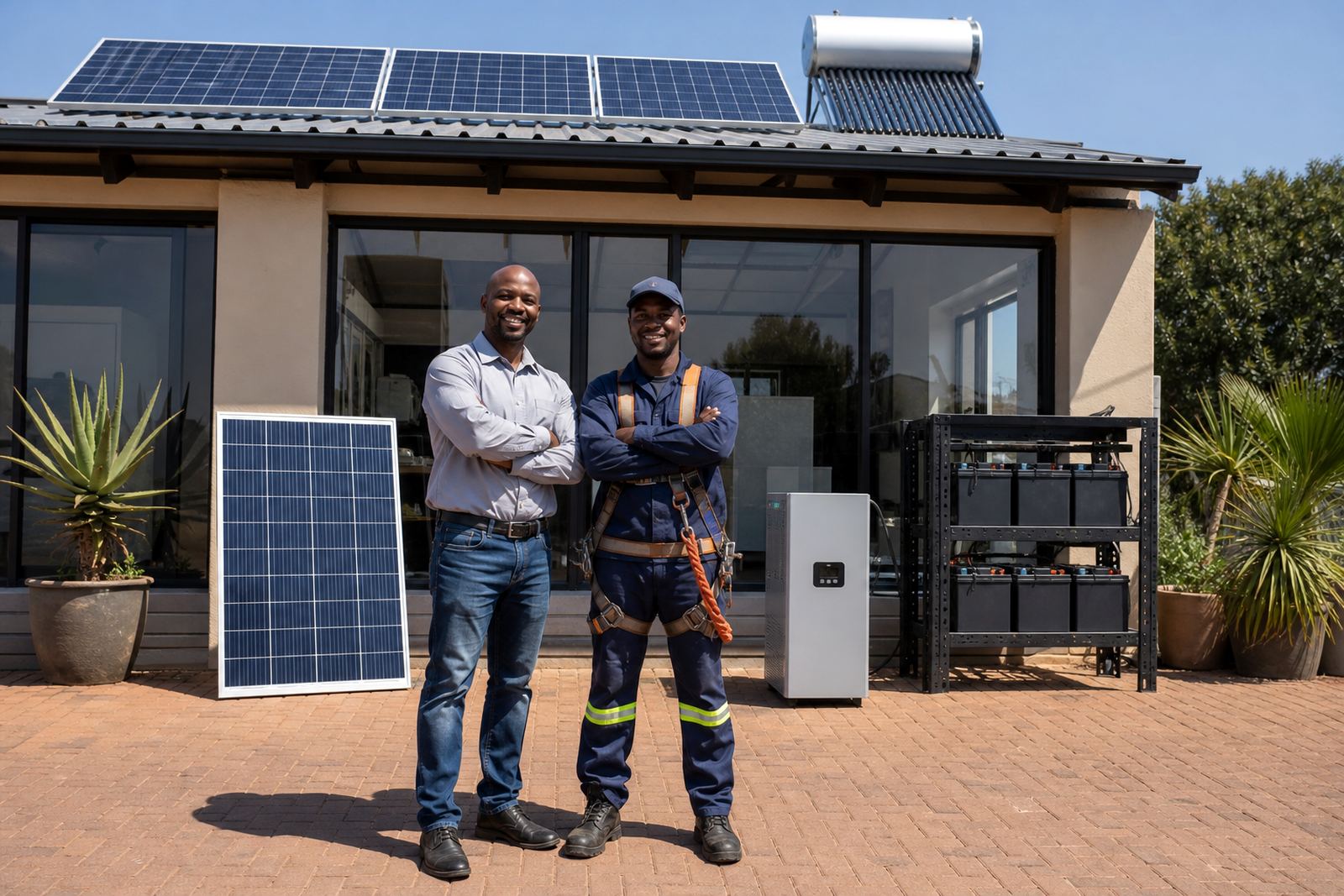
Electrical work should only be done by qualified installers. That includes integration with the board, protection devices, changeover arrangements and system commissioning. A proper handover should explain how to operate the system, what alarms mean and when to call for support. That matters when the power is off and your staff need to keep trading with no confusion.
Plan Installation Around Your Trading Hours
Retail shops cannot always shut down for a full day, so installation planning matters. A good team will work with your trading hours, stock delivery times and security arrangements. In a busy shop, the install may need to be split into stages so tills, fridges and alarm systems stay protected. For branches across Pretoria, Centurion, Johannesburg, Durban, Cape Town and Bloemfontein, this practical planning reduces disruption.
Ask for a clear schedule that covers delivery, mounting, wiring, commissioning and any final checks. You should also know who will be on site and who will be responsible for each stage. Good project coordination keeps the job organised and makes it easier to hand over when the system is live. If your shop is in a centre with body corporate or landlord rules, make sure those permissions are sorted before the team arrives.
- Confirm access times and loading bay rules
- Protect stock, signage and customer areas
- Agree on shutdown windows for electrical tie-ins
- Check landlord or centre management approval where needed
Keep The System Working After The First Month
Once the system is running, it still needs care. Solar panels should be cleaned when dust, pollen or bird droppings build up. Batteries need monitoring, and inverters should be checked for warning lights or unusual behaviour. A retail shop that depends on power for tills, lights and security should not wait until a full breakdown before asking for help.
Maintenance can be simple if it is done regularly. In Gauteng, dust and dry weather can leave a film on panels, while coastal humidity can affect fittings and cable protection if the installation was not planned properly. Fault finding should start with the obvious items, then move through the electrical system methodically. Keep a record of any outages, fault messages and cleaning dates. That makes support callouts quicker and more accurate.
If you manage more than one branch, keep a basic checklist for each site. That way you can compare how Pretoria, Johannesburg and Durban stores are performing and spot problems early. A shop owner who keeps notes usually spends less time guessing and more time trading.
A Practical Checklist Before You Sign Off
Before you approve the final quote, make sure the proposal is tied to your shop’s real needs and not a generic package. Ask what is included, what is excluded, and what will happen if the roof, wiring or battery space needs adjustment during the job. A clear scope helps avoid extra costs and confusion later.
Use this final check to compare options in a sensible way. It is not about finding the biggest system, it is about finding the one that supports your stock, staff and trading hours. For retail businesses, reliability and proper installation matter more than fancy promises.
- Have your essential loads been listed clearly?
- Does the proposal include panels, inverter, batteries and any solar water heating you need?
- Has the site been inspected properly?
- Are electrical works to be handled by qualified installers?
- Have maintenance, fault finding and support callouts been explained?
- Do you know who to contact through the enquiry form if you need follow-up?