Start With Your Power Needs, Not the Inverter Model
Before you compare inverter types, list the appliances you need to keep running during load-shedding and outages. A home in Centurion with a fridge, lights, Wi-Fi and a few plugs has very different needs from a small business in Johannesburg that must keep point-of-sale equipment, security systems and office computers online. The right inverter choice depends on daily usage, start-up surges, roof space, battery storage and whether you want backup only or full solar support.
A proper site assessment should look at your existing electrical board, available wall space, cable runs and the condition of the wiring. In older properties we often find overloaded circuits or mixed wiring that needs attention before any inverter is added. That is why electrical work is done by qualified installers, so the system is connected safely and in line with local requirements.
- List essential loads first
- Check whether you need backup or day-time solar support too
- Note any high start-up appliances such as pumps or small motors
- Confirm available space for batteries and equipment
Basic Inverters: Simple Backup for Light Loads
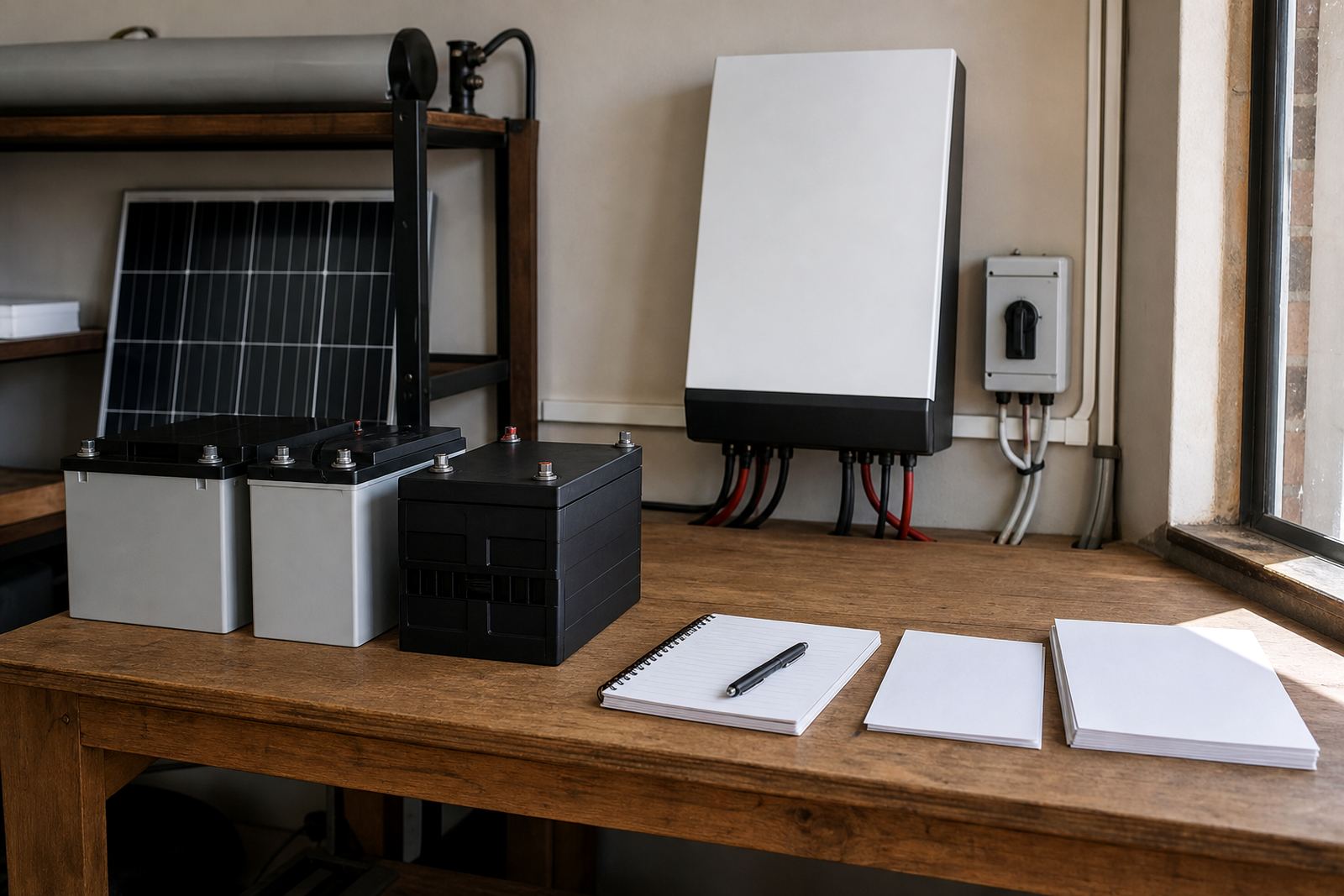
A basic inverter is usually suited to small backup applications where the priority is to keep a few essential items on during outages. It can work well for a townhouse, flat or small office that only needs lighting, internet and selected plug points. In many cases, this type is paired with batteries and used mainly as a backup supply when the grid fails.
This option is often easier to plan around if your load is modest and you are not trying to offset a large share of daytime consumption. It is a practical starting point for clients in Pretoria, Midrand and Bloemfontein who want a straightforward solution without over-specifying the system. For coastal areas such as Durban and Cape Town, enclosure placement and ventilation also matter because humidity and salt air can affect equipment over time.
- Best for essential loads only
- Useful when backup time matters more than heavy solar production
- Needs correctly sized batteries
- Should be installed with proper protection and isolators
Hybrid Inverters: Flexible for Solar and Grid Use
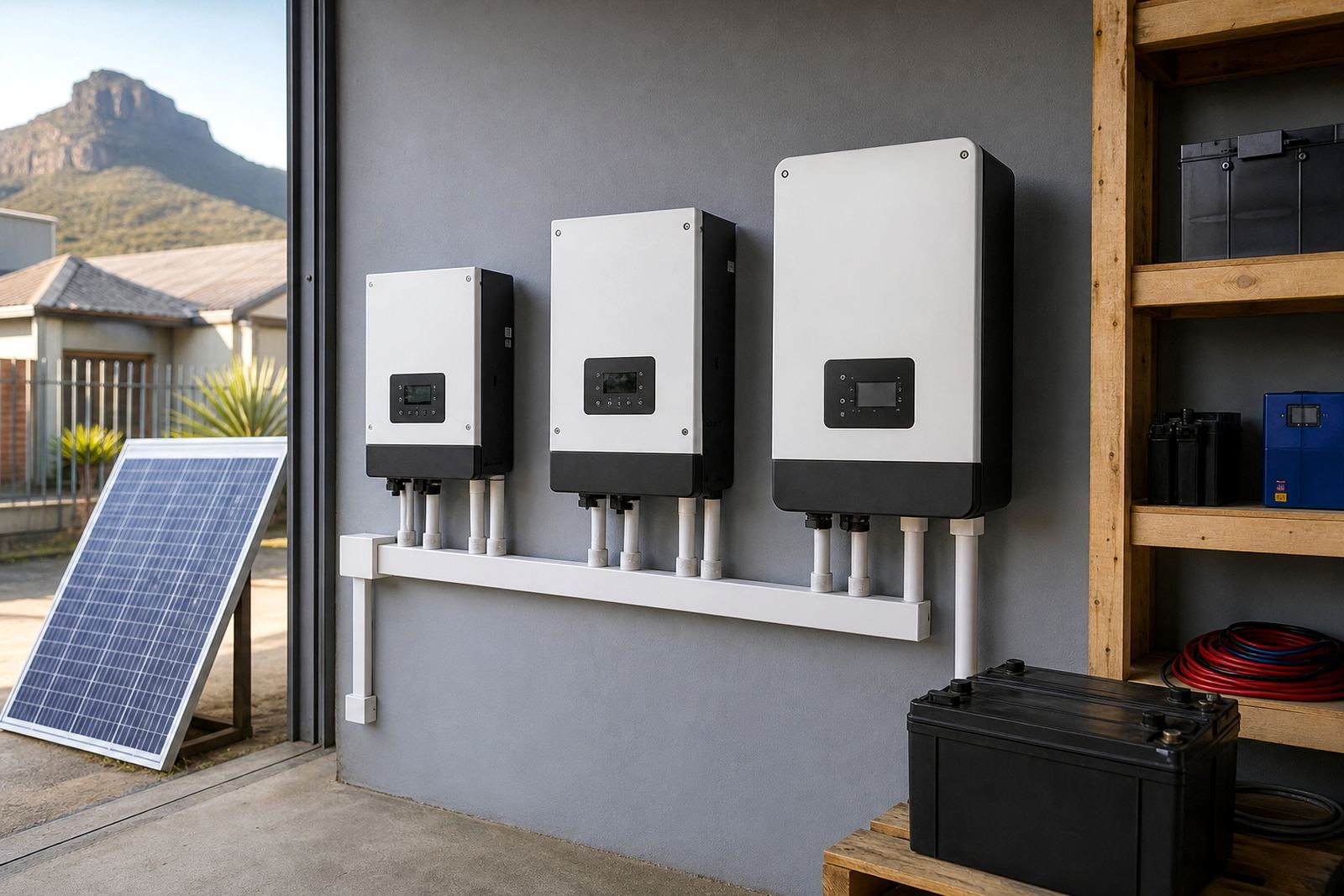
Hybrid inverters are a strong choice for many South African homes and small businesses because they can work with panels, batteries and the grid in one setup. They are often selected when the client wants solar support during the day, battery backup at night and the option to recharge from panels whenever there is enough sun. This type gives more control over how power is used, especially where load-shedding is frequent.
If you are planning a phased system, a hybrid inverter can be a practical fit. You may start with an inverter and battery bank, then add panels later or expand storage once your budget allows. In Pretoria and Gauteng, where many properties want to reduce grid dependence without changing the whole installation at once, this staged approach makes sense. The final design should match the panel count, battery capacity and the load you want to carry.
- Good for mixed solar, battery and grid use
- Useful for phased installations
- Common for homes and small businesses with regular outage cover needs
- Requires careful sizing to avoid unnecessary strain on the batteries
Grid-Tied Options: When Daytime Solar Matters Most
Grid-tied inverters suit properties that use a lot of electricity during the day and want solar to support live consumption. They are often considered for businesses that run equipment while the sun is up, or homes where people are around during office hours. This setup can help reduce reliance on the grid when panels are producing power, but it usually does not provide backup during an outage unless batteries are included and the system is designed for that purpose.
For sites in Johannesburg, Cape Town and Durban, this type of inverter can be useful where the goal is to match daytime demand with solar output. It is important to understand your use pattern before choosing this route. If your most important loads are needed in the evening, then a battery-backed solution may be more suitable. The design should also consider municipal rules, especially where the system connects to a distribution board that may need inspection or sign-off.
Check these points before deciding:
- Do you use most power during the day?
- Do you need backup during outages or only solar support?
- Is the electrical board ready for integration?
- Are there any municipal approval steps to complete?
Match the Inverter to the Battery Bank and Panel Array
An inverter should never be chosen in isolation. Its size and type must suit the battery bank and the number of panels planned for the system. If the inverter is too small, it will limit your supply and may trip under heavier load. If it is too large for the batteries, the system can be poorly balanced and less cost-effective. A good design takes all three parts together, not one item at a time.
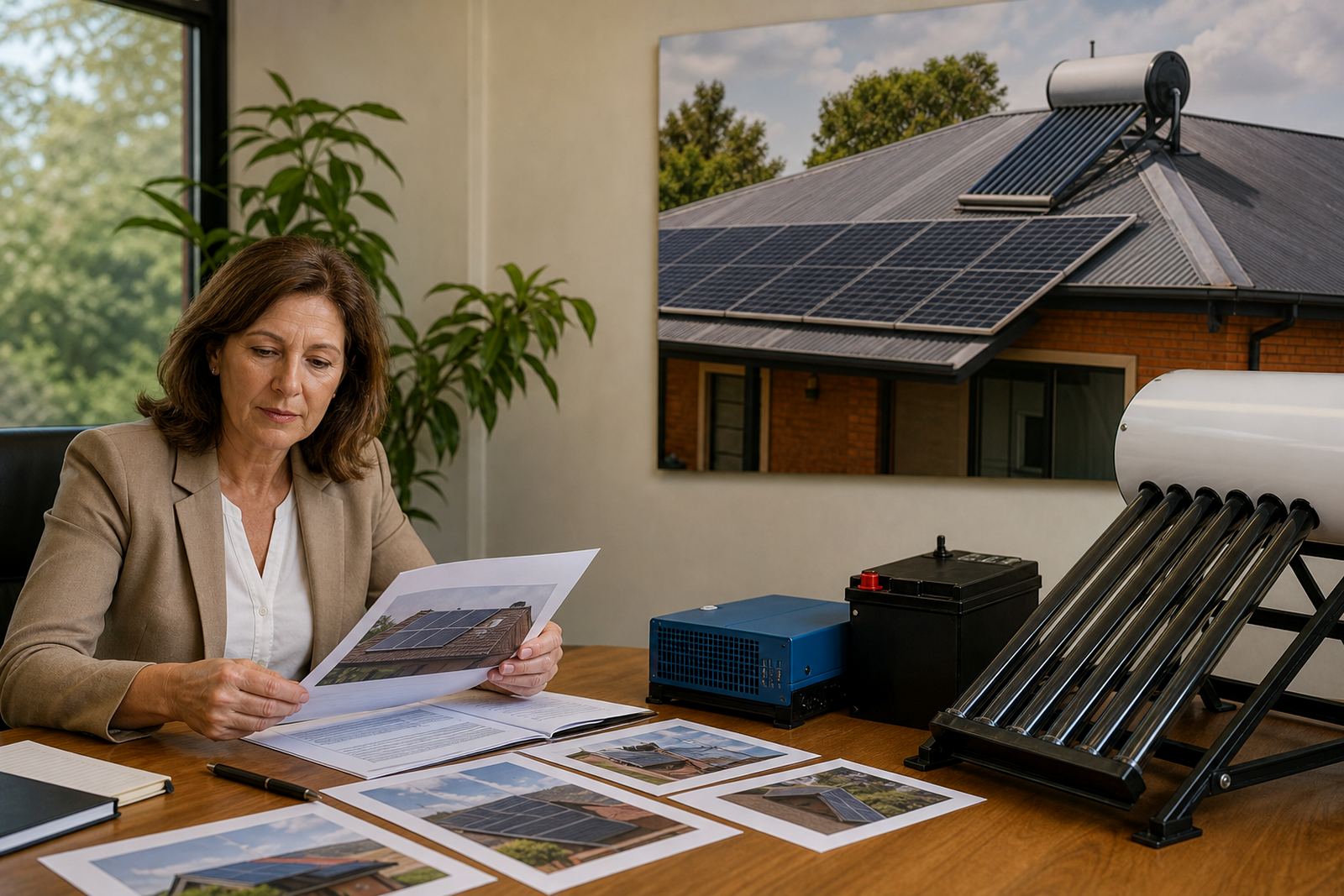
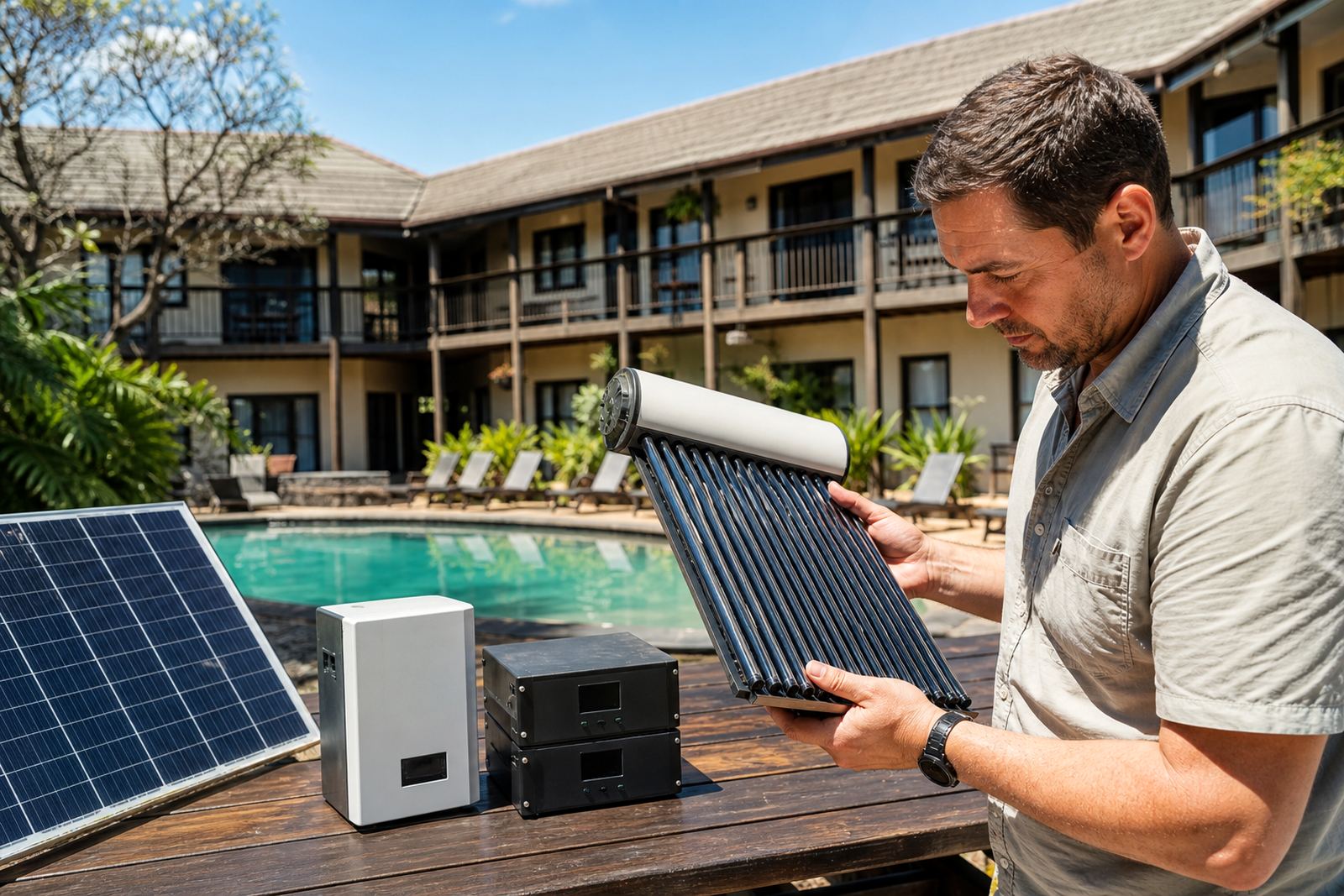
As a simple rule, think about what the system must do on a normal day, then on a bad day when weather is poor and the grid is down. Solar water heaters are separate from the inverter side of the system, but many clients want both solutions at the same property. In those cases the installer should assess hot water demand, roof layout and electrical load so the full setup works properly. On coastal properties, corrosion protection and tidy cable management are especially important.
- Size the inverter to the real load, not guesswork
- Confirm battery capacity for evening and outage use
- Allow enough panel input for charging and daytime supply
- Plan for future expansion if the property may grow
A Practical Selection Checklist Before You Book Installation
Once you know what the property needs, use a short checklist to narrow the inverter choice. This avoids overspending on features you will not use, while still giving enough capacity for daily life and backup. It also helps the installer prepare for safe electrical integration and commissioning once the equipment arrives on site.
Linuo Solar works from Centurion, Pretoria and supports homes and small businesses across South Africa including Pretoria, Johannesburg, Durban, Cape Town and Bloemfontein. Our team handles site assessments, system design, inverter installation, battery installation, panel installation, water heater installation, maintenance, fault finding and support callouts. Vuyo Phasha leads the business, with support from Naledi Kgosi, Sarel Delport, Palesa Mabena, Mothusi Mphahlele, Faatimah Latief and Unathi Tau. That experience matters when the job needs proper planning and clean installation on site.
- What must stay on during load-shedding?
- Will the system be used daily or only as backup?
- Is there enough room for batteries, ventilation and cabling?
- Do you need future expansion later?
- Has the board been checked by qualified installers?