
1. Start with your building’s daily energy use
Before choosing panels, inverters or batteries, get a clear picture of how your business uses power during the day. A salon in Centurion, a small office in Midrand, or a workshop in Johannesburg will all have different loads. Start by listing your main appliances, operating hours and any equipment that must stay on during load-shedding. If you run refrigeration, IT equipment, gates or pumps, note those separately because they affect the system size.
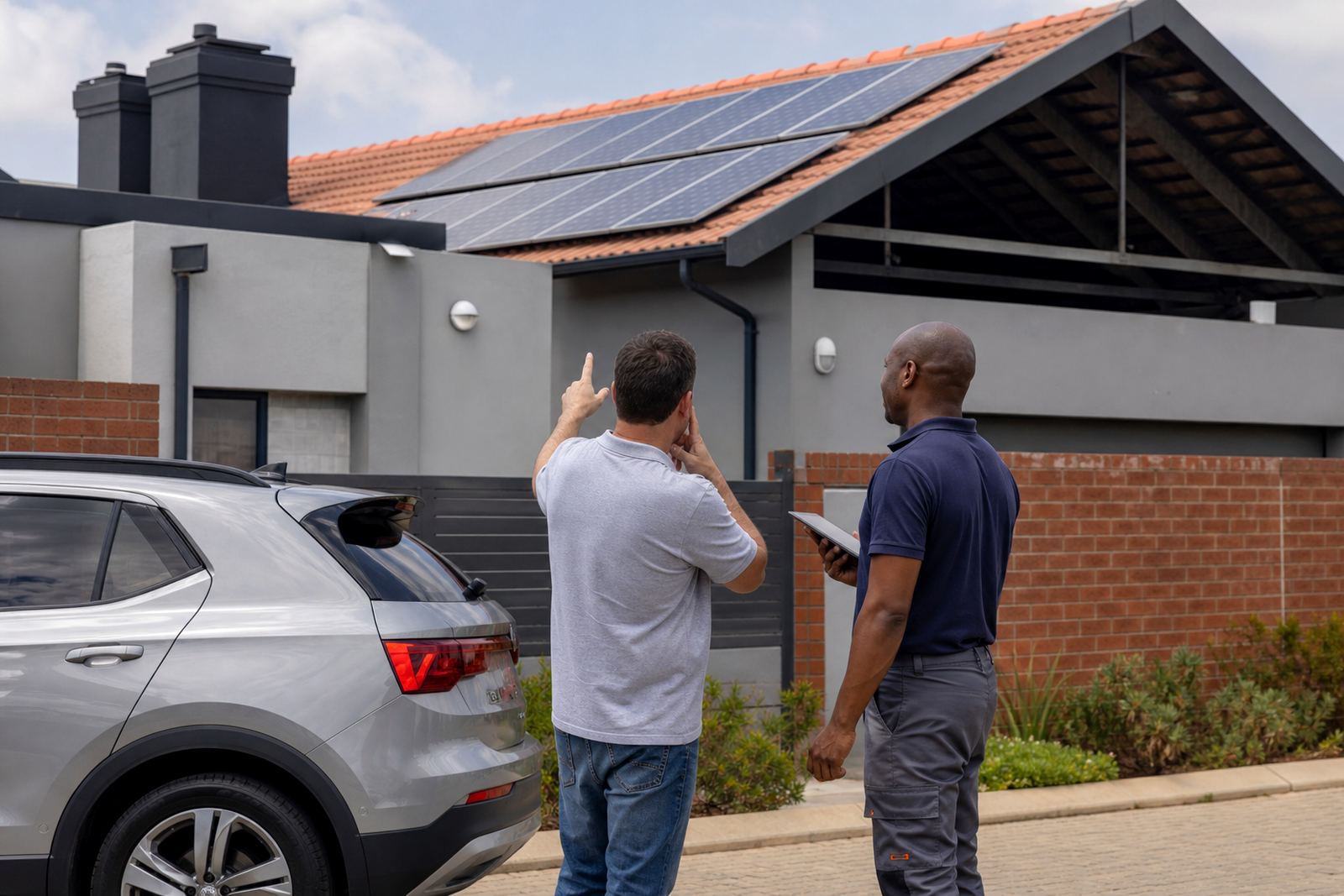
It helps to collect at least 3 to 6 months of electricity bills and any recent changes in trading hours. If your usage varies by season, school holidays or production cycles, note that too. For many small businesses, the right system is not the biggest one, it is the one matched to the actual pattern of use. A proper site assessment will also check roof space, shading, cable routes and whether the existing electrical board can support the new work.
2. Choose the right mix of panels, inverter and battery support
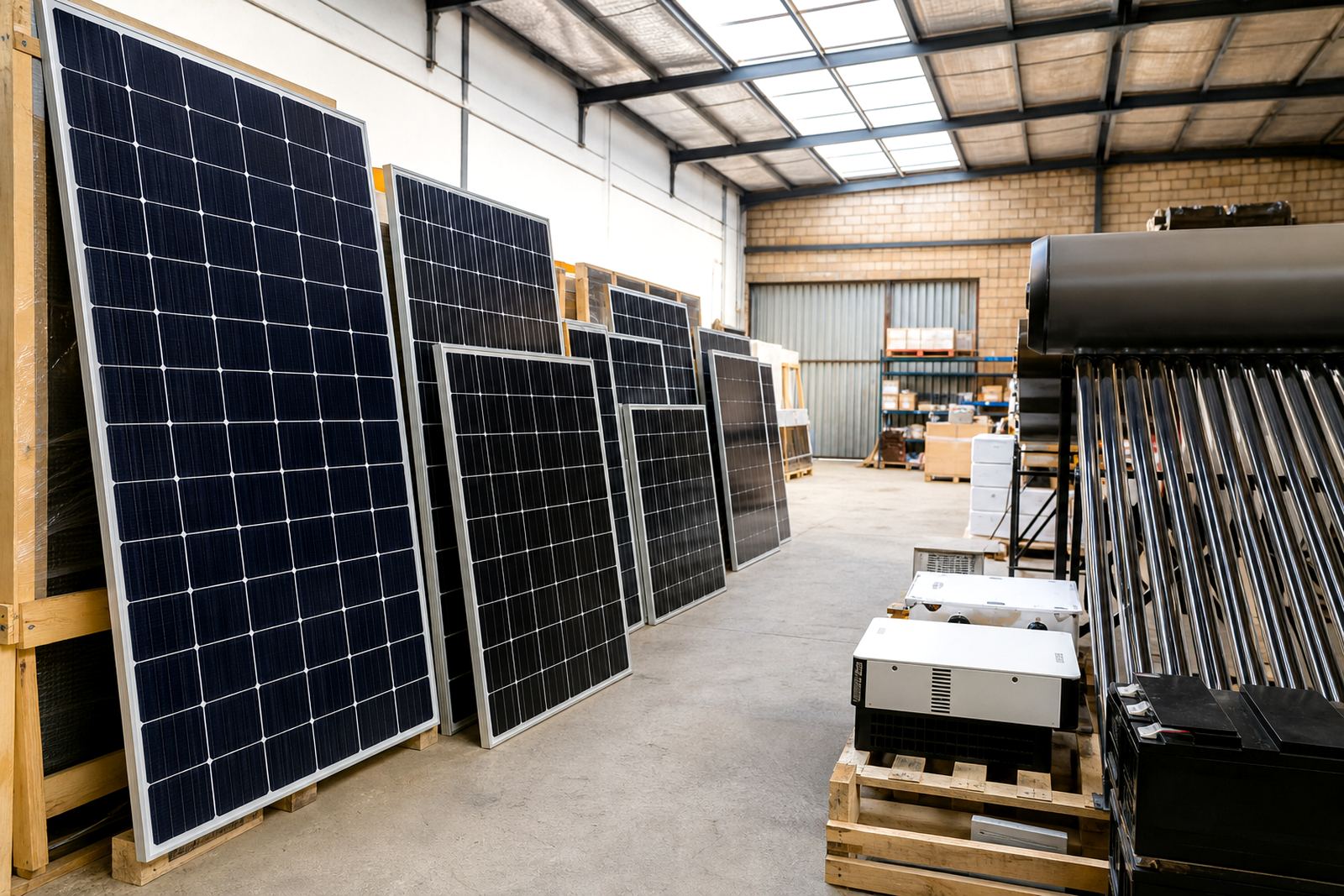
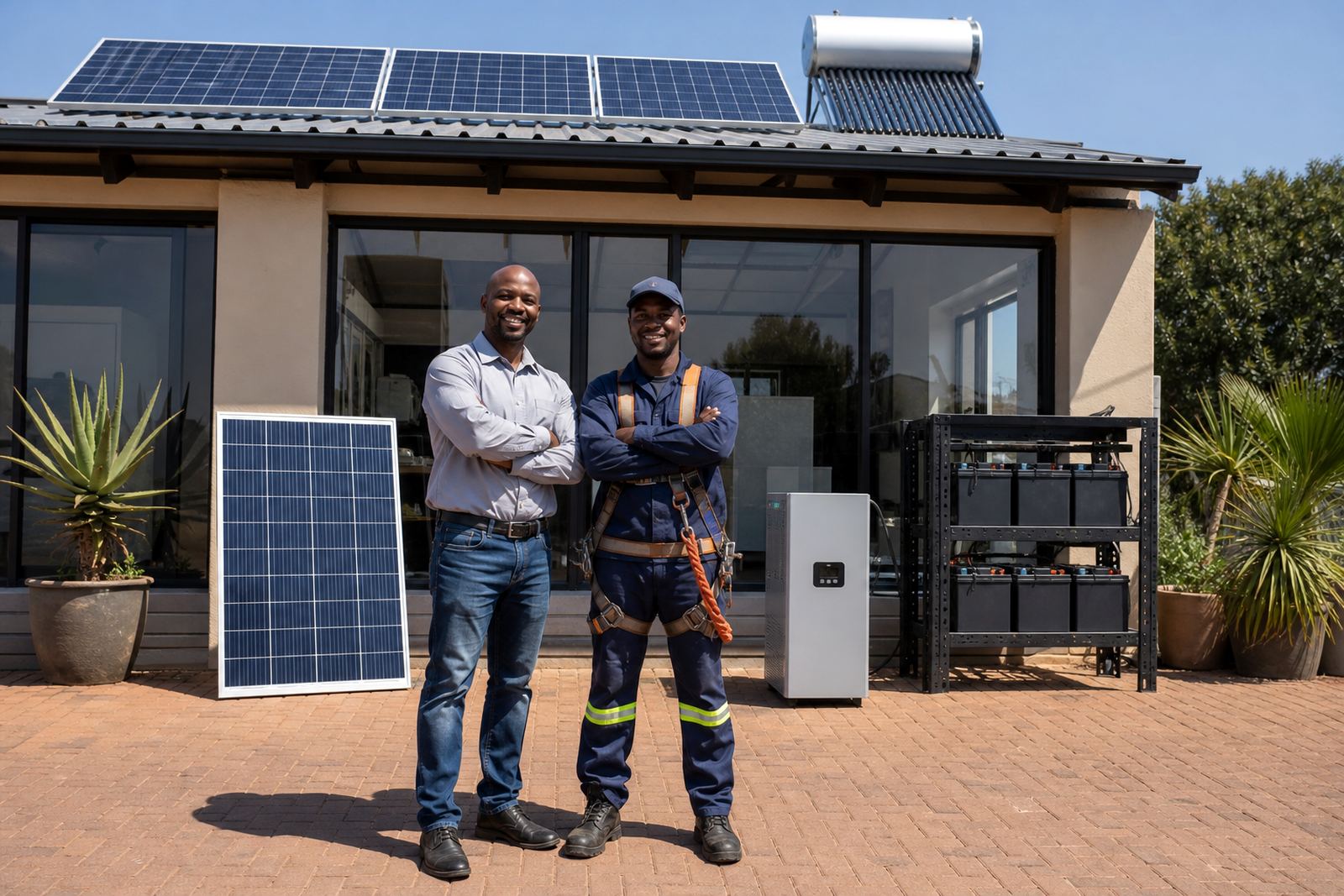
Solar panels convert sunlight into electricity, while the inverter manages how that power is used in the building. Batteries store excess energy for later use, which is useful when you need backup during outages or want to run essential loads after sunset. Some businesses need all three, others only need panels and an inverter tied to daytime use. The correct mix depends on whether you are trying to reduce grid reliance, protect critical equipment or support longer trading hours during load-shedding.
It is worth thinking about future growth too. If you plan to add staff, fridges, servers or more production equipment in the next year or two, the system should allow for that. In coastal areas like Durban and Cape Town, salt air and humidity can affect equipment selection and fixing methods. In Pretoria and Bloemfontein, heat and dust are often the bigger concern, so panel placement and ventilation matter. A good design takes local conditions into account, not just the equipment list.
- Check how much roof space is available and whether it faces north, east or west.
- Ask what loads will run during the day and what must stay on at night.
- Decide whether batteries are needed for backup or only for better energy management.
- Make sure the inverter size suits the electrical demand and future expansion.
3. Make sure the roof and electrical system are ready
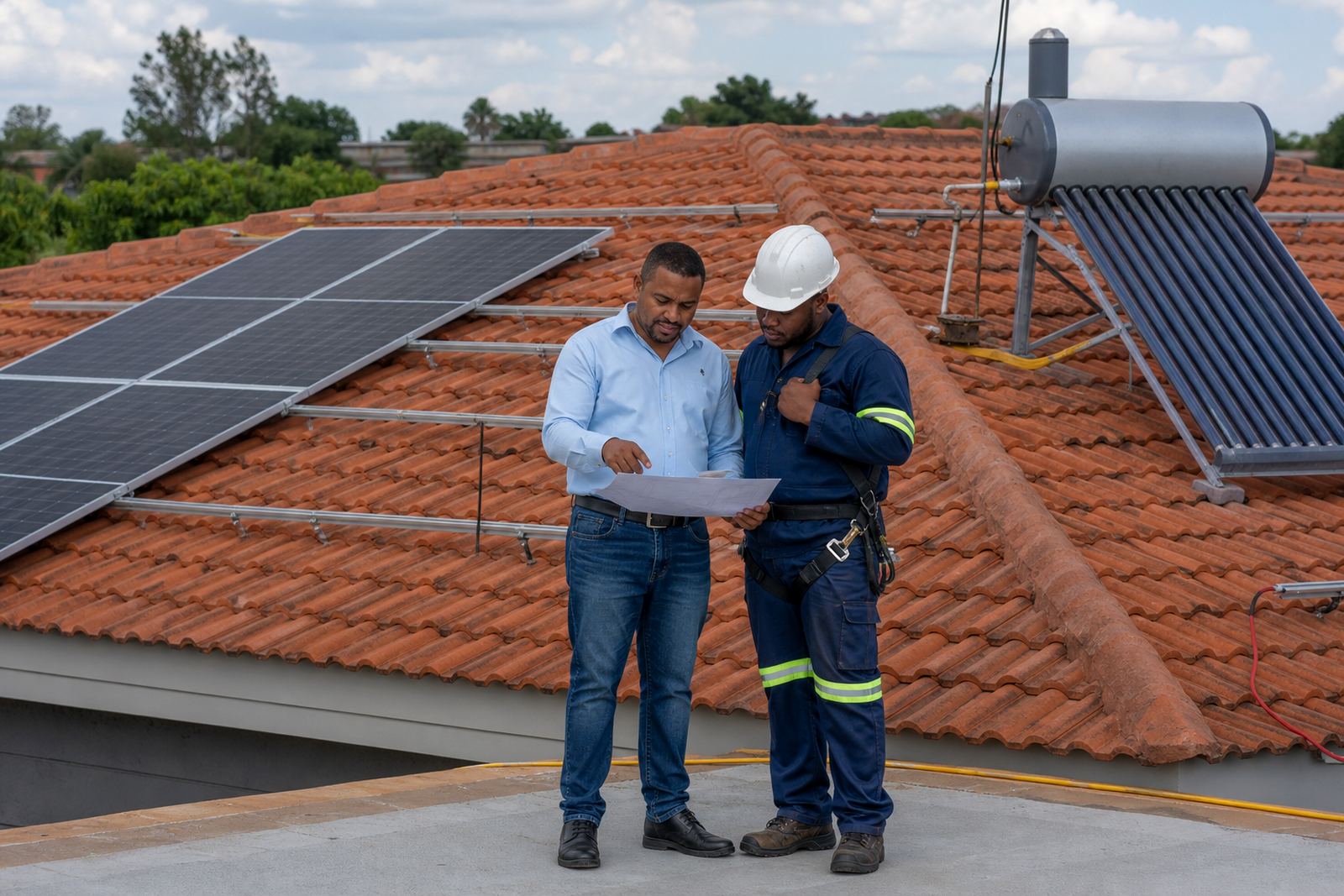
Many businesses focus on the equipment and forget the building itself. That can cause delays later. The roof must be in good condition, with no loose sheets, cracked tiles or weak support points. If the roof needs repair first, it is better to do that before panels go up. For flat roofs, the mounting method must suit wind exposure and drainage. In areas with strong afternoon storms, fixing details matter a lot.
The electrical side needs just as much attention. Electrical integration should be handled by qualified installers who understand local safety rules and municipal requirements. This includes the main distribution board, protection devices, earthing and the changeover arrangement where needed. If the existing system is old or overloaded, it may need upgrades before commissioning. It is common for small businesses to underestimate this part, but it is where a proper installation either works well or gives trouble later.
4. Compare your installation options line by line
When you ask for a proposal, do not look only at the total amount. Compare what is included and what is not. A clear proposal should explain the system size, equipment layout, installation scope, electrical integration, commissioning and any maintenance or support that follows. It should also show whether panel cleaning, fault finding and callout support are available later on.
For businesses in Gauteng, especially Pretoria, Centurion and Johannesburg, the practical details matter just as much as the equipment itself. Ask how the team will manage access, roof safety, working hours and any building rules. If your premises are in a shared complex or shopping area, there may be extra approval steps. In some cases the municipality or building management may need notice before work starts, so it is best to confirm that early rather than at the last minute.
- Ask for a site assessment before any final design is agreed.
- Confirm what electrical changes are required on your premises.
- Check how the installer handles commissioning and handover.
- Find out what maintenance services are available after installation.
5. Plan for solar water heating where hot water use is regular
If your business uses a steady amount of hot water, a solar water heater can be a useful part of the overall plan. This is common for guesthouses, small laundries, staff wash areas, salons and light hospitality operations. Solar water heating can reduce pressure on geysers and help keep hot water available when electricity is interrupted. The system should be sized to match daily use, roof space and plumbing layout.
Water heater installation should be planned alongside the electrical work so the full system fits together properly. In colder months, or where demand rises early in the morning, backup heating may still be needed. A practical design will consider water temperature needs, the number of users, pipe runs and insulation. In our experience, businesses often get better results when they treat water heating as part of the full energy plan, not as a separate add on.
6. Keep the system working after the handover
A solar installation is not finished when the panels are fixed to the roof. The system needs checking, cleaning and occasional fault finding to stay reliable. Dust, bird droppings and coastal grime can affect performance. In Pretoria and surrounding areas, windblown dust can build up on panels more quickly than people expect. Regular cleaning and visual inspections help keep output steady and can spot loose fittings, damaged cabling or inverter warnings before they become a bigger issue.
It is also worth keeping a simple log of outages, warnings and maintenance visits. That makes it easier to spot patterns and plan support callouts when needed. Small businesses should assign one person to report any changes, even if they are minor. If staff know where the inverter is, what the display means and who to call first, problems are usually handled faster. For ongoing support, the best approach is a scheduled check rather than waiting until something fails.