Start With Your Roof Space and Sun Path
The first step is to look at what your roof can actually carry and how much clear space you have. In Pretoria, Centurion and Johannesburg, many homes have pitched roofs with limited uninterrupted sections, while some small business sites have flat roofs where tilting and spacing matter just as much as panel size. A good selection starts with the usable area, the direction of the roof and any shade from trees, parapets, TV masts or neighbouring buildings.
South-facing shade in the early morning or late afternoon can reduce output, and even a small shadow across one panel can affect the whole string if the system is not planned properly. On tiled roofs, installers also need to check the fixing points and the condition of the roof before recommending panel quantities. In Durban and Cape Town, salt air and stronger wind exposure can also affect the mounting choice, so the panel selection must suit the site not just the catalogues.
- Measure clear roof space in metres, not estimates.
- Note any shade during morning, midday and late afternoon.
- Check roof age, tile condition and access for safe installation.
- Confirm whether the site is residential, commercial or a mixed-use building.
Match the Panel to the Load You Want to Carry
Panel choice should follow your energy use, not the other way around. A home with a few lights, a fridge, a TV and gate motor will need a different setup from a small office running computers, routers and air conditioning. The right panel size depends on the daily load, the inverter capacity and the battery bank if backup is part of the plan. If the goal is to cut daytime usage from the grid, panel selection can focus on direct production. If backup during load-shedding is important, the system needs enough panel output to support charging as well as normal use.
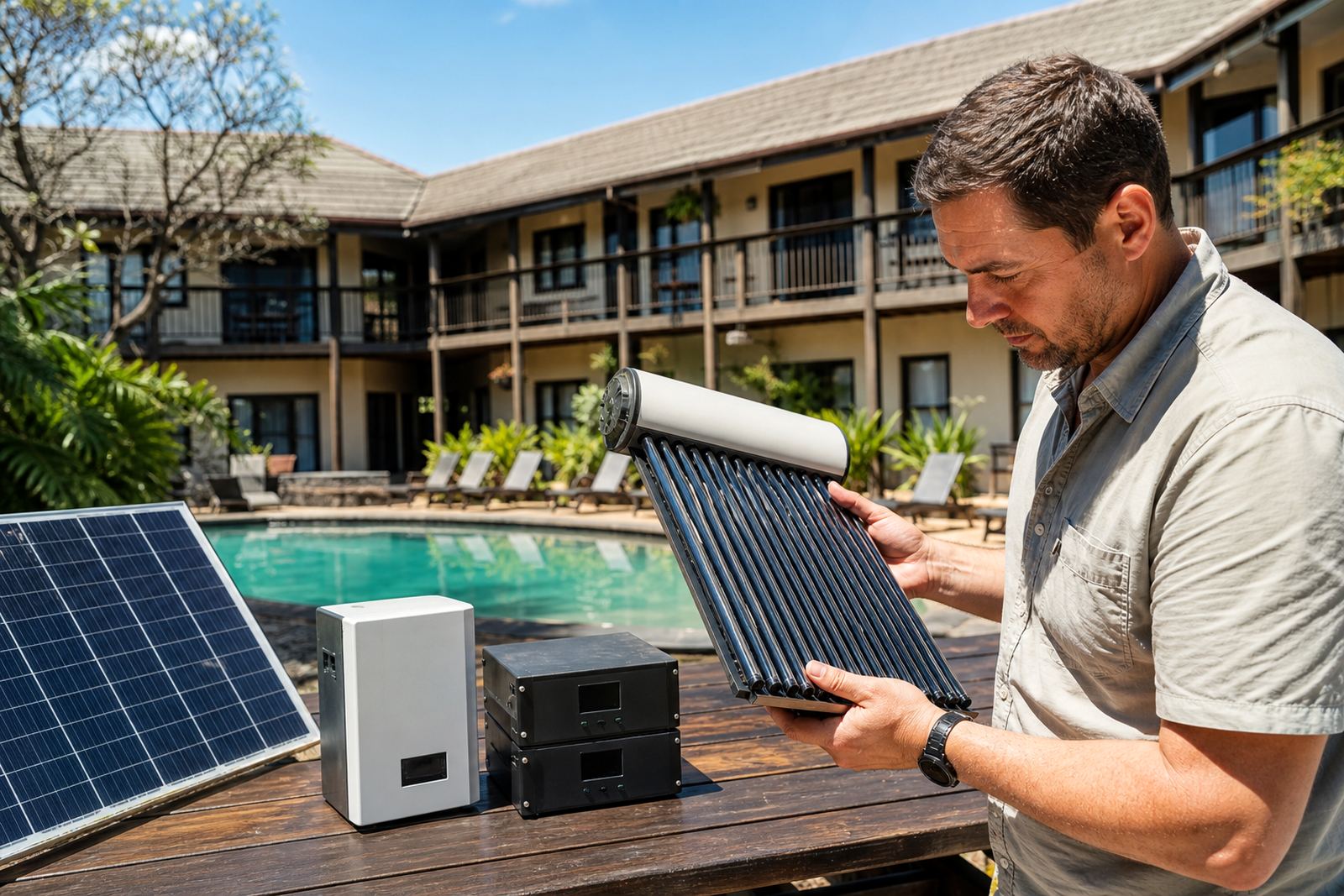
As a rule, the panel array should be sized as part of a complete system design. That includes inverter compatibility, roof layout, cable runs and the space available for battery installation. For water heating systems, panel selection is different again, because the collector or panel arrangement must suit hot water demand, roof angle and the plumbing layout. This is where a site assessment helps avoid paying for equipment that is too small or oversized for the real need.
- List your main appliances and when they run.
- Decide whether the system is for daytime use, backup or both.
- Check if the inverter and battery plan already exist or still need design.
- For water heating, note how many people use hot water and when.
Compare Panel Types, Ratings and Build Quality
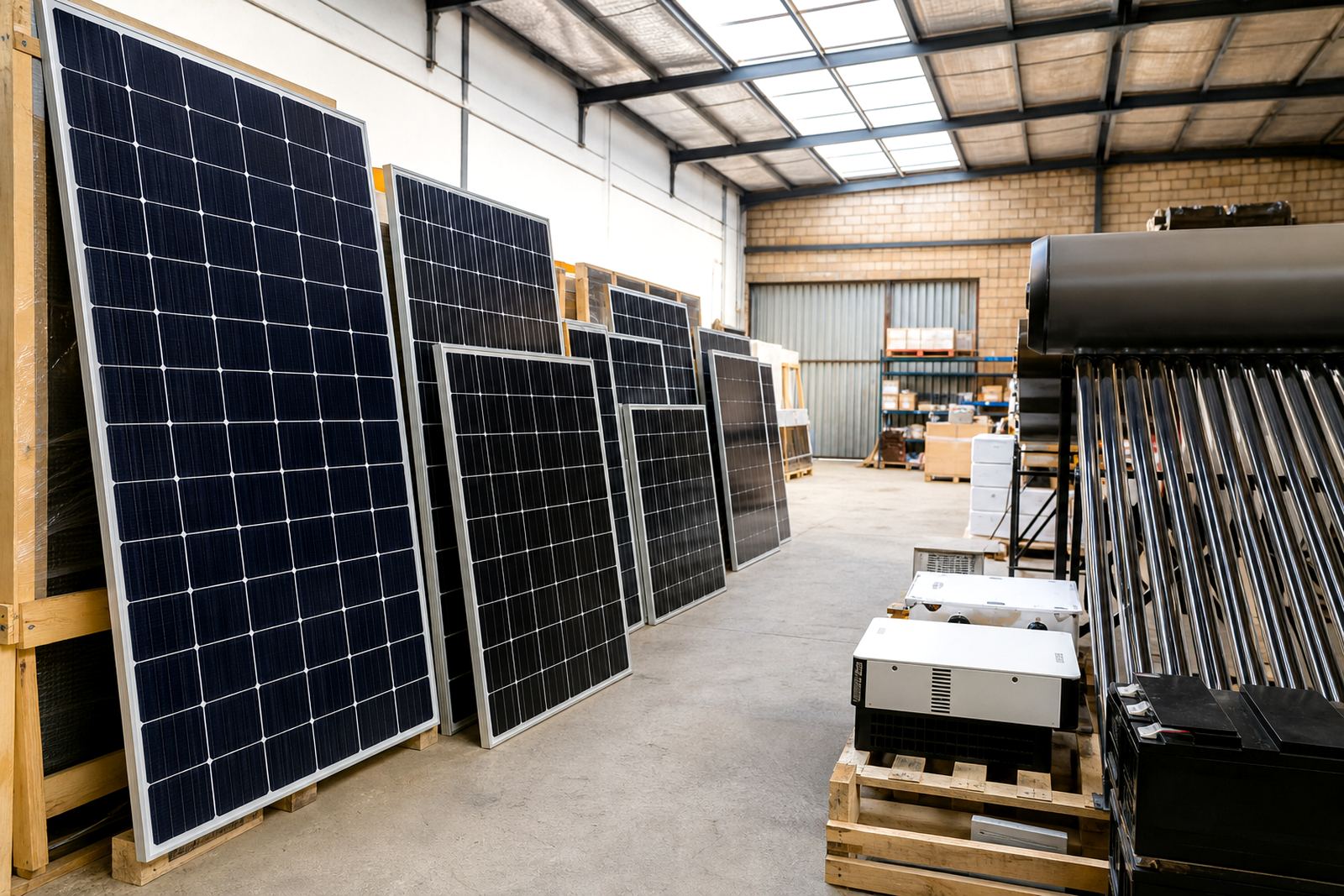
Not all solar panels are suited to every roof or application. When comparing options, look at the watt rating, physical size, frame strength, cell layout and how the panel is expected to perform in heat. In Gauteng, roof temperatures can rise quickly in summer, so panel performance in hot conditions is worth checking. In humid coastal areas such as Durban and Cape Town, the construction materials and sealing details matter too, especially where salty air can speed up corrosion.
Do not select on wattage alone. Two panels with a similar rating can differ in size, weight and how they fit on a roof. A higher watt panel may save space, but if it is too large or too heavy for the mounting arrangement it is not the best choice. Ask for the physical dimensions, the recommended spacing and the number of panels needed to reach your target output. It is also worth checking how the panels are arranged on the roof so that airflow is not blocked. Better airflow can help the system perform more consistently in hot weather, and less heat build-up is always useful.
- Compare watt rating, dimensions and weight together.
- Ask how the panel handles heat and humid conditions.
- Check frame finish and mounting compatibility.
- Make sure the roof layout allows for safe spacing and airflow.
Choose a Panel Setup That Fits Your Inverter and Batteries
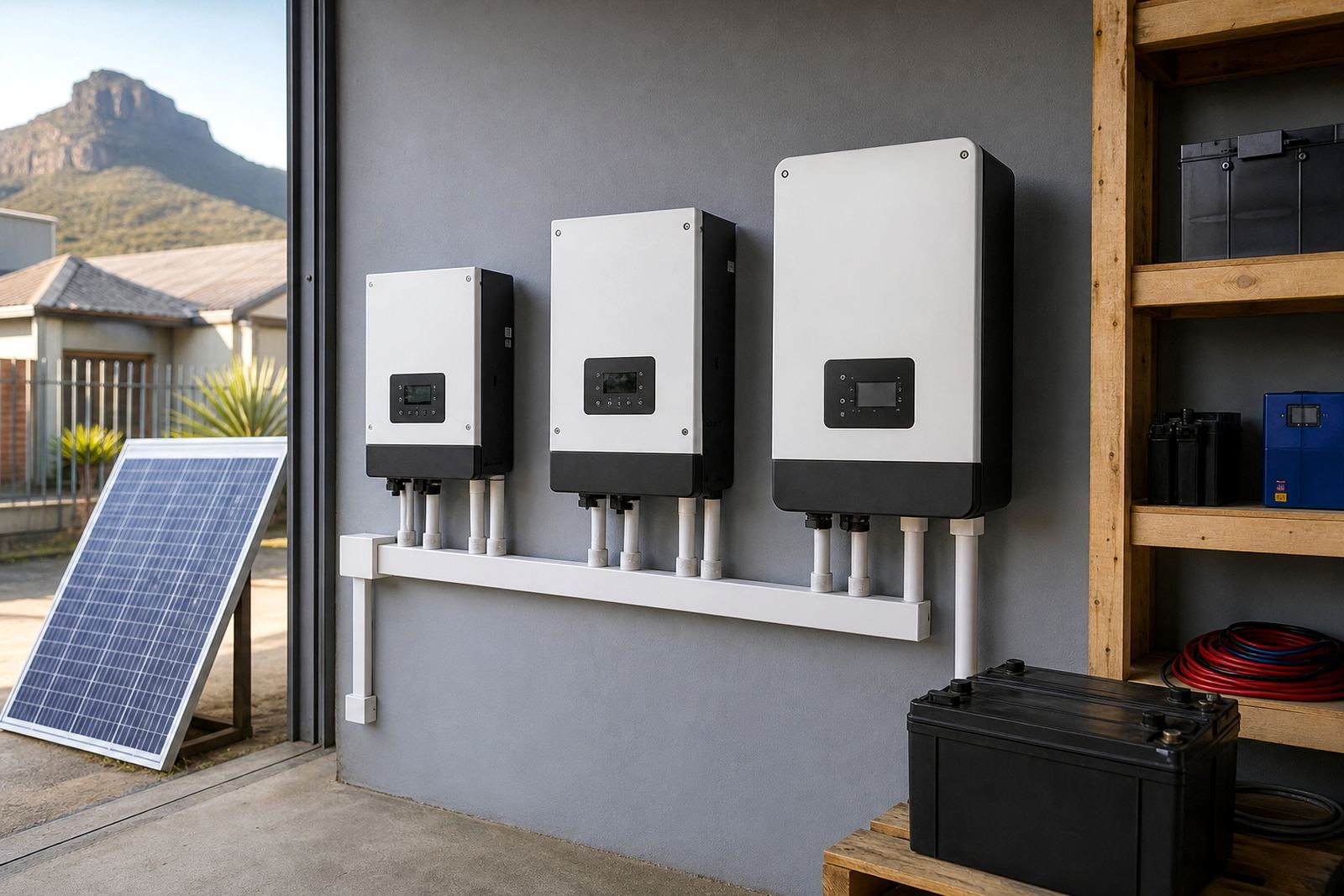
Solar panels do not work in isolation. They must match the inverter, battery bank and electrical layout. If the panel voltage range does not suit the inverter, the system may underperform or need redesign. If battery charging is part of the plan, the panel array must provide enough input for the expected daily demand and charging window. This is especially important in places where power cuts are frequent and owners need practical backup without unnecessary strain on the equipment.
A qualified installer should handle the electrical integration, protection devices and commissioning. That includes making sure the cabling, isolators and protections are set correctly and that the system is tested before handover. For small businesses in Pretoria, Midrand or Bloemfontein, a well matched system can help keep basic operations running through outages. For homes, the aim is often to cover essential loads first, then expand later if needed. That planning starts with the panel choice and the inverter limits.
- Confirm inverter voltage and array compatibility.
- Check whether the battery bank will be charged from solar only or from solar and grid.
- Ask who is handling electrical integration and commissioning.
- Allow space for future expansion if more panels may be added later.
What to Ask During a Site Assessment
A proper site assessment saves trouble later. It should cover roof strength, access, shade, cable routes and where the inverter and batteries will sit. In Pretoria and Centurion, many clients have long driveways or detached outbuildings, so cable length can become a real factor. In Johannesburg and Midrand, there are often more shared boundaries and shaded sections, which can change the panel layout. On coastal sites, the installer should also look at wind exposure and corrosion risks.
Use the visit to ask direct questions about how the system will be mounted, cleaned and maintained. Panel cleaning matters in dusty inland areas, and regular checks help pick up loose fittings, dirt build-up or damaged wiring before a fault becomes expensive. If a business depends on the system, ask how fault finding and support callouts are handled after commissioning. A good recommendation should fit the site, the budget and the daily use pattern, not just the available roof space.
- Will the roof support the proposed panel weight and mounting method?
- Where will cabling run, and will it be protected from weather and heat?
- How often should the panels be cleaned in this area?
- What maintenance or support callouts are available after installation?
Simple Checklist Before You Approve the Quote
Before you approve a panel quote, make sure you know exactly what is being supplied and installed. The best quote is not always the cheapest, because panel quality, layout, labour and proper commissioning all affect the long term result. If the system includes a solar water heater, check that the hot water demand and roof arrangement were both considered. If it is a power system, make sure the panel quantity matches the load and the backup expectations.
At Linuo Solar, we work with homes and small businesses across Pretoria, Gauteng, Johannesburg, Durban, Cape Town and Bloemfontein, from our base in Centurion. Our team, led by Vuyo Phasha, includes Naledi Kgosi, Sarel Delport, Palesa Mabena, Mothusi Mphahlele, Faatimah Latief and Unathi Tau, and each project is handled with the site in mind. The best result comes from clear measurements, proper electrical work by qualified installers and a layout that suits the roof for years to come.
- Panel quantity and total output are clearly stated.
- Panel dimensions fit the available roof space.
- Inverter and battery compatibility is confirmed where needed.
- Electrical integration and commissioning are included.
- Maintenance, cleaning and support options are explained.