Why this Westdene house needed a different approach
This project was for a shared student house in Westdene, Johannesburg, where power use is uneven and often spikes in the evening. One week the place is full, the next week a few rooms are empty, so the system had to work well without being oversized for the building.
The brief was straightforward: reduce reliance on municipal power, keep the basics running during outages, and support a property with rotating tenants who might not always use electricity in the same way. The owner also wanted a tidy installation that would not create unnecessary noise or maintenance headaches for the managing agent.
- Property type: shared student accommodation
- Town: Westdene, Johannesburg
- Use pattern: variable occupancy with evening peaks
- Main goal: backup power for essential loads and lower day to day grid use
Site constraints and planning in an occupied house
Because the house stayed occupied during the project, we had to plan the work around access, noise and safety. Roof space was limited and the electrical board was already carrying a number of circuits for bedrooms, lighting, a common area and appliance points. The installation had to fit the existing layout without forcing major building changes.
Westdene properties also tend to have older roof lines and mixed wiring histories, so we inspected the condition of the roof structure, cable paths and distribution board before any work started. The team checked shading from nearby trees and boundary walls, then mapped the panel positions so the array would get useful sun through most of the day. That planning stage saved time later because the install crew knew exactly where each run would go.
- Limited roof space meant careful panel spacing
- Occupancy continued during the works
- Existing circuits had to be grouped for essential and non essential use
- Shading and cable routes were checked before installation began
What we supplied and installed
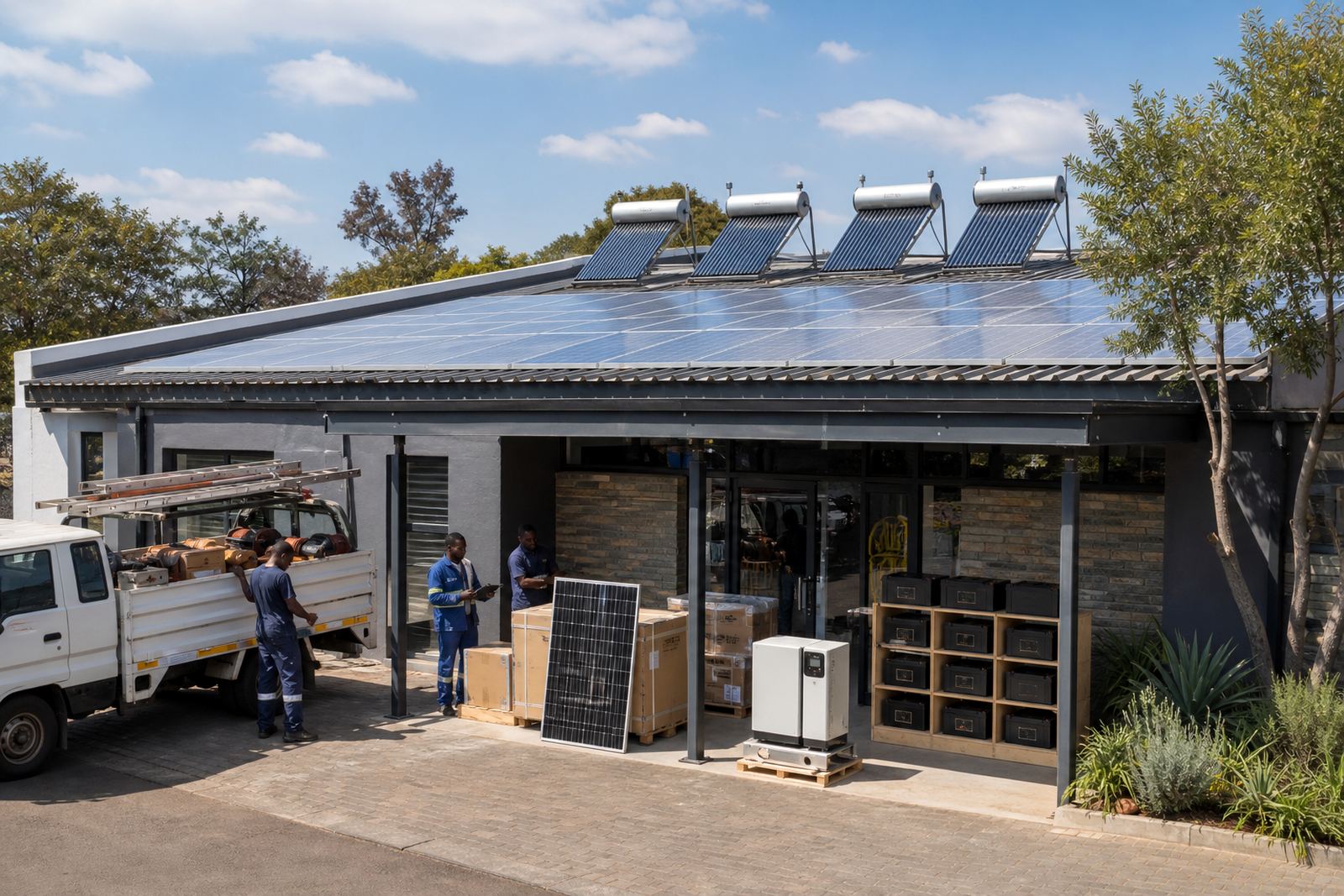
We supplied and installed a residential solar power package made up of panels, an inverter, battery storage and the electrical integration needed to connect the system properly. The setup was sized for a student house rather than a large family home, with enough capacity to support common areas, lighting, network equipment and selected plug points during outages.
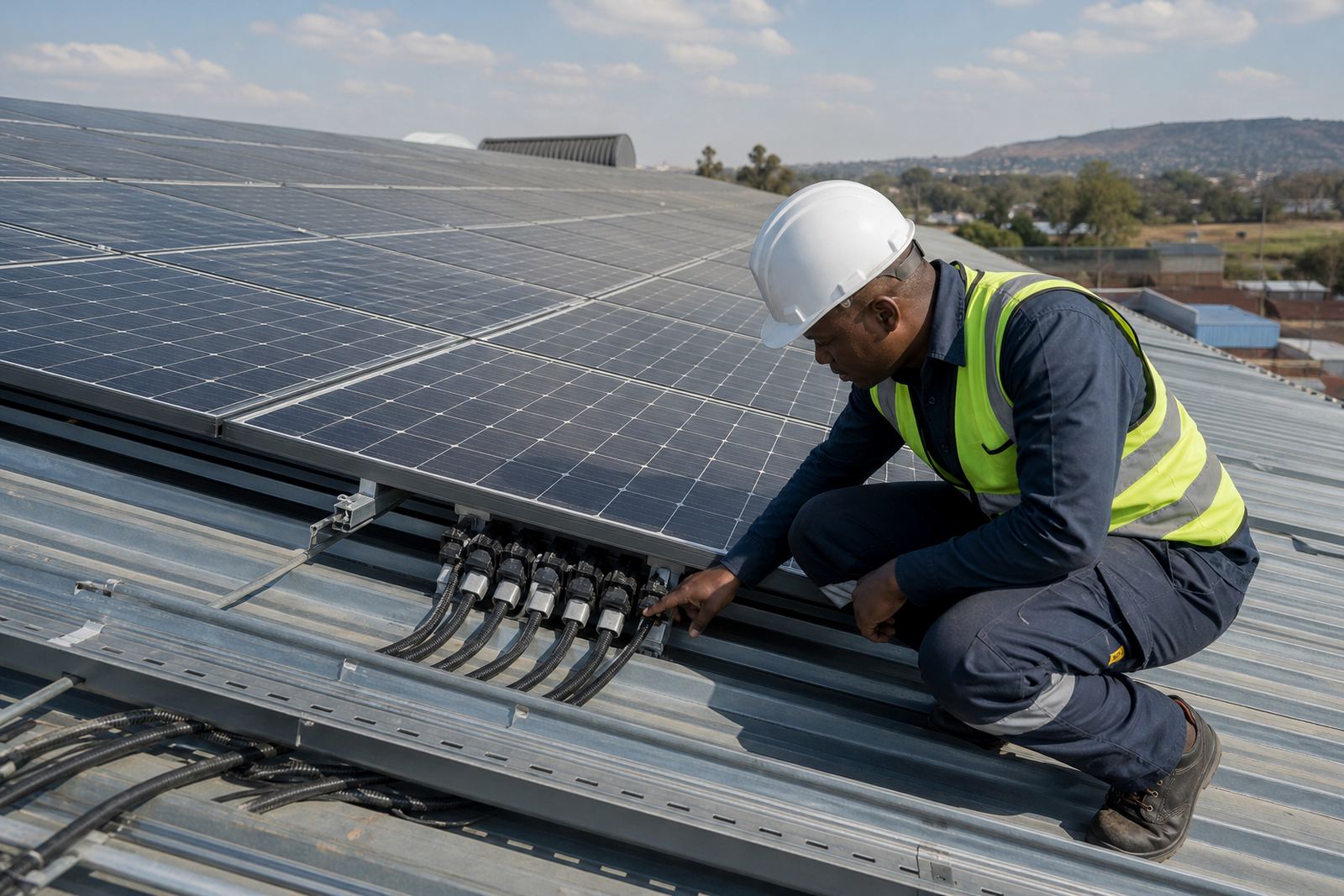
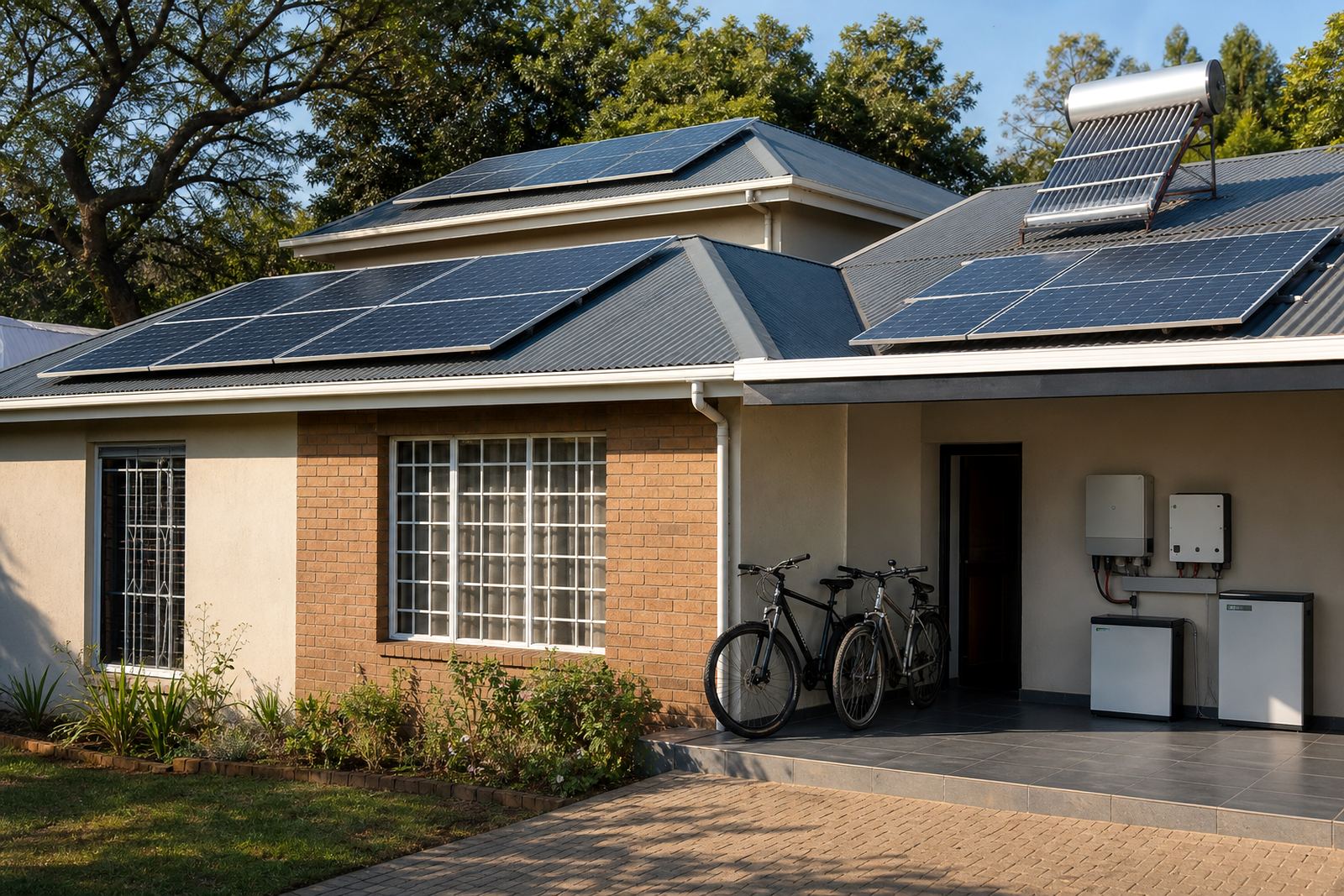
Our team handled the panel installation on the roof, mounted the inverter in a safe indoor position and connected the battery bank to a protected wall space with ventilation in mind. All electrical work was completed by qualified installers and the system was commissioned after testing. We also labelled the circuits clearly so the owner and caretaker could see which loads were backed up and which were not.
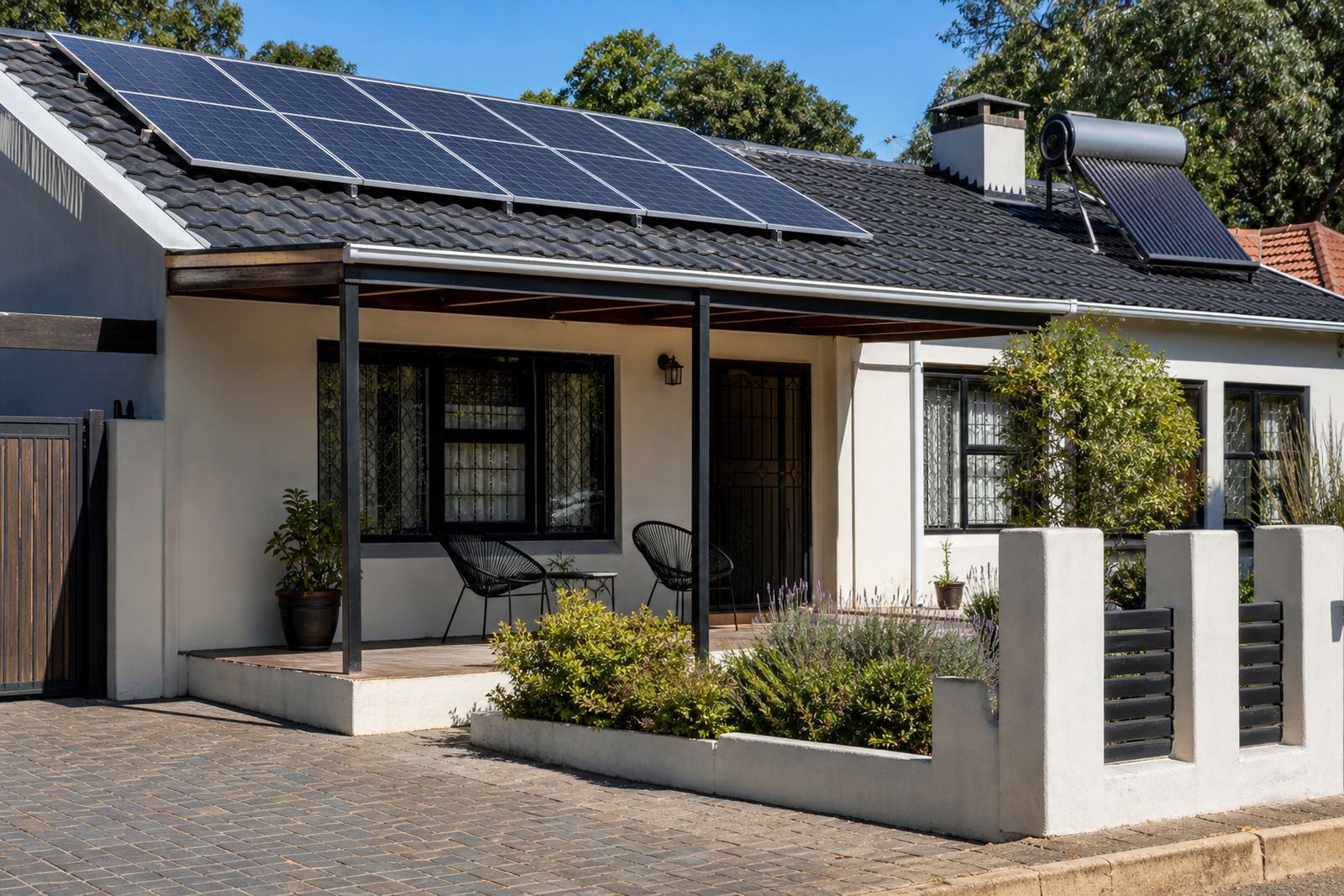
- Solar panels installed on available roof sections
- Inverter fitted indoors in a secure service area
- Battery storage added for backup during load shedding
- Electrical integration and commissioning completed by qualified installers
- Circuits labelled for easier day to day use
Project timeline and installation steps
This installation moved from site assessment to final handover over a three-week period. Week one covered the assessment, measurements and design. Week two was the physical installation of the panels, inverter and batteries. Week three covered commissioning, testing and a walk through with the owner.
Because this was a shared house, the install had to be broken into neat stages so the residents were not left without power for long periods. We also coordinated the final switch over to reduce disruption to the study schedule and evening routines of the occupants. That made the handover smoother and the tenants did not have to keep asking what was happening.
- Week 1: site assessment and system design
- Week 2: panel, inverter and battery installation
- Week 3: testing, commissioning and handover
- Work scheduled to limit disruption for residents
Results for a house with changing occupancy
Once the system was running, the house had a more predictable power supply for the essentials. The residents could keep lights, connectivity and selected appliances running through outages, and the owner had a clearer structure for managing electricity use. The solar contribution during the day also reduced pressure on the grid supply, which is useful in a property where the load can change quickly from one hour to the next.
For a student house, the real benefit is not just backup during load shedding, it is also the way the system gives the property manager more control. The building no longer depends on everyone remembering the same routine, and the owner has a better setup for future tenants as well. In practical terms, the house became easier to run and less stressful when the power went off.
- Better support for evening and night time use
- Backup power for selected circuits during outages
- More control for the owner and caretaker
- Lower reliance on the grid during daytime hours
What we would repeat on the next student property
If we were doing another shared student house in Pretoria, Johannesburg or anywhere else in Gauteng, we would use the same approach: assess the actual usage pattern first, protect the essential circuits, and keep the installation neat enough for ongoing tenant turnover. That means practical sizing rather than guessing, and clear labelling so whoever moves in next can understand the system quickly.
We would also repeat the same focus on access and maintenance. Student properties need equipment that is easy to monitor, easy to clean and simple to service when a fault callout is needed. In a coastal city like Durban, or in places with more dust and summer heat, we would take the same care with positioning, ventilation and cable protection, because those details matter over time.
- Start with the actual occupancy pattern
- Keep essential loads separate from non essential loads
- Allow for easy maintenance and fault finding
- Use clear labelling for future tenants and property managers
Key facts
| Project type | Residential solar project for a shared student house |
|---|---|
| Location | Westdene, Johannesburg |
| Scope | Solar panels, inverter, battery storage and electrical integration |
| Timeline | 3 weeks from assessment to handover |
| Work performed by | Qualified installers and technical support staff |
| Key use case | Backup for essential circuits and daytime solar support for variable occupancy |