Workshop brief in Boksburg
The client was a small manufacturing workshop in Boksburg, Gauteng, where the owner wanted to cut back on grid use during the day without interrupting production. The building had a fairly busy roof line, with sections already carrying services and a structure that needed careful loading checks before any panels could go up. The job had to work around forklifts, deliveries and staff movement, so the plan needed to be simple and safe from the start.
We first looked at the patterns of use in the workshop. The main need was daytime support for tools, lighting, office equipment and small motors, with enough reserve to handle short interruptions and keep important circuits running. The client also wanted a solution that could be maintained locally and not become a problem every time there was load-shedding or a utility fault.
- Client type: small workshop and light industrial use
- Town: Boksburg, East Rand
- Main aim: reduce daytime grid draw and improve supply stability
- Site limits: roof structure, working hours, existing roof services
Roof checks and system planning
Before any equipment was ordered, we carried out a site assessment and measured the usable roof areas. The roof sections available for panels were checked for direction, shade from nearby structures and the condition of the sheet metal and fixing points. Because the workshop was active during the day, we had to plan the layout so installers could work safely without blocking access or creating unnecessary downtime.
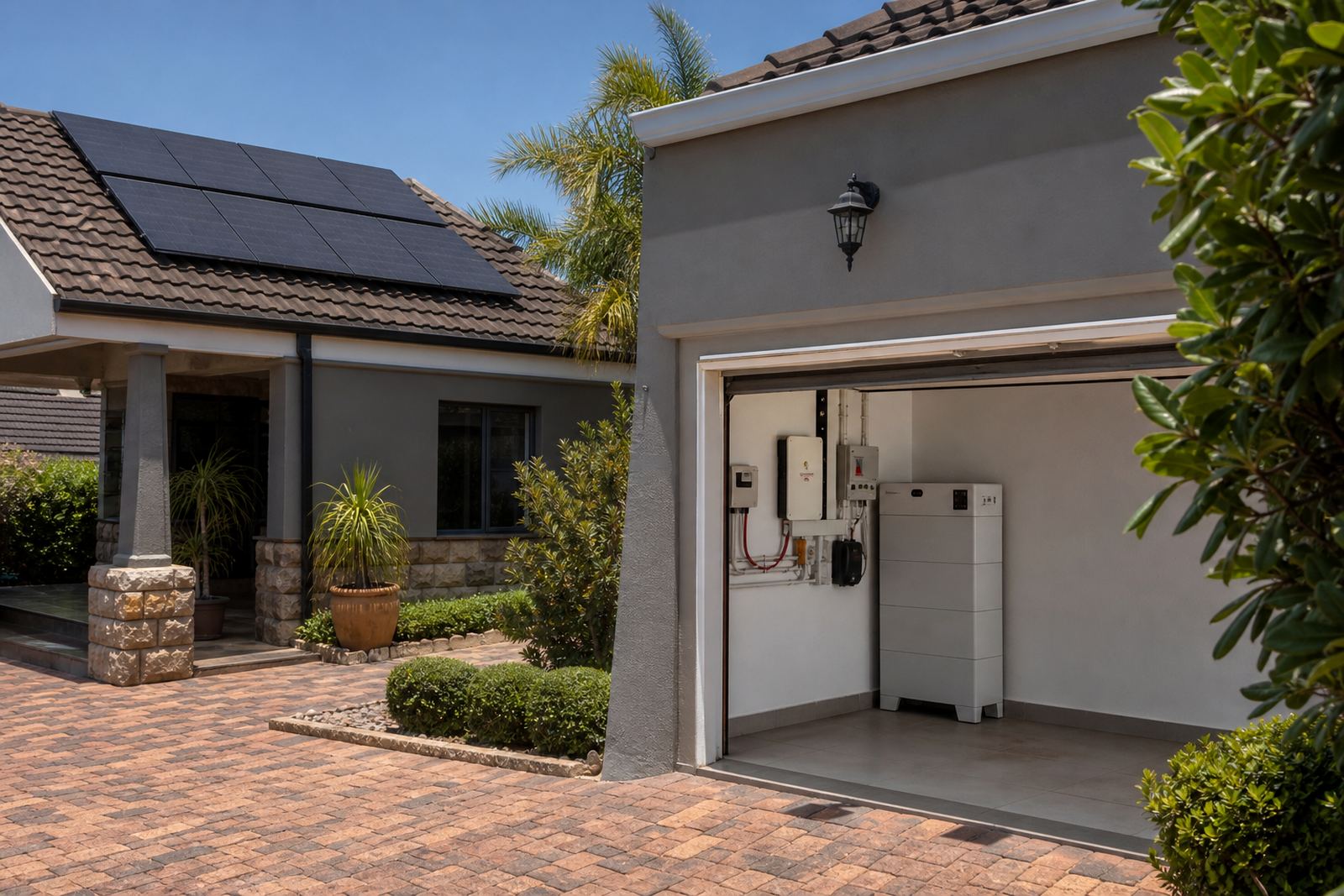
We designed the system around the available roof space and the client’s daytime load profile. The plan included solar panels, an inverter, a battery bank for backup support and the electrical integration needed to connect everything cleanly to the existing distribution board. Electrical work was handled by qualified installers, and we kept the setup practical rather than oversized. That helped with cost control and also suited the roof capacity better.
We also discussed maintenance from the start. In an area like Boksburg, dust and industrial grime can build up on panels, so access for cleaning mattered. The client wanted a setup that could be checked and serviced without complicated shutdowns or special access gear every time.
- Assessment covered roof condition, shade, cable routes and access
- System sized for daytime workshop demand
- Inverter and battery included for backup support
- Maintenance access considered in the layout
What we supplied and installed
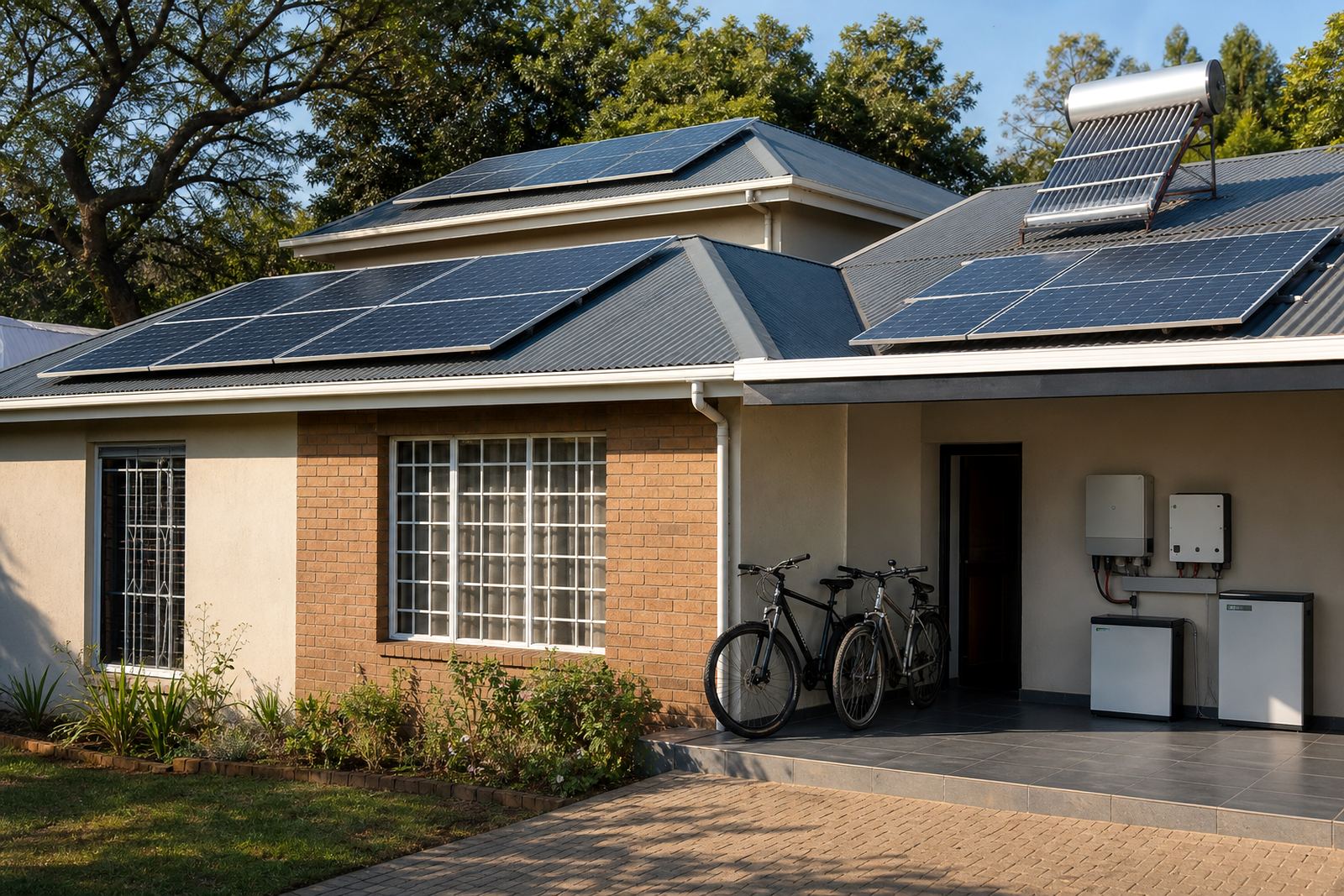
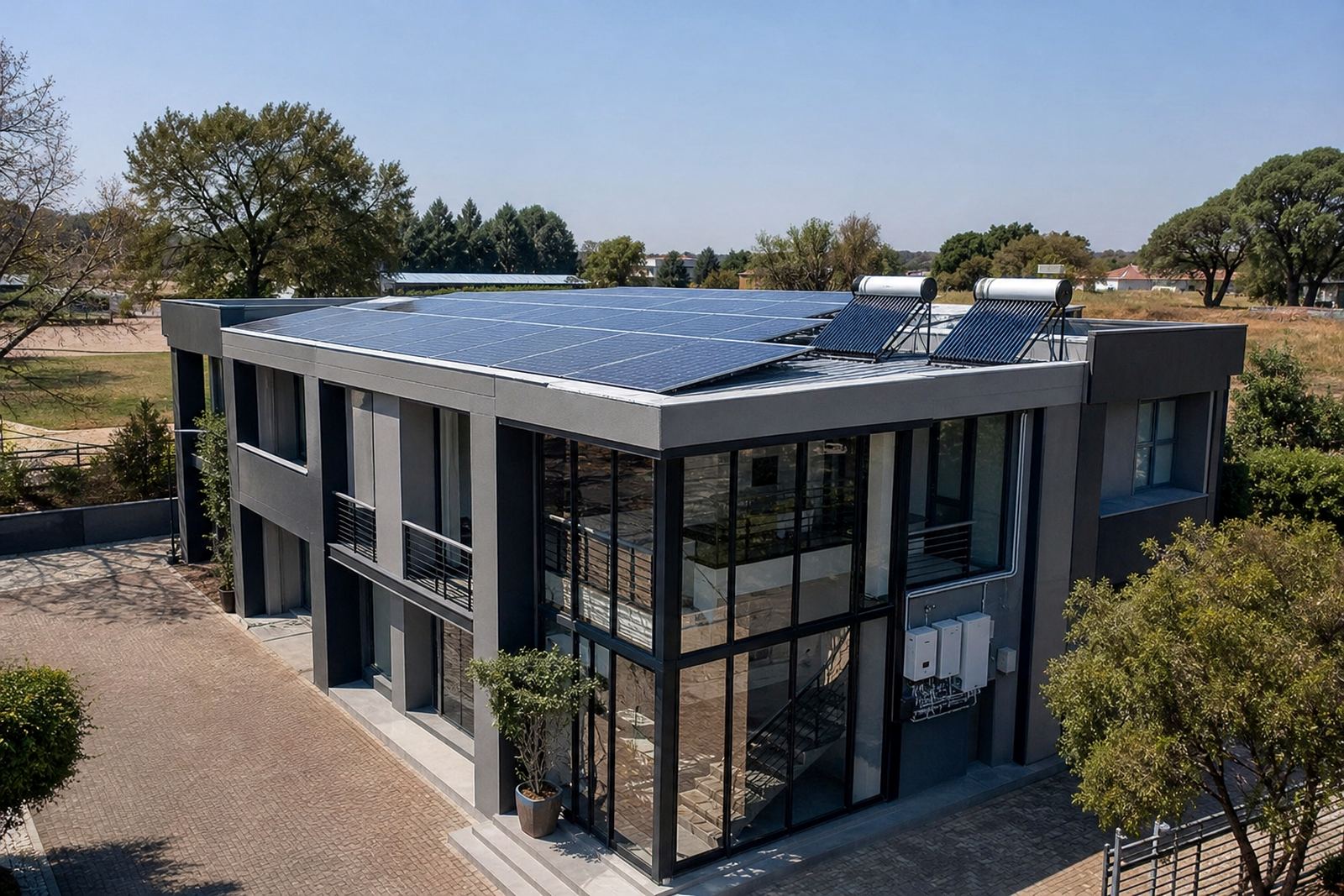
We supplied monocrystalline solar panels sized to suit the roof area and the workshop’s energy needs. The array was installed on a mounting structure suited to the roof pitch and fixed to keep it secure in windy weather. For power conversion, we installed an inverter matched to the panel array and the expected load profile. The battery bank was included to support essential circuits when the grid dipped or when the workshop needed short backup periods.
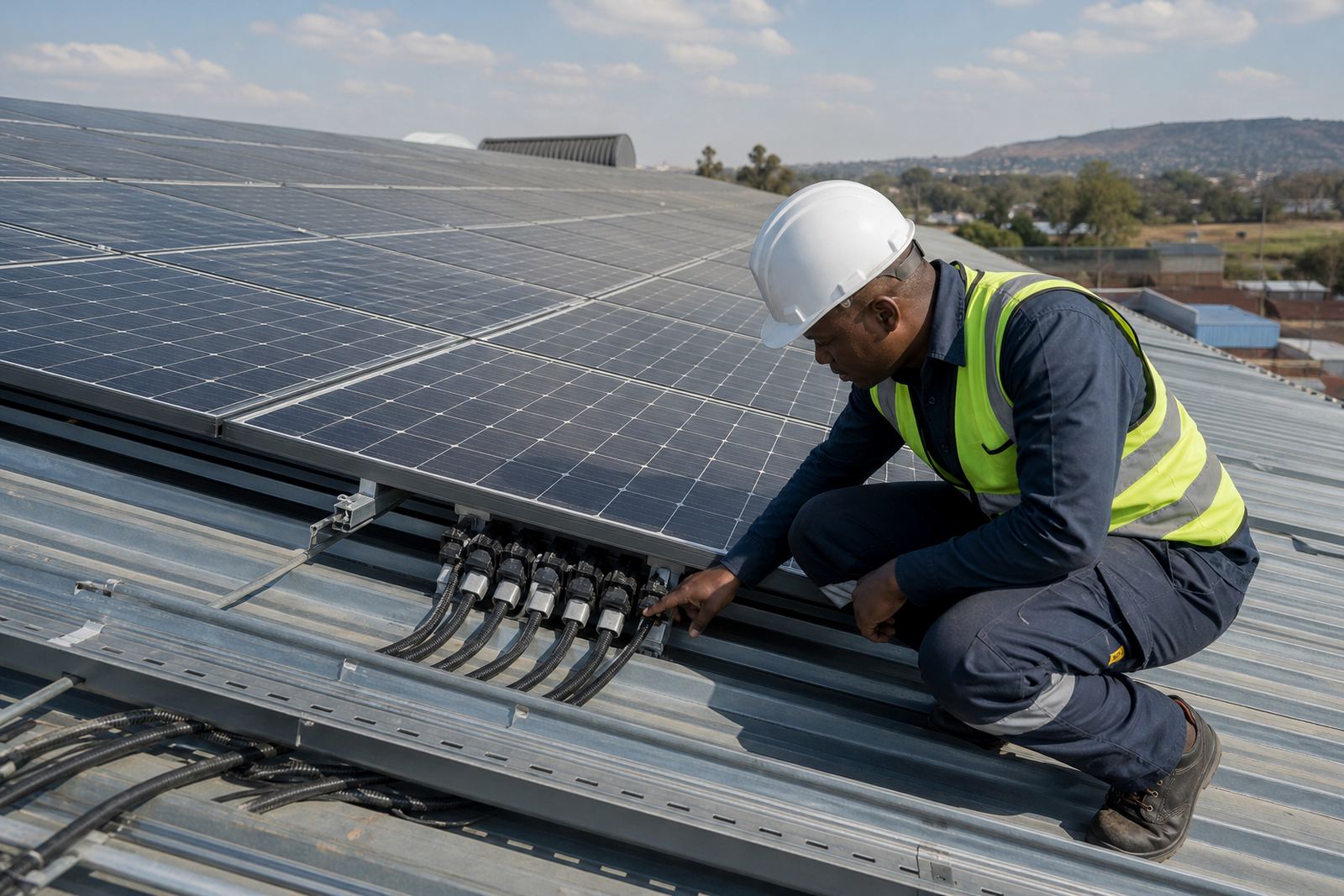
Electrical integration covered the protection devices, isolators, cabling and the connection into the existing electrical system. That part of the work was done by qualified installers, with testing at each stage before the system was switched over. We also set up the monitoring so the owner could see how the system was performing during the day and spot issues early if anything changed.
The client asked for solar water heating as well, but after checking the roof and the operating pattern we kept the focus on the electrical supply for this project. The workshop needed dependable daytime support first and the roof was better used for panels than for extra equipment at that stage.
- Solar panels matched to available roof space
- Inverter installed for conversion and load management
- Battery bank added for backup support
- Protection, isolators and cabling installed and tested
- Monitoring set up for routine checks
Keeping the workshop running during install
The install was planned over 2 weeks so the workshop could stay open. We split the work into stages, starting with roof prep and mounting, then panel placement, then the electrical connection and final commissioning. That sequencing let the client keep operating while the more disruptive work was handled after hours or during quieter periods. There was no point in making a small business stop for a solar job that should support the business, not slow it down.
One of the main challenges was working around the roof structure and making sure cable runs stayed neat and protected. The site had a few tight corners and some equipment close to the install area, so our team kept the route planning practical. We also checked each fixing point carefully because a roof that looks fine from the ground can tell a very different story once you are up there.
We found that the cleanest approach was to keep the solar wiring short, direct and easy to service later. That is especially useful in industrial areas where dust, vibration and regular roof movement can affect equipment over time.
- Timeline: 2 weeks from site setup to commissioning
- Work split into roof, electrical and testing stages
- Operations kept running during the installation period
- Route planning used to reduce future maintenance issues
Results on site after commissioning
After commissioning, the workshop had a system that could carry a meaningful part of its daytime demand and support essential circuits during interruptions. The owner now had a cleaner setup for managing daily power use, with better visibility of what the system was doing and less pressure on the grid during busy hours. For a small workshop, that kind of control matters more than fancy extras.
The battery support gave the client a buffer for short outages and unstable supply periods, while the solar array took advantage of the strong daytime sun that Boksburg gets across much of the year. The setup was also arranged so future maintenance would be straightforward. If anything needs attention later, the access points and wiring paths are easy enough to get to without disturbing the whole site.
The client was pleased that the project stayed practical. No overstatement, no unnecessary add-ons, just a proper working system that fit the roof and the way the business runs. That is usually what small business solar should be.
- Daytime demand support improved
- Backup capacity added for short interruptions
- Load management became easier for the owner
- System laid out for straightforward future servicing
Steps We’d Keep For A Similar Workshop Job
On a workshop site like this, we would use the same approach again. Start with a proper assessment, check the roof structure before promising a layout, and build the system around the business hours rather than forcing the business to fit the system. That process saves time later and avoids awkward changes after equipment has already been delivered.
We would also keep the electrical side simple and well documented. In industrial spaces, a tidy install is easier to fault-find, easier to maintain and less likely to cause trouble during load-shedding. The same applies to panel cleaning and routine checks. If the site can be reached easily, the job stays manageable, and that matters just as much as the equipment itself.
For small businesses in Boksburg and across Gauteng, our view is straightforward: measure first, plan properly, install with qualified people and leave the site with a system that makes day-to-day work easier not harder.
- Measure the roof before final sizing
- Plan around trading hours and access routes
- Keep the electrical layout clear and serviceable
- Use qualified installers for the full connection
Key facts
| Project type | Small workshop solar installation |
|---|---|
| Location | Boksburg, Gauteng |
| Timeline | 2 weeks |
| Core equipment | Solar panels, inverter, battery bank |
| Scope | Site assessment, design, installation, electrical integration, commissioning |
| Service note | Electrical work completed by qualified installers |