Compact office, tight roof space, clear continuity brief
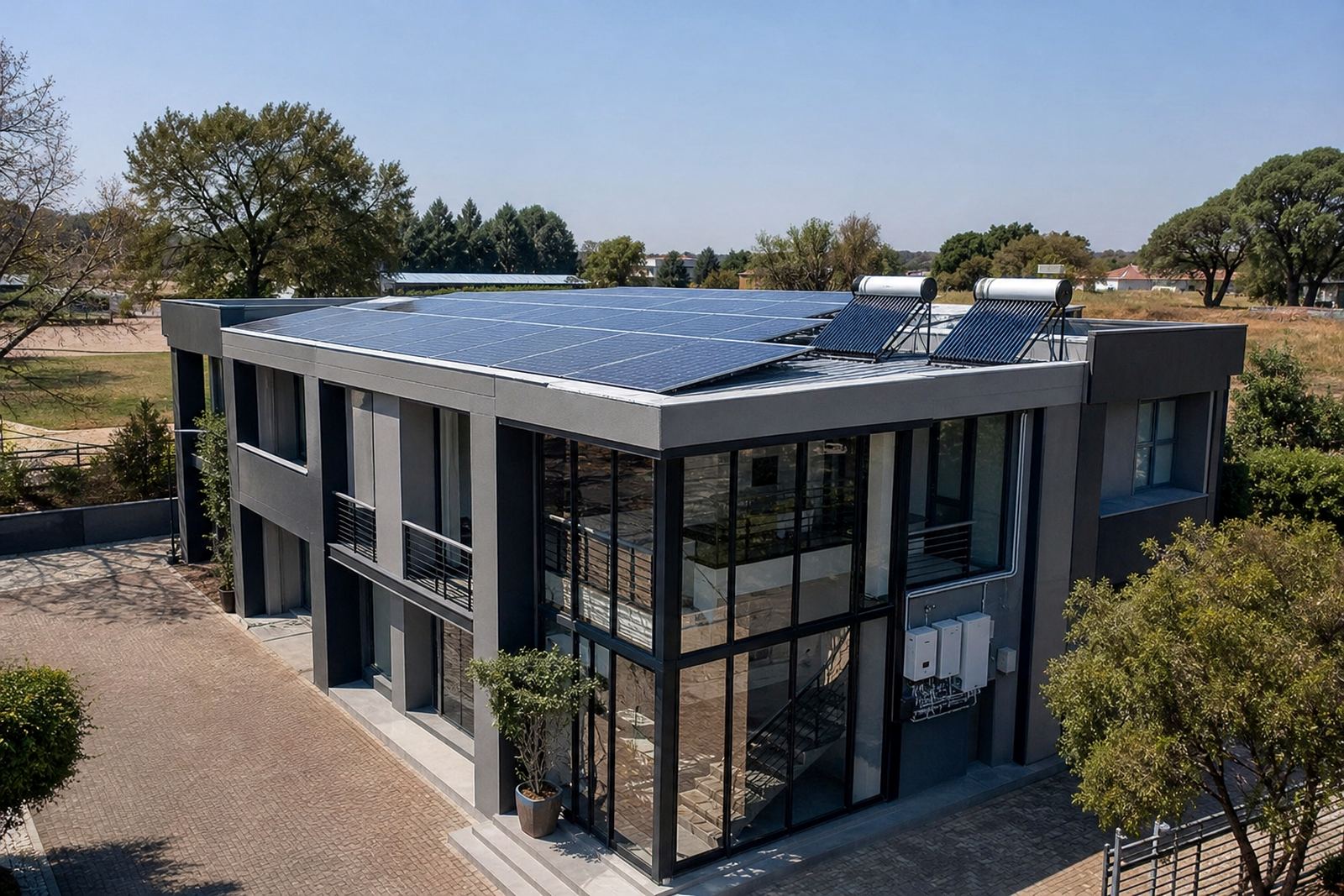
The client was a small professional office in Umhlanga, Durban, working from a compact premises with limited roof area and no room for a large plant room. Their main goal was business continuity. They wanted power for lights, computers, internet equipment and a few essential office circuits when the grid dropped out, without changing the way the office operated day to day.
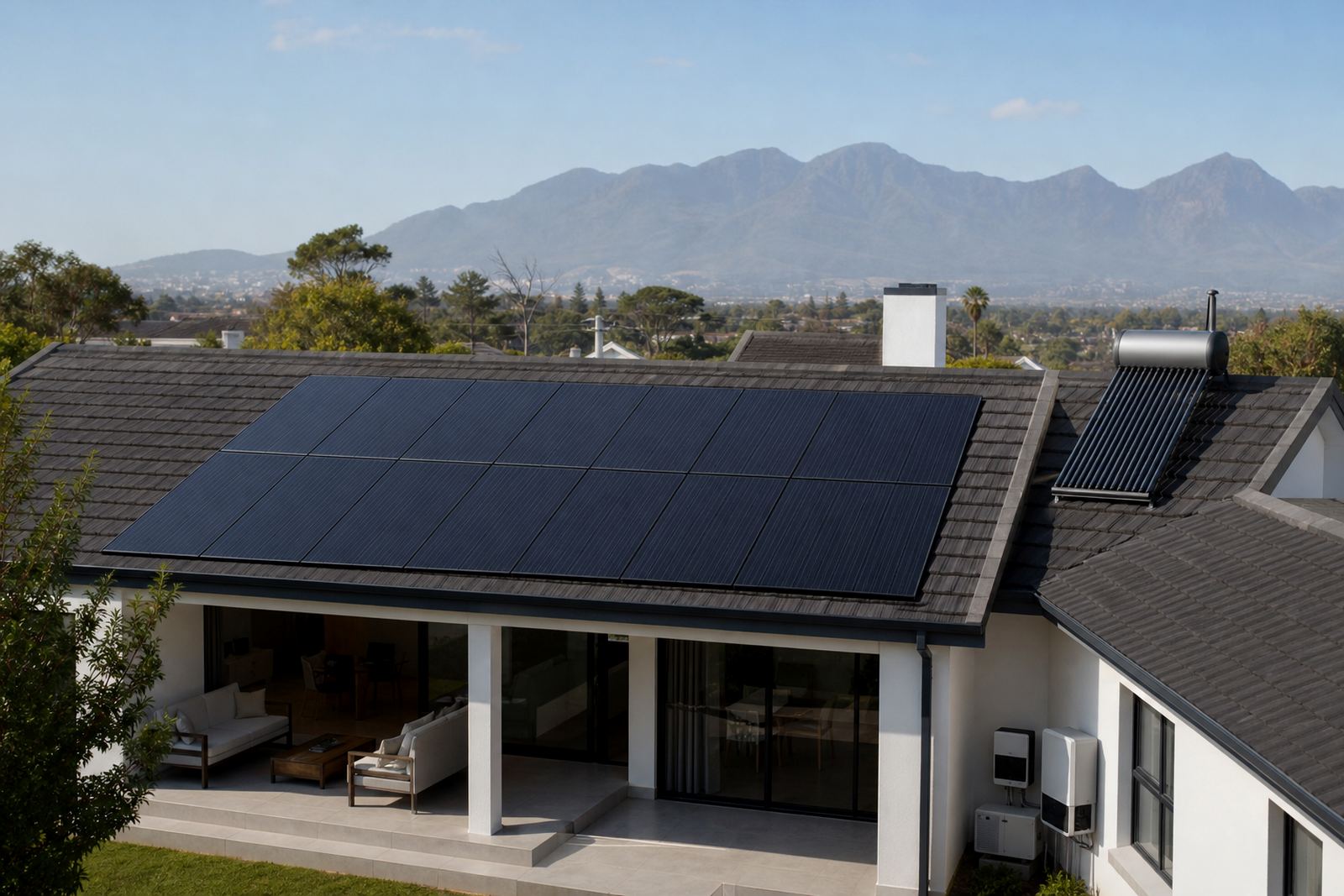
The brief was practical from the start. The system had to fit a neat roof layout, keep the building looking tidy from the street, and work within body corporate requirements for a commercial property. Because the site is close to the coast, we also had to plan for salt air, stronger wind exposure and long term corrosion control on fixings and cable routes. We used aluminium mounting, UV resistant cabling, sealed exterior glands and careful cable management to keep the installation neat and serviceable.
The office needed a solution that would start working quickly, with minimal downtime during installation. That meant a clear sequence of site assessment, design approval, installation and commissioning. The client also wanted a setup that could be expanded later if their power use grows.
What we assessed before the install
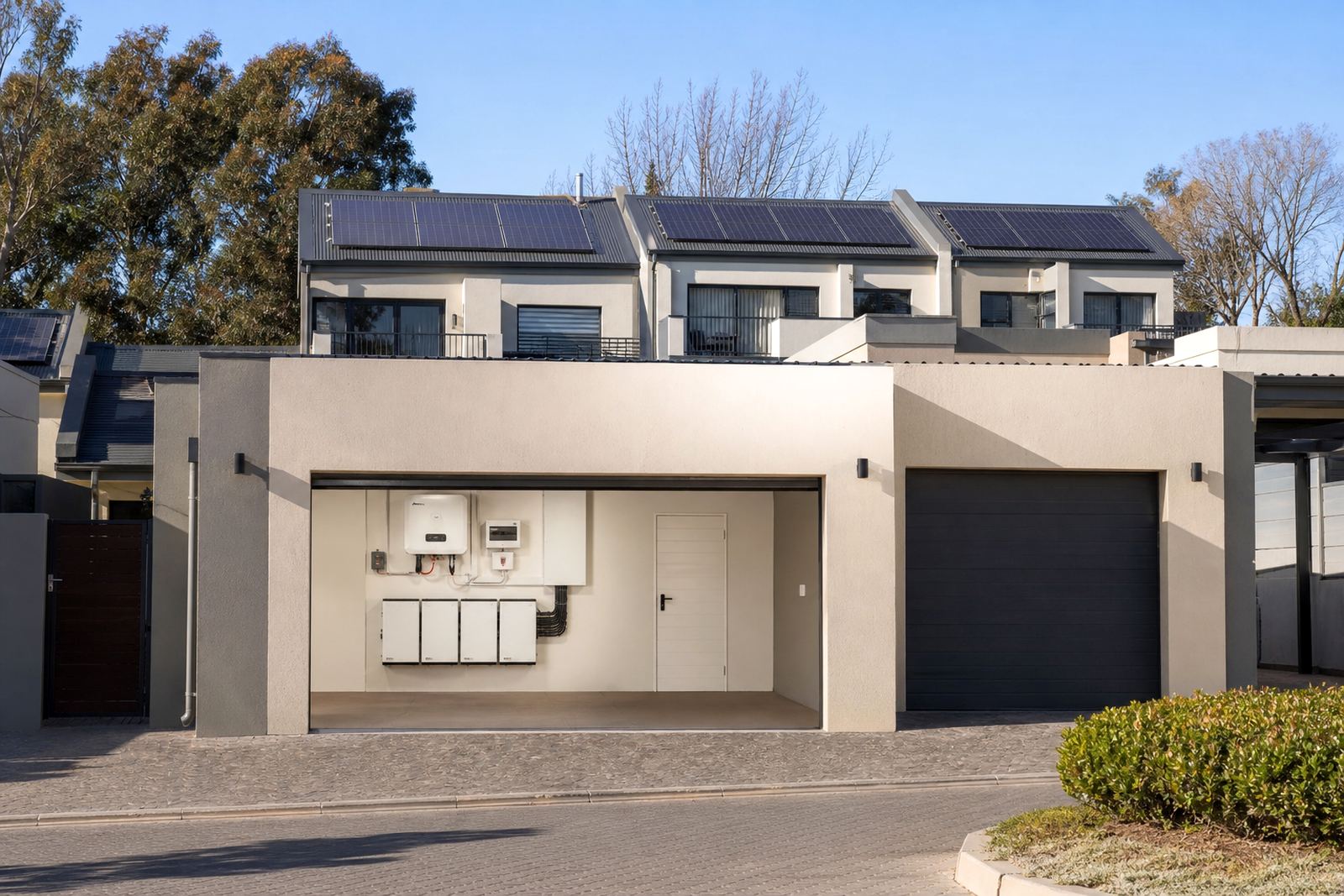
Our first visit checked the roof orientation, shading from nearby structures, usable roof area and the point where the inverter and battery could be mounted indoors. We also looked at the existing distribution board, essential loads and cable routes from the roof to the electrical room. That upfront work matters on a commercial site because there is little tolerance for guesswork or messy wiring.
The roof itself was suitable for a split array arrangement. We mapped the panel positions around service lines and available roof sections so the final layout would not interfere with maintenance access. The electrical room had a suitable wall space for the inverter and battery, but ventilation had to be planned carefully to allow safe operating temperatures in summer. On a coastal site that kind of detail is important, because heat and humidity can shorten the life of equipment if it is boxed in too tightly.
- Roof survey and shade check
- Load review for essential office circuits
- Mounting point review for inverter and battery
- Routing plan for cables and isolators
- Compliance check for commercial wiring layout
The equipment and work package we supplied
We supplied a system built around solar panels, a grid-tied inverter, a battery bank for backup power and the balance of system components needed for safe operation. The panel array was sized to suit the available roof area rather than forcing an oversized layout onto the building. The battery capacity was selected to support the office through typical load-shedding periods and short interruptions, while the inverter managed day to day switching and charging.
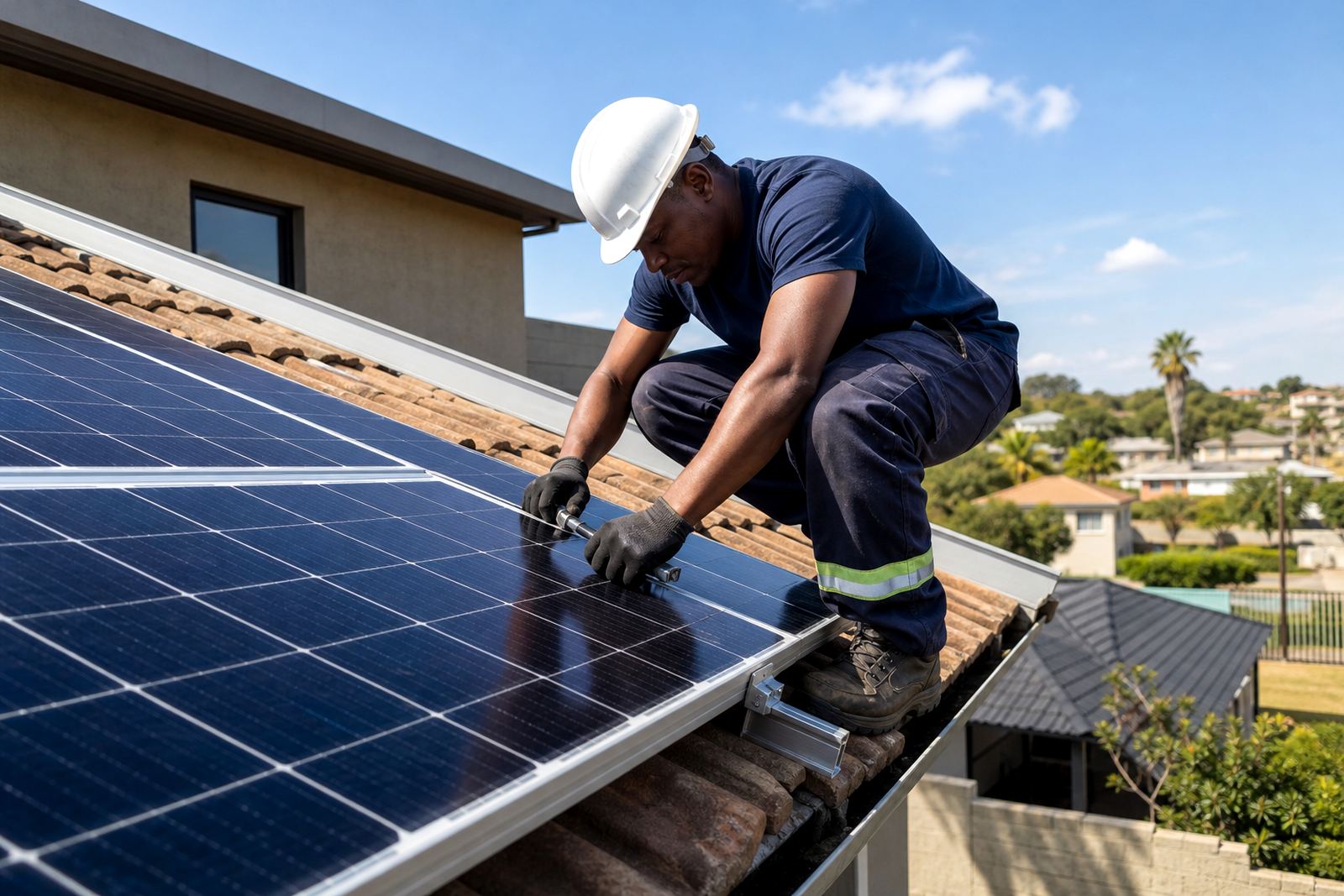
The installation package included roof mounting hardware, DC protection, AC protection, isolators, cable trays, labels and earthing connections. Electrical integration was carried out by qualified installers, which is non-negotiable on a commercial premises. We also commissioned the system, tested the changeover behaviour and verified that the essential circuits stayed live without upsetting the rest of the office distribution. The solar water heating part of our service was not needed on this specific job, but we would normally advise on it where a business has hot water demand for staff facilities or washrooms.
- Solar panel array sized to fit the roof
- Hybrid inverter for solar, grid and battery management
- Battery backup for essential office loads
- Protection devices and labelled isolators
- Qualified electrical integration and commissioning
Installation timeline in a working office
The full project ran over three weeks. Week one covered assessment, load review and the final layout. Week two covered mounting, panel installation, inverter placement, battery fitment and cable runs. Week three covered electrical integration, testing, commissioning and handover. We worked around office hours where possible so the client could continue business with limited disruption.
One of the main constraints was access. The premises had a compact parking area and limited space for storing equipment during the install, so deliveries were staged to avoid clutter. Another constraint was keeping internal noise and dust low in shared office areas. Because of that we planned the cable work and drilling carefully, and the client was kept informed before each phase. It was a smooth job overall, but it did require good coordination between site access, electrical work and roof safety.
For offices in Durban, the practical lesson is simple: if the building is small, the install still needs room to breathe. A tidy sequence and clear responsibility keep the job moving.
Results for the business after commissioning
After commissioning, the office had a reliable backup supply for essential circuits during outages, which helped staff keep working through load-shedding and short grid interruptions. The battery gives the system a useful buffer when cloud cover changes or when the grid drops out suddenly, and the inverter handles the transfer without the kind of messy downtime that causes lost work and frustrated calls.
The client also gained a cleaner energy setup for the premises. The roof array was installed neatly, the electrical room was organised and labelled, and the system can be monitored and maintained without pulling the whole office apart. For a small commercial user, that matters just as much as generation. A good result is not only power coming from the roof, it is also a system that can be checked, cleaned and fault found without drama.
- Essential office loads stayed powered during outages
- Changeover was controlled and predictable
- The roof layout remained neat and accessible
- The system was set up for future expansion if needed
What we would carry forward on a similar office project
If we were doing the same style of office again, we would keep the same approach: start with a proper load survey, keep the array size realistic for the roof and separate essential circuits cleanly from non essential ones. That makes commissioning easier and keeps the client in control of what stays on during an outage. We would also repeat the focus on corrosion control and cable protection, especially for coastal areas like Umhlanga where hardware is exposed to humidity and salt in the air.
For small business clients in Pretoria, Johannesburg, Midrand, Durban, Cape Town and Bloemfontein, the lesson is that solar should be planned around how the office actually works. Reception, workstations, networking gear and basic lighting do not all need the same backup time, so the design has to match the usage. That is where our site assessments, system design, panel installation, inverter installation, battery installation, electrical integration, commissioning, solar maintenance, fault finding, panel cleaning and support callouts fit together. Our team in Centurion, Pretoria led this project under Vuyo Phasha, with support from Naledi Kgosi, Sarel Delport, Palesa Mabena, Mothusi Mphahlele, Faatimah Latief and Unathi Tau.
Clients across South Africa reach us through the enquiry form on our contact page. For office premises like this one, we aim for solutions that are practical, tidy and built for day to day use, not just for the first week after installation.
Key facts
| Project type | Office solar installation for business continuity |
|---|---|
| Location | Umhlanga, Durban |
| Project duration | 3 weeks |
| System components | Solar panels, inverter, battery bank and protection equipment |
| Installation scope | Panel installation, electrical integration and commissioning |
| Business context | Compact commercial premises with limited roof and plant space |