Townhouse Brief in Bloemfontein
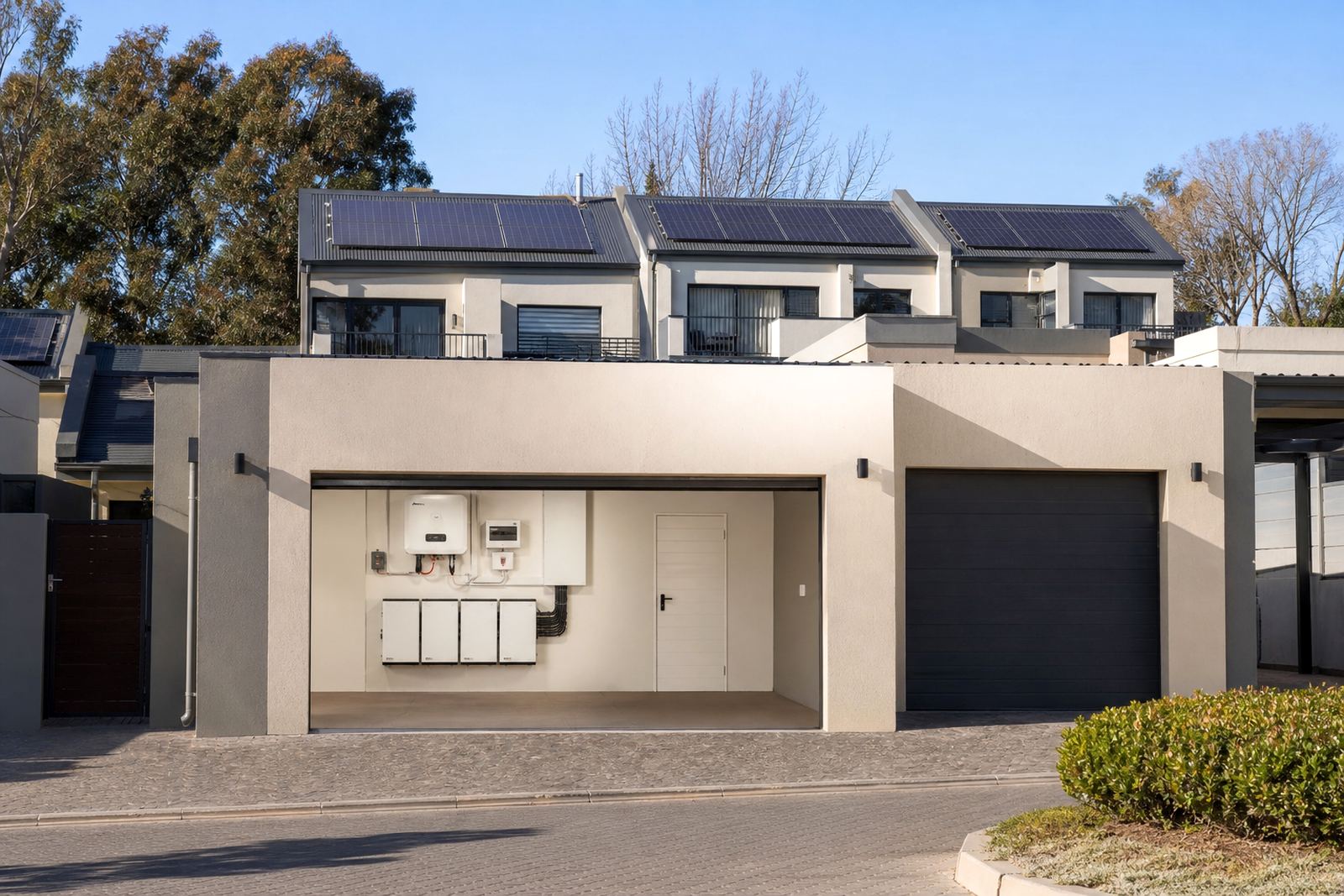
The client was a townhouse owner in Bloemfontein looking for a smaller solar solution that could support essential loads and reduce pressure during load-shedding. The brief was simple enough on paper, but the roof space was tight and the property sat within a sectional-title setup where neat cable runs and careful planning mattered.
We started with a site assessment to check roof orientation, afternoon shading and the available mounting area. In Bloemfontein, the dry climate helps with panel performance, but summer heat and occasional dust still need to be considered when choosing the layout and maintenance plan.
- Property type: townhouse
- Town: Bloemfontein, Free State
- Project type: compact hybrid solar installation
- Main aim: backup power and lower daytime grid dependence
What Limited the Design
The biggest constraint was roof area. The townhouse did not have enough open space for an oversized array, so the system had to be sized around the loads that mattered most. That meant the design had to balance panel count, battery capacity and inverter output without forcing the owner into unnecessary costs.
There was also the matter of body corporate expectations. Cable routes, mounting positions and electrical integration had to remain tidy and compliant with local requirements. We kept the layout compact and practical, with equipment positioned for service access rather than cramming everything into one corner.
- Limited roof space reduced the number of panels that could be fitted
- Partial shading had to be worked around in the layout
- The system needed to remain neat for sectional-title approval and future maintenance
System Supplied and Installed
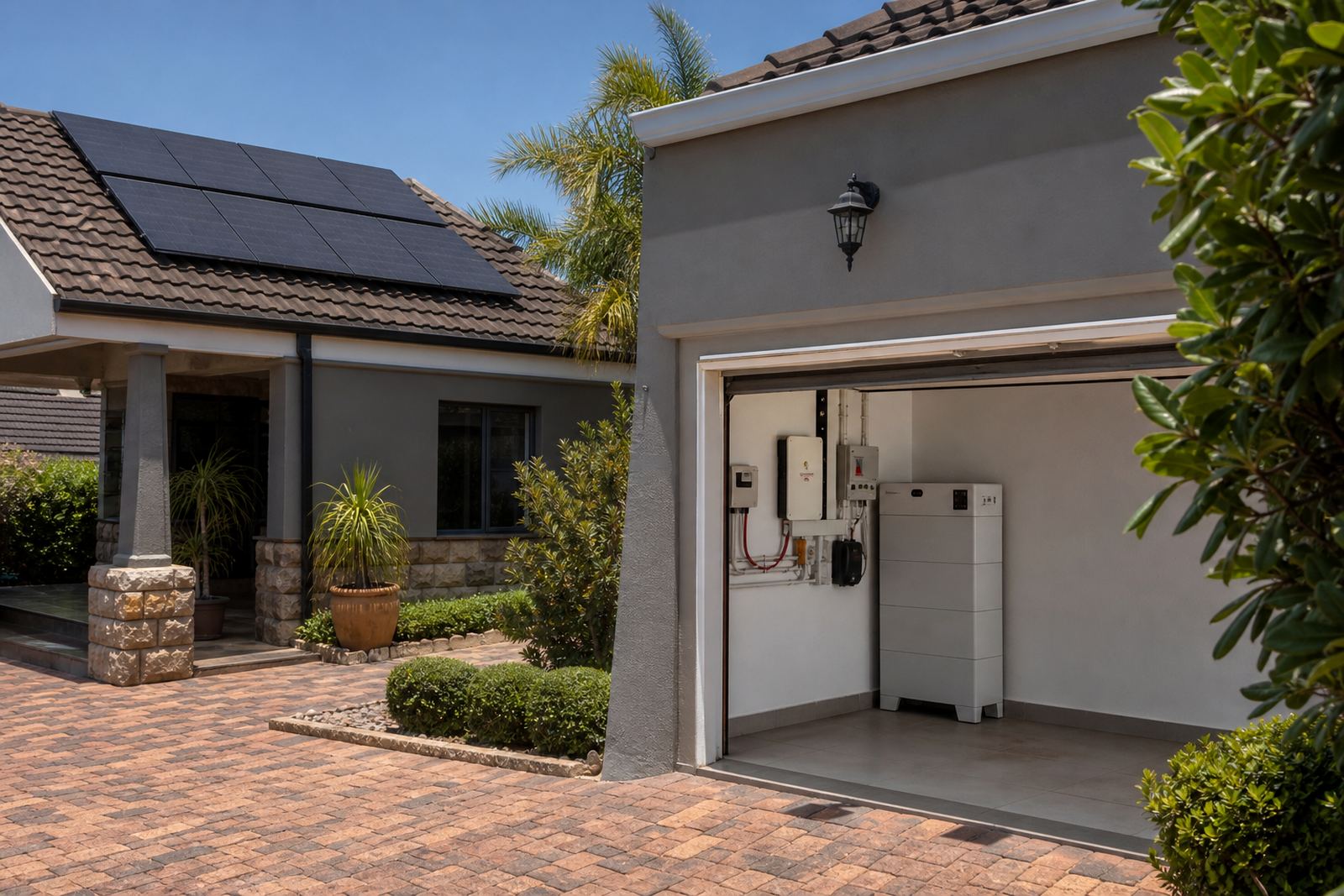
For this project we supplied and installed a hybrid solar setup made up of solar panels, an inverter, battery storage and the associated balance of system components. We also completed the electrical integration and commissioning through qualified installers, with testing carried out before handover.
The final arrangement was designed to cover daytime usage, support evening essentials and keep the system manageable for a townhouse owner who wanted something sensible rather than oversized. The battery bank was sized to give backup during outages and the inverter was matched to the available generation on the roof, so the system could work efficiently without unnecessary strain.
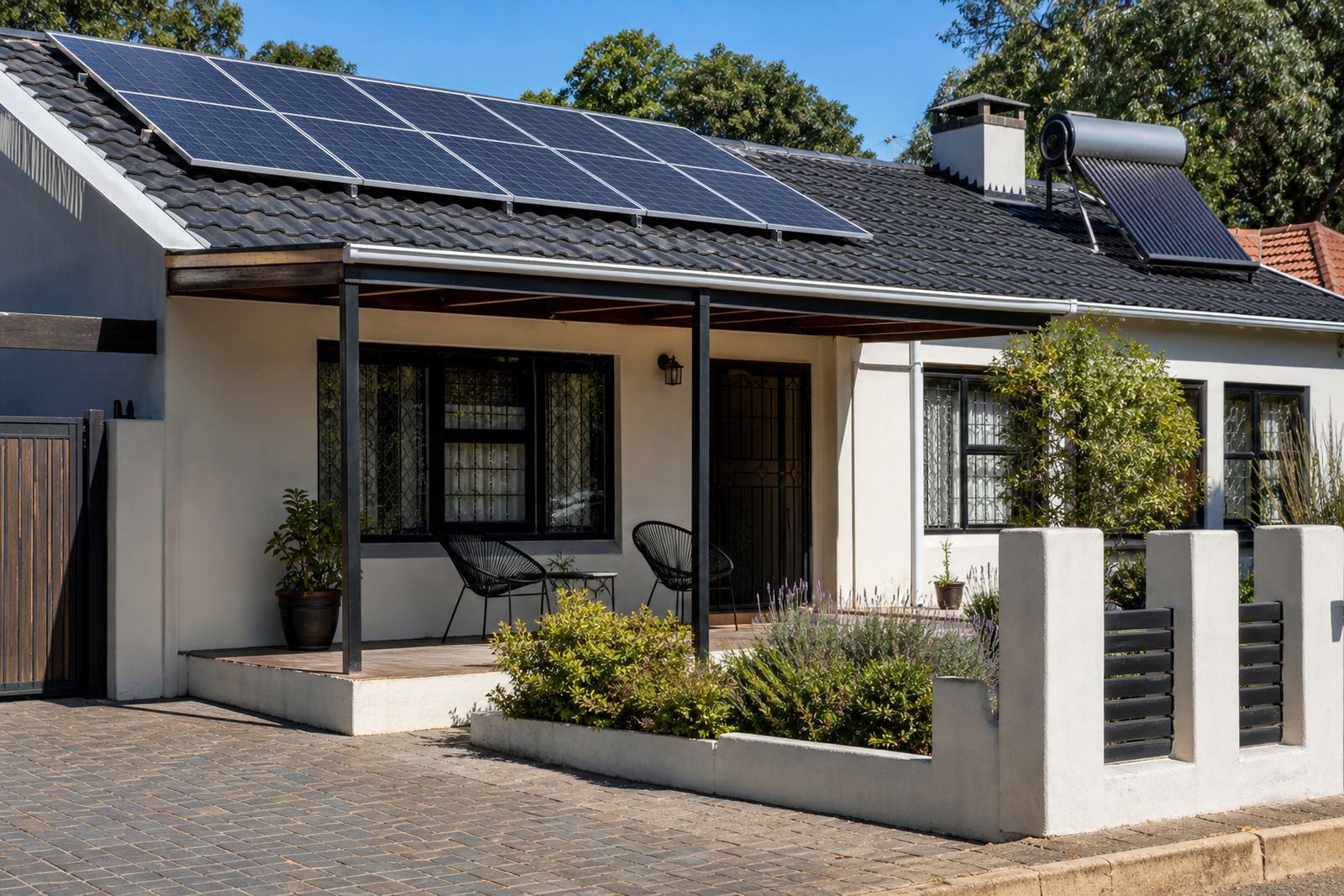
- Solar panels mounted on the available roof section
- Hybrid inverter for solar use and battery support
- Battery storage for evening and outage backup
- Electrical integration and commissioning completed on site
Installation on a Tight Timeline
The project ran over two weeks from assessment to final handover. Week one was used for site review, load discussion and final design approval. Week two covered installation, wiring, system testing and handover guidance. Because the property was occupied, we planned the work to keep disruption low and ensure the owner could carry on with normal routines.
Sarel Delport handled the installation work, with support from Mothusi Mphahlele on technical setup and fault checks, while Palesa Mabena kept the schedule and paperwork moving. Vuyo Phasha oversaw the overall project direction, and the customer was kept updated at each stage. Faatimah Latief assisted with handover communication, so the owner knew how to use the system from day one.
- Week 1: assessment and system design
- Week 2: installation, integration and commissioning
- Occupied site managed with minimal disruption
Results for Daily Use
Once complete, the townhouse had a cleaner, more practical way to manage essential power use. The owner gained backup support for key circuits, better control over daytime consumption and a system that fit the property without overcrowding the roof. That was the main win here, because small sites can become expensive quickly if the design ignores the real constraints.
The setup also made sense for Bloemfontein conditions. The panels were positioned to make the best use of the available sun, and the battery gave the client a buffer during supply interruptions. For a townhouse with a modest footprint, the result was a balanced installation that matched the home rather than trying to force a large system onto it.
- Backup support for essential household loads
- Better use of available roof space
- Cleaner energy management during outages and evening use
Solar Water Heating for Smaller Homes
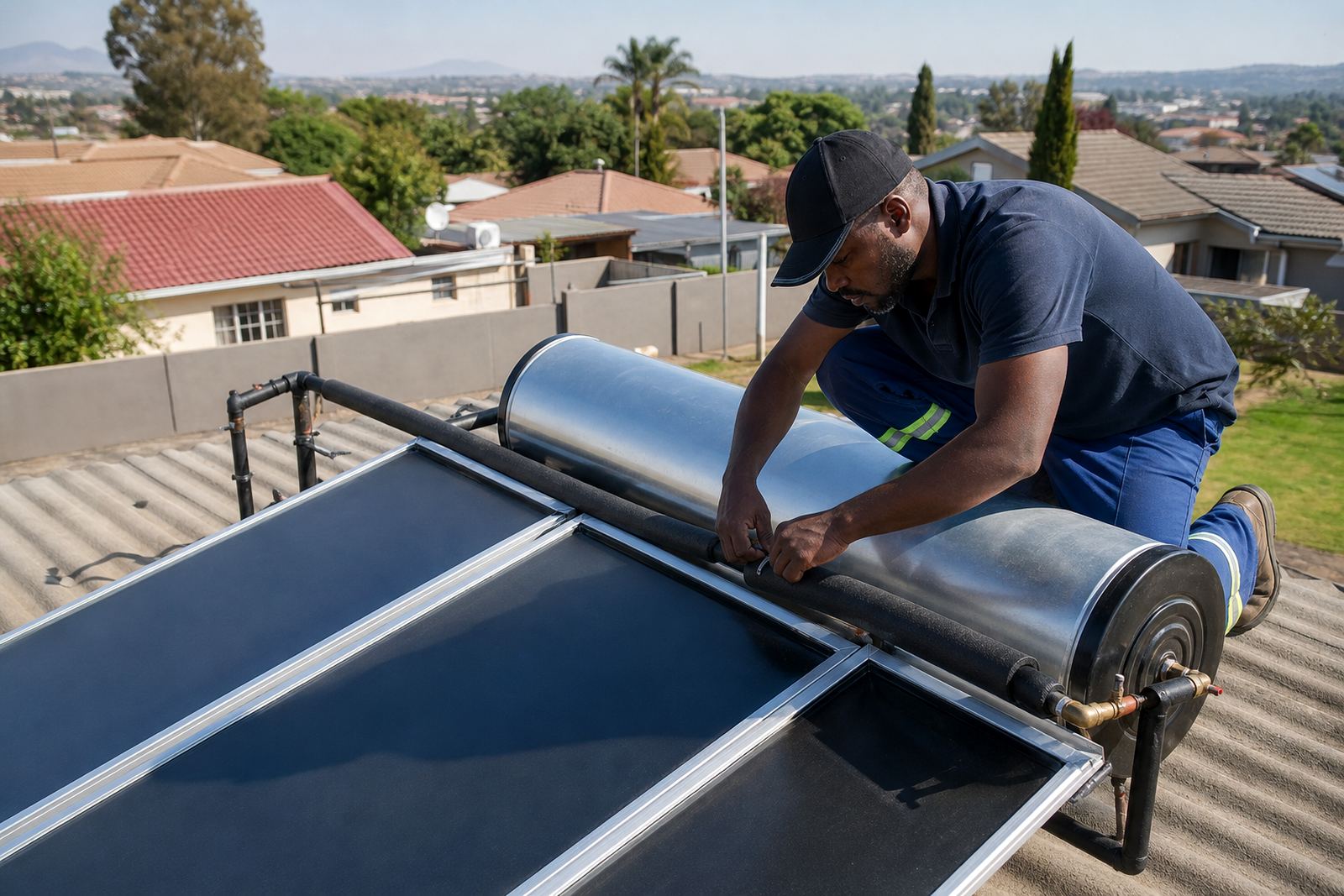
Although this project focused on a hybrid power system, our team also works on solar water heaters for homes and small businesses when hot water savings are part of the brief. In townhouse settings, a solar water heater can be a good fit where roof space and plumbing routes allow it, especially if the owner wants to reduce geyser reliance in the long term.
For this Bloemfontein property, we would take the same careful approach again: check the available space, assess the plumbing route and make sure the electrical work is handled by qualified installers. That is the part that keeps a system practical, safe and easy to live with.
- Solar water heaters suit many compact residential properties
- Plumbing and electrical planning should be done properly from the start
- Qualified installers are used for all electrical integration work
Key facts
| Project location | Bloemfontein townhouse, Free State |
|---|---|
| System type | Compact hybrid solar setup |
| Main components | Solar panels, inverter, battery storage |
| Scope of work | Site assessment, design, installation and commissioning |
| Timeline | 2 weeks from assessment to handover |
| Team involved | Vuyo Phasha, Naledi Kgosi, Sarel Delport, Palesa Mabena, Mothusi Mphahlele, Faatimah Latief and Unathi Tau |