Rental property brief in Hatfield
The owner of this rental property in Hatfield asked for a solar solution that would help the home run more comfortably for tenants without turning the site into a complicated technical project. The brief was straightforward: provide daytime generation, backup power for key circuits and a clean installation that would not disrupt the house or make future tenant changes difficult.
Because it is a rental home, the system had to work around everyday use. The property needed reliable supply for lights, plugs, Wi-Fi and essential appliances, with enough backup to bridge common load-shedding stages in Pretoria. The owner also wanted a setup that would not need constant attention once in service, since tenants may not always handle equipment carefully.
We also had to factor in the normal conditions seen in Gauteng: hot roof spaces, dust, summer storms and the usual pressure of fitting work around occupied homes. The client wanted the upgrade completed neatly and with clear handover notes so the tenants understood how the system behaves and what to do during outages.
Site constraints and what had to be managed
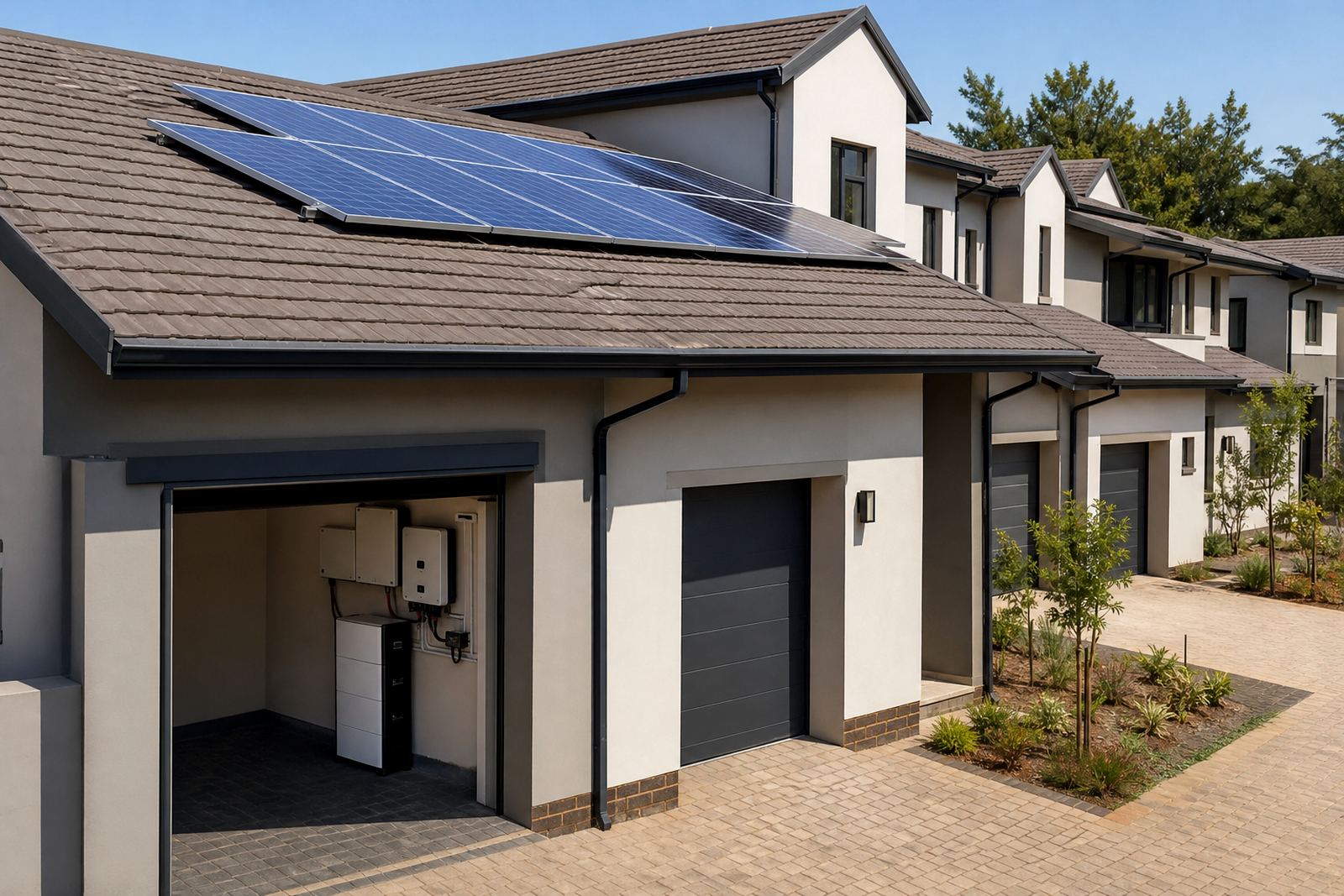
The property layout and tenant occupancy meant that access had to be planned carefully. Roof work had to be kept orderly, internal cable routes needed to stay discreet and the inverter position had to allow for ventilation, service access and a sensible route back to the distribution board. We also had to keep the electrical integration compliant and limited to qualified installers, which is important on any residential project and especially where tenants are involved.
Other practical points came up as well. The roof structure needed a measured approach for mounting points, the installation had to suit Pretoria weather, and the owner wanted a system that would be useful without becoming oversized for a medium-size rental home. We kept the design focused on the actual loads in the house rather than pushing unnecessary equipment.
- Occupied rental home, so works had to be planned around tenants
- Roof mounting and cable routes had to stay neat and low-visibility
- Electrical integration completed by qualified installers
- Backup needed for essential household circuits during outages
- Equipment had to suit local heat, dust and storm exposure
System supplied and installed
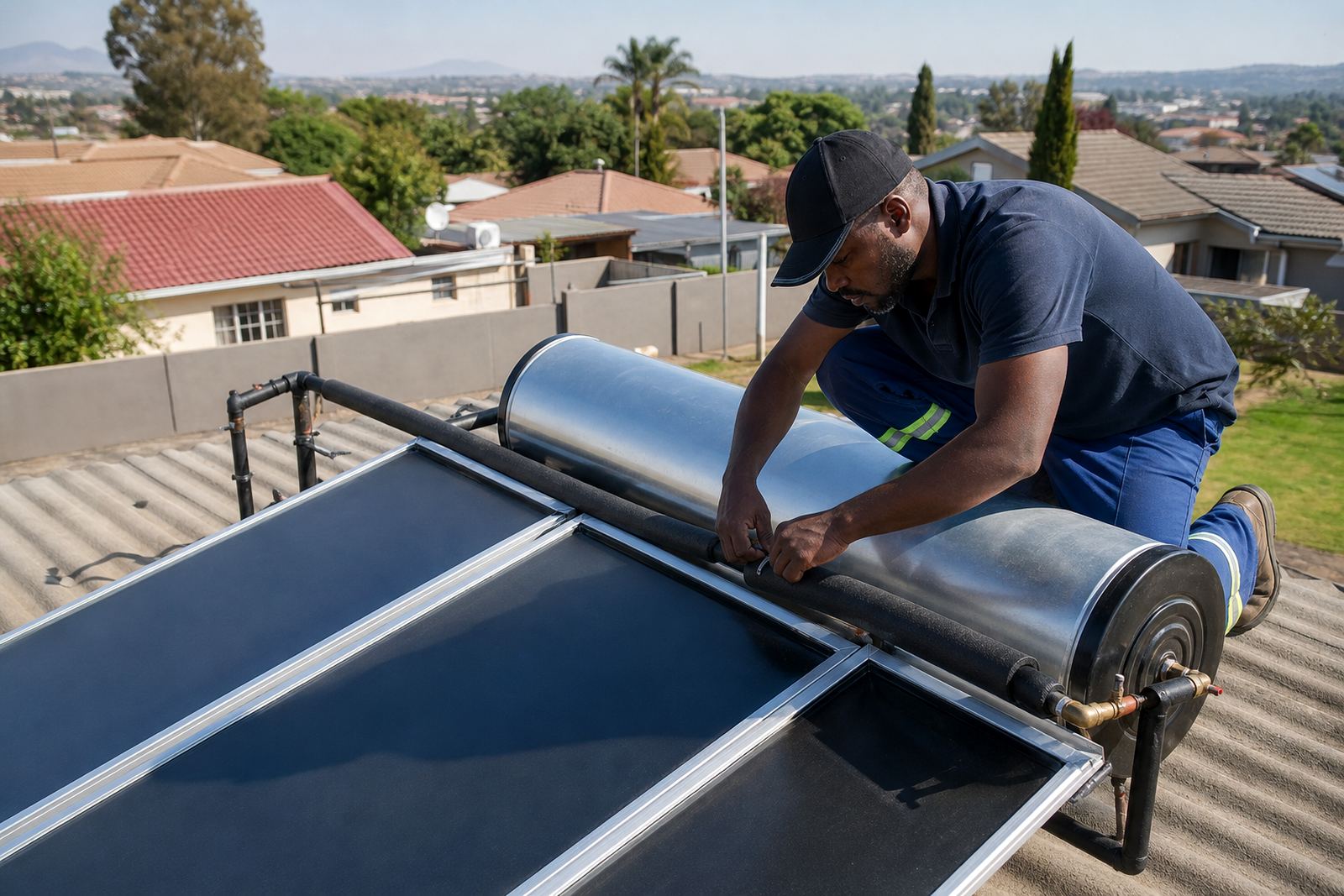
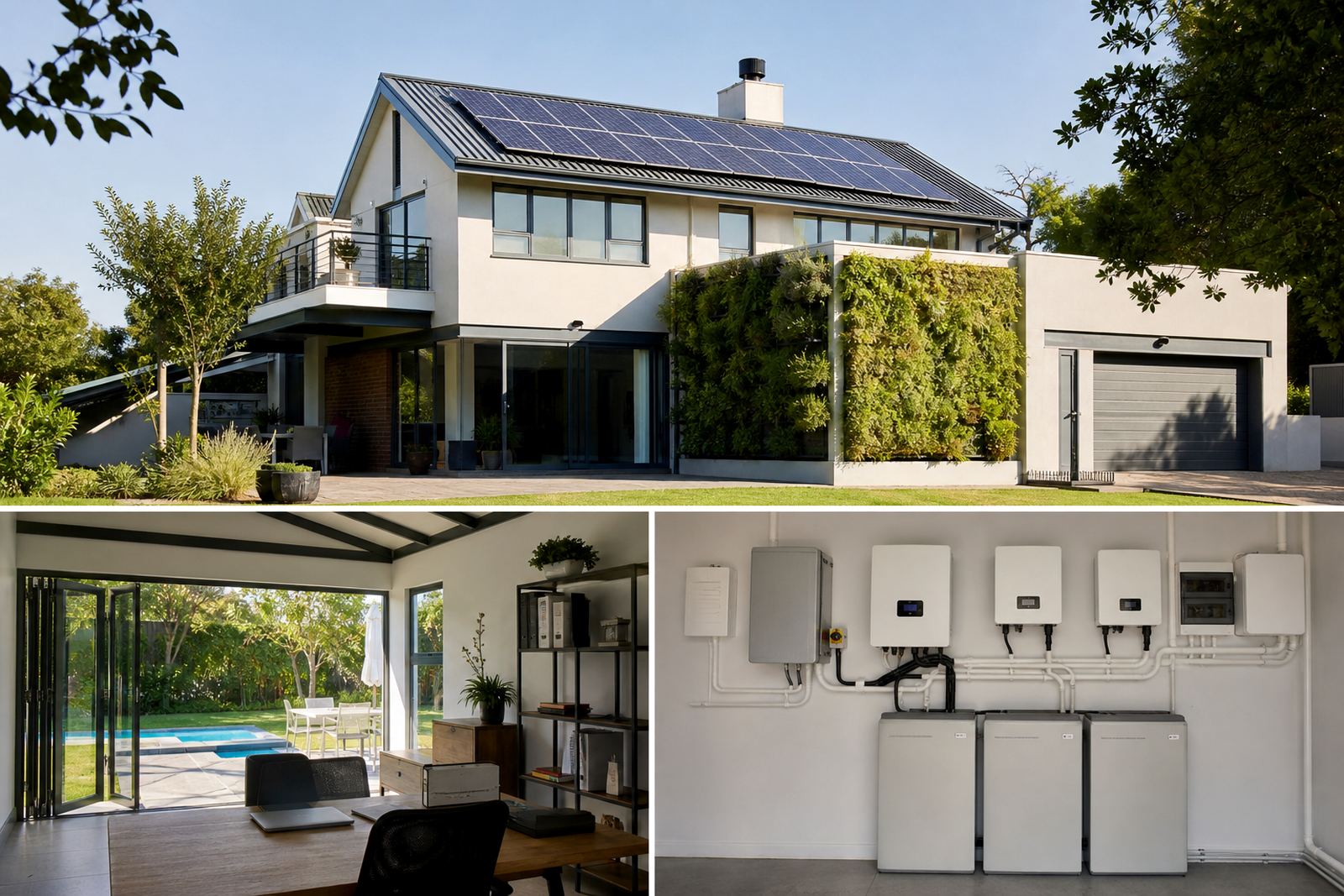
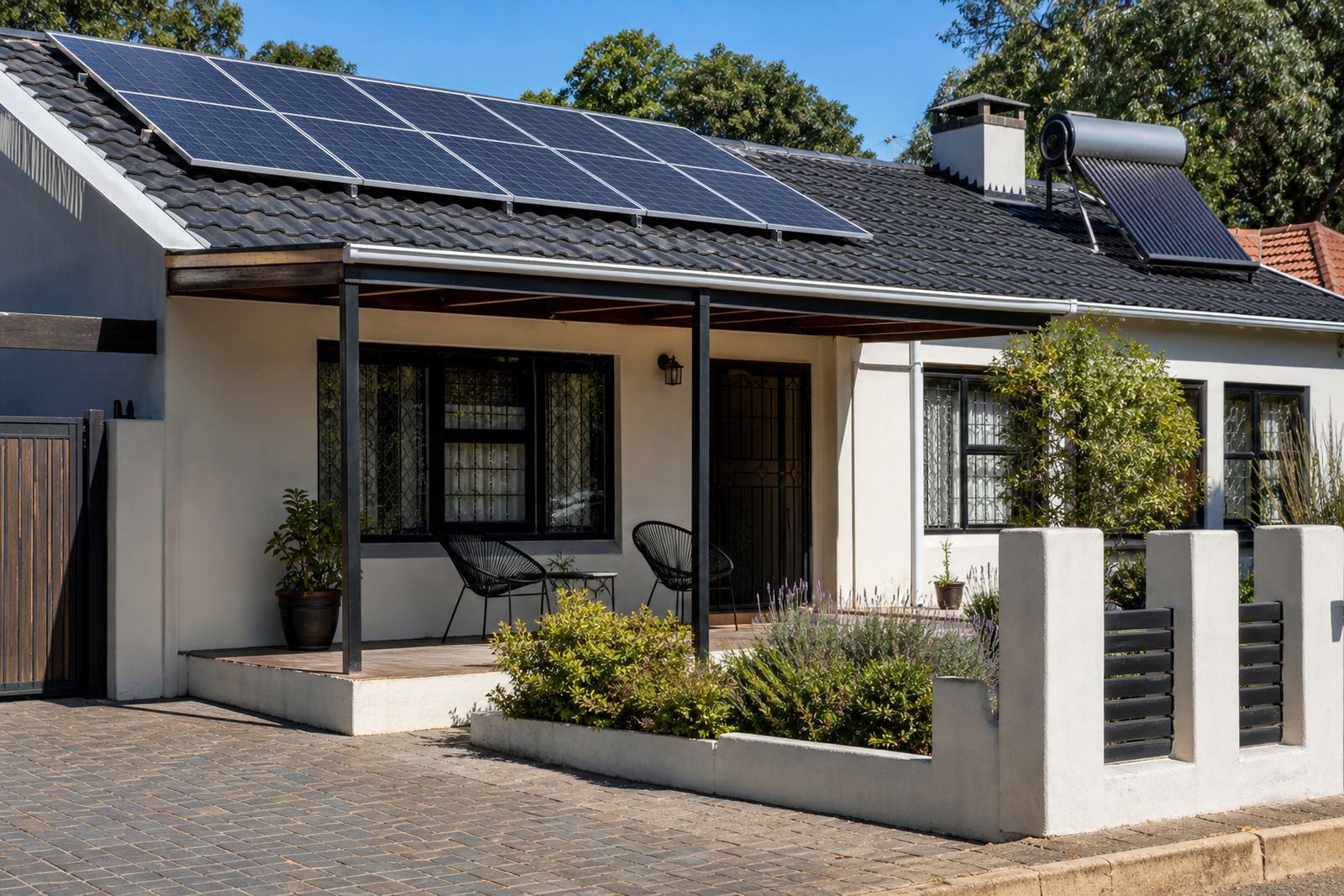
We supplied a package built around roof-mounted solar panels, an inverter, battery storage and the electrical components needed to tie the system into the home safely. The array was sized to offset daytime consumption and help charge the batteries while the tenants were using the property. The inverter was selected to manage the changeover between grid power and backup power without fuss, and the battery bank was sized to keep essential loads supported when municipal supply was down.
Our team handled panel installation, inverter installation, battery installation and electrical integration as one coordinated job. We also carried out system commissioning, which included checks on string performance, protection settings, changeover function and general operation under load. The result was a setup that works as a proper residential backup system rather than just a collection of parts.
- Solar panels mounted for reliable daytime generation
- Inverter installed to manage backup supply and switching
- Battery storage fitted for evening and outage use
- Electrical integration completed by qualified installers
- Commissioning and basic operating handover done on site
Project timeline and delivery in weeks
The project moved from assessment to completion in three weeks. Week one covered the site assessment, load discussion and system design. We checked the house layout, existing electrical board and the tenant access plan, then finalised the equipment mix. In week two the hardware was installed, with the roof work, inverter position and battery placement completed in a controlled sequence so the property stayed usable.
Week three was used for final electrical integration, testing and commissioning. We confirmed the backup circuits, checked charging behaviour and made sure the owner and tenants had a simple explanation of what the system does during daytime, at night and during load-shedding. No one wants a rental home with equipment that is technically fine but hard to live with, so the handover mattered just as much as the installation.
Results for the owner and tenants
The home now has a practical solar-backed supply that helps reduce reliance on the grid during the day and gives the tenants backup power when outages hit. That makes day-to-day living easier in Hatfield, especially when load-shedding affects cooking, lighting and internet access. The owner also gained a cleaner property proposition for future tenants because the house can be marketed as having backup power already in place.
From a maintenance point of view, the system is simple enough to manage without frequent intervention. The equipment is arranged for access, the cables are tidy and the layout supports straightforward fault finding if needed later. In a rental setting that matters, because the property needs to keep working even if tenants change or usage patterns shift a bit.
- Better continuity for lights, plugs and essential household use
- Reduced dependence on municipal power during daytime hours
- Backup supply available for common load-shedding periods
- Cleaner property offering for the landlord and future tenants
- Simpler maintenance access if support is needed later
Practical Lessons For A Similar Rental Home
On another rental property like this, we would take the same practical route: assess the real load, keep the system sized for actual use and make sure the installation is easy for tenants to live with. A lot of residential systems fail because they are too big, too clever or too awkward to use. For a home in Pretoria or Johannesburg, the better answer is usually a neat system that does the basics well and can be maintained without trouble.
We would also keep the same focus on electrical compliance and clear handover. The owner does not need a complicated explanation every time there is load-shedding, they need a system that behaves predictably. That means proper commissioning, tidy cable runs, sensible battery placement and a straightforward service plan for cleaning panels, checking connections and handling any fault calls if the weather or usage changes.
For homes in Durban, Cape Town or Bloemfontein, we would still start with the same process, then adapt for local conditions such as coastal humidity, wind loading or higher seasonal use. The basic principle stays the same: match the system to the property, not the other way round.
Key facts
| Project | Hatfield Rental Home solar upgrade |
|---|---|
| Location | Hatfield, Pretoria, Gauteng |
| Client type | Private rental property owner |
| Scope | Solar panels, inverter backup, battery storage and electrical integration |
| Timeline | 3 weeks from assessment to commissioning |
| Primary use | Daytime solar support and backup for essential loads |