Townhouse brief in Pretoria East
The client was a private homeowner in Pretoria East, living in a sectional title townhouse with tight roof area, a compact garage and a body corporate that expected a tidy finish. The brief was simple in principle but not in practice: reduce day to day grid dependence, keep the installation neat, and add hot water support without filling the property with equipment.
We started with a site assessment to check roof orientation, available wall space, cable routes and the point where the municipal supply entered the unit. In a townhouse setting, every metre matters. There was limited south-facing roof space, some shading from a nearby tree in the afternoon, and only one practical indoor position for the inverter and battery equipment. The home also had normal load-shedding concerns, so the client wanted reliable backup for lights, plugs, Wi Fi and selected kitchen circuits.
- Property type: sectional title townhouse
- Area: Pretoria East, Gauteng
- Main constraints: limited roof space, limited indoor wall space, shade from nearby trees
- Priority: clean layout with sensible backup during load-shedding
What we supplied and installed
We supplied a compact solar package suited to the home’s actual usage pattern rather than oversizing it. The system included solar panels mounted on the usable roof sections, an inverter sized for the household load, a battery for backup storage, and a solar water heating solution to reduce electric geyser demand. All electrical work was done by qualified installers, with the integration planned to suit the existing DB board and the townhouse’s space limits.
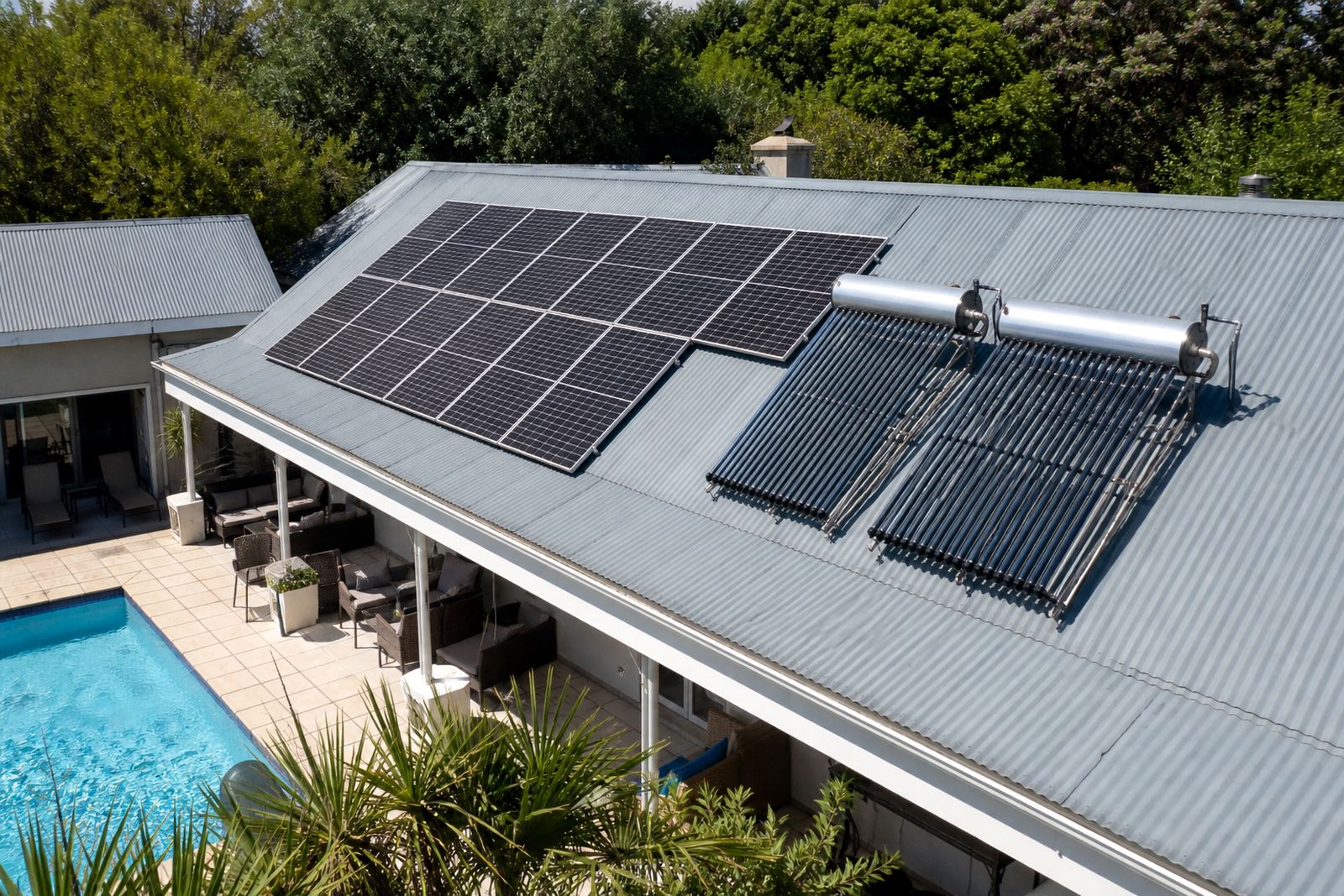
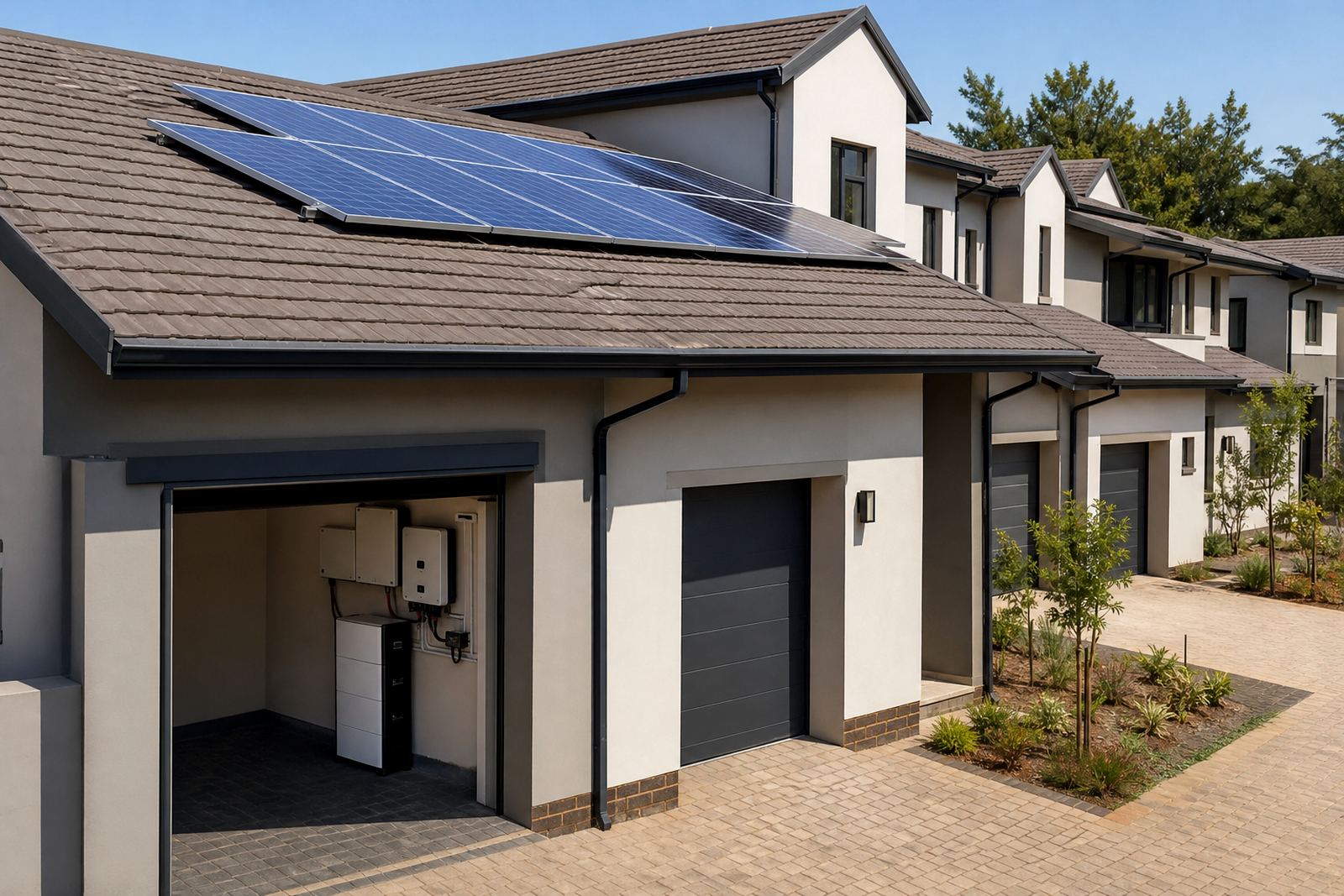
The panel array was arranged to make the best use of the available morning and midday sun. Because the roof area was restricted, panel placement had to be measured carefully to avoid service fittings and to keep access clear for future maintenance. The inverter and battery were positioned indoors in a ventilated utility area, with a clean cable run that did not clutter the living space. For the hot water side, we fitted a solar water heater to support the household’s daily use, which is useful in Pretoria where sunny conditions can be strong but winter evenings still draw a lot of geyser power.
- Solar panels for roof-mounted generation
- Inverter for household power management
- Battery backup for selected circuits during outages
- Solar water heater for domestic hot water support
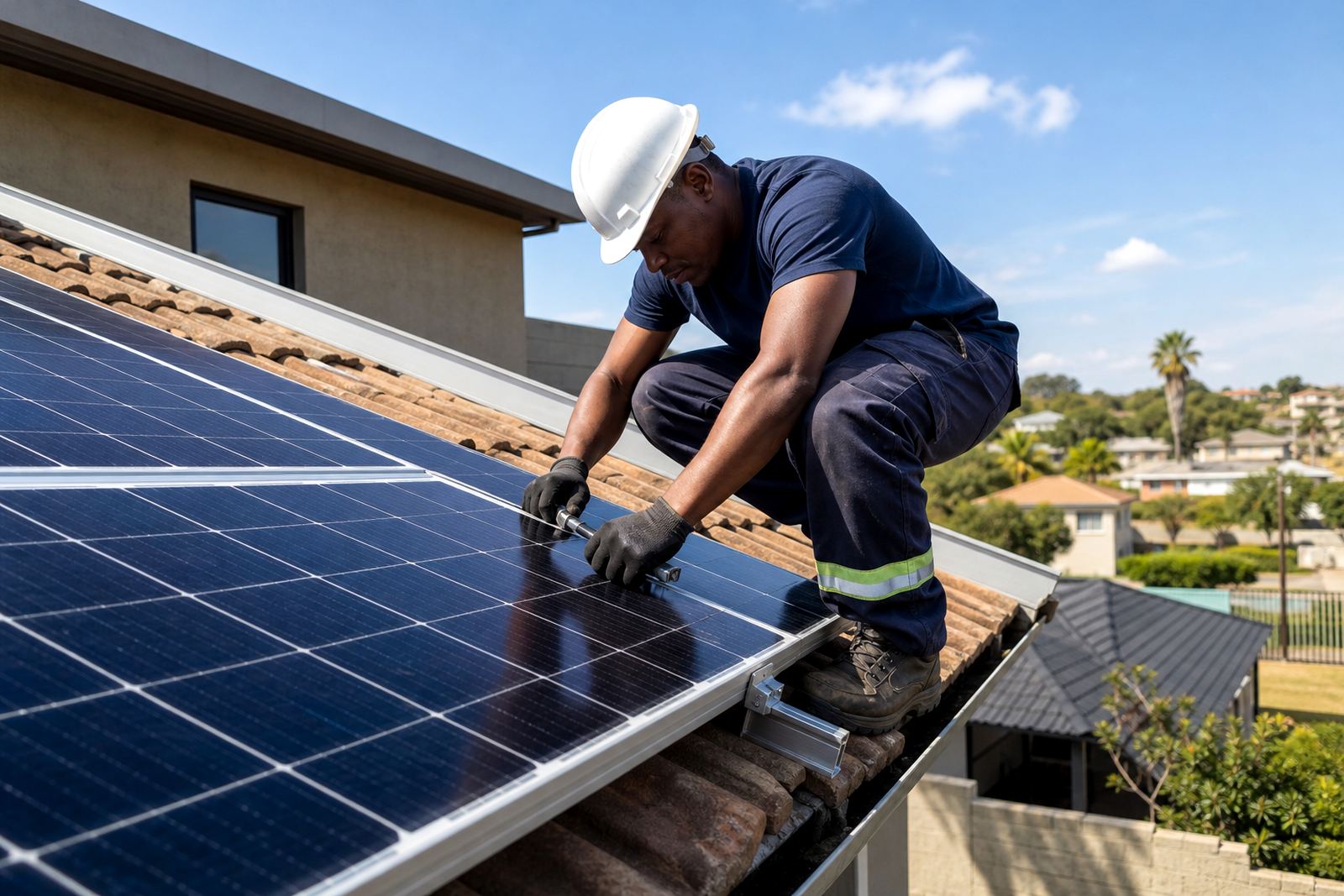
- Electrical integration and commissioning by qualified installers
How we worked around the space limits
Townhouse work is different from freestanding homes. You often have stricter access, less room to move equipment, and more people affected by the installation. In this case we had to plan around neighbours, parking restrictions and body corporate expectations. The team kept the work area clean each day and limited disruption by staging the delivery in sensible loads instead of bringing everything in at once.
Inside the unit, we had to choose the battery and inverter position very carefully. The owner did not want equipment blocking a walkway or taking up storage space, so we selected a wall that allowed safe clearances and easy access for future maintenance. On the roof, the panel layout was designed to leave enough space for roof servicing and to avoid creating problems with waterproofing. That meant careful fixing, correct alignment and tidy conduit runs. In a place like Pretoria East, where summer heat and occasional heavy rain both put pressure on materials, that attention matters.
- Worked within sectional title access rules
- Kept the installation neat for the body corporate and neighbours
- Used a compact indoor equipment position
- Allowed for future maintenance and roof access
Installation timeline and commissioning
The full project ran over three weeks from assessment to final sign-off. Week one covered the site visit, measurements, load review and system design. Week two was the supply and installation phase, where the panels, inverter, battery and water heating components were fitted. Week three was used for electrical integration, testing, commissioning and a final handover with the homeowner.
During commissioning, we checked the changeover function, battery charging behaviour, panel output and hot water performance. We also confirmed that the client understood which circuits were backed up and how to use the system during load-shedding. The homeowner wanted a straightforward setup rather than something complicated, so we kept the controls simple and the labelling clear. That is often the best choice for family homes and smaller properties, especially when more than one person will use the system day to day.
- Week 1: site assessment and system design
- Week 2: supply and installation
- Week 3: testing, commissioning and handover
- Final step: client briefing on safe use and basic checks
Results for a smaller home
The finished installation gave the townhouse a practical solar setup that suits its size and layout. The homeowner now has a cleaner way to manage power interruptions, support selected household loads and reduce reliance on the geyser for every hot water cycle. The whole system sits neatly on the property without dominating the roof or the interior.
For a compact home, the result was not about fitting in as much gear as possible. It was about getting the balance right. The panels work with the available sun, the battery gives useful backup for essential use, and the solar water heater supports daily living without adding unnecessary complexity. In Pretoria East, that kind of setup makes sense for owners who want value, order and less dependence on grid power when load-shedding arrives.
The client appreciated that the installation was completed with minimal mess and that the electrical integration was handled by qualified installers who could explain each part of the system clearly. The end result was a home that feels better prepared, with equipment that suits the property rather than fighting against it.
What Matters Most On A Similar Townhouse Install
If we were starting the same project again, we would follow the same process: detailed site assessment, compact equipment planning, tidy installation and careful commissioning. Townhouse solar works best when the design matches the property instead of forcing a larger system into a small space.
We would again prioritise roof layout, indoor mounting position, and clear access for maintenance. We would also keep the client informed at each step, because sectional title properties often have a few extra checks before work can begin. That includes confirming access times, gate procedures and where equipment can be delivered without causing a problem for residents.
- Use a measured design, not an oversized one
- Keep roof and wall equipment layout compact
- Plan for maintenance access from day one
- Confirm sectional title access requirements early
For Pretoria East townhouses, that approach remains the most reliable way to get a neat result that lasts.
Key facts
| Project type | Townhouse solar installation with solar water heating |
|---|---|
| Location | Pretoria East, Gauteng |
| Timeline | 3 weeks from assessment to commissioning |
| Main equipment | Solar panels, inverter, battery and solar water heater |
| Electrical work | Completed by qualified installers |
| Project challenge | Limited roof area and limited indoor space |
| Focus | Backup for essential loads and tidy integration |