Clinic loading in Roodepoort and the brief we worked to
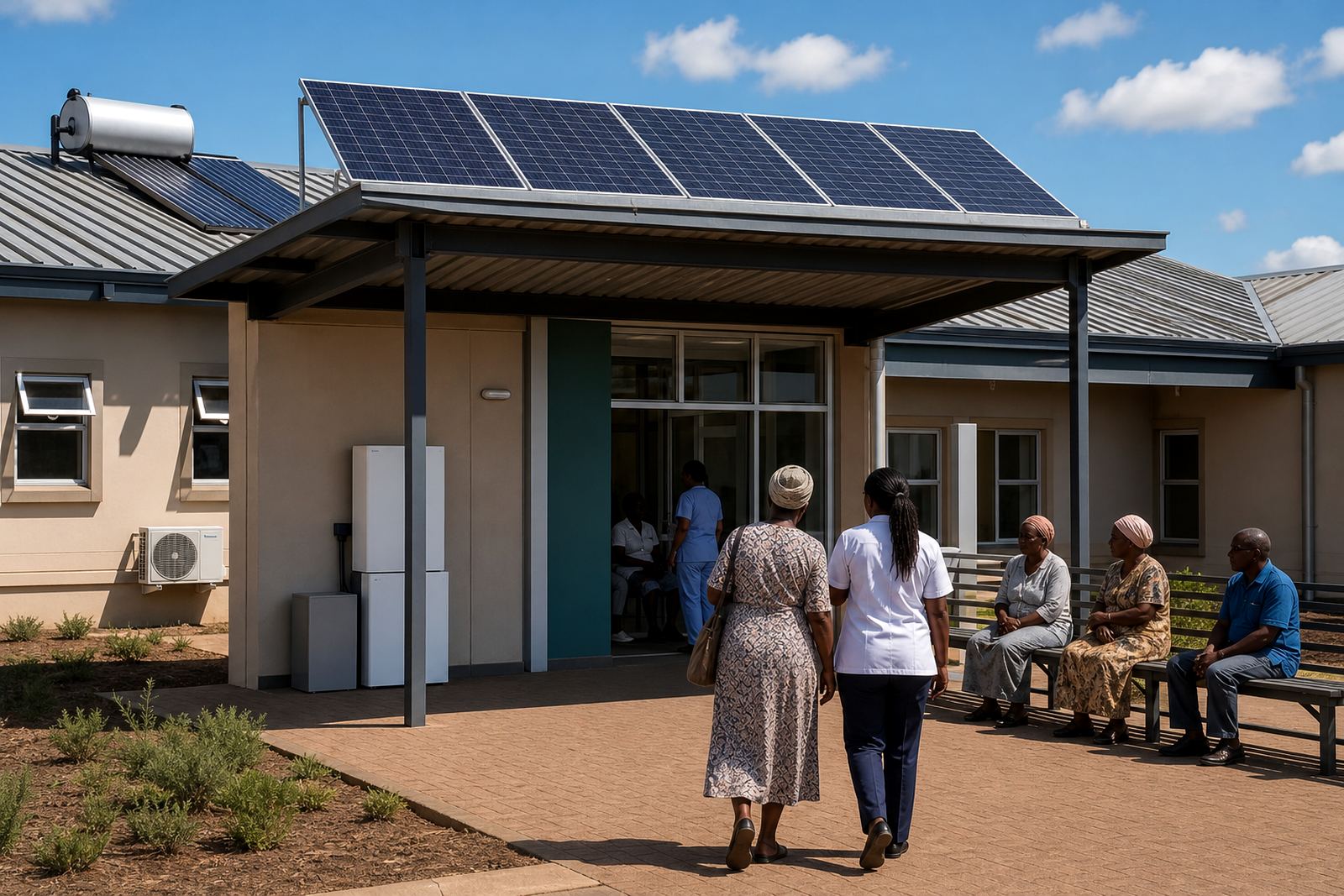
The client was a small healthcare facility in Roodepoort, Gauteng, with consulting rooms, medication storage, basic admin equipment and lighting that had to keep running during outages. The brief was clear: support the essential circuits first, keep the install neat, and avoid any disruption to patients or staff while work was taking place.
We started with a site assessment to check the incoming supply, the distribution board layout, roof space, shading and the clinic's peak demand. The building had limited roof access and a busy daytime schedule, so the system had to be compact and practical. We also had to plan around municipal rules, existing electrical work and the fact that the clinic could not afford long shutdowns. That meant careful staging, clear labelling and a phased install rather than trying to do everything in one rush.
System design for essential medical and admin loads
For this project we designed a hybrid solar and battery setup around the loads that mattered most: lights, refrigeration for sensitive supplies, computers, router equipment, small medical devices and selected plugs. The aim was not to run the whole building from batteries, but to keep essential circuits live when the grid failed and to reduce pressure on the clinic during normal daytime use. The array was arranged to suit the available roof area and Pretoria region weather patterns, with attention to summer heat, dust and the occasional heavy storm.
We specified solar panels, a hybrid inverter, lithium battery storage and all the protection gear needed for safe operation. The inverter was set up to manage solar input, battery charging and automatic switching during outages. Because the clinic is in Gauteng and sees regular load-shedding, the battery bank was sized to carry the critical circuits through evening interruptions and short daytime cuts. No system is magic, but this one gave the clinic proper continuity where it counted.
- Solar panels matched to the available roof area
- Hybrid inverter for solar, battery and grid management
- Lithium battery storage for essential backup power
- DC and AC protection, isolators and proper earthing
- Essential-load changeover for selected clinic circuits
Installation on a live site with limited disruption
The installation was completed over three weeks on site, after the initial assessment and sign-off. The first stage covered cable routes, board preparation and mounting positions. After that we fitted the panels, installed the inverter and battery set, then linked everything into the clinic's essential circuits. Electrical work was handled by qualified installers, with testing at every stage before we energised the system.
Because the clinic remained open, we worked in short blocks and kept the work area tidy. That mattered quite a bit. Staff could still use the building while the install was underway, and patients were not moved around unnecessarily. We also coordinated with the person responsible for the premises so the switch-over points were understood before commissioning. In a setting like this, communication is as important as the hardware.
- Week 1: assessment, measurements and final layout
- Week 2: mounting, cabling and board preparation
- Week 3: commissioning, testing and staff handover
What was supplied and how the system was commissioned
The package included the panel array, inverter, battery bank, mounting structure, monitoring setup and the wiring needed for a proper integration into the clinic's supply. We also supplied the electrical protection and the labelling required for safe use and future maintenance. The battery storage was selected to cover the most important circuits during evening outages and short grid interruptions, while the solar array helps charge the batteries during the day and support daytime use.
Commissioning covered voltage checks, charge settings, changeover tests and a review of the essential-load panel. We confirmed the battery charging profile, checked that the panel strings were within spec and made sure the clinic team understood the operating basics. The handover included fault response steps, cleaning advice and what to do during extended bad weather. Coastal humidity is not the issue in Roodepoort, but dust still builds up and the panels need routine care to keep performing well.
- Panel installation and secure roof mounting
- Inverter setup and battery integration
- Essential-load board changes and labelling
- System testing, commissioning and user handover
Results for day-to-day clinic operations
Once the system was live, the clinic had a much steadier supply for its critical circuits during outages. The lights stayed on, key equipment remained powered and staff did not have to stop work every time the grid dropped. That matters in a healthcare setting, where even a short interruption can delay appointments, spoil medication storage or affect patient comfort. The battery system also gave the clinic a cleaner handover between grid power and backup power, which reduced the stress that comes with sudden cuts.
There was also a practical operational benefit. By shifting part of the daytime demand to solar, the clinic reduced its reliance on the grid when the sun was available and put less strain on the electrical system overall. The result was a neater, more predictable setup that suited a working medical premises. The system is not oversized, and that was the point. It is sized to do one job properly.
What we would repeat on a similar healthcare site
For another clinic or small healthcare site, we would again start by checking essential loads, separating critical circuits and keeping the installation compact.: assess the real essential loads first, separate them properly from non-critical circuits, and keep the installation compact enough for a busy site. Clinics and small healthcare practices need dependable power, but they also need clear access, safety and minimal downtime. That means careful scheduling and a clean electrical layout from the start.
We would also keep the handover simple. Staff need to know what the inverter does, how the battery behaves, and who to call if there is a fault. For a Roodepoort clinic, or any similar site in Pretoria, Johannesburg, Durban, Cape Town or Bloemfontein, a good solar and battery system is one that fits the building and the working day. It should be practical, reliable and easy to live with, not just impressive on paper.
- Start with essential circuits only
- Match battery size to actual outage needs
- Plan around live operations and access limits
- Use qualified installers for all electrical work
Key facts
| Project type | Solar and battery system for a clinic |
|---|---|
| Town | Roodepoort, Gauteng |
| System scope | Essential-load solar supply for lights, admin equipment, refrigeration and selected clinical circuits |
| Main equipment | Solar panels, hybrid inverter, lithium battery storage and electrical protection |
| Installation timeline | 3 weeks on site |
| Work carried out | Site assessment, system design, panel installation, inverter installation, battery installation, electrical integration, commissioning and handover |