What the Pinetown salon needed from solar
The client was a small salon in Pinetown, KwaZulu-Natal, serving walk-in and appointment customers through the week. The brief was straightforward: keep lighting on, protect tills and payment equipment, and cover a few essential appliances so staff could keep working when the power dipped or went off completely.
Pinetown shops deal with mixed conditions, from heat and summer storms to the odd voltage issue on the local supply. The owner did not want a system that tried to carry everything in the shop. They wanted something sized sensibly for daily trading, with enough battery support to ride through load-shedding and short cuts without making the installation expensive or hard to manage.
Site checks, limits and the design brief
We started with a site assessment to understand the actual electrical use in the salon. The key loads were lighting, tills, routers, a few small salon appliances and charging points. We also checked available roof space, cable routes, inverter position and whether the existing distribution board could take the extra work safely.
- Roof space was limited, so panel layout had to be neat and compact.
- The salon needed a clean installation with very little disruption to trading hours.
- Electrical integration had to be done by qualified installers, with proper isolators and protection in place.
- The system had to support day-to-day loads, not oversized equipment that would sit idle.
Because the business trades through the day, we planned the work in stages. That helped the owner keep the salon open for most of the process and reduced downtime for staff and clients alike.
What we supplied and installed
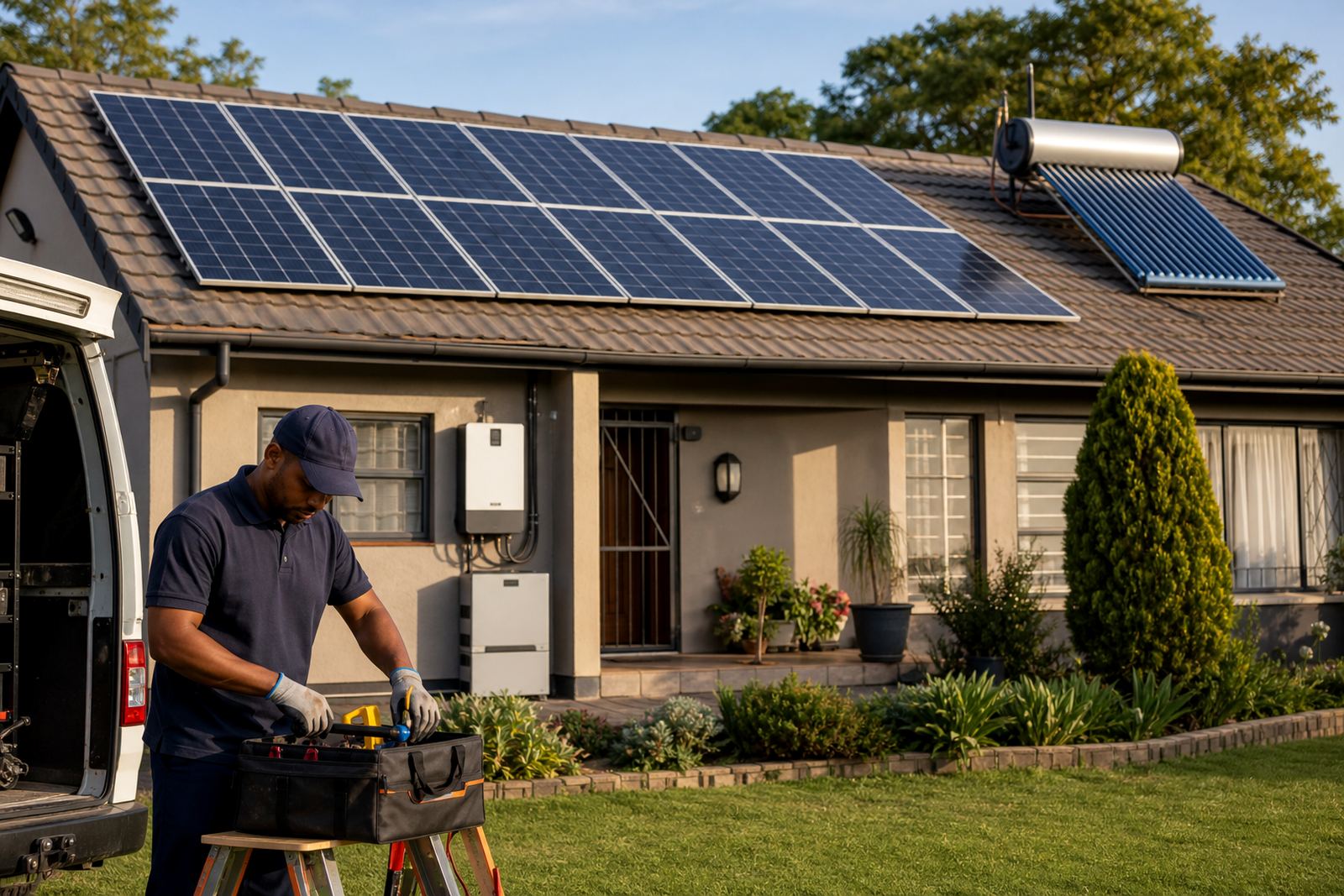
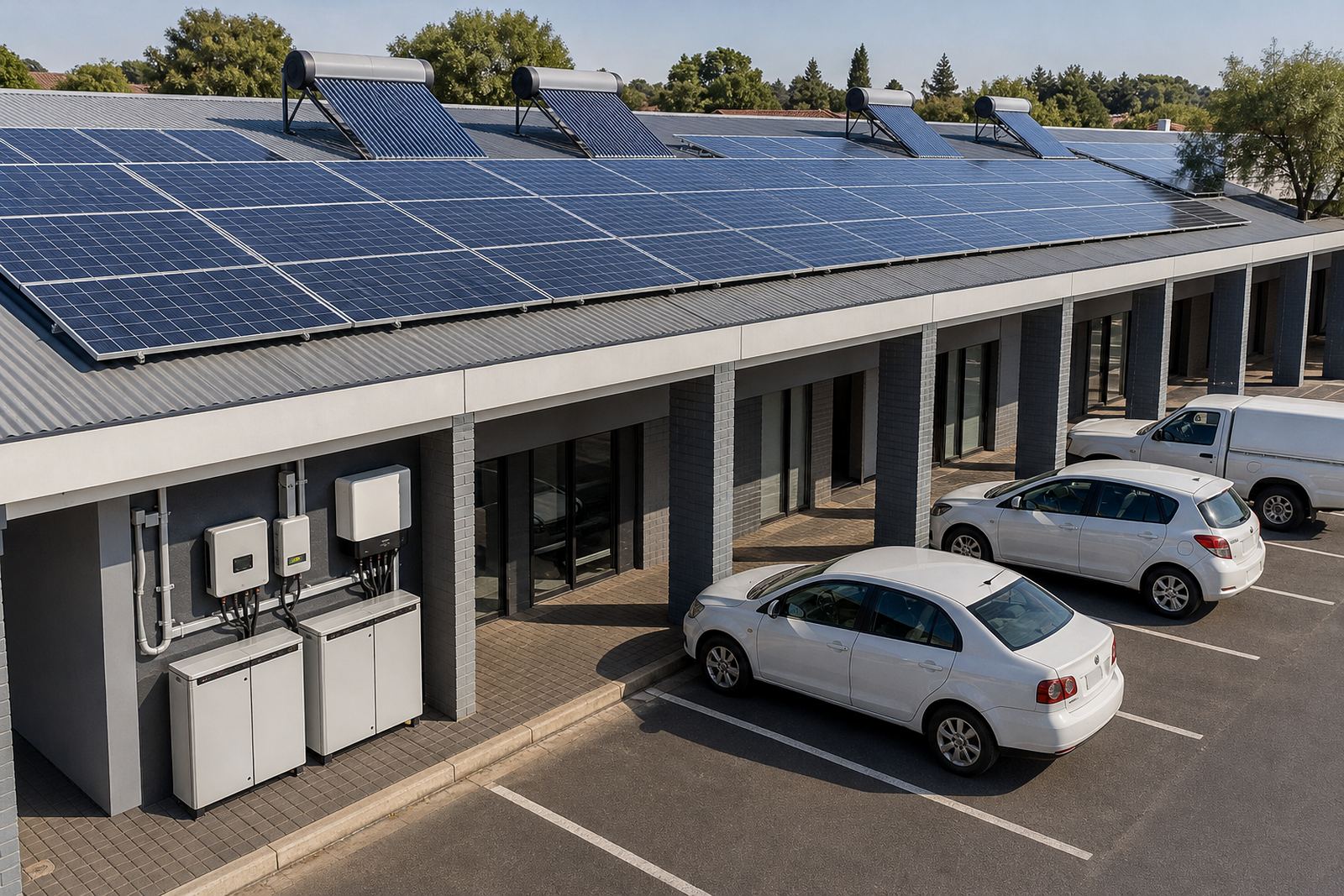
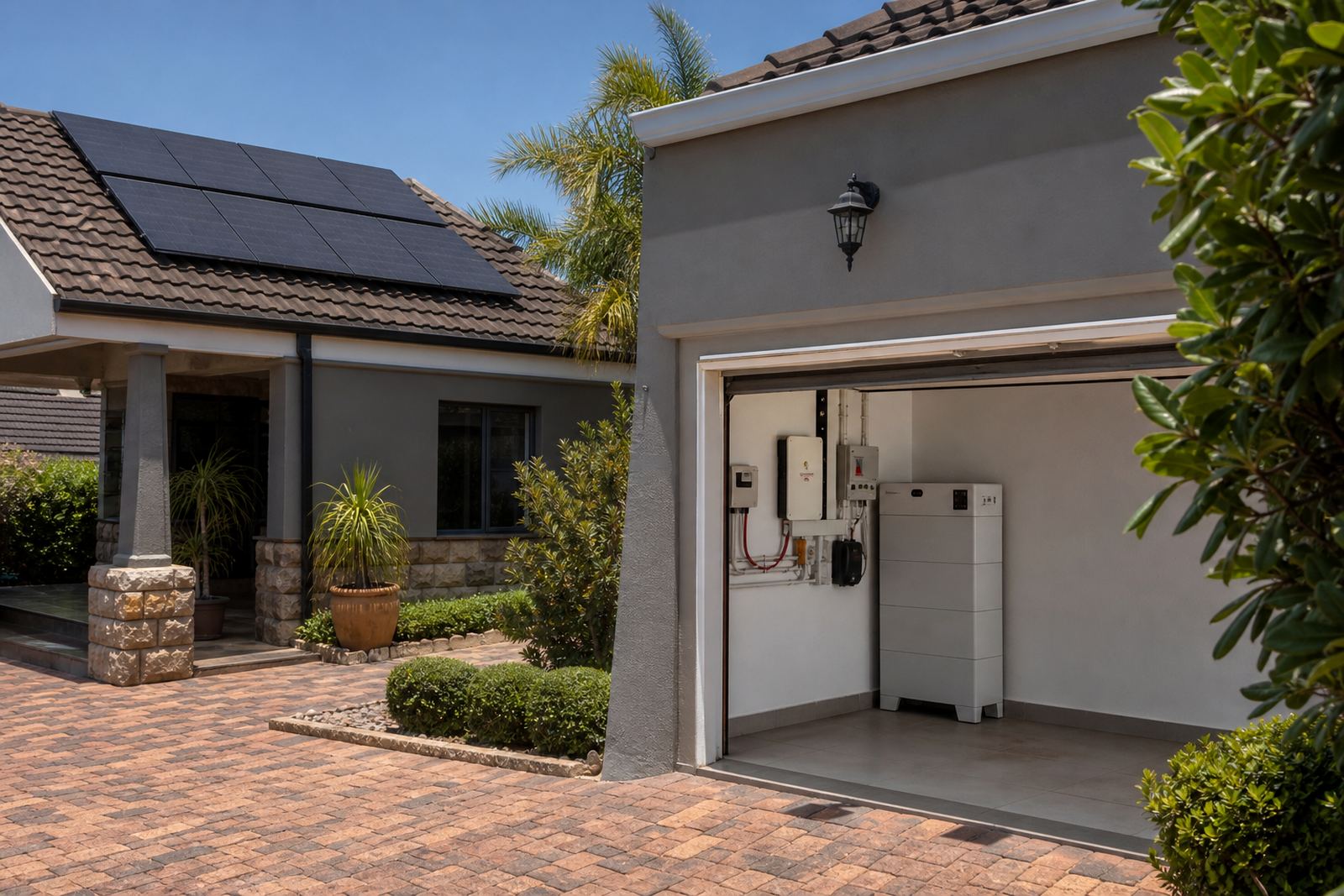
We supplied a practical solar package built around solar panels, an inverter, batteries and the wiring needed to connect the essential circuits. The panels were positioned to make the best use of the available roof area, while the inverter and battery bank were placed in a secure service area with good ventilation and easy access for maintenance.
The solar array was sized to support daytime operation and battery charging, while the inverter handled changeover when municipal supply failed. The battery storage was set up to cover the salon's key loads during outages, rather than trying to power every single appliance at once. That approach keeps the system simpler and more reliable over time.
- Solar panel installation on the available roof section
- Inverter installation with changeover for essential loads
- Battery installation for backup during load-shedding
- Electrical integration and commissioning by qualified installers
- Labelling, testing and handover with basic operating guidance
We also made sure the salon owner understood what could be run at the same time and what should be left off when battery level drops. That conversation matters, because a small commercial system works best when the users know its limits and use it properly.
Installation timeline and on-site coordination
The project ran over three weeks from assessment to commissioning. Week one covered the site visit, load review and final design. Week two was for material preparation and scheduling with the salon owner so the installation could fit around trading hours. Week three covered the physical installation, electrical changeover and system checks.
We worked carefully around client appointments, and the team kept noise and disruption down as much as possible. One useful part of the job was coordinating the inverter and battery position before any cabling was fixed in place, as that saved time later on. The result was a tidy install that did not interfere with the salon floor space or customer movement.
How the salon uses the system day to day
After commissioning, the salon had stable support for its essential electrical needs. Lights stayed on, tills remained active and the team could keep serving customers during outages instead of closing early or working in poor lighting. For a business like this, that makes a real difference to daily trading.
The owner also liked that the system could be monitored in plain terms without technical confusion. If the sun is good, the panels help carry daytime use and recharge the batteries. If the weather turns or the grid goes off, the inverter steps in and the battery supports the selected loads. Simple is often better for small businesses, especially in places where the power can be unpredictable.
- Cleaner trading environment during outages
- Better continuity for card payments and lighting
- Less interruption to appointments and treatments
- More control over essential loads during load-shedding
What Suited This Type Of Salon Installation
If we were doing the same kind of project again in Pinetown or another busy urban area, we would use the same practical approach: start with the real load, protect the essential circuits and avoid oversizing. That keeps costs sensible and makes the system easier to maintain. For a salon, we would still prioritise lights, tills, router equipment and a few small loads rather than trying to back up the whole premises.
We would also keep the installation neat and service-friendly, with clear labelling and enough space around the inverter and batteries for future maintenance. Good planning upfront avoids headaches later. The same applies to solar water heating on commercial or residential sites: choose the right size, place it properly, and make sure the electrical work is handled by qualified installers. That is where long-term reliability starts.
For homeowners and small businesses across Pretoria, Johannesburg, Durban, Cape Town and Bloemfontein, that is the kind of project we prefer to deliver. Not complicated, just well matched to the property and the way people actually use power.
Key facts
| Project type | Small business salon solar installation |
|---|---|
| Town | Pinetown, KwaZulu-Natal |
| System purpose | Backup for lights, tills and selected daily loads |
| Main equipment | Solar panels, inverter and battery storage |
| Installation timeline | 3 weeks from assessment to commissioning |
| Electrical work | Completed by qualified installers |