Why the Shop Needed Solar in Midrand
The client was a small retail operator in Midrand serving daily walk-in trade, with no room for long interruptions to trading hours. The brief was simple: reduce reliance on the municipal grid, keep essential loads running during load-shedding, and avoid the disruption that comes with repeated power cuts and low voltage events.
Midrand is busy and commercial, but the conditions on site still called for careful planning. The roof had limited usable space, the unit sat inside a shared property with access rules, and the electrical work had to be completed without affecting neighbouring tenants. We also had to work around store opening hours so the installation did not disturb customers or stock handling.
- Client type: small retail unit
- Town: Midrand, Gauteng
- Main need: backup power for trading hours
- Site condition: limited roof area and shared premises
The result needed to be neat, safe, and suitable for day to day business use, not a complicated setup that would need constant attention.
What We Planned for the Rooftop System
After the site assessment, we designed a compact rooftop system matched to the unit's load profile. The focus was on practical coverage for lighting, point of sale equipment, refrigeration support where applicable, Wi-Fi and small office use. We also allowed for sensible future expansion if the owner later wanted to add battery storage or more daytime capacity.
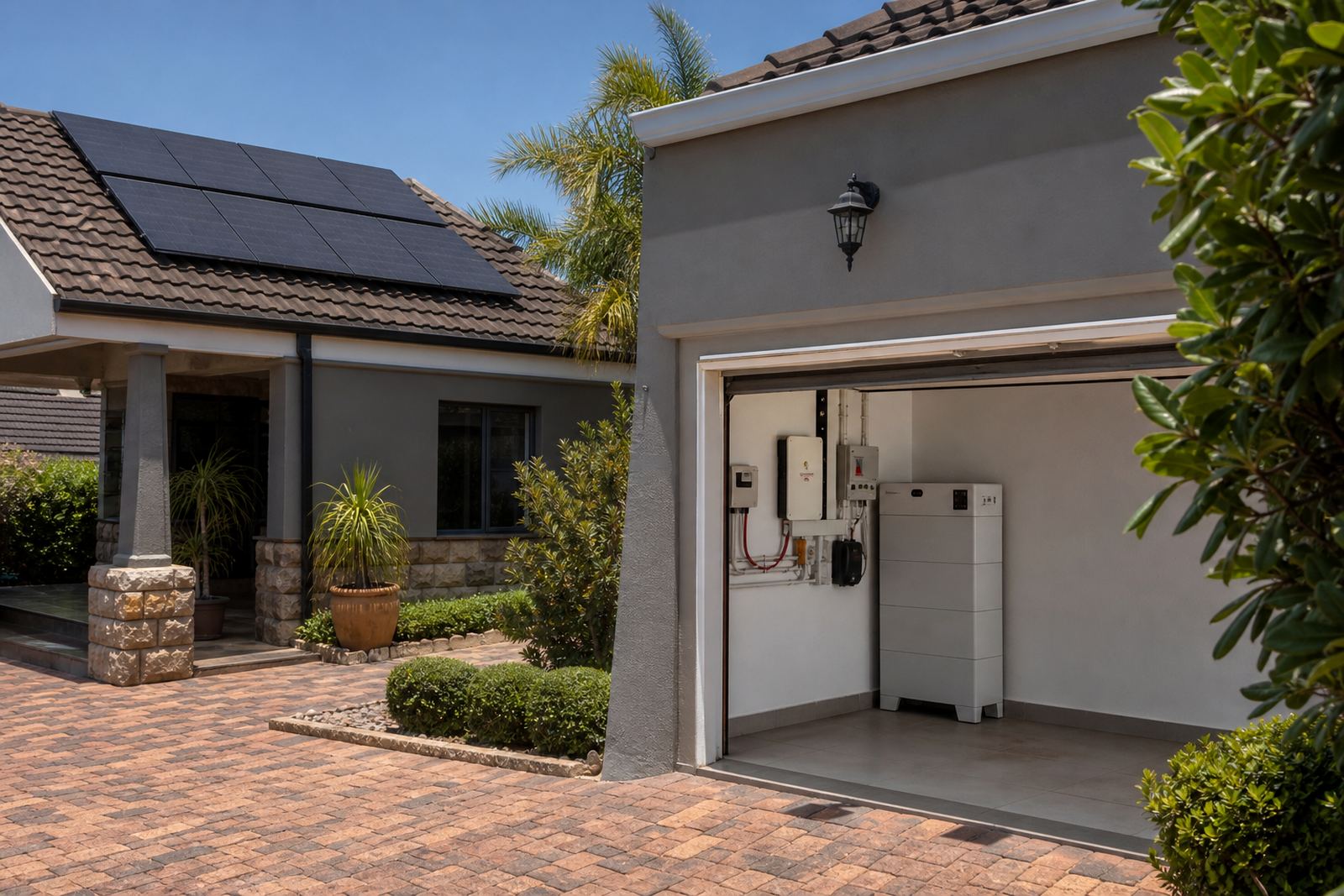
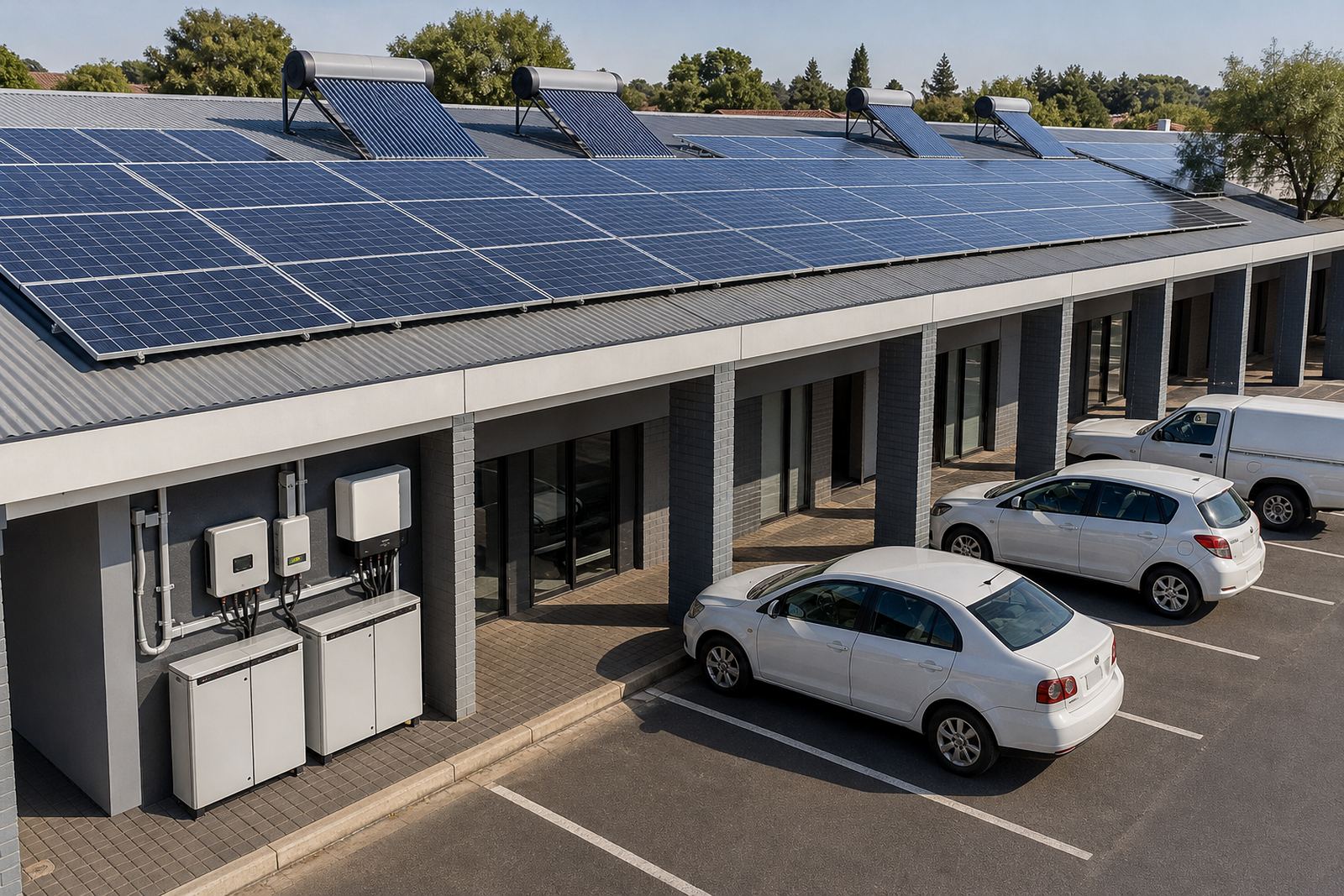
The array was arranged to use the roof space efficiently and to suit the orientation available on the building. In Midrand, afternoon heat can affect performance, so spacing, tilt and cable runs were all checked before installation began. We planned the inverter position to keep it protected from dust and direct weather, with enough ventilation for steady operation.
Because the project involved electrical integration, all connection work was handled by qualified installers. That included the changeover arrangement, protection devices, and final commissioning checks. We kept the system simple for the staff to understand, with clear labelling and a setup that would not require anyone to guess what each switch does.
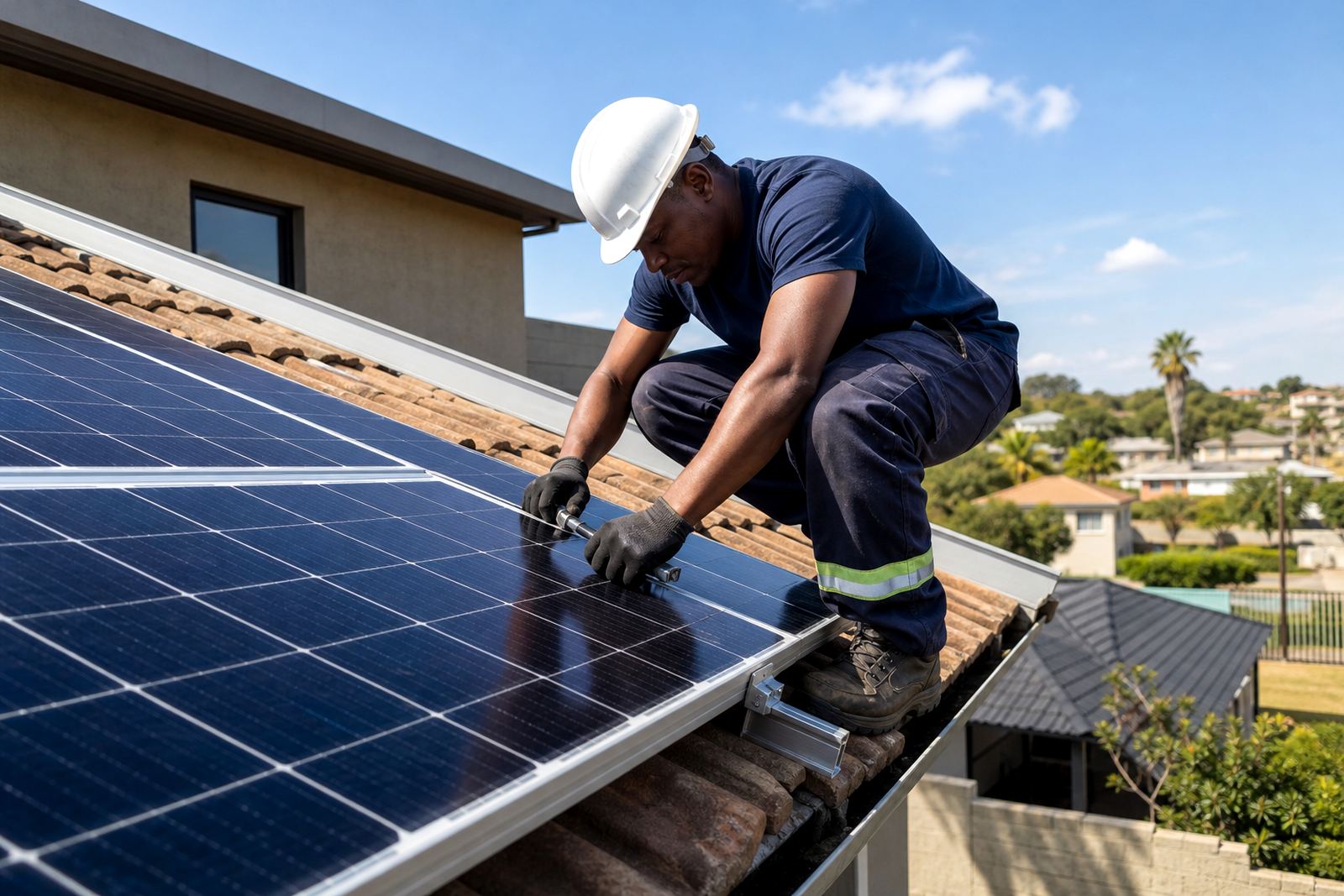
- Roof-mounted solar panels sized for the available footprint
- Inverter equipment selected for essential retail loads
- Proper protection, isolators and labelled connections
- Room for later battery addition if required
Installation Over Two Weeks
The project ran over two weeks from final approval to commissioning. Week one covered the site confirmation, materials staging, mounting work and panel placement. Week two covered inverter installation, electrical integration, testing and handover. Working in stages helped us keep the unit operational and avoid long shut-down periods.
We used a tidy install sequence because retail spaces need order. First the roof hardware went in, then the panel frames and modules, followed by cable routes into the inverter position. Once the hardware was fixed, the electrical team completed the AC and DC connections, checked polarity, and tested for safe operation under load.
The unit had a few practical constraints: limited parking for our team, a shared access gate, and the need to keep pathways clear for deliveries. That meant materials had to be brought in carefully and the work area kept clean every day. There were also scheduling checks around municipal and building management access rules, which is normal on small commercial sites in Gauteng.
By keeping the process organised, we were able to finish without unnecessary disruption and hand the system over in good order.
Key Equipment and Site Specs
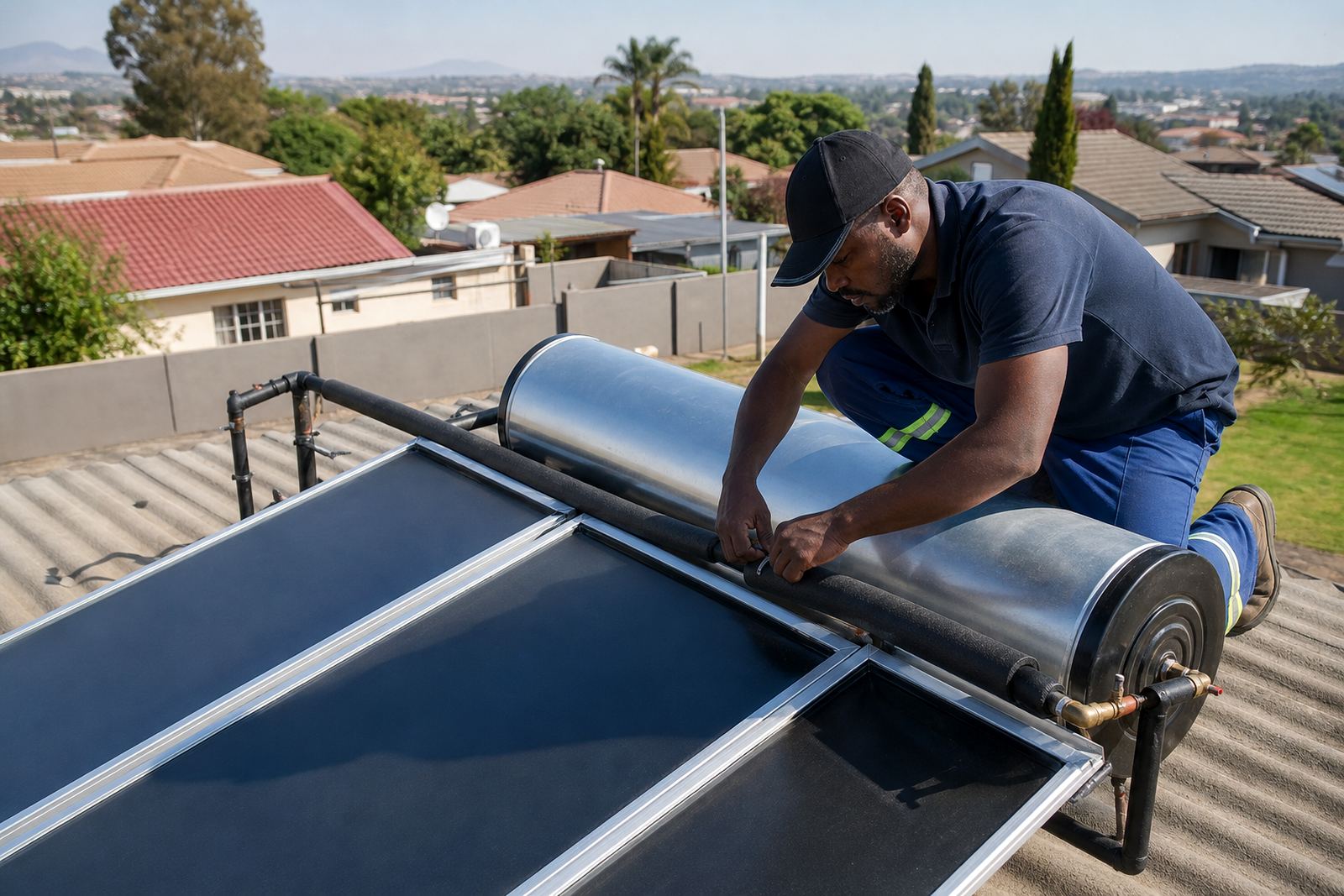
This Midrand shop unit did not need a large plant room or complicated controls. What it needed was a reliable set of components sized to the trading pattern of a small business. The solar panels were mounted on the rooftop, the inverter was positioned in a protected service area, and the cabling was installed with weather resistance and future maintenance in mind.
We also checked that the system would suit everyday South African conditions, including summer heat, dust and occasional heavy rain. For a retail site, the important detail is not only whether equipment is installed, but whether it can keep working cleanly and safely when the weather changes or the grid behaves badly.
- Rooftop solar panels for daytime generation
- Inverter equipment for load control and conversion
- Electrical integration into the existing distribution board
- Commissioning and functional testing on site
- Labelled isolators and visible safety marking
- Maintenance access left clear for future servicing
For the customer, this meant a practical setup that fit the unit rather than forcing the unit to fit the solar system.
What Changed After Commissioning
Once the system was commissioned, the shop could run key electrical loads with far less dependence on the grid during trading hours. The owner gained better continuity for day to day operations, and the staff had a more predictable setup during outages and unstable supply periods. The biggest improvement was not flashy, it was steady power when the unit needed it.
There was also a visual benefit. The roof now carries a clean, properly fixed solar array and the indoor electrical side is orderly and easier to manage. For a small business, that matters because maintenance is simpler when the system is laid out clearly and the parts are easy to inspect.
We do not promise figures that depend on weather or usage, but the customer did see a more stable operating environment and less interruption to normal retail work. That is often the main reason small shops in Midrand, Johannesburg and Pretoria choose solar in the first place.
- Improved continuity during load-shedding
- Less dependence on unstable grid supply
- Cleaner installation with clear labelling
- Better day to day control of essential loads
What We Would Do Again on Similar Sites
For a small retail site like this, we would still begin with a proper assessment, a compact layout and correct electrical integration from the start.: start with a proper site assessment, keep the design compact, and make the electrical work the right way from the start. Small retail units usually do best with practical systems that are easy to service and simple for the staff to understand.
We would also keep the same attention to roof layout, access planning and commissioning checks. In a place like Midrand, where commercial space is busy and shared buildings are common, a neat installation with good coordination saves time later. It also reduces the chance of avoidable callouts, which is important for businesses that cannot afford long downtime.
Linuo Solar works from Centurion, Pretoria, and that practical setup carries through into how these projects are handled. Our team, led by Vuyo Phasha, includes Naledi Kgosi, Sarel Delport, Palesa Mabena, Mothusi Mphahlele, Faatimah Latief and Unathi Tau, so each part of the job from operations to technical support is covered properly. We handle site assessments, system design, panel installation, inverter installation, battery installation, water heater installation, electrical integration, commissioning, maintenance, fault finding, panel cleaning and support callouts across Pretoria, Johannesburg, Durban, Cape Town and Bloemfontein.
For shop units, our aim is always the same: keep it safe, keep it practical, and leave the client with a system that makes sense for the space they actually have.
Key facts
| Project | Midrand shop unit solar installation |
|---|---|
| Location | Midrand, Gauteng |
| Property type | Small retail unit |
| System type | Rooftop solar panels with inverter equipment |
| Timeline | 2 weeks from site approval to commissioning |
| Scope | Site assessment, installation, electrical integration and testing |